Loading page, please wait…
STRENGTHENING POCSO Act 2012 - UPSC Social Issues
What is STRENGTHENING POCSO Act 2012 in UPSC Social Issues?
STRENGTHENING POCSO Act 2012 is a key topic under Social Issues for UPSC Civil Services Examination. Key points include: Supreme Court ruled watching/possessing sexually explicit material involving minors is illegal.. This act constitutes a punishable offence under POCSO Act, 2012.. Sharing or transmitting the material is NOT a prerequisite for the offense.. Understanding this topic is essential for both UPSC Prelims and Mains preparation.
Why is STRENGTHENING POCSO Act 2012 important for UPSC exam?
STRENGTHENING POCSO Act 2012 is a Medium-level topic in UPSC Social Issues. It is tested in both Prelims (factual MCQs) and Mains (analytical answer writing). Previous year UPSC questions have frequently covered aspects of STRENGTHENING POCSO Act 2012, making it essential for comprehensive IAS preparation.
How to prepare STRENGTHENING POCSO Act 2012 for UPSC?
To prepare STRENGTHENING POCSO Act 2012 for UPSC: (1) Study the comprehensive notes covering all key concepts on Vaidra. (2) Practice previous year questions on this topic. (3) Connect it with current affairs using daily updates. (4) Revise using key takeaways and mind maps available for Social Issues. (5) Write practice answers linking STRENGTHENING POCSO Act 2012 to related GS Paper topics.
Key takeaways of STRENGTHENING POCSO Act 2012 for UPSC
- Supreme Court ruled watching/possessing sexually explicit material involving minors is illegal.
- This act constitutes a punishable offence under POCSO Act, 2012.
- Sharing or transmitting the material is NOT a prerequisite for the offense.
- The ruling significantly strengthens the POCSO Act's deterrent effect.
- It targets passive consumption, aiming to reduce demand for child sexual abuse material (CSAM).
STRENGTHENING POCSO Act 2012
Medium⏱️ 4 min read
social issues
📖 Introduction
Introduction to Strengthening POCSO Act 2012
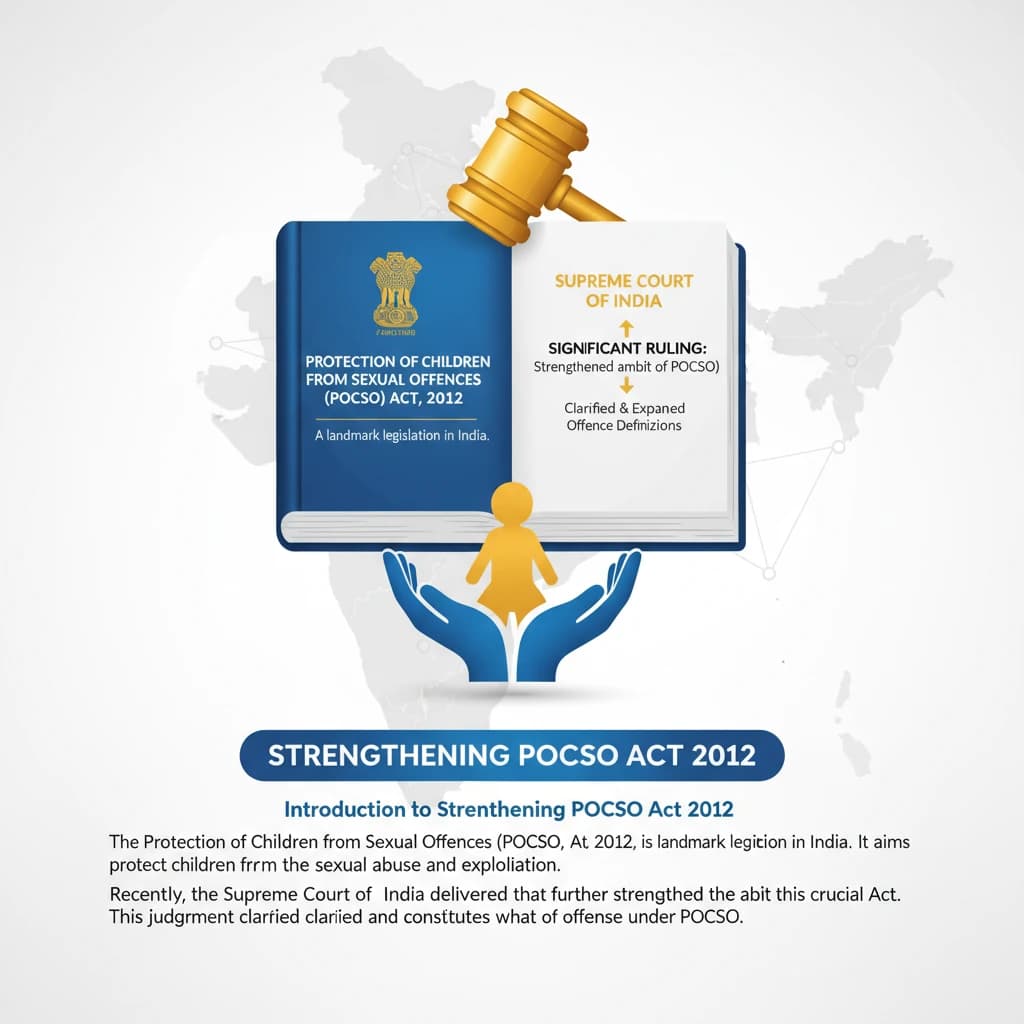
The Protection of Children from Sexual Offences (POCSO) Act, 2012, is a landmark legislation in India. It aims to protect children from various forms of sexual abuse and exploitation.
Recently, the Supreme Court of India delivered a significant ruling that further strengthened the ambit of this crucial Act. This judgment clarified and expanded what constitutes an offense under POCSO.
Key Supreme Court Ruling
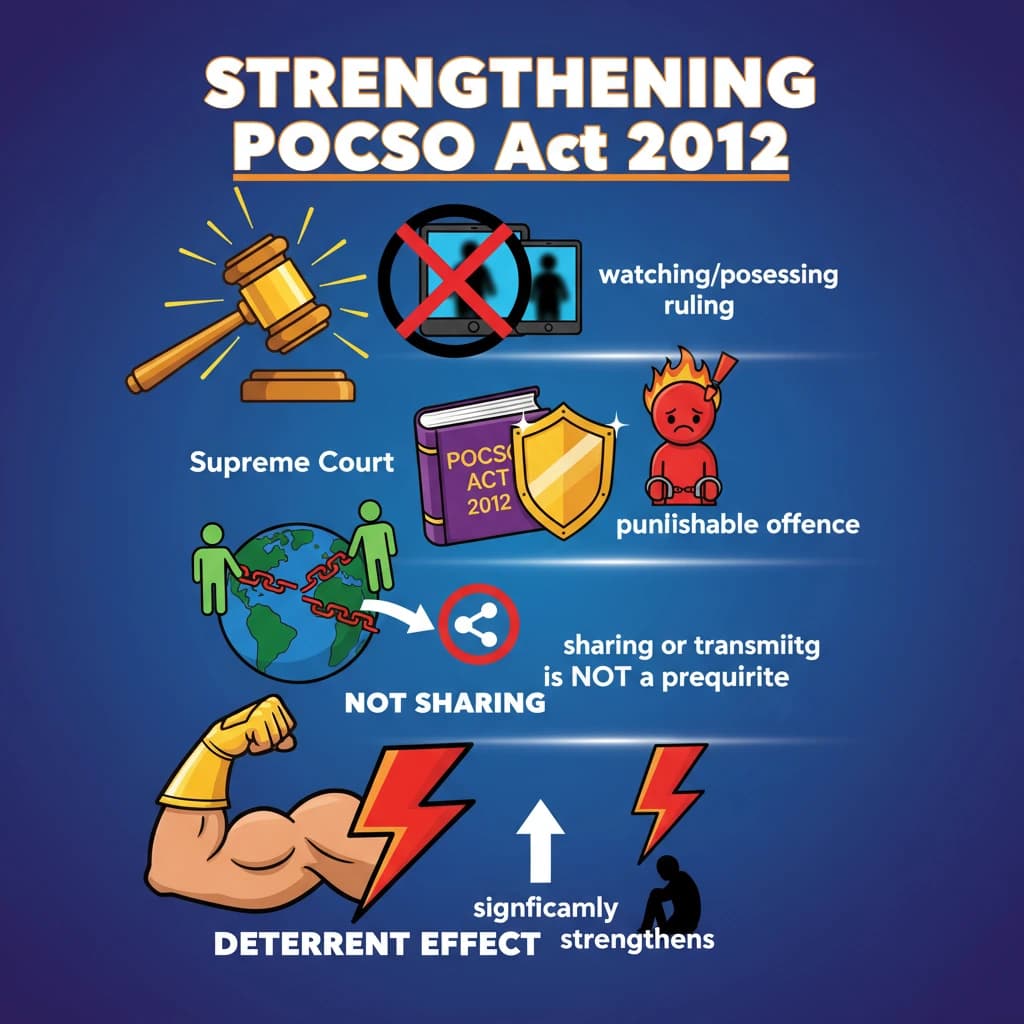
The Supreme Court has unequivocally ruled that the act of watching or possessing sexually explicit material involving minors is an illegal activity. This constitutes a direct violation of the provisions outlined in the POCSO Act, 2012.
This ruling clarifies that such actions are a punishable offence under the POCSO Act, 2012. Crucially, this holds true regardless of whether the material is further shared or transmitted to others. The mere act of viewing or holding such content is sufficient for prosecution.
UPSC Insight: This ruling is vital for GS Paper II (Governance, Social Justice) and GS Paper III (Internal Security, Cybercrime). It highlights the judiciary's proactive role in child protection and tackling online child abuse.
💡 Key Takeaways
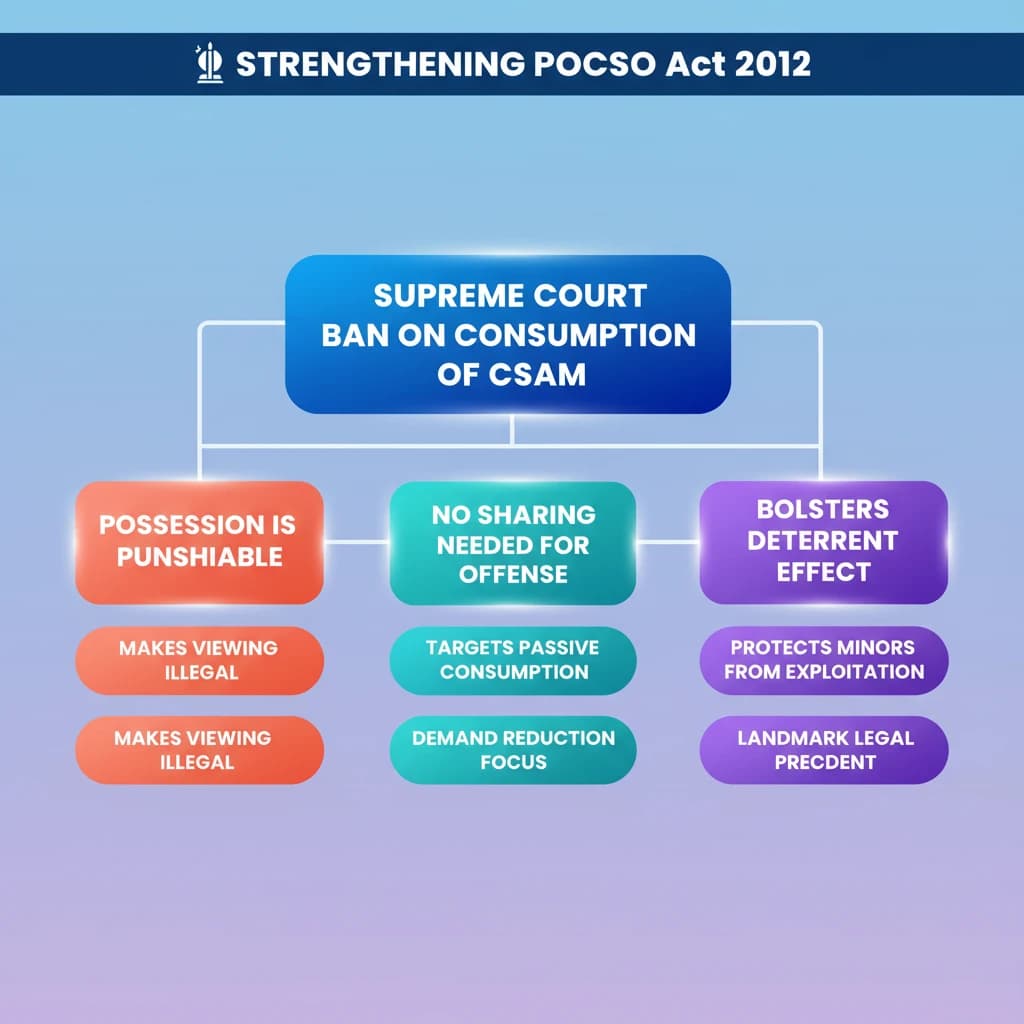
- •Supreme Court ruled watching/possessing sexually explicit material involving minors is illegal.
- •This act constitutes a punishable offence under POCSO Act, 2012.
- •Sharing or transmitting the material is NOT a prerequisite for the offense.
- •The ruling significantly strengthens the POCSO Act's deterrent effect.
- •It targets passive consumption, aiming to reduce demand for child sexual abuse material (CSAM).
🧠 Memory Techniques
95% Verified Content
📚 Reference Sources
•The Protection of Children from Sexual Offences (POCSO) Act, 2012
•Supreme Court of India judgments (general understanding of recent rulings on POCSO)