Loading page, please wait…
The Women’s Reservation Bill - UPSC Social Issues
What is The Women’s Reservation Bill in UPSC Social Issues?
The Women’s Reservation Bill is a key topic under Social Issues for UPSC Civil Services Examination. Key points include: The Women's Reservation Bill proposes 33% reservation for women in Lok Sabha and State Legislative Assemblies.. It was first introduced in 1996.. Its passage has been stalled due to a persistent lack of political consensus among major parties.. Understanding this topic is essential for both UPSC Prelims and Mains preparation.
Why is The Women’s Reservation Bill important for UPSC exam?
The Women’s Reservation Bill is a Easy-level topic in UPSC Social Issues. It is tested in both Prelims (factual MCQs) and Mains (analytical answer writing). Previous year UPSC questions have frequently covered aspects of The Women’s Reservation Bill, making it essential for comprehensive IAS preparation.
How to prepare The Women’s Reservation Bill for UPSC?
To prepare The Women’s Reservation Bill for UPSC: (1) Study the comprehensive notes covering all key concepts on Vaidra. (2) Practice previous year questions on this topic. (3) Connect it with current affairs using daily updates. (4) Revise using key takeaways and mind maps available for Social Issues. (5) Write practice answers linking The Women’s Reservation Bill to related GS Paper topics.
Key takeaways of The Women’s Reservation Bill for UPSC
- The Women's Reservation Bill proposes 33% reservation for women in Lok Sabha and State Legislative Assemblies.
- It was first introduced in 1996.
- Its passage has been stalled due to a persistent lack of political consensus among major parties.
- Aims to enhance women's political representation and promote gender equality.
- Crucial for strengthening democratic inclusivity and ensuring gender-sensitive policy-making.
The Women’s Reservation Bill
Easy⏱️ 4 min read
social issues
📖 Introduction
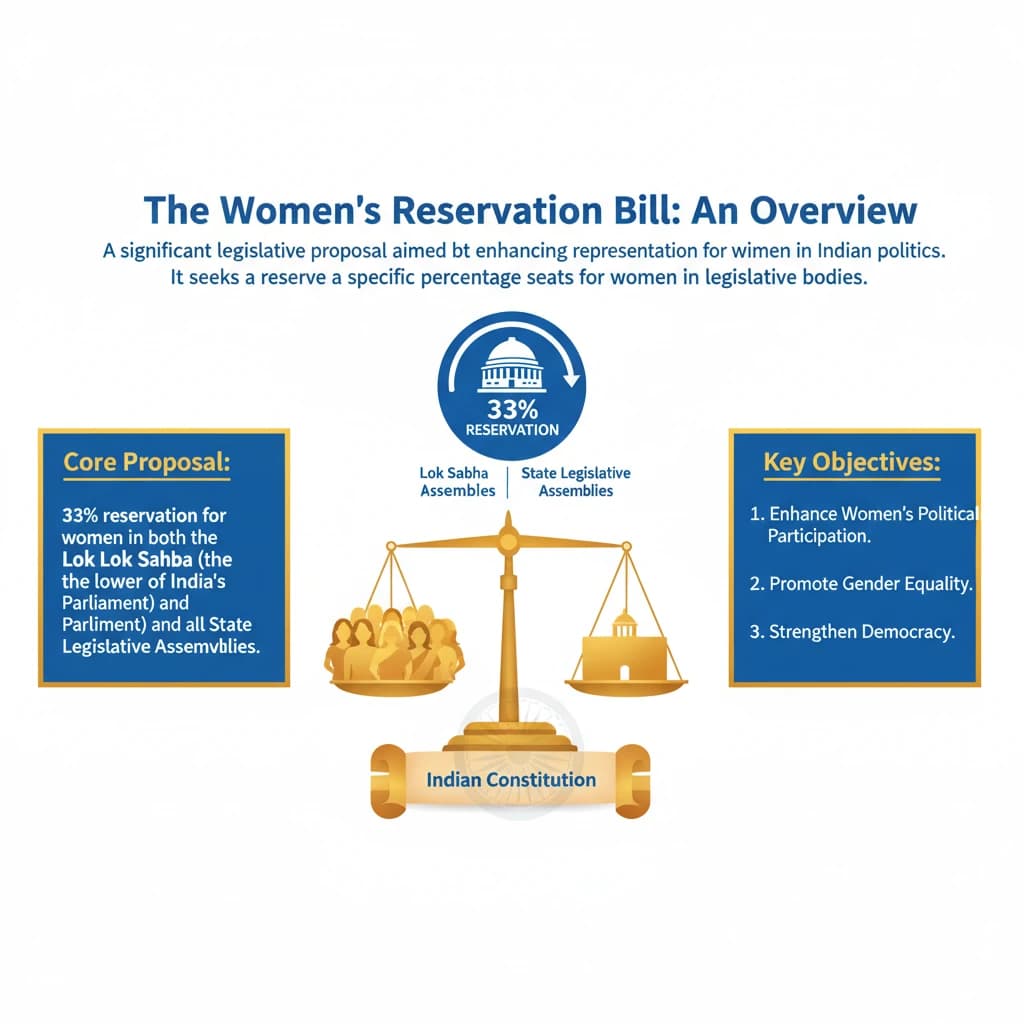
The Women's Reservation Bill: An Overview
The Women's Reservation Bill is a significant legislative proposal aimed at enhancing the representation of women in Indian politics. It seeks to reserve a specific percentage of seats for women in legislative bodies.
Core Proposal: The bill proposes a 33% reservation for women in both the Lok Sabha (the lower house of India's Parliament) and all state legislative assemblies.
Historical Journey and Challenges
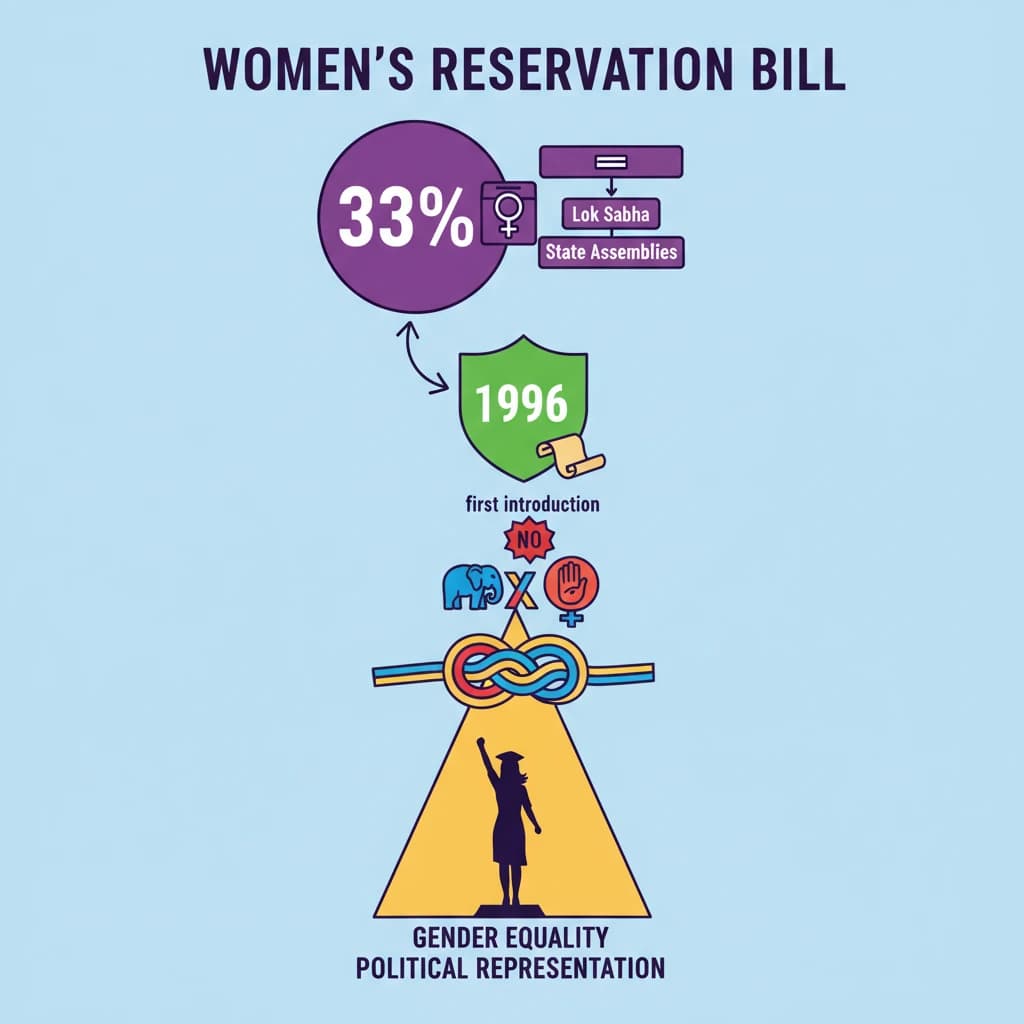
The concept of reserving seats for women in legislatures is not new. The Women's Reservation Bill was first introduced in 1996, marking the beginning of a long and often contentious legislative journey.
Despite being introduced multiple times over the decades, the bill has consistently failed to be passed by Parliament. This prolonged impasse highlights deep-seated political and social challenges.
Primary Hurdle: The main reason for the bill's non-passage has been a persistent lack of political consensus among major political parties. Divergent views on its implementation, particularly regarding sub-quotas for OBC women, have stalled its progress.
UPSC Insight: Understanding the Women's Reservation Bill is crucial for topics related to gender justice, electoral reforms, and democratic representation in GS Paper I and II. Be prepared to discuss its historical context, proposed provisions, and the socio-political challenges to its enactment.
💡 Key Takeaways
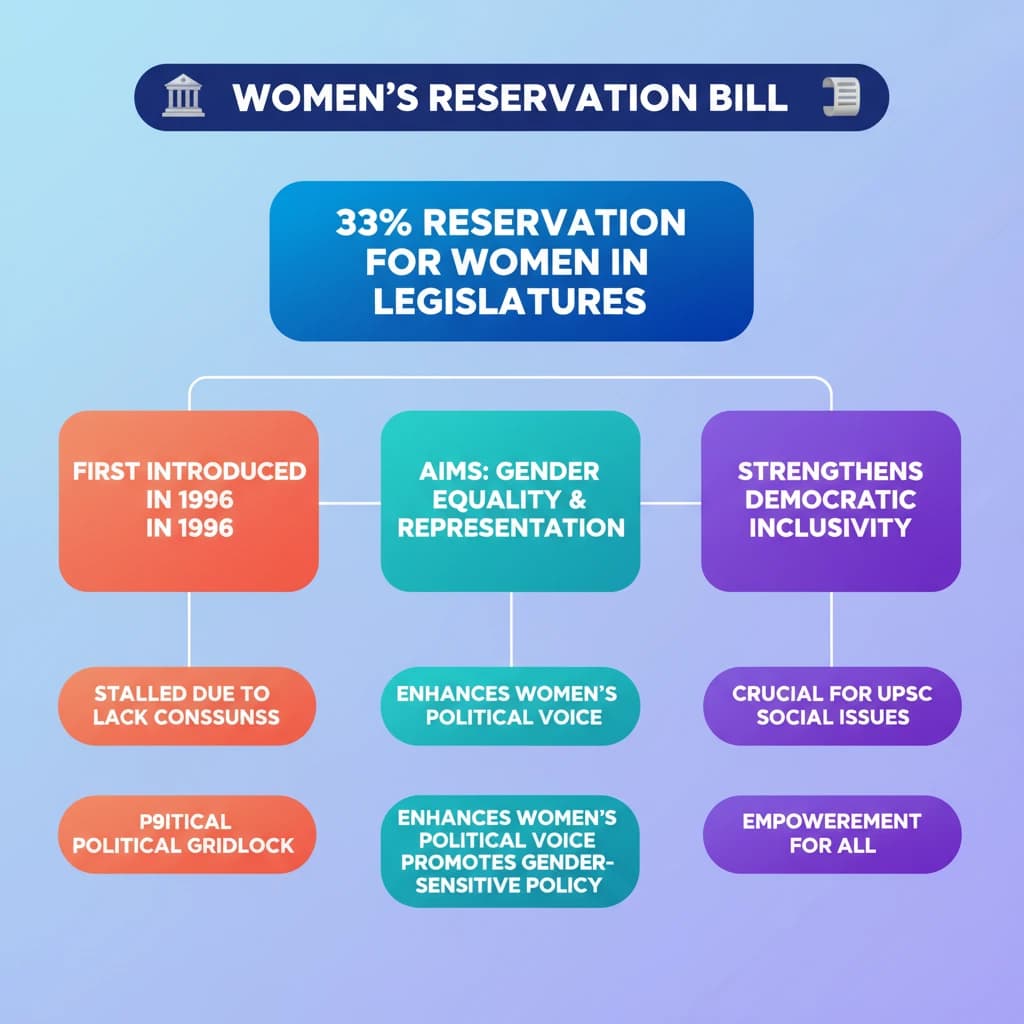
- •The Women's Reservation Bill proposes 33% reservation for women in Lok Sabha and State Legislative Assemblies.
- •It was first introduced in 1996.
- •Its passage has been stalled due to a persistent lack of political consensus among major parties.
- •Aims to enhance women's political representation and promote gender equality.
- •Crucial for strengthening democratic inclusivity and ensuring gender-sensitive policy-making.
🧠 Memory Techniques
95% Verified Content
📚 Reference Sources
•Parliament of India archives (general knowledge of bill's history)
•PRS Legislative Research (general knowledge of bill's provisions and journey)