Loading page, please wait…
Tobacco Taxation in India: Cigarettes vs. Bidis & Public Health - UPSC Social Issues
What is Tobacco Taxation in India: Cigarettes vs. Bidis & Public Health in UPSC Social Issues?
Tobacco Taxation in India: Cigarettes vs. Bidis & Public Health is a key topic under Social Issues for UPSC Civil Services Examination. Key points include: India taxes cigarettes heavily (53% of retail price) but bidis significantly lower (16%).. Public health experts advocate for higher bidi taxes to reduce consumption and raise government revenue.. Tobacco taxation serves dual goals: public health improvement and fiscal revenue generation.. Understanding this topic is essential for both UPSC Prelims and Mains preparation.
Why is Tobacco Taxation in India: Cigarettes vs. Bidis & Public Health important for UPSC exam?
Tobacco Taxation in India: Cigarettes vs. Bidis & Public Health is a Medium-level topic in UPSC Social Issues. It is tested in both Prelims (factual MCQs) and Mains (analytical answer writing). Previous year UPSC questions have frequently covered aspects of Tobacco Taxation in India: Cigarettes vs. Bidis & Public Health, making it essential for comprehensive IAS preparation.
How to prepare Tobacco Taxation in India: Cigarettes vs. Bidis & Public Health for UPSC?
To prepare Tobacco Taxation in India: Cigarettes vs. Bidis & Public Health for UPSC: (1) Study the comprehensive notes covering all key concepts on Vaidra. (2) Practice previous year questions on this topic. (3) Connect it with current affairs using daily updates. (4) Revise using key takeaways and mind maps available for Social Issues. (5) Write practice answers linking Tobacco Taxation in India: Cigarettes vs. Bidis & Public Health to related GS Paper topics.
Key takeaways of Tobacco Taxation in India: Cigarettes vs. Bidis & Public Health for UPSC
- India taxes cigarettes heavily (53% of retail price) but bidis significantly lower (16%).
- Public health experts advocate for higher bidi taxes to reduce consumption and raise government revenue.
- Tobacco taxation serves dual goals: public health improvement and fiscal revenue generation.
- The current tax disparity makes bidis more accessible, impacting health equity and exacerbating health disparities.
- Increasing bidi taxes aligns with global best practices and WHO FCTC recommendations for effective tobacco control.
Tobacco Taxation in India: Cigarettes vs. Bidis & Public Health
Medium⏱️ 7 min read
social issues
📖 Introduction
Understanding Tobacco Taxation in India
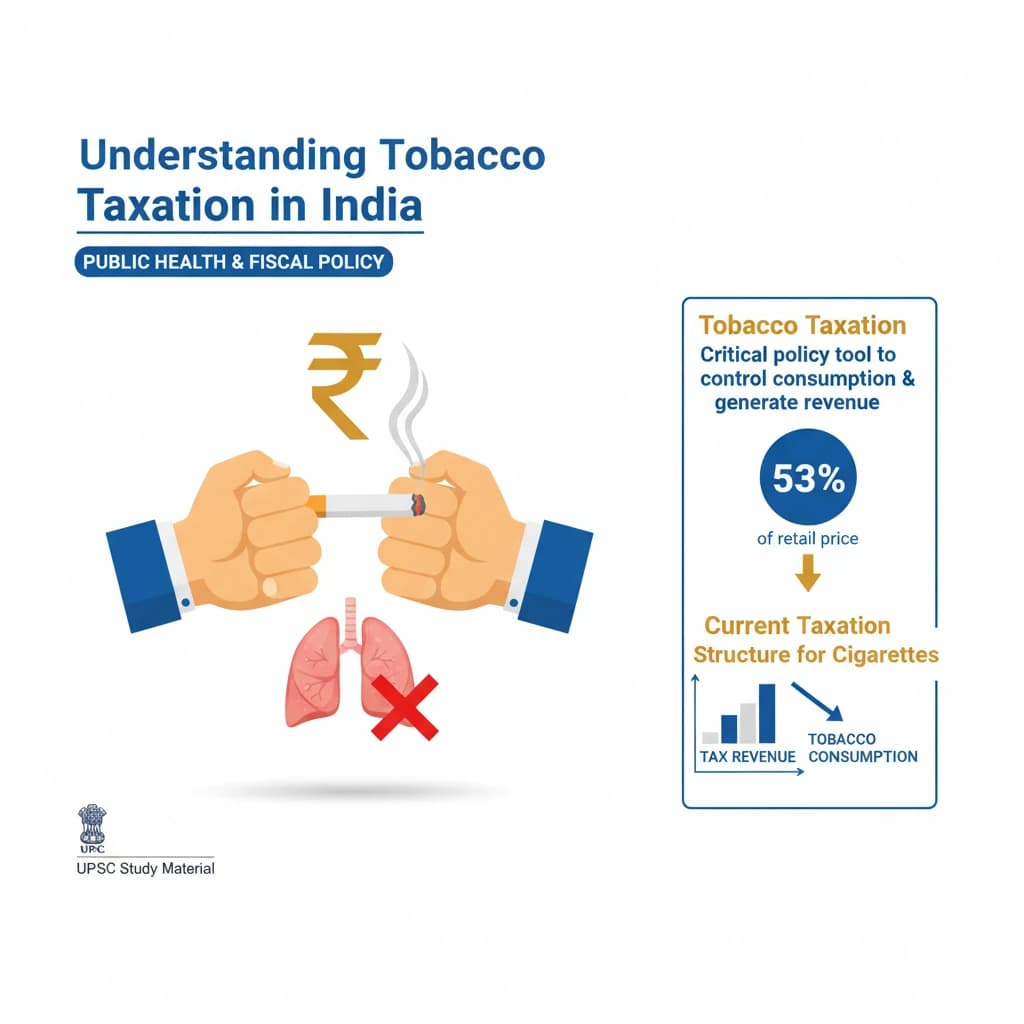
Tobacco taxation is a critical policy tool used by governments worldwide to control tobacco consumption and generate revenue. In India, it plays a significant role in public health initiatives and fiscal policy.
Current Taxation Structure for Cigarettes
India implements a substantial tax on cigarettes. Currently, the tax burden on cigarettes amounts to approximately 53% of their retail price. This high taxation aims to make cigarettes less affordable and deter usage.
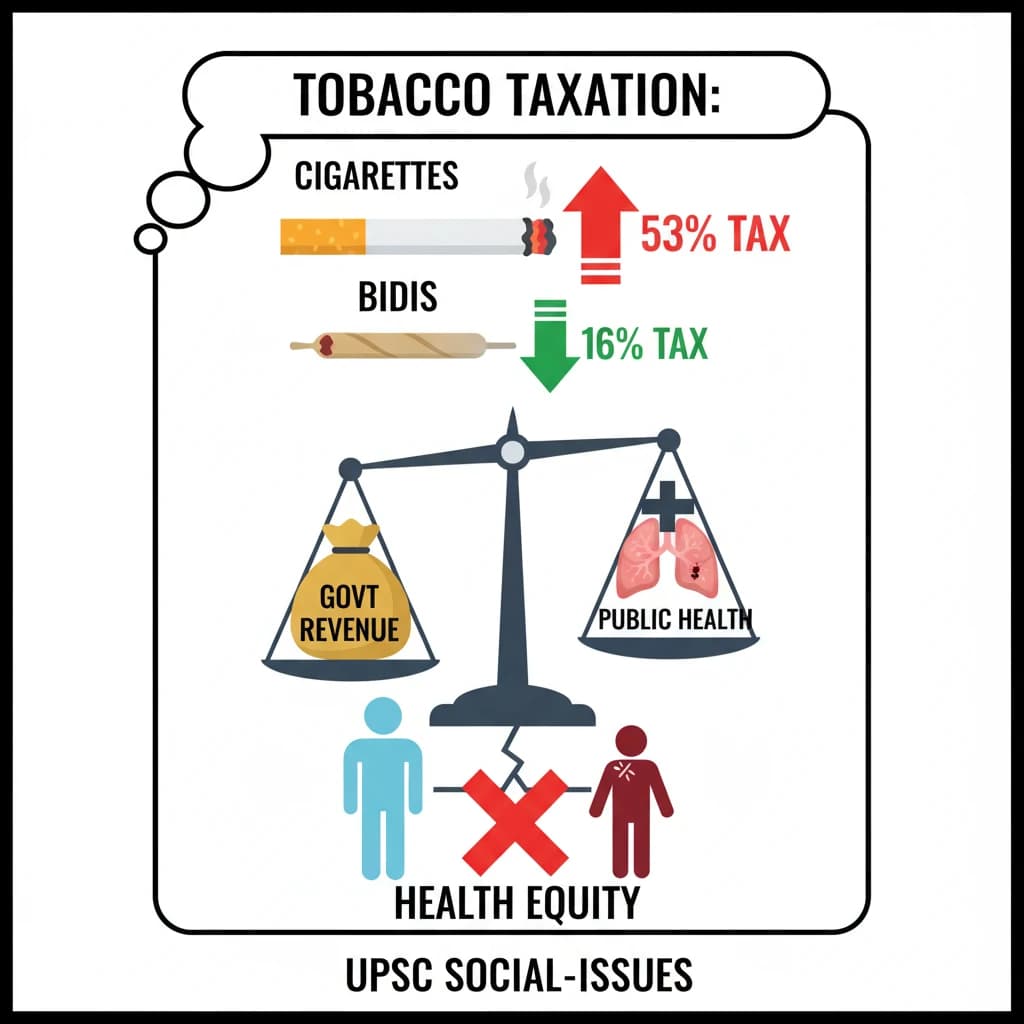
Cigarette Tax Burden: Approximately 53% of retail price.
Bidi Taxation: A Significant Disparity
In stark contrast to cigarettes, bidis, a traditional and cheaper form of tobacco consumption, are taxed at a much lower rate. Their tax burden stands at around 16% of the retail price.
This significant difference in taxation makes bidis considerably more affordable, especially for lower-income groups, impacting public health outcomes.
Bidi Tax Burden: Approximately 16% of retail price.
Rationale for Increasing Bidi Taxes
Public health experts consistently advocate for a substantial increase in bidi taxes. The primary objective is to make bidis less accessible and affordable, thereby discouraging their use.
Higher taxes on bidis are expected to lead to a reduction in consumption, contributing positively to public health indicators and reducing the burden of tobacco-related diseases.
Dual Objectives of Higher Bidi Taxes:
- Public Health: To deter bidi consumption and reduce associated health risks.
- Government Revenue: To generate additional funds for public services and health programs.
Revenue Generation Potential
Beyond public health, increasing bidi taxes presents a significant opportunity for the government to raise substantial revenue. This additional income can be channelled into various development projects or health initiatives.
UPSC Insight: Questions on tobacco taxation often link to public health (GS-II), fiscal policy (GS-III), and social welfare (GS-II). Be prepared to discuss both health and economic dimensions.
💡 Key Takeaways
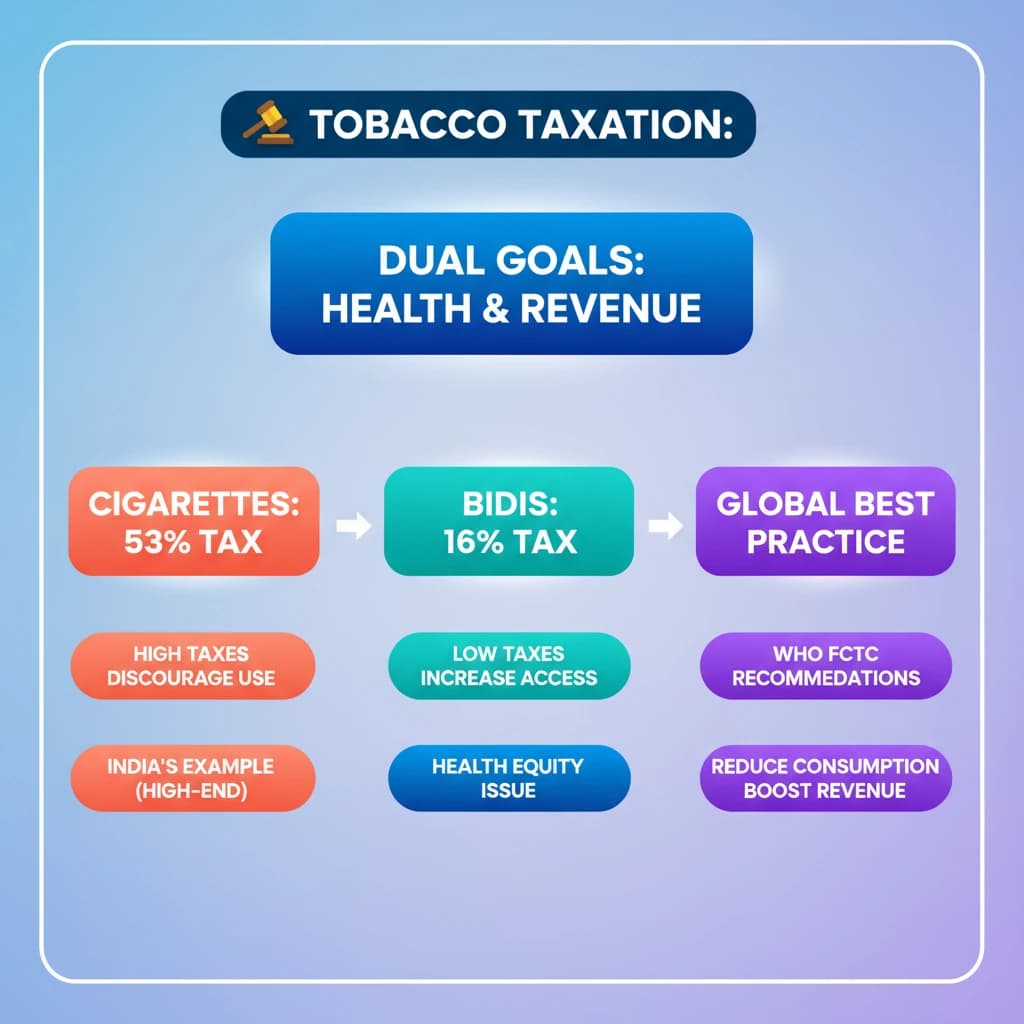
- •India taxes cigarettes heavily (53% of retail price) but bidis significantly lower (16%).
- •Public health experts advocate for higher bidi taxes to reduce consumption and raise government revenue.
- •Tobacco taxation serves dual goals: public health improvement and fiscal revenue generation.
- •The current tax disparity makes bidis more accessible, impacting health equity and exacerbating health disparities.
- •Increasing bidi taxes aligns with global best practices and WHO FCTC recommendations for effective tobacco control.
🧠 Memory Techniques
95% Verified Content
📚 Reference Sources
•Ministry of Finance, Government of India (GST Council documents)
•World Health Organization (WHO) Framework Convention on Tobacco Control (FCTC) reports
•Public Health Foundation of India (PHFI) research and policy briefs