Loading page, please wait…
U-Win Platform & Childhood Immunization Trends in India (2022-2023) - UPSC Social Issues
What is U-Win Platform & Childhood Immunization Trends in India (2022-2023) in UPSC Social Issues?
U-Win Platform & Childhood Immunization Trends in India (2022-2023) is a key topic under Social Issues for UPSC Civil Services Examination. Key points include: U-WIN digitizes India's Universal Immunisation Programme (UIP).. It tracks pregnant women, delivery outcomes, newborns, and all vaccination events.. Inspired by the success of the Co-WIN platform.. Understanding this topic is essential for both UPSC Prelims and Mains preparation.
Why is U-Win Platform & Childhood Immunization Trends in India (2022-2023) important for UPSC exam?
U-Win Platform & Childhood Immunization Trends in India (2022-2023) is a Medium-level topic in UPSC Social Issues. It is tested in both Prelims (factual MCQs) and Mains (analytical answer writing). Previous year UPSC questions have frequently covered aspects of U-Win Platform & Childhood Immunization Trends in India (2022-2023), making it essential for comprehensive IAS preparation.
How to prepare U-Win Platform & Childhood Immunization Trends in India (2022-2023) for UPSC?
To prepare U-Win Platform & Childhood Immunization Trends in India (2022-2023) for UPSC: (1) Study the comprehensive notes covering all key concepts on Vaidra. (2) Practice previous year questions on this topic. (3) Connect it with current affairs using daily updates. (4) Revise using key takeaways and mind maps available for Social Issues. (5) Write practice answers linking U-Win Platform & Childhood Immunization Trends in India (2022-2023) to related GS Paper topics.
Key takeaways of U-Win Platform & Childhood Immunization Trends in India (2022-2023) for UPSC
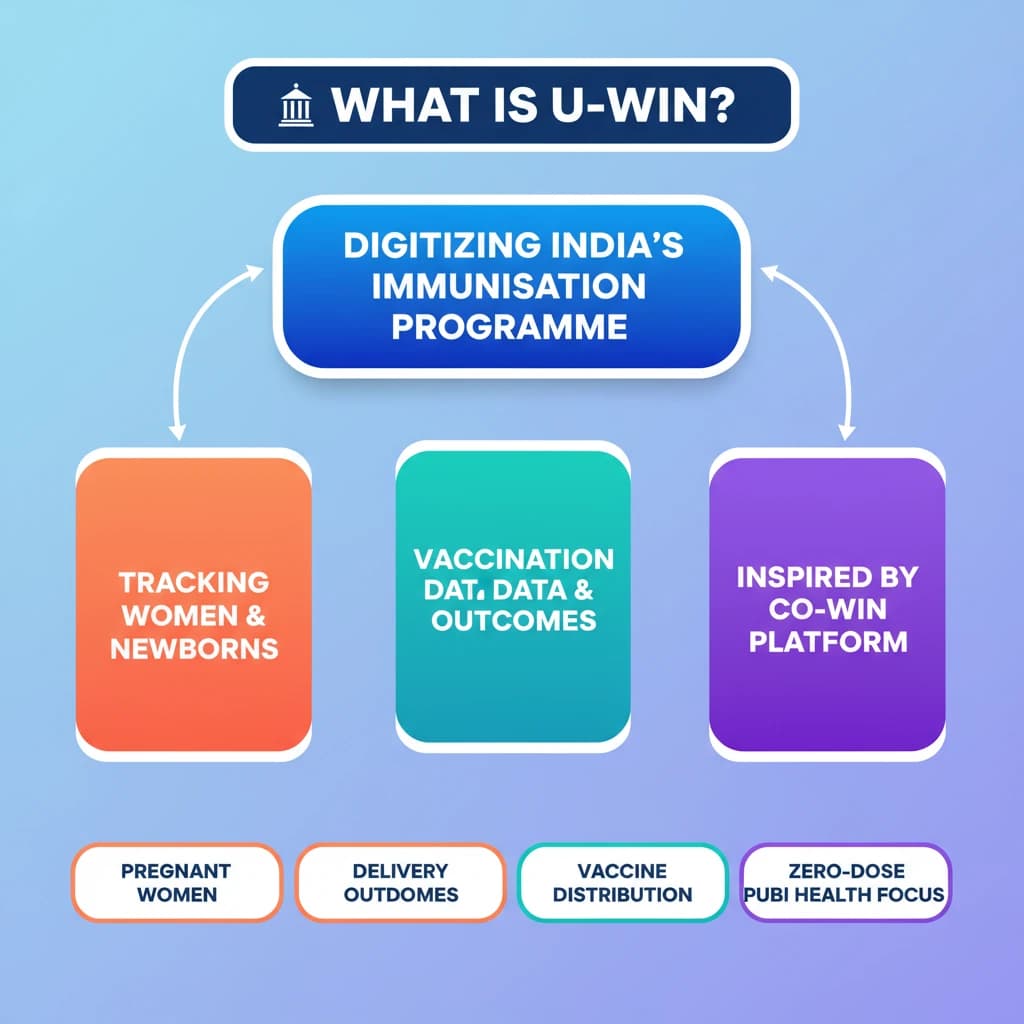
- U-WIN digitizes India's Universal Immunisation Programme (UIP).
- It tracks pregnant women, delivery outcomes, newborns, and all vaccination events.
- Inspired by the success of the Co-WIN platform.
- Aims to provide real-time data for better planning and vaccine distribution.
- Addresses challenges of zero-dose and under-vaccinated children, crucial for public health.
U-Win Platform & Childhood Immunization Trends in India (2022-2023)
Medium⏱️ 7 min read
social issues
📖 Introduction
Introduction to U-WIN
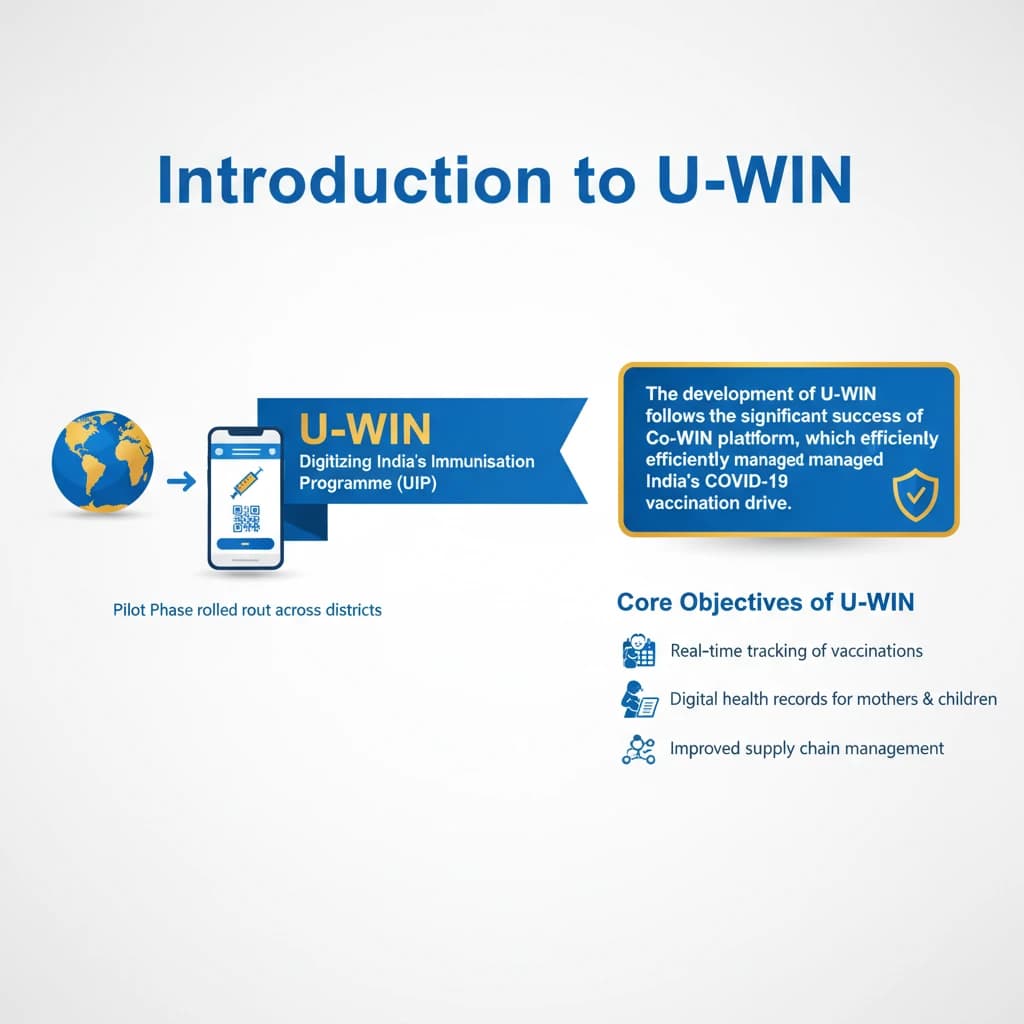
U-WIN is a pioneering initiative aimed at digitising India’s Universal Immunisation Programme (UIP).
It has been rolled out in a pilot phase across various districts.
The development of U-WIN follows the significant success of the Co-WIN platform, which efficiently managed India's COVID-19 vaccination drive.
Core Objectives of U-WIN
The primary goal of U-WIN is to create a comprehensive electronic registry for routine vaccinations.
- Registering every pregnant woman and recording her delivery outcome.
- Registering every newborn delivery.
- Administering birth doses and tracking all subsequent vaccination events.
U-WIN is designed to be the single source of information for all immunisation services. It will update vaccination status, delivery outcomes, and generate reports like antigen-wise coverage.
Benefits for Healthcare System
The platform offers crucial advantages for healthcare professionals and program managers.
- Ability to generate real-time data on routine immunisation sessions.
- Provides accurate vaccination coverage statistics.
- Facilitates better planning for immunisation drives.
- Enables more efficient vaccine distribution across the country.
Childhood Immunisation Trends in India (2019-2023)
Recent data indicates fluctuations in childhood immunisation coverage in India.
A slight dip in childhood immunisation was observed in 2023 compared to 2022.
- DPT Vaccine Coverage: Dipped by two percentage points (from 95% in 2022 to 93% in 2023).
- Third DPT Dose: 91% received in 2023 (down 2% from 2022), still above the global average of 84%.
Understanding Zero-Dose and Under-Vaccinated Children
Zero-dose children are defined as those who have not received any routine immunisation doses.
The number of zero-dose children in India increased from 1.1 million in 2022 to 1.6 million in 2023.
However, this figure is significantly lower than the 2.73 million zero-dose children recorded in 2021.
In terms of under-vaccinated children, 2.04 million children remained under-vaccinated in 2023, which is slightly lower than the 2.11 million in the pre-pandemic year of 2019.
These statistics are crucial for understanding the challenges U-WIN aims to address. UPSC often asks about public health indicators and government initiatives to improve them. Remember the trend: 2021 high, 2022 low, 2023 slight increase in zero-dose, but overall improvement from 2019 for under-vaccinated.
💡 Key Takeaways
- •U-WIN digitizes India's Universal Immunisation Programme (UIP).
- •It tracks pregnant women, delivery outcomes, newborns, and all vaccination events.
- •Inspired by the success of the Co-WIN platform.
- •Aims to provide real-time data for better planning and vaccine distribution.
- •Addresses challenges of zero-dose and under-vaccinated children, crucial for public health.
🧠 Memory Techniques

95% Verified Content