Loading page, please wait…
What are the Constitutional Provisions Related to SC, ST, and OBC in India? - UPSC Social Issues
What is What are the Constitutional Provisions Related to SC, ST, and OBC in India? in UPSC Social Issues?
What are the Constitutional Provisions Related to SC, ST, and OBC in India? is a key topic under Social Issues for UPSC Civil Services Examination. Key points include: Constitutional provisions for SCs, STs, and OBCs are fundamental to India's social justice framework.. Articles 17 and 23 prohibit untouchability and forced labour, protecting vulnerable groups.. Articles 15(4) and 16(4) enable reservations in educational institutions and public employment respectively.. Understanding this topic is essential for both UPSC Prelims and Mains preparation.
Why is What are the Constitutional Provisions Related to SC, ST, and OBC in India? important for UPSC exam?
What are the Constitutional Provisions Related to SC, ST, and OBC in India? is a Medium-level topic in UPSC Social Issues. It is tested in both Prelims (factual MCQs) and Mains (analytical answer writing). Previous year UPSC questions have frequently covered aspects of What are the Constitutional Provisions Related to SC, ST, and OBC in India?, making it essential for comprehensive IAS preparation.
How to prepare What are the Constitutional Provisions Related to SC, ST, and OBC in India? for UPSC?
To prepare What are the Constitutional Provisions Related to SC, ST, and OBC in India? for UPSC: (1) Study the comprehensive notes covering all key concepts on Vaidra. (2) Practice previous year questions on this topic. (3) Connect it with current affairs using daily updates. (4) Revise using key takeaways and mind maps available for Social Issues. (5) Write practice answers linking What are the Constitutional Provisions Related to SC, ST, and OBC in India? to related GS Paper topics.
Key takeaways of What are the Constitutional Provisions Related to SC, ST, and OBC in India? for UPSC
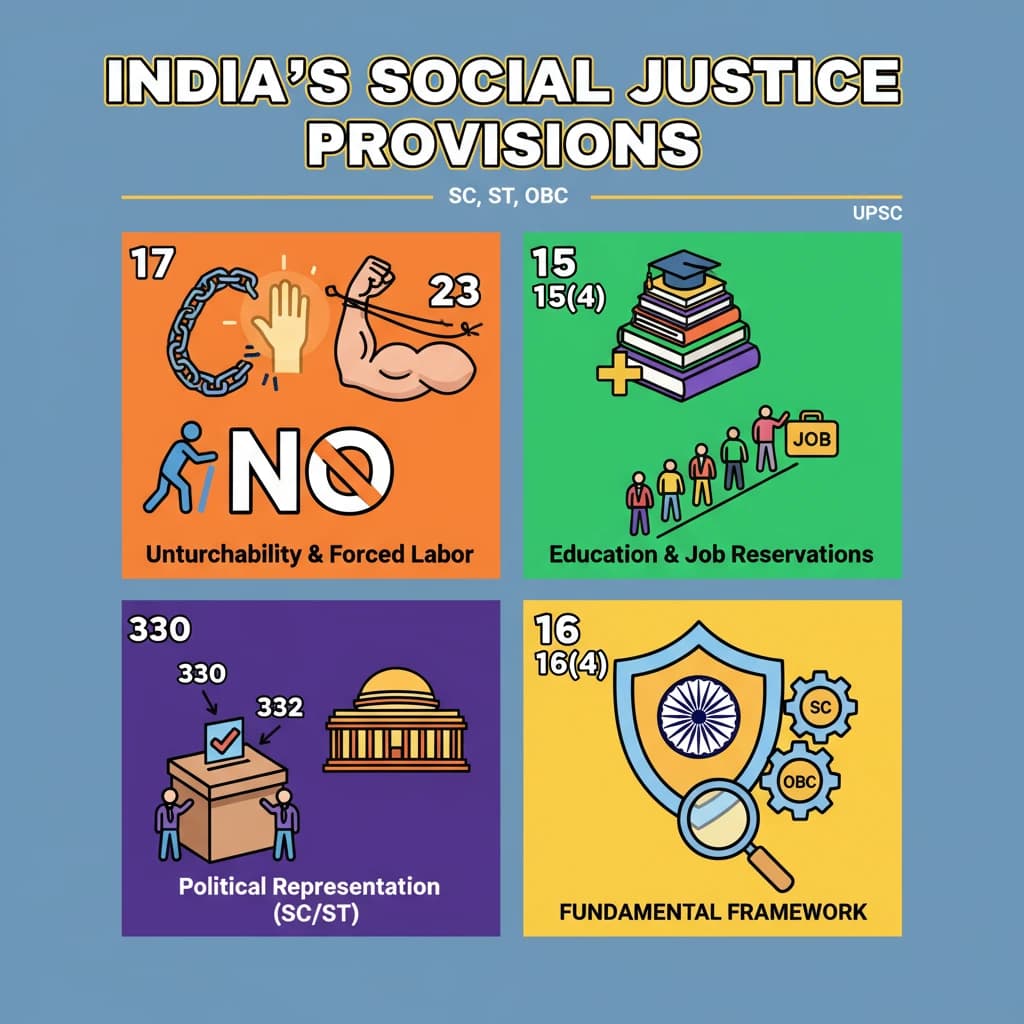
- Constitutional provisions for SCs, STs, and OBCs are fundamental to India's social justice framework.
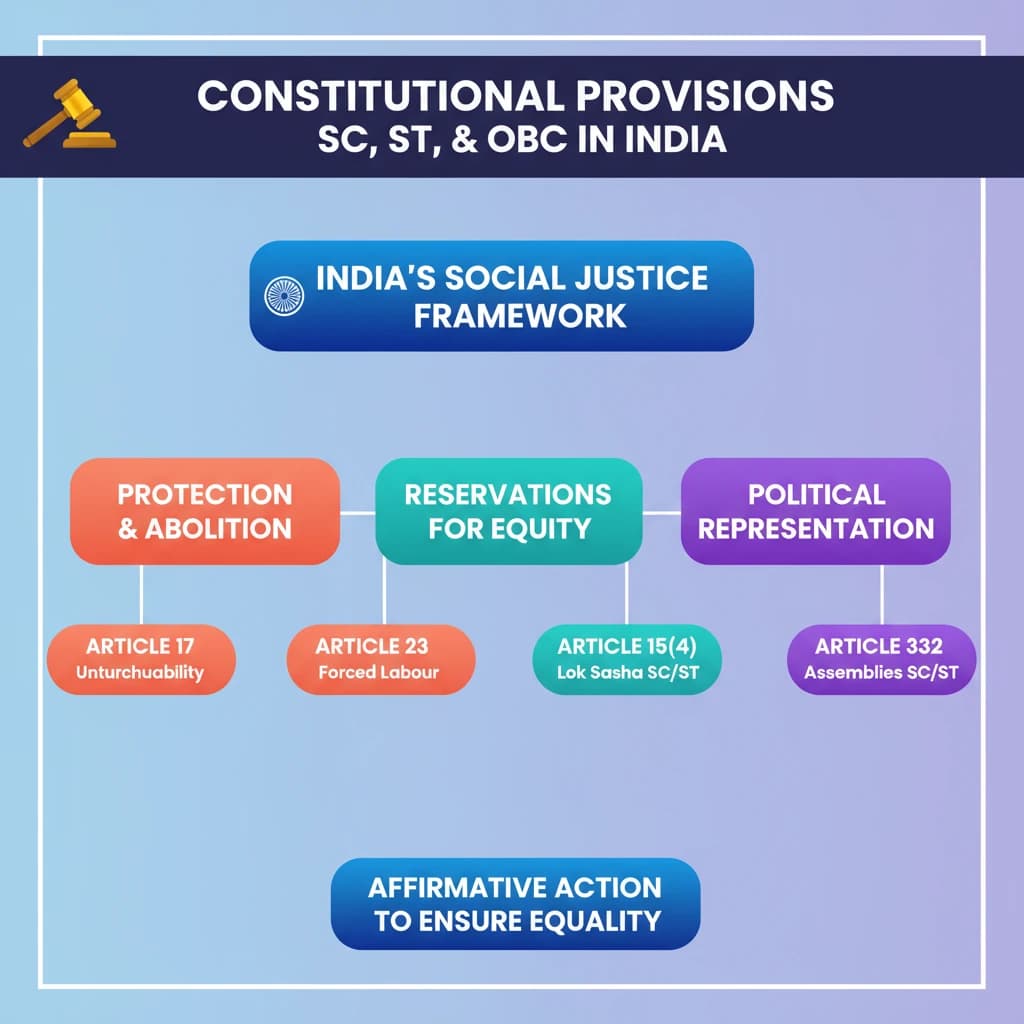
- Articles 17 and 23 prohibit untouchability and forced labour, protecting vulnerable groups.
- Articles 15(4) and 16(4) enable reservations in educational institutions and public employment respectively.
- Articles 330 and 332 ensure political representation for SCs and STs in legislative bodies.
- These provisions are a form of affirmative action to address historical discrimination and ensure equality of opportunity.
- The implementation of these provisions is subject to ongoing debates and judicial scrutiny, reflecting their dynamic nature.
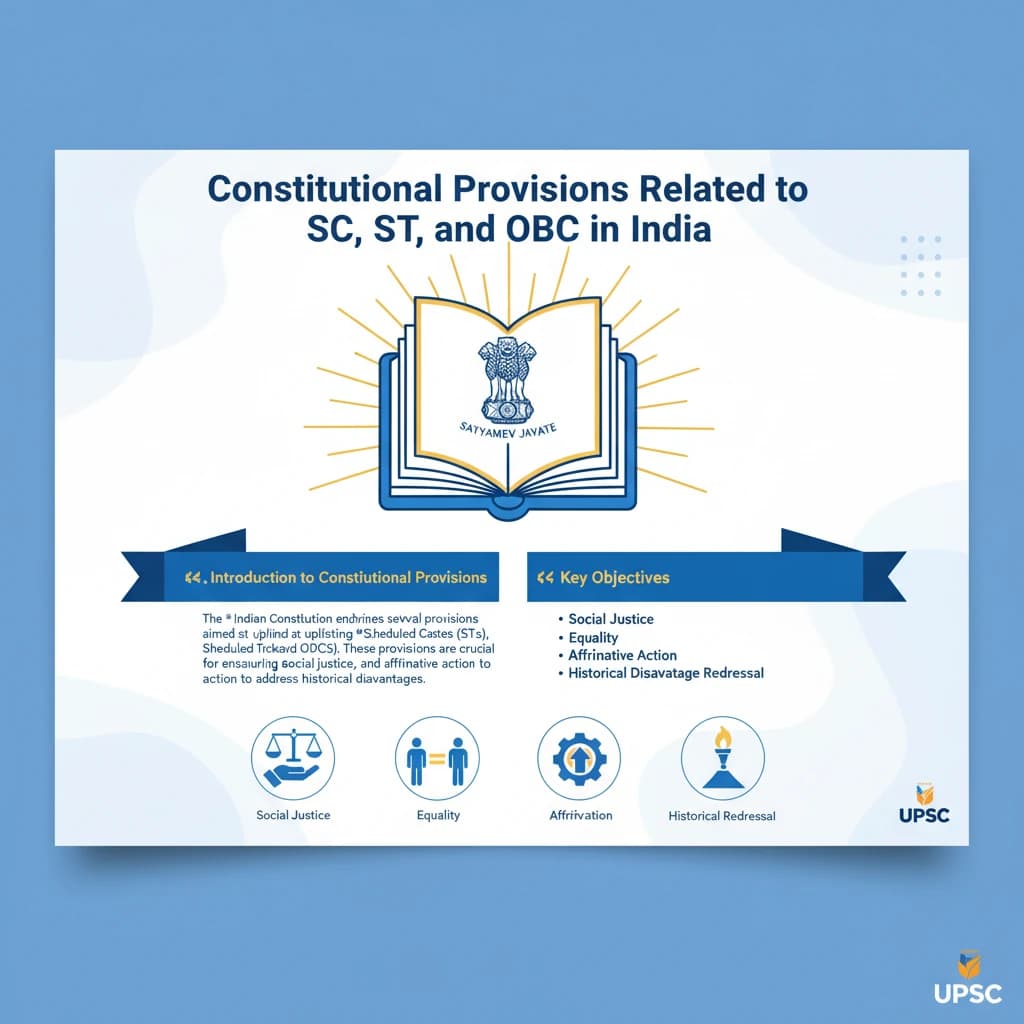
What are the Constitutional Provisions Related to SC, ST, and OBC in India?
Medium⏱️ 8 min read
social issues
📖 Introduction
Introduction to Constitutional Provisions
The Indian Constitution enshrines several provisions aimed at uplifting Scheduled Castes (SCs), Scheduled Tribes (STs), and Other Backward Classes (OBCs). These provisions are crucial for ensuring social justice, equality, and affirmative action to address historical disadvantages.
These constitutional safeguards reflect the commitment of the Indian state to build an inclusive society where every citizen has equal opportunities and protection against discrimination.
UPSC Insight: Understanding these articles is fundamental for GS Paper II (Polity & Governance), especially for questions on social justice, affirmative action, and constitutional law. Remember the specific article numbers and their implications.
Fundamental Rights and Protective Measures
The Constitution includes specific articles under Fundamental Rights that provide protection and special provisions for SCs, STs, and OBCs.
Article 17: Abolition of Untouchability
- This article prohibits untouchability in any form.
- Its enforcement is crucial for the dignity and rights of Scheduled Castes.
- The practice of untouchability is declared an offence punishable by law.
Article 23: Prohibition of Human Trafficking and Forced Labour
- This article prohibits human trafficking (begar) and other forms of forced labour.
- It provides protection against exploitation, particularly benefiting vulnerable groups like SCs and STs who were historically subjected to such practices.
Article 15(4): Special Provisions for Advancement
- This clause allows the state to make any special provision for the advancement of any socially and educationally backward classes of citizens or for the Scheduled Castes and the Scheduled Tribes.
- It primarily enables reservations in educational institutions.
Article 16(4): Reservation in Public Employment
- This article empowers the state to make any provision for the reservation of appointments or posts in favour of any backward class of citizens.
- This is applicable if the state believes they are not adequately represented in the services under the state.
- It forms the basis for reservation in public employment for SCs, STs, and OBCs.
Political Representation
To ensure adequate representation and participation in the democratic process, the Constitution provides for reserved seats in legislative bodies for SCs and STs.
Article 330: Reservation of Seats in the House of the People
- This article provides for the reservation of seats for Scheduled Castes and Scheduled Tribes in the Lok Sabha (House of the People).
- The number of seats reserved is based on their population ratio.
Article 332: Reservation of Seats in the Legislative Assemblies of the States
- This article ensures reservation of seats for Scheduled Castes and Scheduled Tribes in the Legislative Assemblies of the States.
- Similar to the Lok Sabha, the reservation is proportionate to their population in the state.
These provisions collectively aim to correct historical injustices and facilitate the socio-economic and political empowerment of marginalized communities in India.
💡 Key Takeaways
- •Constitutional provisions for SCs, STs, and OBCs are fundamental to India's social justice framework.
- •Articles 17 and 23 prohibit untouchability and forced labour, protecting vulnerable groups.
- •Articles 15(4) and 16(4) enable reservations in educational institutions and public employment respectively.
- •Articles 330 and 332 ensure political representation for SCs and STs in legislative bodies.
- •These provisions are a form of affirmative action to address historical discrimination and ensure equality of opportunity.
- •The implementation of these provisions is subject to ongoing debates and judicial scrutiny, reflecting their dynamic nature.
🧠 Memory Techniques
98% Verified Content
📚 Reference Sources
•Drishti IAS Study Material (provided source)
•Ministry of Social Justice and Empowerment, Government of India reports
•Reports of the National Commission for Scheduled Castes and Scheduled Tribes