Loading page, please wait…
What are the Key Facts Related to Ovarian Cancer? - UPSC Social Issues
What is What are the Key Facts Related to Ovarian Cancer? in UPSC Social Issues?
What are the Key Facts Related to Ovarian Cancer? is a key topic under Social Issues for UPSC Civil Services Examination. Key points include: Ovarian cancer is a significant health burden in India, ranking among the top 3 women's cancers.. Late diagnosis is a primary factor contributing to poor survival rates due to vague early symptoms.. No effective routine screening test exists for ovarian cancer; CA125 is for monitoring, not screening.. Understanding this topic is essential for both UPSC Prelims and Mains preparation.
Why is What are the Key Facts Related to Ovarian Cancer? important for UPSC exam?
What are the Key Facts Related to Ovarian Cancer? is a Medium-level topic in UPSC Social Issues. It is tested in both Prelims (factual MCQs) and Mains (analytical answer writing). Previous year UPSC questions have frequently covered aspects of What are the Key Facts Related to Ovarian Cancer?, making it essential for comprehensive IAS preparation.
How to prepare What are the Key Facts Related to Ovarian Cancer? for UPSC?
To prepare What are the Key Facts Related to Ovarian Cancer? for UPSC: (1) Study the comprehensive notes covering all key concepts on Vaidra. (2) Practice previous year questions on this topic. (3) Connect it with current affairs using daily updates. (4) Revise using key takeaways and mind maps available for Social Issues. (5) Write practice answers linking What are the Key Facts Related to Ovarian Cancer? to related GS Paper topics.
Key takeaways of What are the Key Facts Related to Ovarian Cancer? for UPSC
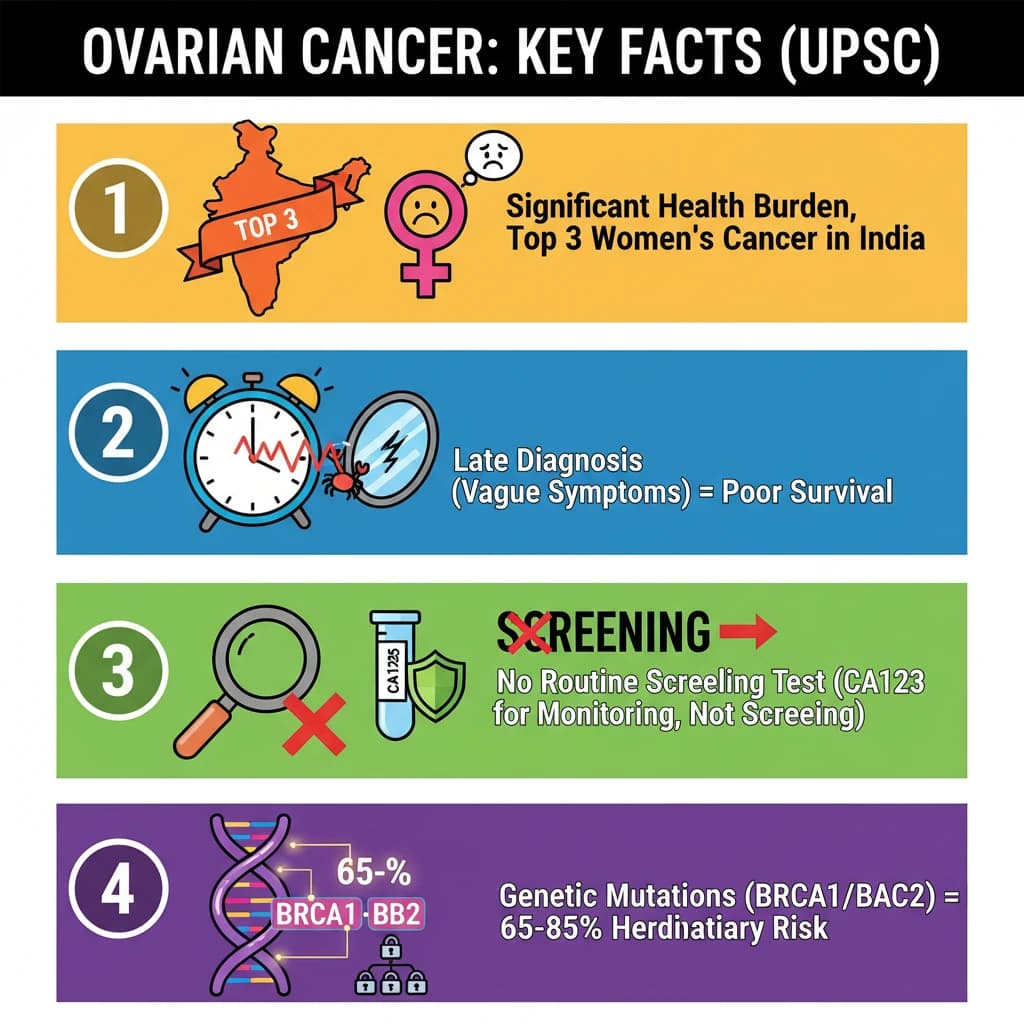
- Ovarian cancer is a significant health burden in India, ranking among the top 3 women's cancers.
- Late diagnosis is a primary factor contributing to poor survival rates due to vague early symptoms.
- No effective routine screening test exists for ovarian cancer; CA125 is for monitoring, not screening.
- Genetic mutations (BRCA1/BRCA2) are linked to 65-85% of hereditary ovarian cancer cases.
- Type II ovarian cancer is more aggressive and responsible for most deaths, while Type I has a better prognosis.
- Lifestyle factors like talcum powder and hair product chemicals are discussed as potential risk factors.
What are the Key Facts Related to Ovarian Cancer?
Medium⏱️ 10 min read
social issues
📖 Introduction
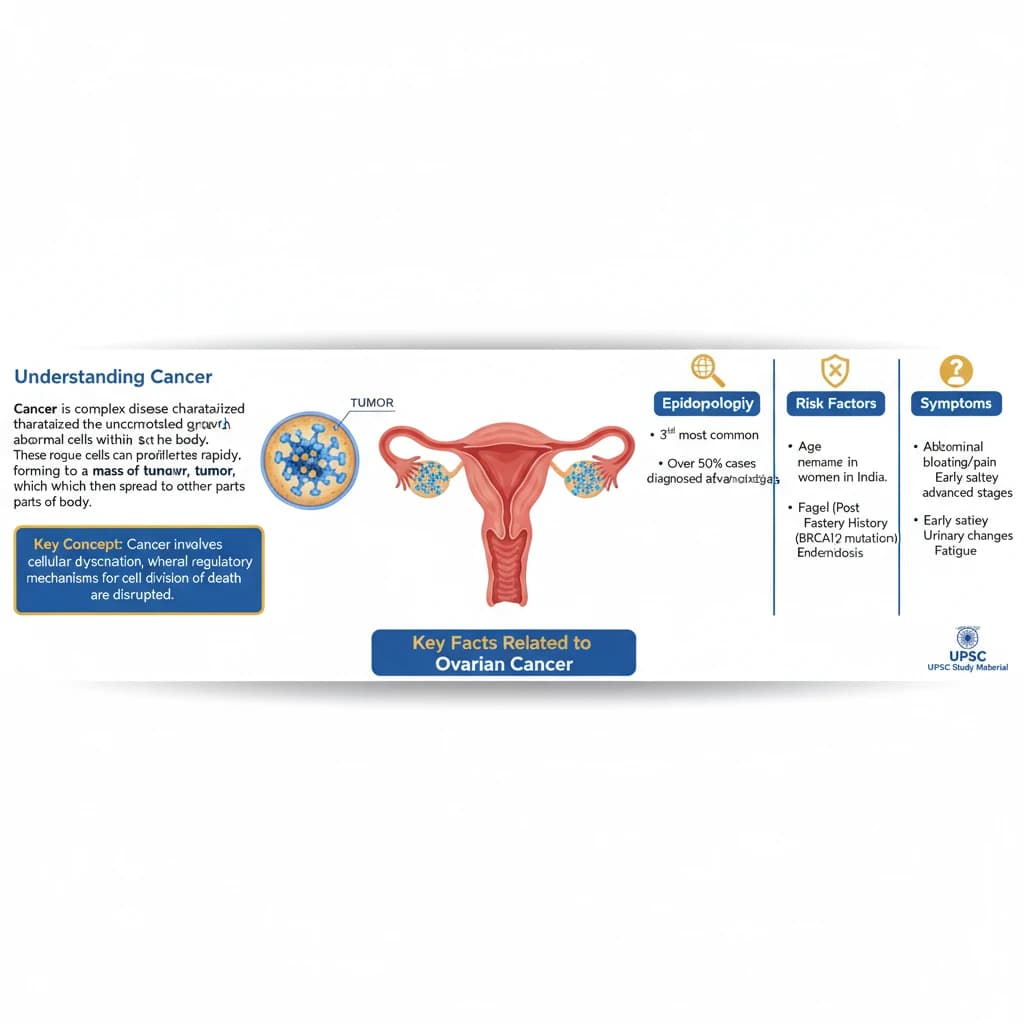
Understanding Cancer
Cancer is a complex disease characterized by the uncontrolled growth of abnormal cells within the body. These rogue cells can proliferate rapidly, forming a mass known as a tumor, which can then spread to other parts of the body.
Key Concept: Cancer involves cellular dysfunction, where normal regulatory mechanisms for cell division and death are disrupted.
Epidemiology of Ovarian Cancer in India
Ovarian cancer represents a significant health challenge for women in India. It accounts for approximately 6.6% of all women's cancers nationwide, making it a critical area of focus for public health initiatives.
The disease is particularly problematic due to its frequent late diagnosis. This delay in detection significantly impacts the survival rates of affected individuals, leading to poorer outcomes compared to cancers detected earlier.
Statistical Snapshot (India, 2022):
- New Ovarian Cancer Cases: 47,333
- Deaths from Ovarian Cancer: 32,978
Ranking in India: Ovarian cancer ranks among the top 3 cancers affecting women in India, following only breast cancer and cervical cancer.
Types of Ovarian Cancer
Ovarian cancers are broadly categorized into two main types, each with distinct characteristics regarding aggression and prognosis.
- Type I Ovarian Cancer: This type is generally less common and often diagnosed at an early stage. It typically has a better prognosis due to its slower growth and earlier detection.
- Type II Ovarian Cancer: This type is significantly more aggressive and is usually diagnosed at an advanced stage. Unfortunately, Type II is responsible for the majority of ovarian cancer deaths.
Survival Rates and Detection
The chances of survival for ovarian cancer patients are highly dependent on the stage at which the cancer is detected. Early detection dramatically improves treatment efficacy and long-term survival.
Survival Data: Research indicates that approximately 20% of patients with advanced ovarian cancer, who receive optimal treatment, can be disease-free at 10 years. This highlights the critical need for effective therapies even in late stages.
Screening Challenges
A major hurdle in improving ovarian cancer outcomes is the absence of effective screening tests. Unlike breast cancer (mammography) or cervical cancer (Pap smear), there are no reliable routine screening methods for ovarian cancer.
The CA125 blood test measures a specific blood protein. While it is useful for monitoring diagnosed cases of ovarian, fallopian tube, or primary peritoneal cancer, it is not recommended for routine screening in the general population.
UPSC Insight: Understanding why CA125 is not suitable for routine screening is crucial. Its limited specificity and potential for false positives mean it can lead to unnecessary anxiety and invasive follow-up procedures without definitively identifying cancer in healthy individuals.
Genetic Factors
Ovarian cancer has a strong hereditary component, meaning it can run in families. A significant proportion of hereditary cases are linked to specific gene mutations.
Genetic Link: Between 65-85% of hereditary ovarian cancer cases are associated with mutations in the BRCA1 and BRCA2 genes.
Women who carry these BRCA1 and BRCA2 mutations face a significantly higher risk of developing ovarian cancer, as well as breast and other cancers. These genes play a vital role in DNA repair and regulating cell division, and mutations compromise these protective functions.
Lifestyle Factors
Certain lifestyle choices and environmental exposures have been discussed as potential risk factors for ovarian cancer. While research is ongoing, these factors warrant consideration.
- Talcum Powder Usage: Some studies have explored a potential link between the use of talcum powder in the genital area and an increased risk of ovarian cancer.
- Chemicals in Hair Products: Exposure to certain chemicals found in hair products has also been discussed as a possible contributing factor.
💡 Key Takeaways
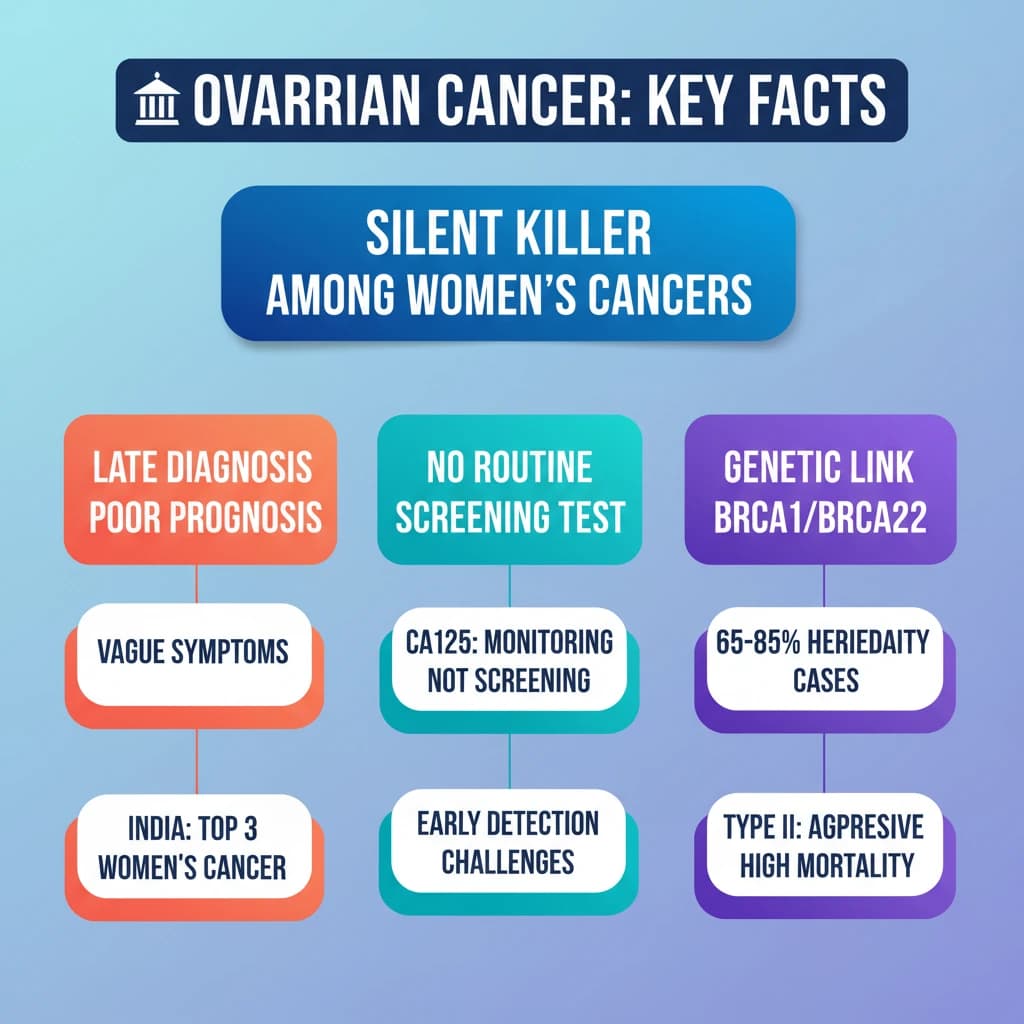
- •Ovarian cancer is a significant health burden in India, ranking among the top 3 women's cancers.
- •Late diagnosis is a primary factor contributing to poor survival rates due to vague early symptoms.
- •No effective routine screening test exists for ovarian cancer; CA125 is for monitoring, not screening.
- •Genetic mutations (BRCA1/BRCA2) are linked to 65-85% of hereditary ovarian cancer cases.
- •Type II ovarian cancer is more aggressive and responsible for most deaths, while Type I has a better prognosis.
- •Lifestyle factors like talcum powder and hair product chemicals are discussed as potential risk factors.
🧠 Memory Techniques
95% Verified Content
📚 Reference Sources
•World Health Organization (WHO) reports on cancer epidemiology
•National Cancer Institute (NCI) data on ovarian cancer genetics
•Indian Council of Medical Research (ICMR) cancer registries