Loading page, please wait…
What are the Key Features of Comprehensive Cancer Multi-omics Data Portal? - UPSC Social Issues
What is What are the Key Features of Comprehensive Cancer Multi-omics Data Portal? in UPSC Social Issues?
What are the Key Features of Comprehensive Cancer Multi-omics Data Portal? is a key topic under Social Issues for UPSC Civil Services Examination. Key points include: Comprehensive Cancer Multi-omics Data Portals integrate diverse biological data for holistic cancer understanding.. Indian-specific datasets are crucial due to unique molecular differences in cancer patients across the Indian population.. The primary goal is to enable personalized cancer treatment protocols, moving beyond 'one-size-fits-all' medicine.. Understanding this topic is essential for both UPSC Prelims and Mains preparation.
Why is What are the Key Features of Comprehensive Cancer Multi-omics Data Portal? important for UPSC exam?
What are the Key Features of Comprehensive Cancer Multi-omics Data Portal? is a Medium-level topic in UPSC Social Issues. It is tested in both Prelims (factual MCQs) and Mains (analytical answer writing). Previous year UPSC questions have frequently covered aspects of What are the Key Features of Comprehensive Cancer Multi-omics Data Portal?, making it essential for comprehensive IAS preparation.
How to prepare What are the Key Features of Comprehensive Cancer Multi-omics Data Portal? for UPSC?
To prepare What are the Key Features of Comprehensive Cancer Multi-omics Data Portal? for UPSC: (1) Study the comprehensive notes covering all key concepts on Vaidra. (2) Practice previous year questions on this topic. (3) Connect it with current affairs using daily updates. (4) Revise using key takeaways and mind maps available for Social Issues. (5) Write practice answers linking What are the Key Features of Comprehensive Cancer Multi-omics Data Portal? to related GS Paper topics.
Key takeaways of What are the Key Features of Comprehensive Cancer Multi-omics Data Portal? for UPSC
- Comprehensive Cancer Multi-omics Data Portals integrate diverse biological data for holistic cancer understanding.
- Indian-specific datasets are crucial due to unique molecular differences in cancer patients across the Indian population.
- The primary goal is to enable personalized cancer treatment protocols, moving beyond 'one-size-fits-all' medicine.
- These portals leverage principles of big data analytics, bioinformatics, and genomic medicine.
- They support national health initiatives like the National Cancer Grid and align with the 'Make in India' in healthcare.
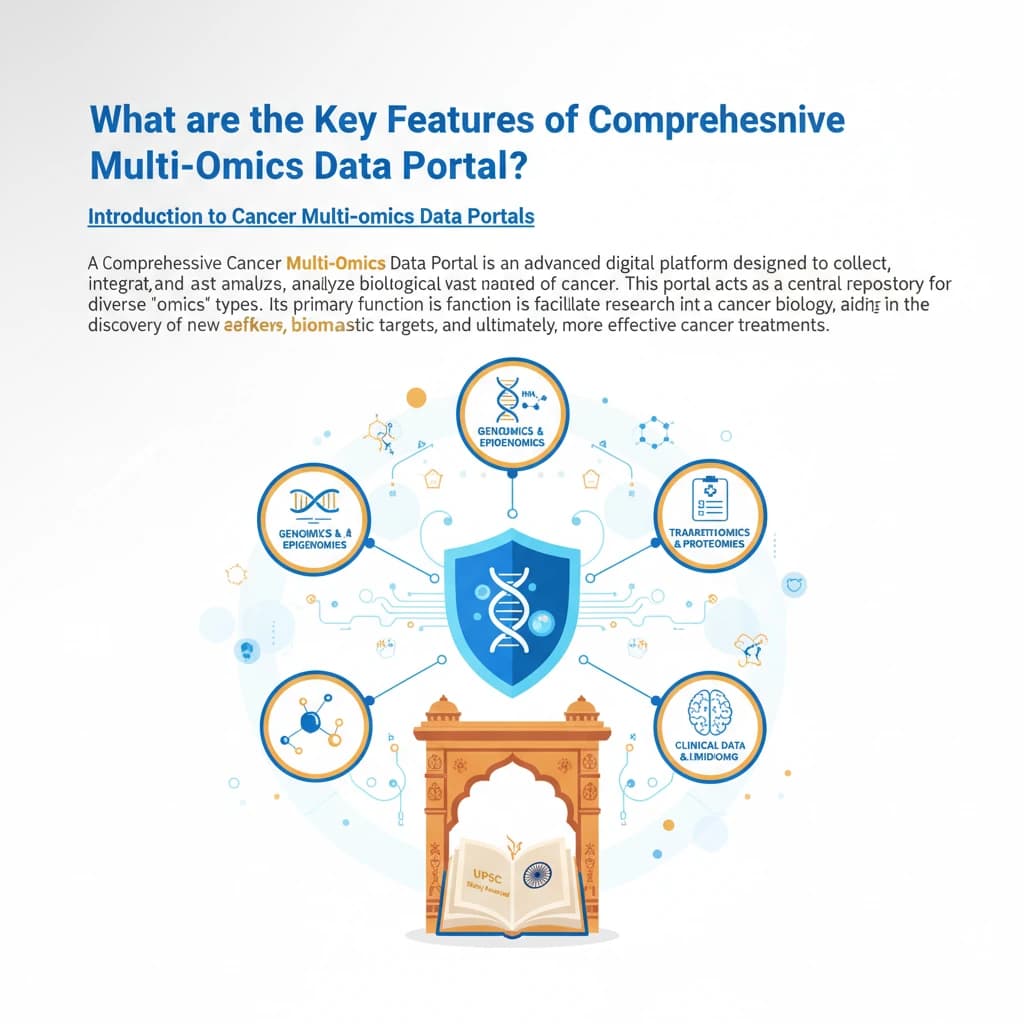
What are the Key Features of Comprehensive Cancer Multi-omics Data Portal?
Medium⏱️ 7 min read
social issues
📖 Introduction
Introduction to Cancer Multi-omics Data Portals
A Comprehensive Cancer Multi-omics Data Portal is an advanced digital platform designed to collect, integrate, and analyze vast amounts of biological data related to cancer. This portal acts as a central repository for diverse 'omics' data types.
Its primary function is to facilitate research into cancer biology, aiding in the discovery of new biomarkers, therapeutic targets, and ultimately, more effective treatment strategies.
Understanding the Multi-omics Approach
The term 'Multi-omics' refers to the integration of data from multiple 'omics' fields. These include genomics (DNA), transcriptomics (RNA), proteomics (proteins), and metabolomics (metabolites).
By combining these layers of biological information, researchers gain a holistic view of cancer, moving beyond single-gene analyses to understand complex molecular interactions within tumors.
Key Omics Data Types:
- Genomics: Study of an organism's entire DNA sequence.
- Transcriptomics: Study of RNA molecules, reflecting gene expression.
- Proteomics: Large-scale study of proteins, their structures, and functions.
- Metabolomics: Study of metabolites, the end products of cellular processes.
Objective: Indian-Specific Cancer Datasets
A crucial feature of such a portal, particularly in the Indian context, is the creation of Indian-specific cancer datasets. This objective addresses the significant genetic and environmental diversity within the Indian population.
These datasets are vital because cancer patients in India often exhibit molecular-level differences compared to Western populations. These differences can impact disease progression, drug response, and treatment efficacy.
Why Indian-Specific Data?
Existing global cancer databases are predominantly based on Western populations. Relying solely on this data can lead to suboptimal or ineffective treatments for Indian patients due to inherent genetic and lifestyle variations.
Enabling Personalised Cancer Treatment Protocols
The ultimate goal of accumulating and analyzing this data is to enable personalised cancer treatment protocols. This approach, also known as precision oncology, tailors medical decisions, treatments, and practices to the individual patient.
By understanding the unique molecular profile of an individual's tumor, clinicians can select therapies that are most likely to be effective, while minimizing adverse side effects. This represents a paradigm shift from 'one-size-fits-all' medicine.
UPSC Relevance: The concept of precision medicine and personalized healthcare is a recurring theme in GS Paper II (Health) and GS Paper III (Science & Technology). Understanding data portals like this highlights India's commitment to advanced healthcare solutions.
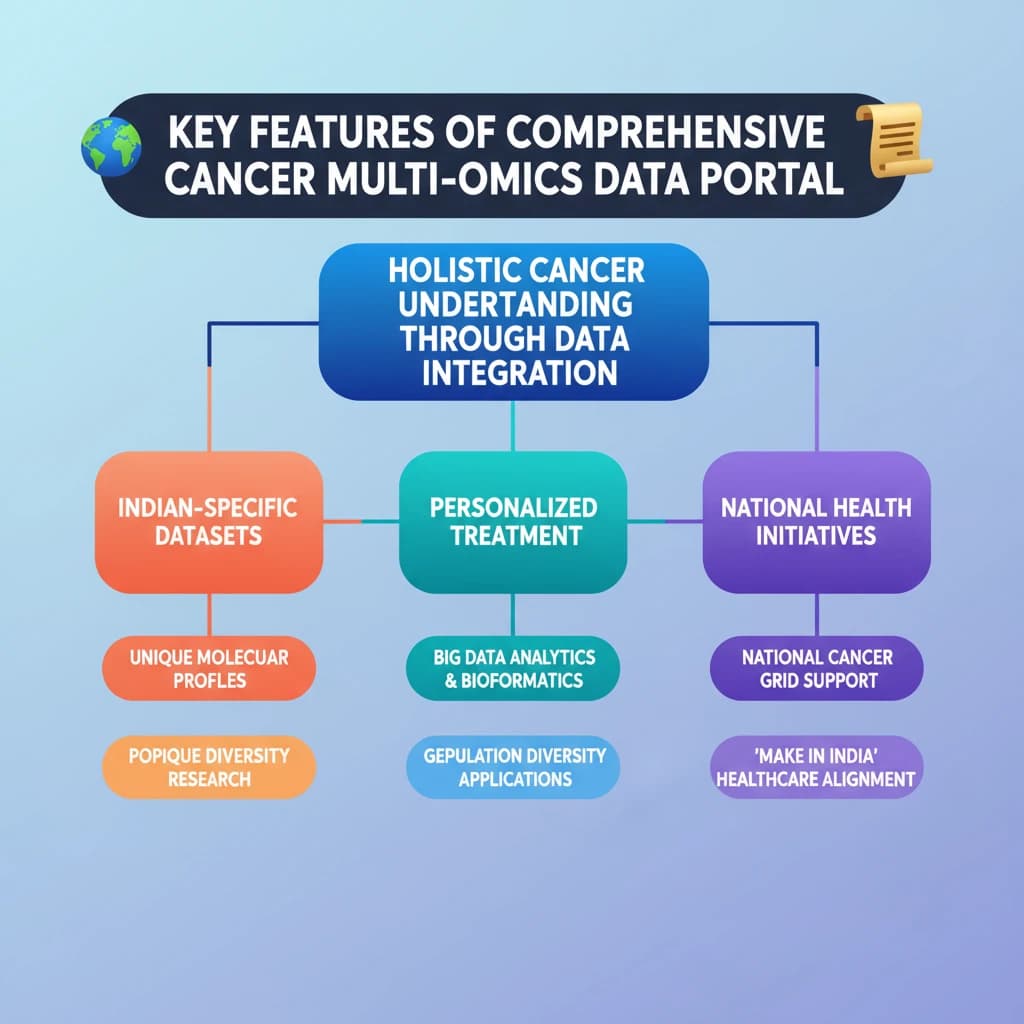
💡 Key Takeaways
- •Comprehensive Cancer Multi-omics Data Portals integrate diverse biological data for holistic cancer understanding.
- •Indian-specific datasets are crucial due to unique molecular differences in cancer patients across the Indian population.
- •The primary goal is to enable personalized cancer treatment protocols, moving beyond 'one-size-fits-all' medicine.
- •These portals leverage principles of big data analytics, bioinformatics, and genomic medicine.
- •They support national health initiatives like the National Cancer Grid and align with the 'Make in India' in healthcare.
🧠 Memory Techniques
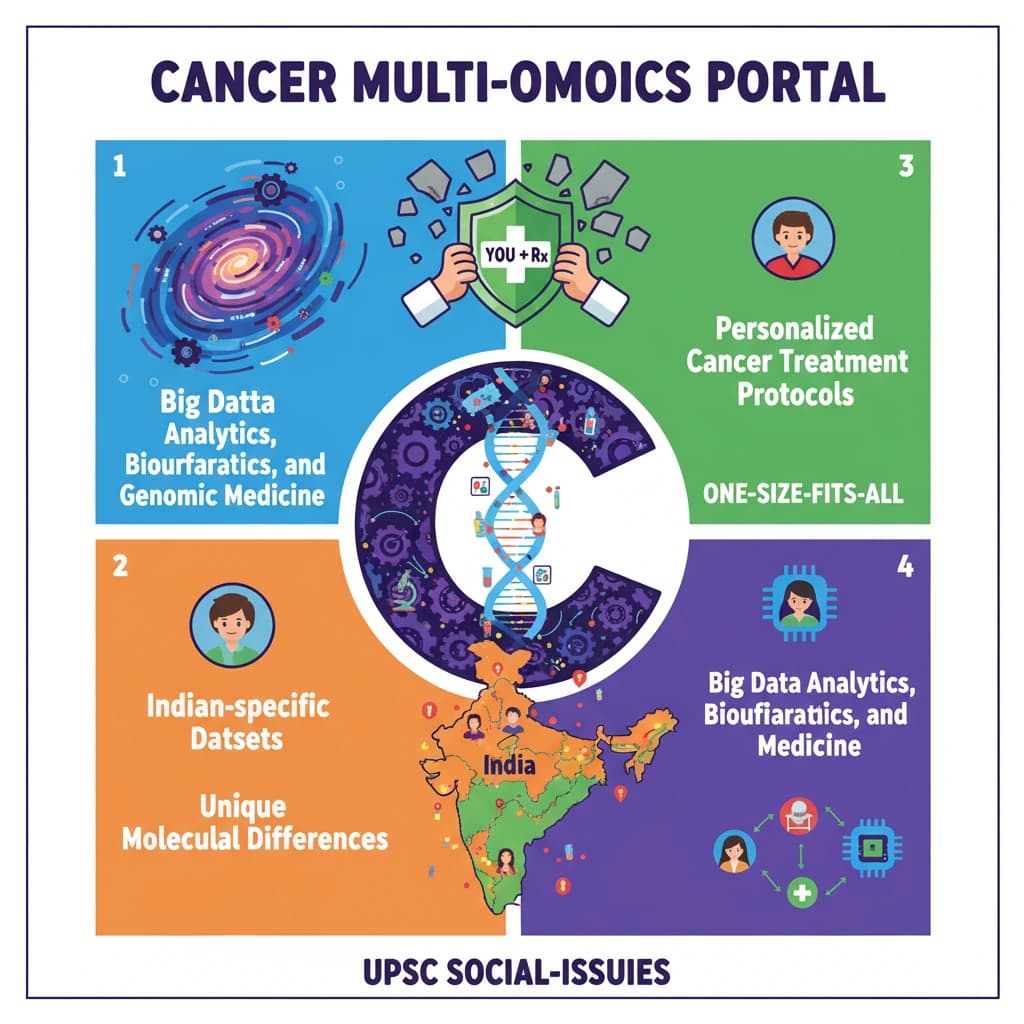
95% Verified Content
📚 Reference Sources
•National Cancer Institute (NCI) resources on Multi-omics
•Indian Council of Medical Research (ICMR) publications on cancer research
•Reports on Ayushman Bharat Digital Mission (ABDM)