Loading page, please wait…
What are the Procedure for Altering the SC/ST/OBC List in India? - UPSC Social Issues
What is What are the Procedure for Altering the SC/ST/OBC List in India? in UPSC Social Issues?
What are the Procedure for Altering the SC/ST/OBC List in India? is a key topic under Social Issues for UPSC Civil Services Examination. Key points include: Alteration of SC/ST/OBC lists is a multi-stage process initiated by State Governments/UTs.. Inclusion criteria vary: SC (extreme backwardness, untouchability), ST (primitive traits, isolation, distinct culture), OBC (social/educational/economic backwardness, inadequate representation).. The President's role is crucial for final notification of SC/ST lists, while Parliament has the power to amend them.. Understanding this topic is essential for both UPSC Prelims and Mains preparation.
Why is What are the Procedure for Altering the SC/ST/OBC List in India? important for UPSC exam?
What are the Procedure for Altering the SC/ST/OBC List in India? is a Medium-level topic in UPSC Social Issues. It is tested in both Prelims (factual MCQs) and Mains (analytical answer writing). Previous year UPSC questions have frequently covered aspects of What are the Procedure for Altering the SC/ST/OBC List in India?, making it essential for comprehensive IAS preparation.
How to prepare What are the Procedure for Altering the SC/ST/OBC List in India? for UPSC?
To prepare What are the Procedure for Altering the SC/ST/OBC List in India? for UPSC: (1) Study the comprehensive notes covering all key concepts on Vaidra. (2) Practice previous year questions on this topic. (3) Connect it with current affairs using daily updates. (4) Revise using key takeaways and mind maps available for Social Issues. (5) Write practice answers linking What are the Procedure for Altering the SC/ST/OBC List in India? to related GS Paper topics.
Key takeaways of What are the Procedure for Altering the SC/ST/OBC List in India? for UPSC
- Alteration of SC/ST/OBC lists is a multi-stage process initiated by State Governments/UTs.
- Inclusion criteria vary: SC (extreme backwardness, untouchability), ST (primitive traits, isolation, distinct culture), OBC (social/educational/economic backwardness, inadequate representation).
- The President's role is crucial for final notification of SC/ST lists, while Parliament has the power to amend them.
- For OBCs, the National Commission for Backward Classes (NCBC) plays a significant role in advising the central government.
- The process ensures dynamic adjustment of reservation benefits to genuinely backward communities.
- Ongoing debates include sub-categorization of OBCs and judicial scrutiny of criteria.
What are the Procedure for Altering the SC/ST/OBC List in India?
Medium⏱️ 8 min read
social issues
📖 Introduction
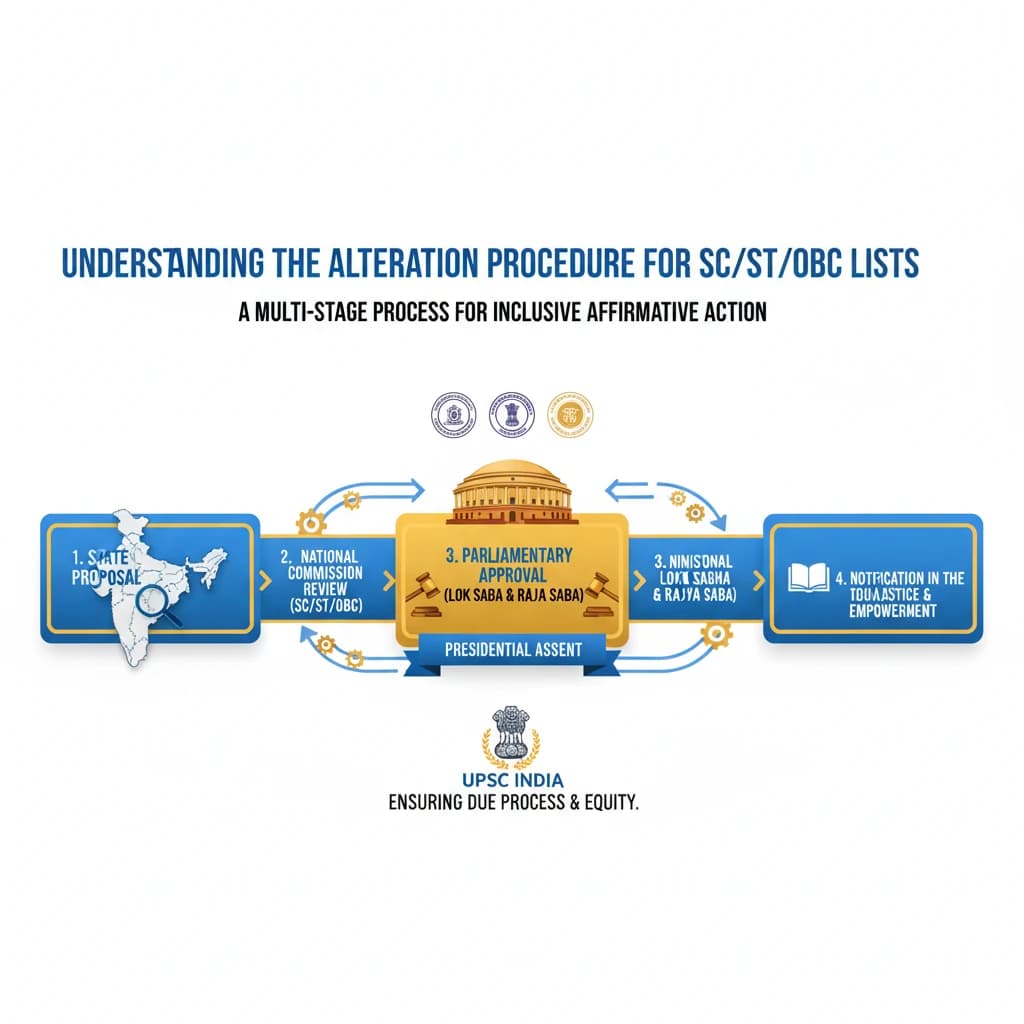
Understanding the Alteration Procedure for SC/ST/OBC Lists
The process of altering the Scheduled Castes (SC), Scheduled Tribes (ST), and Other Backward Classes (OBC) lists in India is a crucial aspect of affirmative action. It ensures that only genuinely backward communities receive the benefits of reservation.
This procedure involves multiple stages, from initial proposals by states to final parliamentary approval, ensuring due diligence and constitutional adherence.
The lists are dynamic, reflecting changes in socio-economic conditions and ensuring targeted support for communities requiring affirmative action.
Inclusion Criteria for Reserved Categories
Specific criteria guide the identification and inclusion of communities into the SC, ST, and OBC lists. These criteria address different facets of backwardness.
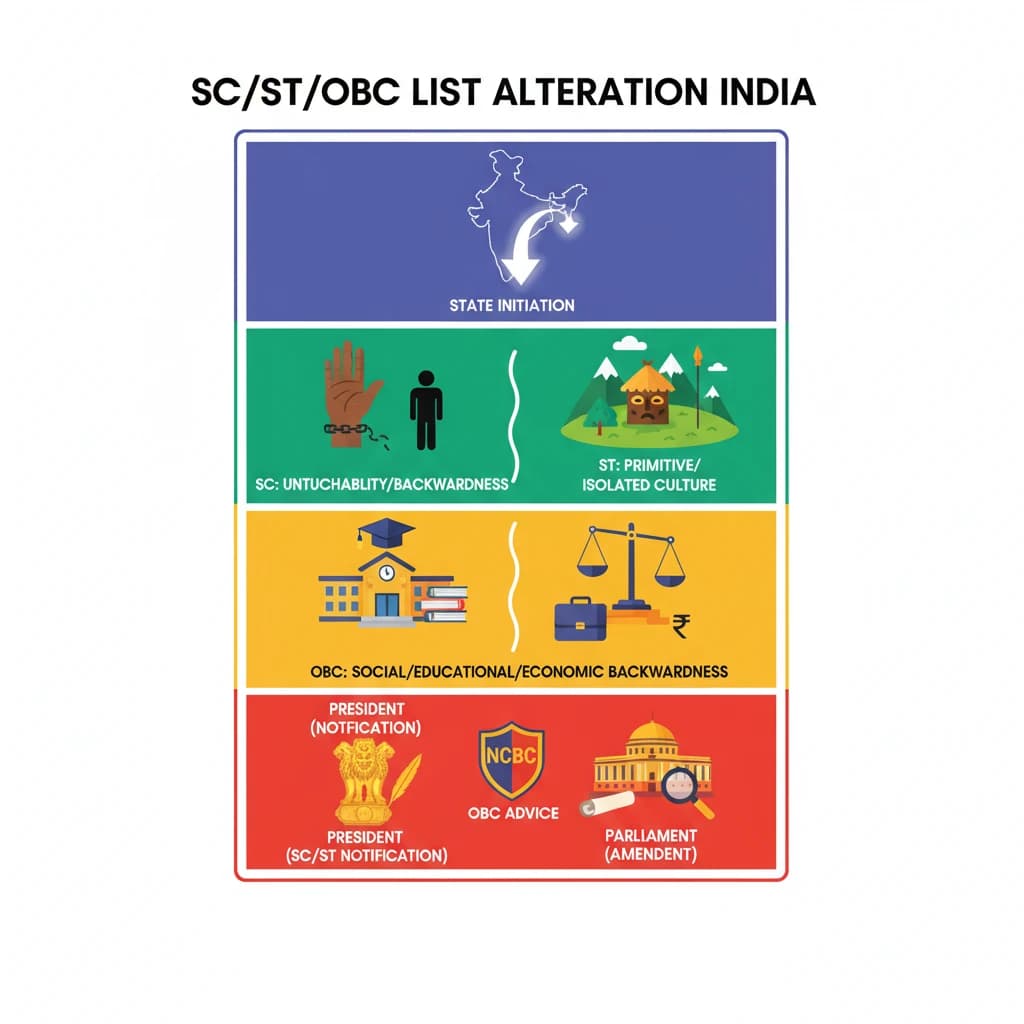
Scheduled Castes (SC)
Communities identified as Scheduled Castes typically exhibit extreme forms of social, educational, and economic backwardness. This is historically linked to the practice of untouchability and associated social disabilities.
Key Criterion: Extreme social, educational, and economic backwardness, often stemming from historical untouchability.
Scheduled Tribes (ST)
The criteria for identifying Scheduled Tribes focus on their distinct cultural identity and geographical isolation. These communities often live in remote areas and maintain traditional lifestyles.
Key Criteria: Indications of primitive traits, distinct cultural practices, geographical isolation, and a general state of backwardness.
Other Backward Classes (OBC)
The Other Backward Classes (OBC) category encompasses communities that are socially and educationally backward, distinct from SCs and STs. A key aspect is their inadequate representation in public services.
Key Criteria: Social, educational, and economic backwardness, along with inadequate representation in government services.
Procedure for Altering the Lists: Initiation and Scrutiny
The process for modifying the SC/ST/OBC lists is initiated at the state level before moving to the central government. This ensures local relevance and broad consultation.
Stage 1: Initiation by State Governments/UTs
The primary step involves a proposal originating from the respective State Governments or Union Territories (UTs). This proposal can be for either the inclusion or exclusion of a specific community from the existing list.
First Step: Proposal initiated by State Governments/UTs for inclusion or exclusion of a community.
UPSC Insight: Remember that the initiation primarily lies with the State Governments/UTs, not directly with the central government or a central commission. This highlights the federal nature of the process. This could be a tricky point in Prelims.
💡 Key Takeaways
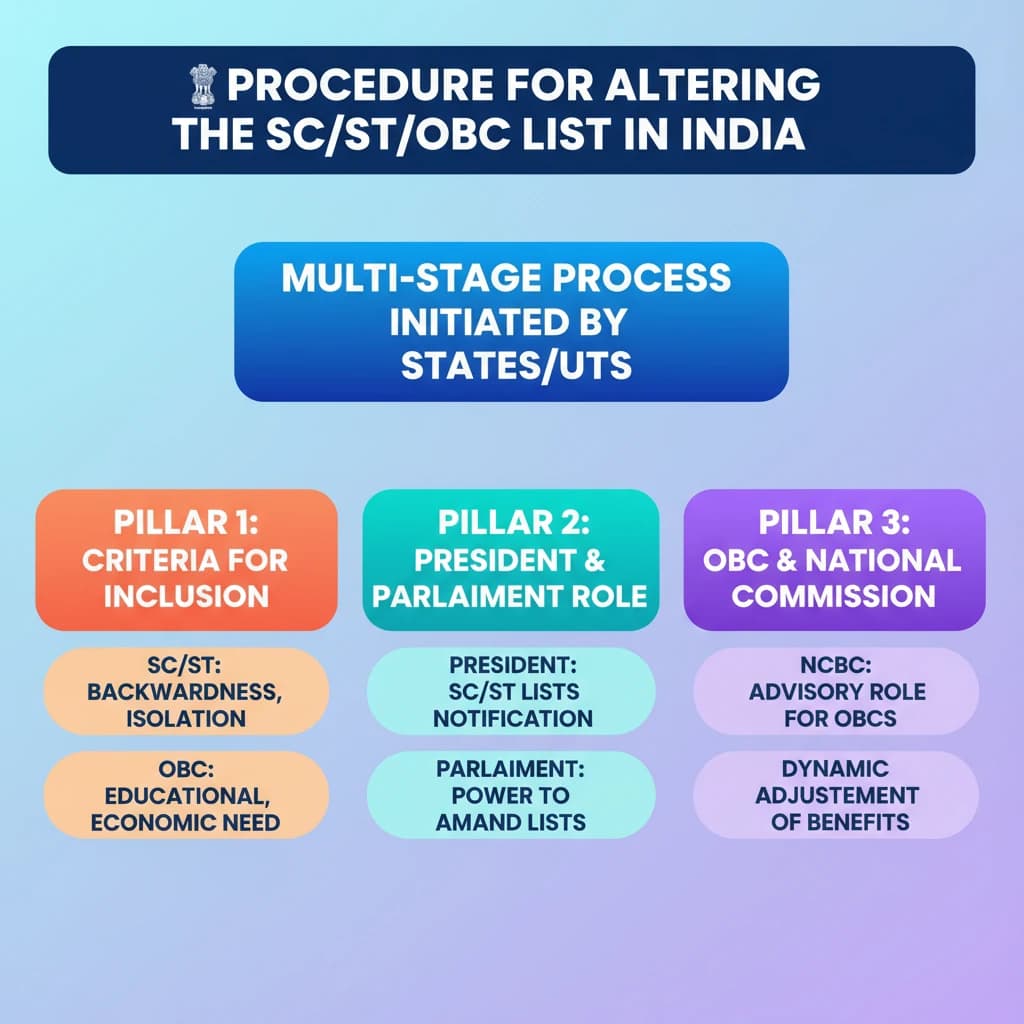
- •Alteration of SC/ST/OBC lists is a multi-stage process initiated by State Governments/UTs.
- •Inclusion criteria vary: SC (extreme backwardness, untouchability), ST (primitive traits, isolation, distinct culture), OBC (social/educational/economic backwardness, inadequate representation).
- •The President's role is crucial for final notification of SC/ST lists, while Parliament has the power to amend them.
- •For OBCs, the National Commission for Backward Classes (NCBC) plays a significant role in advising the central government.
- •The process ensures dynamic adjustment of reservation benefits to genuinely backward communities.
- •Ongoing debates include sub-categorization of OBCs and judicial scrutiny of criteria.
🧠 Memory Techniques
95% Verified Content
📚 Reference Sources
•The Constitution of India (Articles 15, 16, 341, 342)
•Reports of the National Commission for Backward Classes (NCBC)
•Government of India official gazette notifications regarding list alterations