Loading page, please wait…
What are the Supreme Court’s Observations on Inheritance? - UPSC Social Issues
What is What are the Supreme Court’s Observations on Inheritance? in UPSC Social Issues?
What are the Supreme Court’s Observations on Inheritance? is a key topic under Social Issues for UPSC Civil Services Examination. Key points include: SC observed a woman becomes part of her husband's family post-marriage for inheritance.. The ruling was specifically stated as 'not about gender justice' in a broad sense.. It clarifies a woman's inheritance rights within her marital family.. Understanding this topic is essential for both UPSC Prelims and Mains preparation.
Why is What are the Supreme Court’s Observations on Inheritance? important for UPSC exam?
What are the Supreme Court’s Observations on Inheritance? is a Medium-level topic in UPSC Social Issues. It is tested in both Prelims (factual MCQs) and Mains (analytical answer writing). Previous year UPSC questions have frequently covered aspects of What are the Supreme Court’s Observations on Inheritance?, making it essential for comprehensive IAS preparation.
How to prepare What are the Supreme Court’s Observations on Inheritance? for UPSC?
To prepare What are the Supreme Court’s Observations on Inheritance? for UPSC: (1) Study the comprehensive notes covering all key concepts on Vaidra. (2) Practice previous year questions on this topic. (3) Connect it with current affairs using daily updates. (4) Revise using key takeaways and mind maps available for Social Issues. (5) Write practice answers linking What are the Supreme Court’s Observations on Inheritance? to related GS Paper topics.
Key takeaways of What are the Supreme Court’s Observations on Inheritance? for UPSC
- SC observed a woman becomes part of her husband's family post-marriage for inheritance.
- The ruling was specifically stated as 'not about gender justice' in a broad sense.
- It clarifies a woman's inheritance rights within her marital family.
- This observation is distinct from broader judgments on daughters' equal coparcenary rights in parental property.
- It highlights the nuanced nature of women's property rights in India's legal framework.
What are the Supreme Court’s Observations on Inheritance?
Medium⏱️ 6 min read
social issues
📖 Introduction
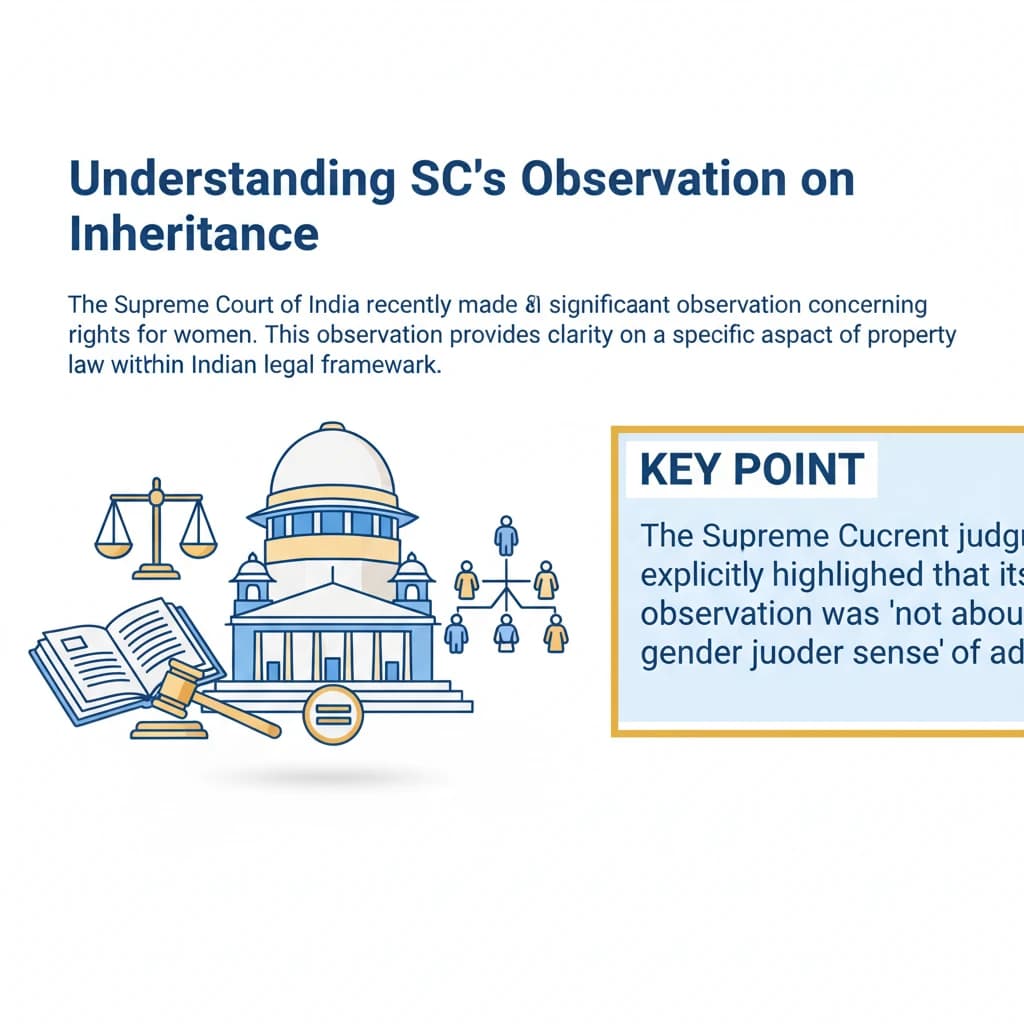
Understanding SC's Observation on Inheritance
The Supreme Court of India recently made a significant observation concerning inheritance rights for women. This observation provides clarity on a specific aspect of property law within the Indian legal framework.
The Supreme Court judgment explicitly highlighted that its observation was "not about gender justice" in the broader sense of advocating for general equality in inheritance rights across all family contexts.
Instead, the ruling focused on the legal implications arising from a woman's marital status and her integration into a new family unit.
Woman's Status Post-Marriage
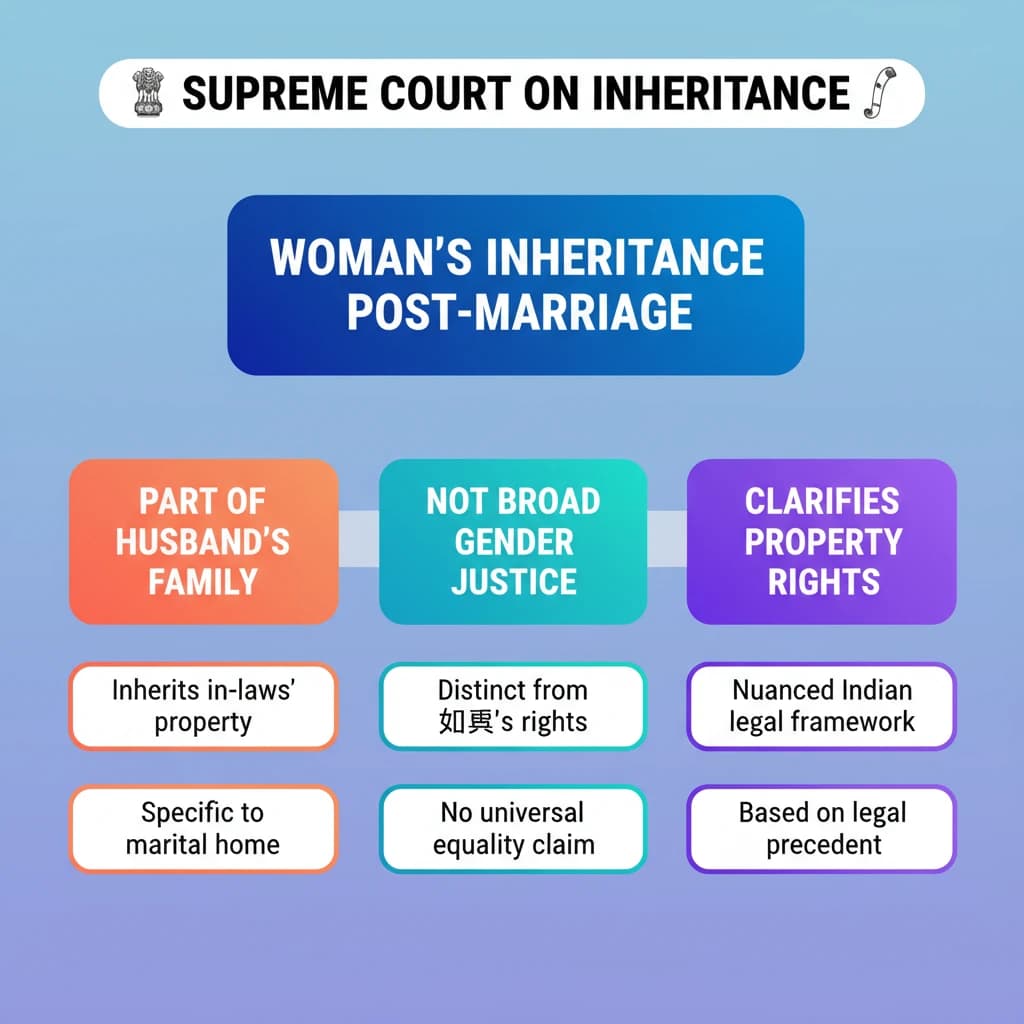
The Court emphasized the legal and social understanding that after marriage, a woman becomes an integral part of her husband's family. This transition carries specific legal consequences.
This legal integration means that her familial ties and associated rights shift, establishing her position within her marital home's lineage for certain purposes.
Inheritance Rights in Husband's Family
Consequently, the judgment stated that a woman acquires corresponding rights to inheritance within her husband's family. These rights are a direct result of her status as a member of that family unit.
UPSC aspirants should carefully note this distinction: the observation clarifies inheritance within the marital family, rather than broadly redefining gender equality in a woman's parental family property. This nuance is crucial for answer writing.
💡 Key Takeaways
- •SC observed a woman becomes part of her husband's family post-marriage for inheritance.
- •The ruling was specifically stated as 'not about gender justice' in a broad sense.
- •It clarifies a woman's inheritance rights within her marital family.
- •This observation is distinct from broader judgments on daughters' equal coparcenary rights in parental property.
- •It highlights the nuanced nature of women's property rights in India's legal framework.
🧠 Memory Techniques

95% Verified Content
📚 Reference Sources
•General understanding of Hindu Succession Act, 1956 and its 2005 amendment
•Principles of Indian Family Law and Property Law