Loading page, please wait…
What Initiatives Have Been Taken to Address Sex Workers? - UPSC Social Issues
What is What Initiatives Have Been Taken to Address Sex Workers? in UPSC Social Issues?
What Initiatives Have Been Taken to Address Sex Workers? is a key topic under Social Issues for UPSC Civil Services Examination. Key points include: Ujjawala Scheme is a comprehensive program for prevention, rescue, rehabilitation, reintegration, and repatriation of trafficking victims.. National Commission for Women (NCW) protects rights of women in the sex industry.. National Human Rights Commission (NHRC) recognizes sex workers as informal workers, advocating for their labor rights.. Understanding this topic is essential for both UPSC Prelims and Mains preparation.
Why is What Initiatives Have Been Taken to Address Sex Workers? important for UPSC exam?
What Initiatives Have Been Taken to Address Sex Workers? is a Medium-level topic in UPSC Social Issues. It is tested in both Prelims (factual MCQs) and Mains (analytical answer writing). Previous year UPSC questions have frequently covered aspects of What Initiatives Have Been Taken to Address Sex Workers?, making it essential for comprehensive IAS preparation.
How to prepare What Initiatives Have Been Taken to Address Sex Workers? for UPSC?
To prepare What Initiatives Have Been Taken to Address Sex Workers? for UPSC: (1) Study the comprehensive notes covering all key concepts on Vaidra. (2) Practice previous year questions on this topic. (3) Connect it with current affairs using daily updates. (4) Revise using key takeaways and mind maps available for Social Issues. (5) Write practice answers linking What Initiatives Have Been Taken to Address Sex Workers? to related GS Paper topics.
Key takeaways of What Initiatives Have Been Taken to Address Sex Workers? for UPSC
- Ujjawala Scheme is a comprehensive program for prevention, rescue, rehabilitation, reintegration, and repatriation of trafficking victims.
- National Commission for Women (NCW) protects rights of women in the sex industry.
- National Human Rights Commission (NHRC) recognizes sex workers as informal workers, advocating for their labor rights.
- Supreme Court (2018) urged action against exploitation and considered regulated legalization for safety.
- The approach is shifting from criminalization to a rights-based, rehabilitation-focused model.
What Initiatives Have Been Taken to Address Sex Workers?
Medium⏱️ 6 min read
social issues
📖 Introduction
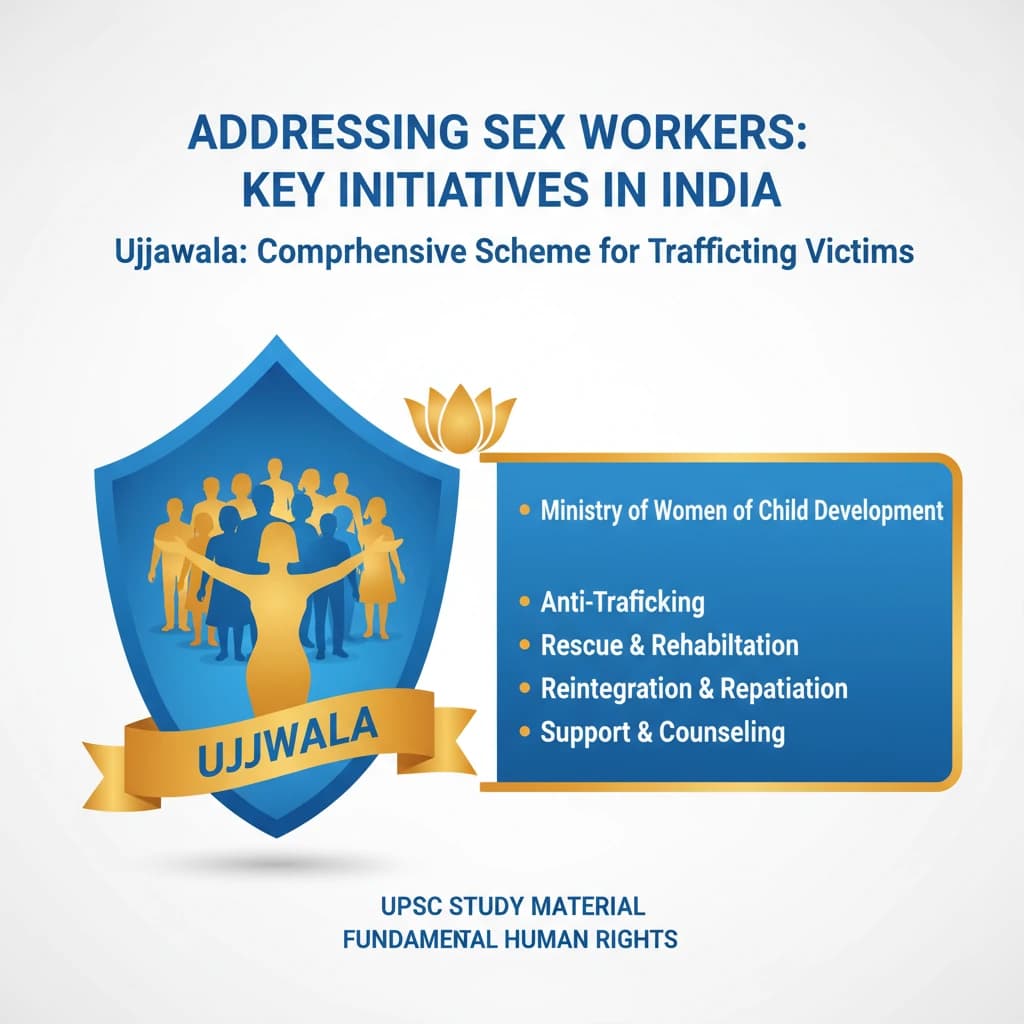
Addressing Sex Workers: Key Initiatives in India
The issue of sex workers and their rights is a complex social challenge in India. Various initiatives have been launched by the government and judicial bodies to address their exploitation, ensure rehabilitation, and protect their fundamental human rights.
Ujjawala: Comprehensive Scheme for Trafficking Victims
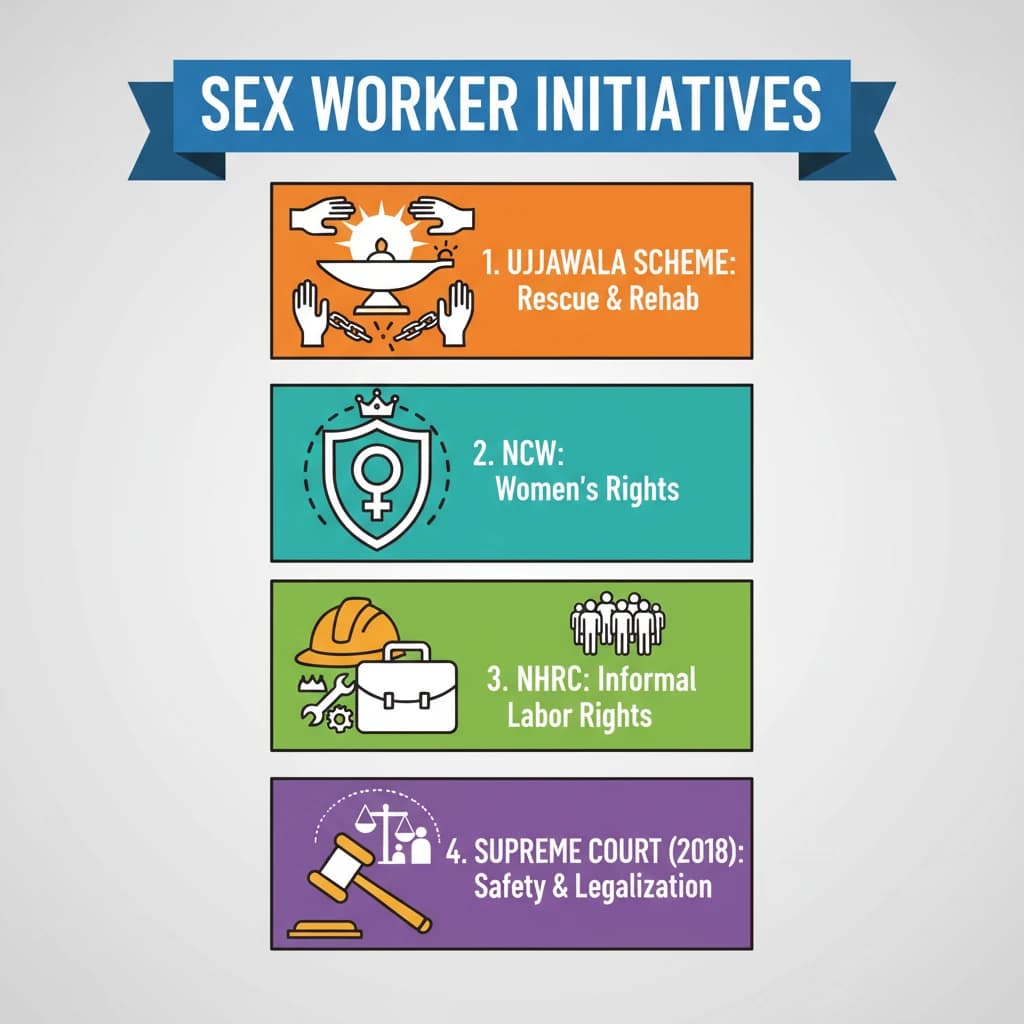
The Ministry of Women and Child Development implements the “Ujjawala” Scheme. This initiative is designed as a comprehensive program to combat human trafficking, particularly for commercial sexual exploitation.
Ujjawala Scheme Objectives:
- Prevention of trafficking.
- Rescue of victims.
- Rehabilitation of survivors.
- Re-integration into society.
- Repatriation of victims (if from other countries).
This scheme focuses on a holistic approach to support victims at every stage.
National Commission for Women (NCW)
The establishment of the National Commission for Women (NCW) signifies the government's commitment to safeguarding the rights of all women, including those involved in prostitution. The NCW works towards ensuring legal and social protection.
The NCW's mandate includes protecting the rights of women and girls who are part of the sex industry, advocating for their welfare, and addressing grievances related to exploitation and discrimination.
National Human Rights Commission (NHRC)
The National Human Rights Commission (NHRC) has played a crucial role in recognizing the dignity and rights of sex workers. This recognition is a significant step towards their social and economic inclusion.
The NHRC officially recognized sex workers as informal workers. This acknowledgment is vital for extending labor rights and social security benefits to this vulnerable group, bringing them under the purview of formal recognition.
Supreme Court Directives and Awareness Campaigns
The judiciary has also intervened to protect the rights of sex workers. The Supreme Court of India has issued directives urging governmental action against exploitation and considering regulatory frameworks.
In 2018, the Supreme Court urged the government to take proactive steps against the exploitation of women in the sex industry. It also suggested exploring the possibility of legalization in specific locations, coupled with rigorous regulation, to mitigate risks and protect rights. This highlights a shift towards a more pragmatic and rights-based approach.
💡 Key Takeaways
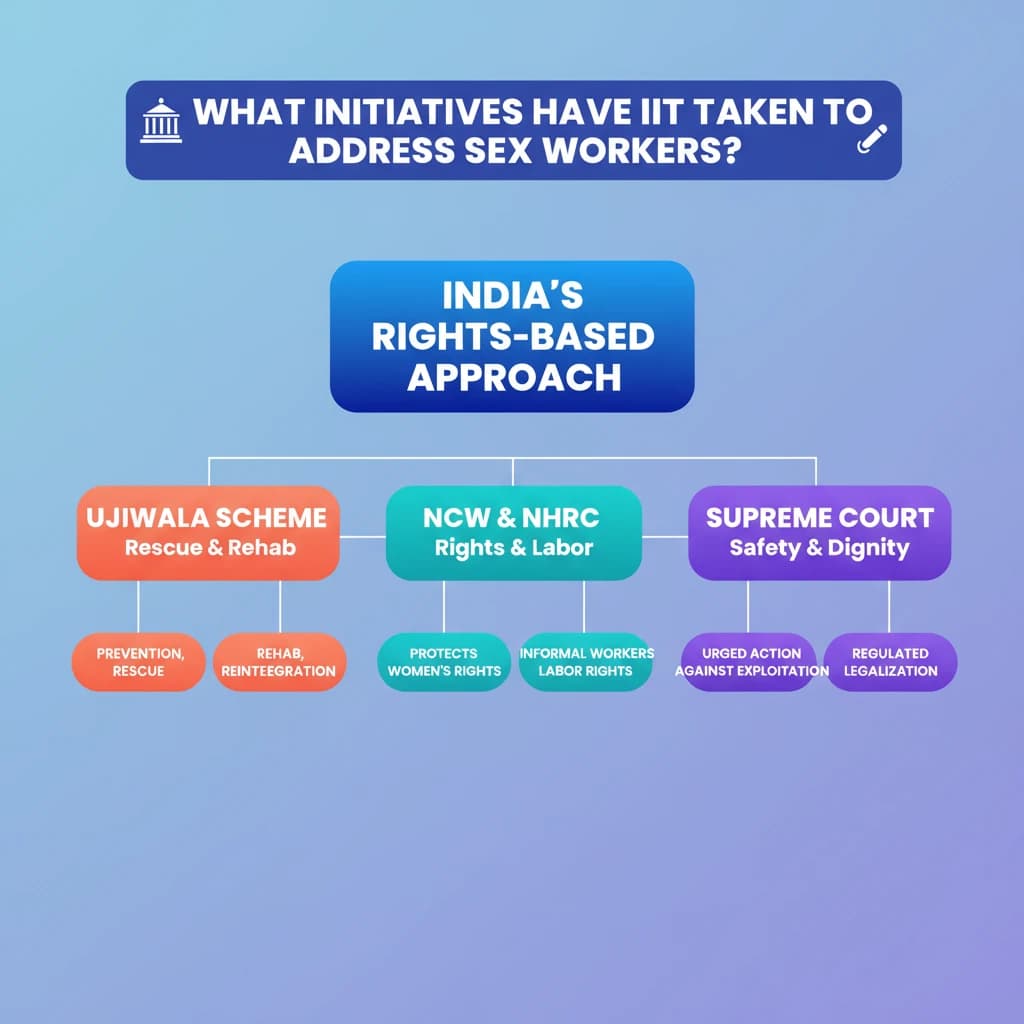
- •Ujjawala Scheme is a comprehensive program for prevention, rescue, rehabilitation, reintegration, and repatriation of trafficking victims.
- •National Commission for Women (NCW) protects rights of women in the sex industry.
- •National Human Rights Commission (NHRC) recognizes sex workers as informal workers, advocating for their labor rights.
- •Supreme Court (2018) urged action against exploitation and considered regulated legalization for safety.
- •The approach is shifting from criminalization to a rights-based, rehabilitation-focused model.
🧠 Memory Techniques
95% Verified Content