Loading page, please wait…
What is International Day of Indigenous Peoples? - UPSC Social Issues
What is What is International Day of Indigenous Peoples? in UPSC Social Issues?
What is International Day of Indigenous Peoples? is a key topic under Social Issues for UPSC Civil Services Examination. Key points include: International Day of Indigenous Peoples is observed annually on August 9th.. It commemorates the first UN Working Group meeting on Indigenous Populations in Geneva (1982).. The UN General Assembly recognized this day in December 1994.. Understanding this topic is essential for both UPSC Prelims and Mains preparation.
Why is What is International Day of Indigenous Peoples? important for UPSC exam?
What is International Day of Indigenous Peoples? is a Easy-level topic in UPSC Social Issues. It is tested in both Prelims (factual MCQs) and Mains (analytical answer writing). Previous year UPSC questions have frequently covered aspects of What is International Day of Indigenous Peoples?, making it essential for comprehensive IAS preparation.
How to prepare What is International Day of Indigenous Peoples? for UPSC?
To prepare What is International Day of Indigenous Peoples? for UPSC: (1) Study the comprehensive notes covering all key concepts on Vaidra. (2) Practice previous year questions on this topic. (3) Connect it with current affairs using daily updates. (4) Revise using key takeaways and mind maps available for Social Issues. (5) Write practice answers linking What is International Day of Indigenous Peoples? to related GS Paper topics.
Key takeaways of What is International Day of Indigenous Peoples? for UPSC
- International Day of Indigenous Peoples is observed annually on August 9th.
- It commemorates the first UN Working Group meeting on Indigenous Populations in Geneva (1982).
- The UN General Assembly recognized this day in December 1994.
- Theme 2024: “Protecting the Rights of Indigenous Peoples in Voluntary Isolation and Initial Contact”.
- Globally, 476 million Indigenous Peoples live in 90 countries, representing 5,000 cultures and 7,000 languages.
- They constitute <6% of world population but >15% of the poorest, highlighting significant disparities.
What is International Day of Indigenous Peoples?
Easy⏱️ 6 min read
social issues
📖 Introduction
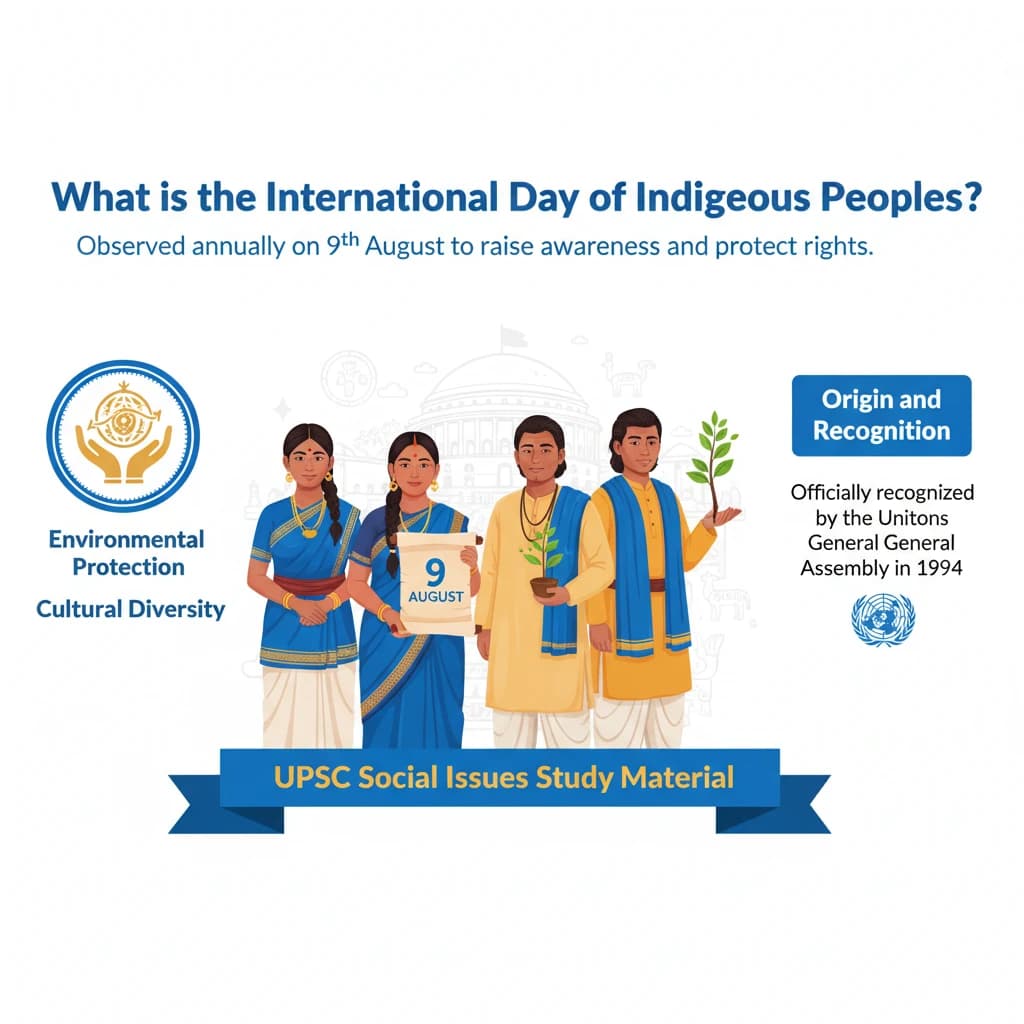
What is the International Day of Indigenous Peoples?
The International Day of Indigenous Peoples is observed annually on 9th August. This day serves to raise awareness and protect the rights of the world's indigenous population.
It highlights the contributions indigenous peoples make to global issues like environmental protection and cultural diversity.
Origin and Recognition
The observance of this day was officially recognized by the UN General Assembly in December 1994. This resolution formalized the global commitment to indigenous rights.
The date, 9th August, commemorates the first meeting of the United Nations Working Group on Indigenous Populations. This significant meeting took place in Geneva in 1982.
Annual Theme
Each year, the day is celebrated with a specific theme to focus global efforts. The Theme 2024 is particularly important.
The Theme 2024 is: “Protecting the Rights of Indigenous Peoples in Voluntary Isolation and Initial Contact”. This theme emphasizes a highly vulnerable segment of the indigenous population.
Global Facts about Indigenous Peoples
Indigenous Peoples constitute a significant, yet often marginalized, segment of the global population. Their unique cultures and ways of life are invaluable.
- Around 200 groups of Indigenous Peoples currently live in voluntary isolation.
- These groups are found in countries such as Bolivia, Brazil, Colombia, Ecuador, and India.
There are an estimated 476 million Indigenous Peoples globally, spread across 90 countries. They represent a vast array of human diversity.
Despite their numbers, indigenous peoples face disproportionate challenges.
- They make up less than 6% of the world’s population.
- However, they account for at least 15% of the poorest people globally.
Their cultural and linguistic contributions are immense.
- They speak an overwhelming majority of the world’s estimated 7,000 languages.
- These groups represent approximately 5,000 different cultures, showcasing incredible diversity.
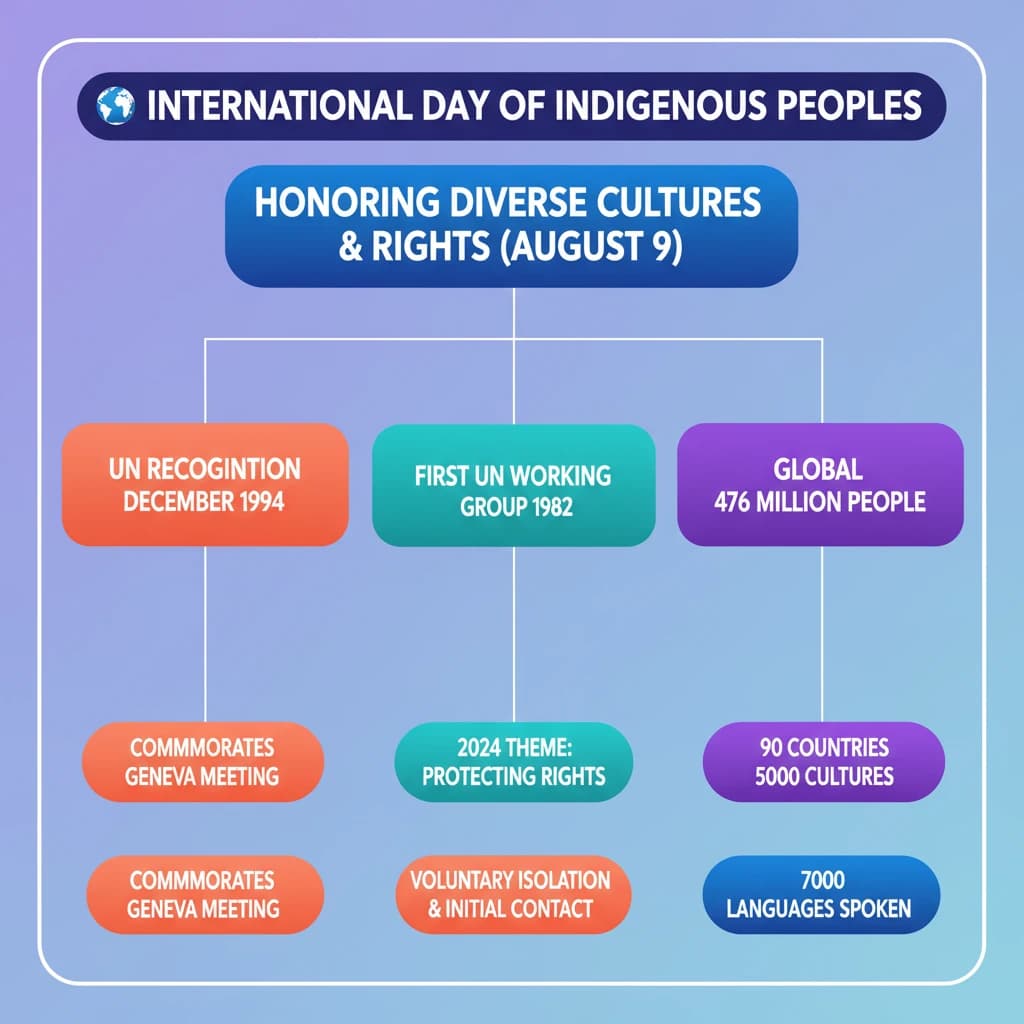
💡 Key Takeaways
- •International Day of Indigenous Peoples is observed annually on August 9th.
- •It commemorates the first UN Working Group meeting on Indigenous Populations in Geneva (1982).
- •The UN General Assembly recognized this day in December 1994.
- •Theme 2024: “Protecting the Rights of Indigenous Peoples in Voluntary Isolation and Initial Contact”.
- •Globally, 476 million Indigenous Peoples live in 90 countries, representing 5,000 cultures and 7,000 languages.
- •They constitute <6% of world population but >15% of the poorest, highlighting significant disparities.
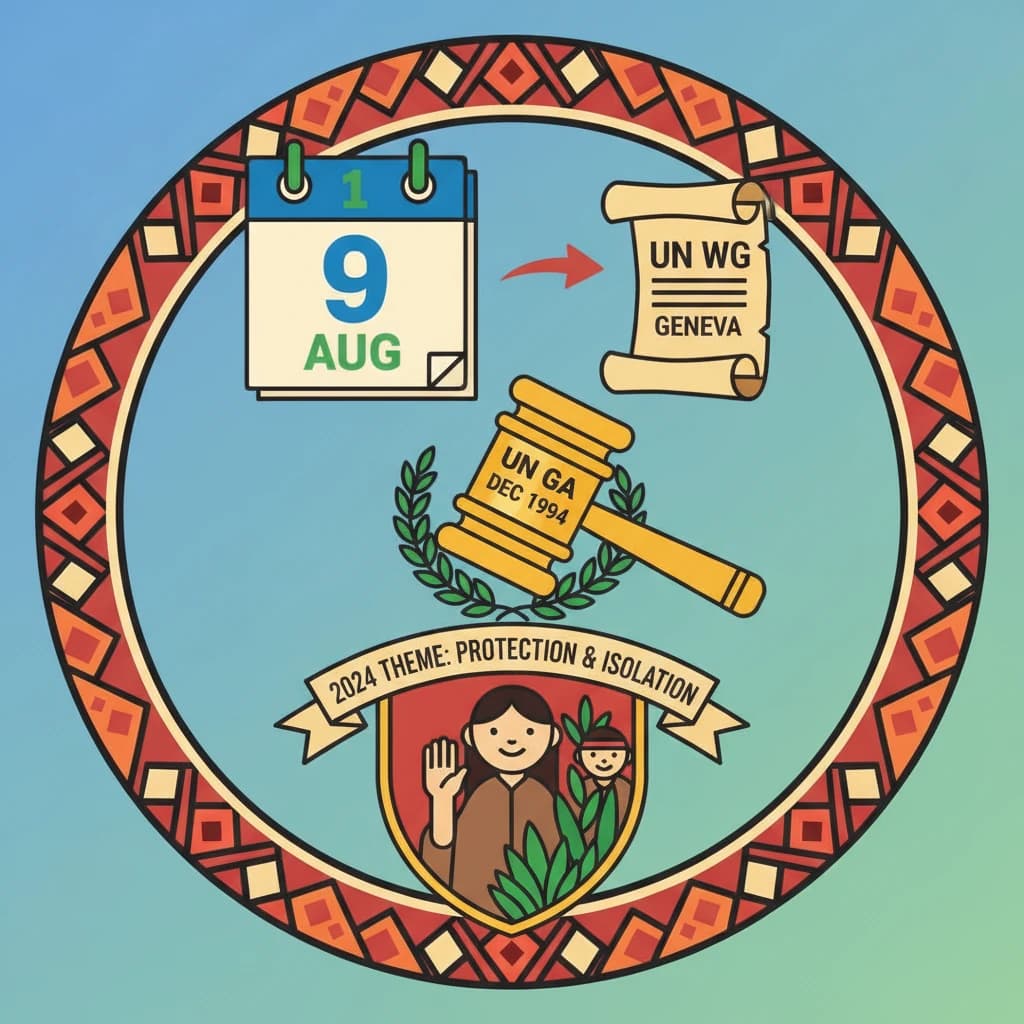
🧠 Memory Techniques
98% Verified Content
📚 Reference Sources
•United Nations official website (for International Day of Indigenous Peoples details and themes)
•UNDP/UNICEF reports on Indigenous Peoples (for global statistics)