Loading page, please wait…
What is Poshan Tracker? - UPSC Social Issues
What is What is Poshan Tracker? in UPSC Social Issues?
What is Poshan Tracker? is a key topic under Social Issues for UPSC Civil Services Examination. Key points include: Poshan Tracker is a mobile app for real-time tracking of health and nutrition of children and pregnant women.. It empowers Anganwadi Workers (AWWs) by reflecting their intervention progress and enabling direct data entry.. The app uses WHO standards to measure child growth and suggests corrective actions for malnutrition.. Understanding this topic is essential for both UPSC Prelims and Mains preparation.
Why is What is Poshan Tracker? important for UPSC exam?
What is Poshan Tracker? is a Medium-level topic in UPSC Social Issues. It is tested in both Prelims (factual MCQs) and Mains (analytical answer writing). Previous year UPSC questions have frequently covered aspects of What is Poshan Tracker?, making it essential for comprehensive IAS preparation.
How to prepare What is Poshan Tracker? for UPSC?
To prepare What is Poshan Tracker? for UPSC: (1) Study the comprehensive notes covering all key concepts on Vaidra. (2) Practice previous year questions on this topic. (3) Connect it with current affairs using daily updates. (4) Revise using key takeaways and mind maps available for Social Issues. (5) Write practice answers linking What is Poshan Tracker? to related GS Paper topics.
Key takeaways of What is Poshan Tracker? for UPSC
- Poshan Tracker is a mobile app for real-time tracking of health and nutrition of children and pregnant women.
- It empowers Anganwadi Workers (AWWs) by reflecting their intervention progress and enabling direct data entry.
- The app uses WHO standards to measure child growth and suggests corrective actions for malnutrition.
- It registers 6 types of beneficiaries, including a specific focus on adolescent girls in Aspirational Districts.
- Poshan Tracker is the technological backbone of the POSHAN Abhiyaan, facilitating data-driven decision-making and targeted interventions.
What is Poshan Tracker?
Medium⏱️ 7 min read
social issues
📖 Introduction
Introduction to Poshan Tracker
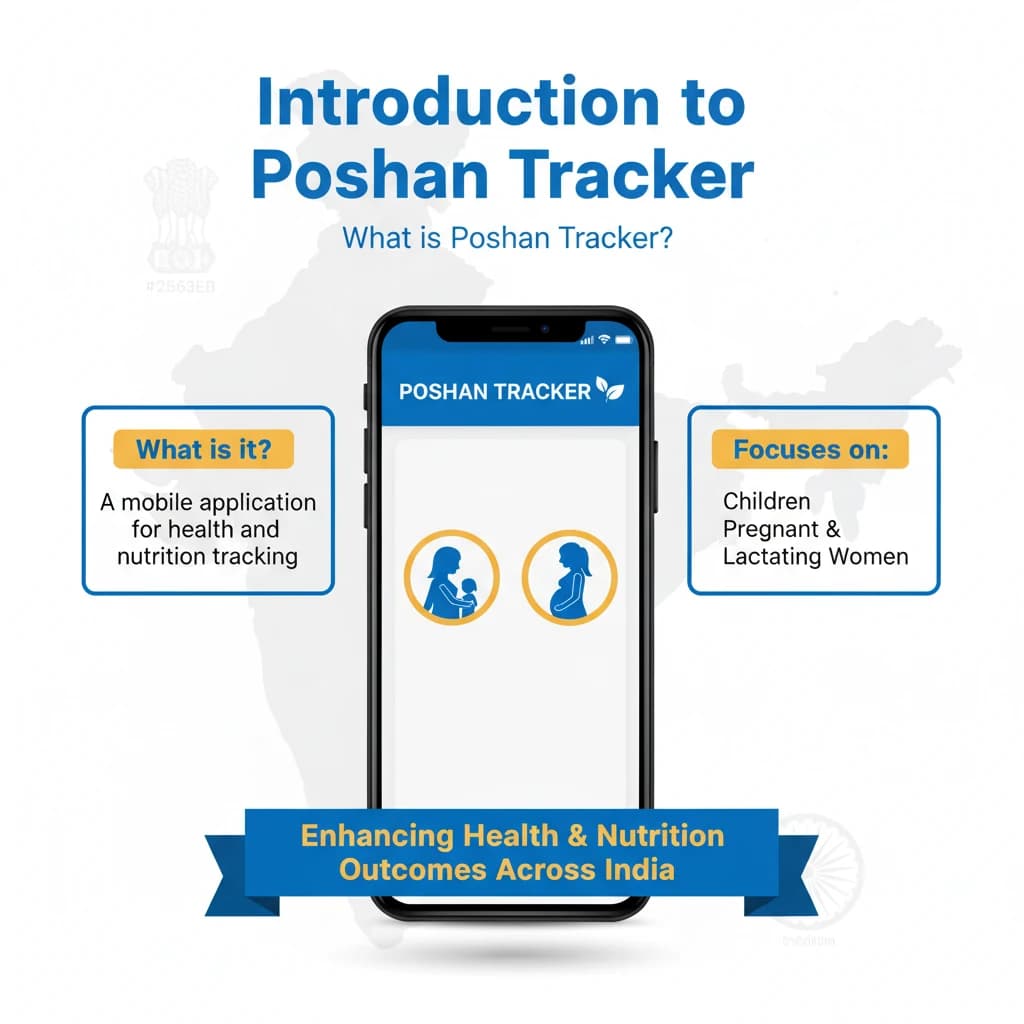
The Poshan Tracker is a crucial mobile application designed to enhance the monitoring and tracking of health and nutrition outcomes across India. It primarily focuses on vulnerable groups, including children and pregnant women, ensuring their well-being is systematically recorded.
What is it? A mobile application for health and nutrition tracking.
Primary Beneficiaries: Children and Pregnant Women in India.
Role of Anganwadi Workers (AWWs)
The application serves as an indispensable tool for Anganwadi Workers (AWWs). It empowers them to effectively manage their daily tasks and interventions related to nutrition and health services at the grassroots level.
Empowering AWWs: Reflects the progress and impact of AWWs' interventions, enabling real-time monitoring of their efforts and beneficiary status.
Interactive Features and Growth Monitoring
Poshan Tracker is an interactive platform that facilitates the measurement of a child’s growth. It utilizes established global benchmarks to ensure accurate assessment and timely action.
Growth Standards: Measures child growth using World Health Organization (WHO) standards.
Corrective Actions: Provides immediate suggestions for corrective actions based on the data inputs, aiding in early intervention.
Beneficiary Categories
The application allows Anganwadi Workers (AWWs) to register and track various categories of beneficiaries, ensuring comprehensive coverage of critical population segments. This broad scope helps in addressing diverse nutritional needs.
- Pregnant Women: For antenatal care and nutritional support.
- Lactating Mothers: For postnatal care and infant feeding practices.
- Children between 0-6 months: Focus on exclusive breastfeeding and early growth.
- Children between 6 months to 3 years: Monitoring growth, complementary feeding, and immunisation.
- Children between 3-6 years: Tracking growth and pre-school education aspects.
- Adolescent Girls aged 14-18 years: Specifically targeted in Aspirational Districts to address adolescent anaemia and nutrition.
UPSC Insight: Understanding the specific beneficiary categories and the role of Aspirational Districts for adolescent girls is crucial for questions on government schemes and social development.
💡 Key Takeaways
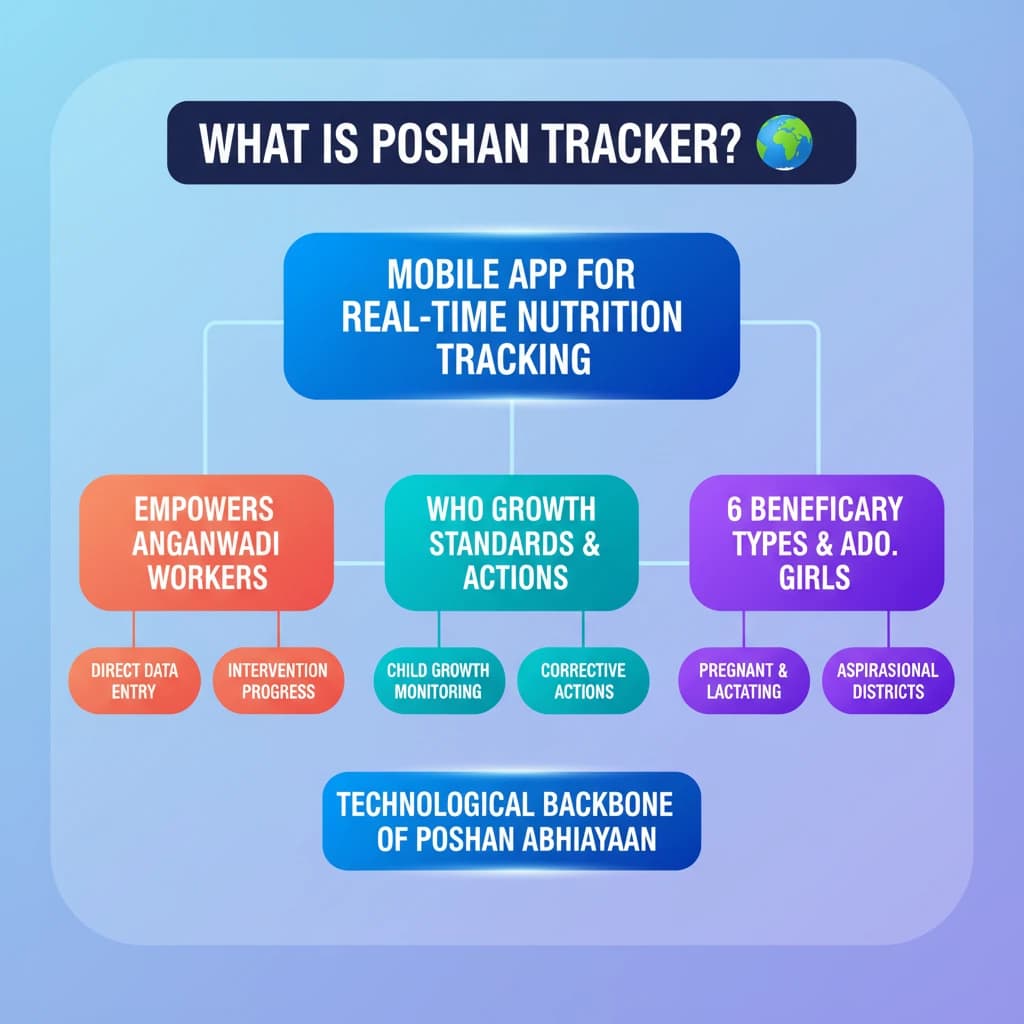
- •Poshan Tracker is a mobile app for real-time tracking of health and nutrition of children and pregnant women.
- •It empowers Anganwadi Workers (AWWs) by reflecting their intervention progress and enabling direct data entry.
- •The app uses WHO standards to measure child growth and suggests corrective actions for malnutrition.
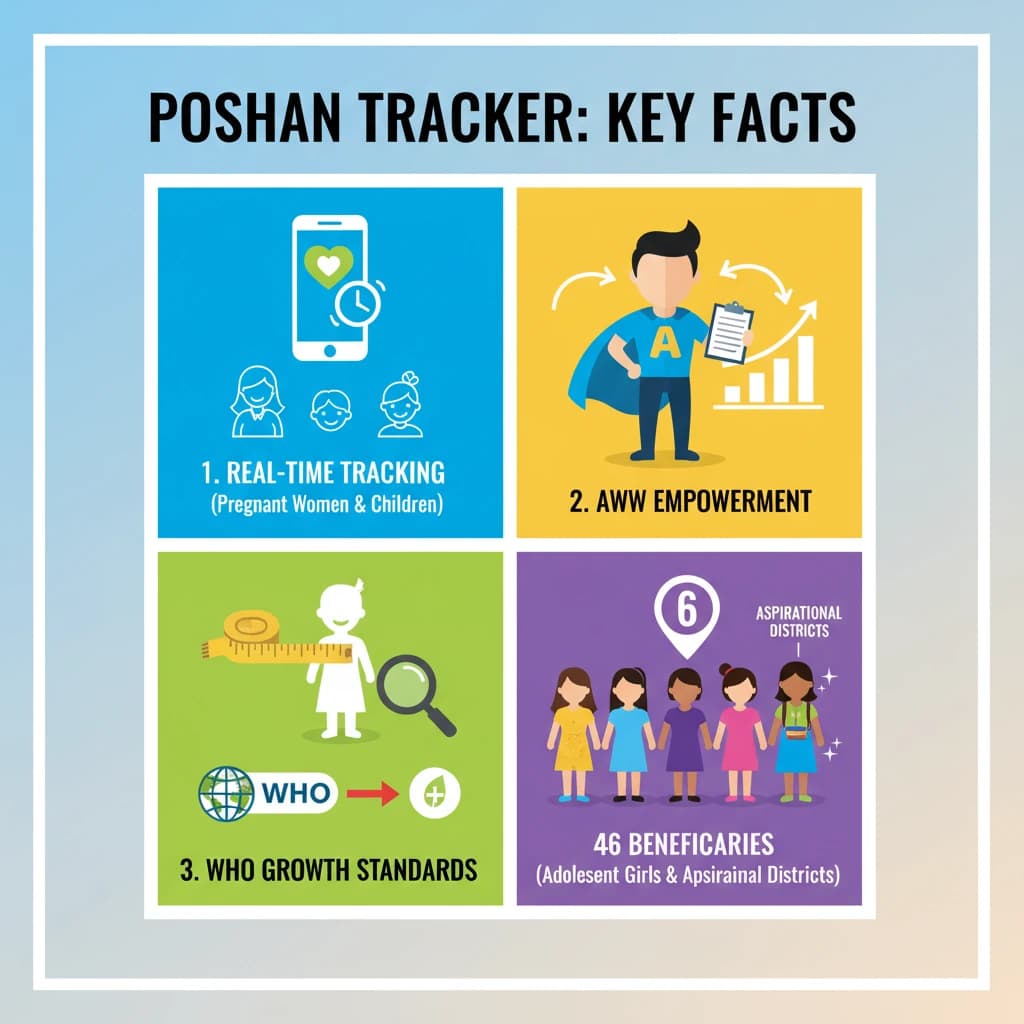
- •It registers 6 types of beneficiaries, including a specific focus on adolescent girls in Aspirational Districts.
- •Poshan Tracker is the technological backbone of the POSHAN Abhiyaan, facilitating data-driven decision-making and targeted interventions.
🧠 Memory Techniques
95% Verified Content
📚 Reference Sources
•Ministry of Women and Child Development (MWCD) website - POSHAN Abhiyaan
•POSHAN Abhiyaan official portal (poshanabhiyaan.gov.in)
•Press Information Bureau (PIB) releases on Poshan Tracker and POSHAN Abhiyaan