Loading page, please wait…
What is Right to Shelter and Important Constitutional Provisions Involved? - UPSC Social Issues
What is What is Right to Shelter and Important Constitutional Provisions Involved? in UPSC Social Issues?
What is Right to Shelter and Important Constitutional Provisions Involved? is a key topic under Social Issues for UPSC Civil Services Examination. Key points include: Right to Shelter is a Fundamental Right derived from Article 21 (Right to Life) of the Indian Constitution.. It encompasses more than just a roof, including adequate space, peace, security, basic infrastructure, and proximity to amenities.. Landmark Supreme Court cases like Olga Tellis v. BMC established its constitutional recognition.. Understanding this topic is essential for both UPSC Prelims and Mains preparation.
Why is What is Right to Shelter and Important Constitutional Provisions Involved? important for UPSC exam?
What is Right to Shelter and Important Constitutional Provisions Involved? is a Medium-level topic in UPSC Social Issues. It is tested in both Prelims (factual MCQs) and Mains (analytical answer writing). Previous year UPSC questions have frequently covered aspects of What is Right to Shelter and Important Constitutional Provisions Involved?, making it essential for comprehensive IAS preparation.
How to prepare What is Right to Shelter and Important Constitutional Provisions Involved? for UPSC?
To prepare What is Right to Shelter and Important Constitutional Provisions Involved? for UPSC: (1) Study the comprehensive notes covering all key concepts on Vaidra. (2) Practice previous year questions on this topic. (3) Connect it with current affairs using daily updates. (4) Revise using key takeaways and mind maps available for Social Issues. (5) Write practice answers linking What is Right to Shelter and Important Constitutional Provisions Involved? to related GS Paper topics.
Key takeaways of What is Right to Shelter and Important Constitutional Provisions Involved? for UPSC
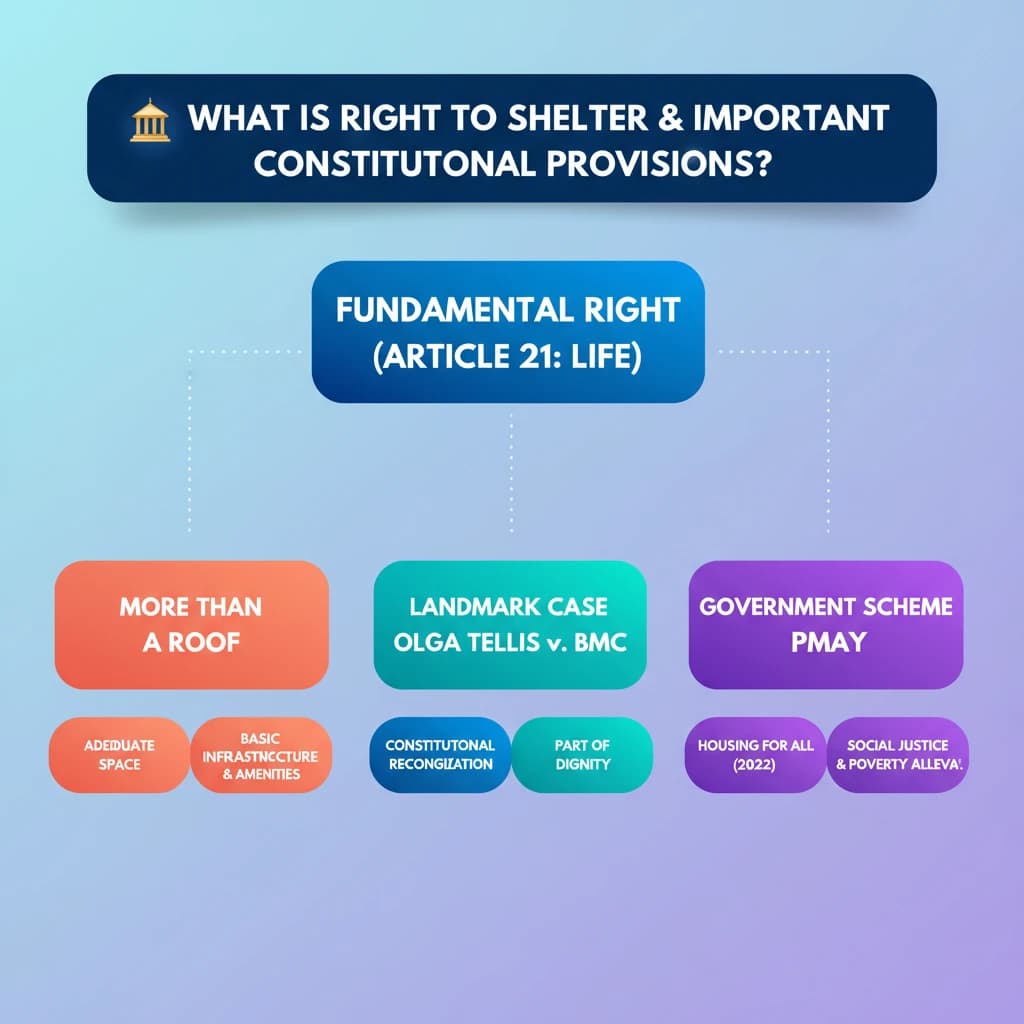
- Right to Shelter is a Fundamental Right derived from Article 21 (Right to Life) of the Indian Constitution.
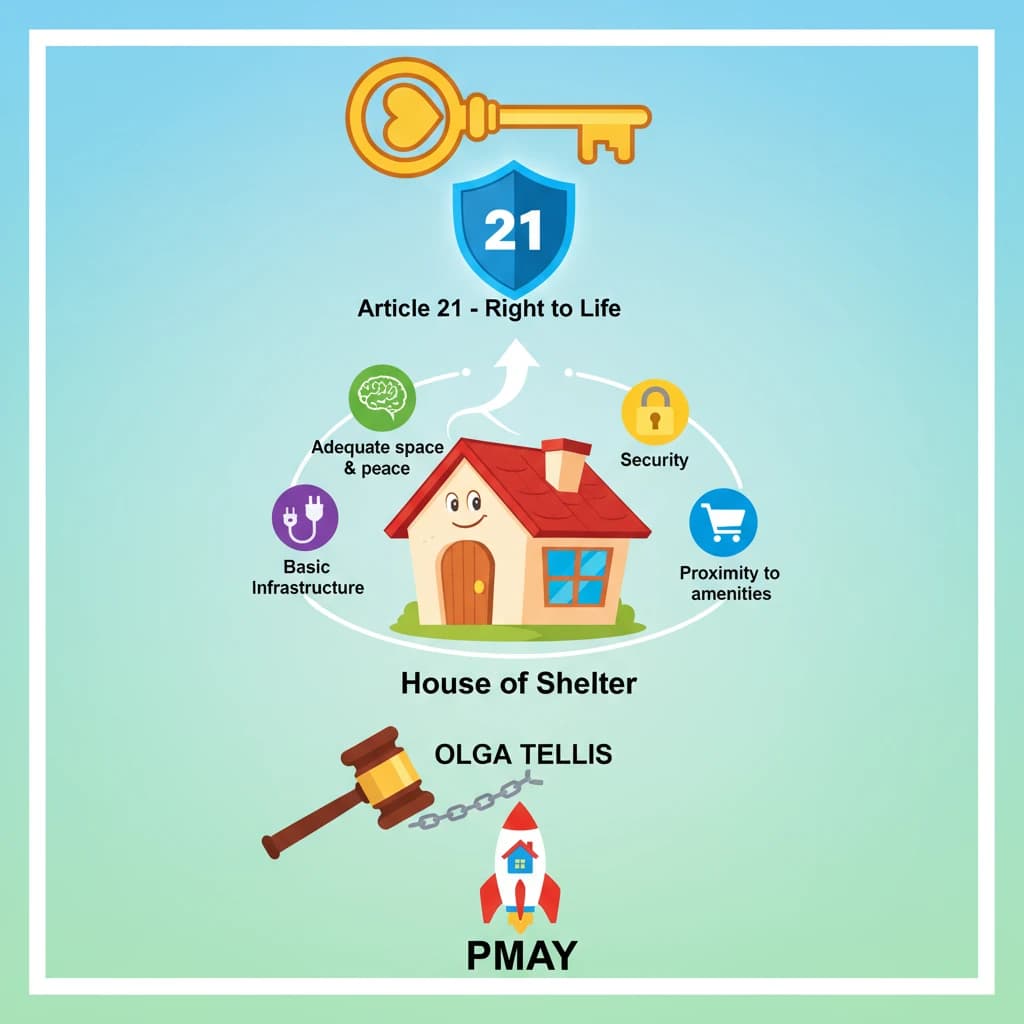
- It encompasses more than just a roof, including adequate space, peace, security, basic infrastructure, and proximity to amenities.
- Landmark Supreme Court cases like Olga Tellis v. BMC established its constitutional recognition.
- Government schemes like Pradhan Mantri Awas Yojana (PMAY) are key initiatives for its practical implementation.
- Ensuring dignified shelter is crucial for social justice, poverty alleviation, and sustainable urban development.

What is Right to Shelter and Important Constitutional Provisions Involved?
Medium⏱️ 8 min read
social issues
📖 Introduction
Understanding the Right to Shelter
The Right to Shelter in India is a pivotal aspect of human dignity. It is explicitly recognized as a fundamental right, falling within the expansive scope of the Right to Life. This overarching right is guaranteed by Article 21 of the Indian Constitution.
The Right to Shelter is not merely a statutory provision but a constitutional imperative, ensuring that every individual can live with dignity.
Components of Adequate Housing
The concept of the Right to Shelter extends far beyond simply having a roof overhead. It encompasses a holistic view of what constitutes adequate and dignified living conditions.
This right implies a dwelling that provides adequate space, ensuring comfort and freedom of movement for its inhabitants. It also includes the provision of peace and security, creating a safe environment free from threats and disturbances.
Adequate housing, as interpreted by the judiciary, includes:
- Sufficient Space: Room for living, sleeping, and daily activities.
- Peace & Security: Protection from external threats and a stable living environment.
- Lighting & Ventilation: Essential for health and well-being.
- Basic Infrastructure: Access to water, sanitation, and electricity.
- Proximity to Amenities: Reasonable access to workplaces, schools, healthcare, and other social services.
These elements collectively ensure that the housing provided supports a life of dignity, health, and social integration, rather than merely preventing exposure to the elements.
For UPSC Mains (GS-II), understanding the nuanced interpretation of Article 21 and its derivative rights like Right to Shelter is crucial. Judicial pronouncements often elaborate on these aspects.
💡 Key Takeaways
- •Right to Shelter is a Fundamental Right derived from Article 21 (Right to Life) of the Indian Constitution.
- •It encompasses more than just a roof, including adequate space, peace, security, basic infrastructure, and proximity to amenities.
- •Landmark Supreme Court cases like Olga Tellis v. BMC established its constitutional recognition.
- •Government schemes like Pradhan Mantri Awas Yojana (PMAY) are key initiatives for its practical implementation.
- •Ensuring dignified shelter is crucial for social justice, poverty alleviation, and sustainable urban development.
🧠 Memory Techniques
95% Verified Content
📚 Reference Sources
•Supreme Court of India judgments (Olga Tellis v. Bombay Municipal Corporation, 1985)
•Ministry of Housing and Urban Affairs (MoHUA) official documents on Pradhan Mantri Awas Yojana (PMAY)
•Reports on Sustainable Development Goal 11 (SDG 11)