Loading page, please wait…
What is the Legality of Sex Work? - UPSC Social Issues
What is What is the Legality of Sex Work? in UPSC Social Issues?
What is the Legality of Sex Work? is a key topic under Social Issues for UPSC Civil Services Examination. Key points include: Supreme Court recognized sex work as a "profession.". Sex workers are entitled to equal protection of the law.. Criminal law applies based on 'age' and 'consent.'. Understanding this topic is essential for both UPSC Prelims and Mains preparation.
Why is What is the Legality of Sex Work? important for UPSC exam?
What is the Legality of Sex Work? is a Medium-level topic in UPSC Social Issues. It is tested in both Prelims (factual MCQs) and Mains (analytical answer writing). Previous year UPSC questions have frequently covered aspects of What is the Legality of Sex Work?, making it essential for comprehensive IAS preparation.
How to prepare What is the Legality of Sex Work? for UPSC?
To prepare What is the Legality of Sex Work? for UPSC: (1) Study the comprehensive notes covering all key concepts on Vaidra. (2) Practice previous year questions on this topic. (3) Connect it with current affairs using daily updates. (4) Revise using key takeaways and mind maps available for Social Issues. (5) Write practice answers linking What is the Legality of Sex Work? to related GS Paper topics.
Key takeaways of What is the Legality of Sex Work? for UPSC
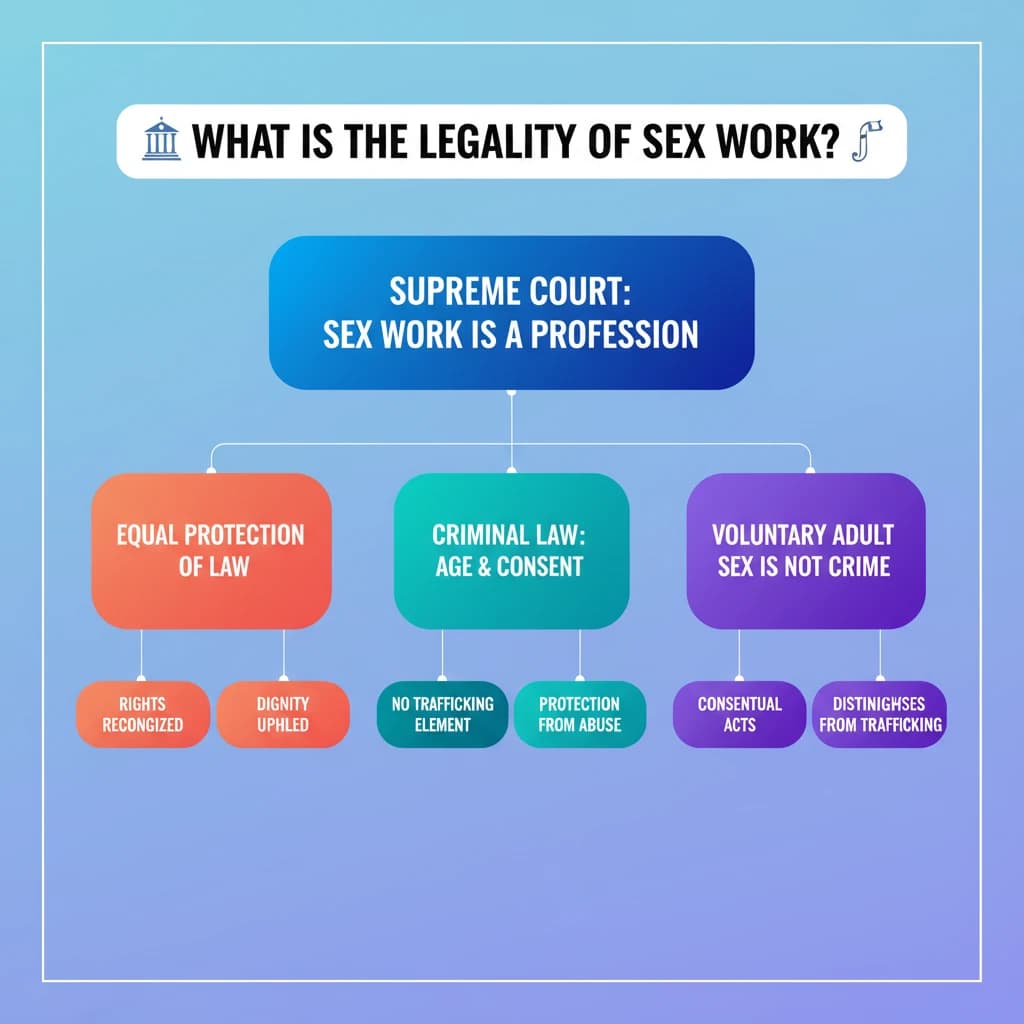
- Supreme Court recognized sex work as a "profession."
- Sex workers are entitled to equal protection of the law.
- Criminal law applies based on 'age' and 'consent.'
- Voluntary sex between adults is not a crime.
- Ruling distinguishes consensual adult sex work from trafficking.
What is the Legality of Sex Work?
Medium⏱️ 8 min read
social issues
📖 Introduction
Supreme Court's Recognition of Sex Work
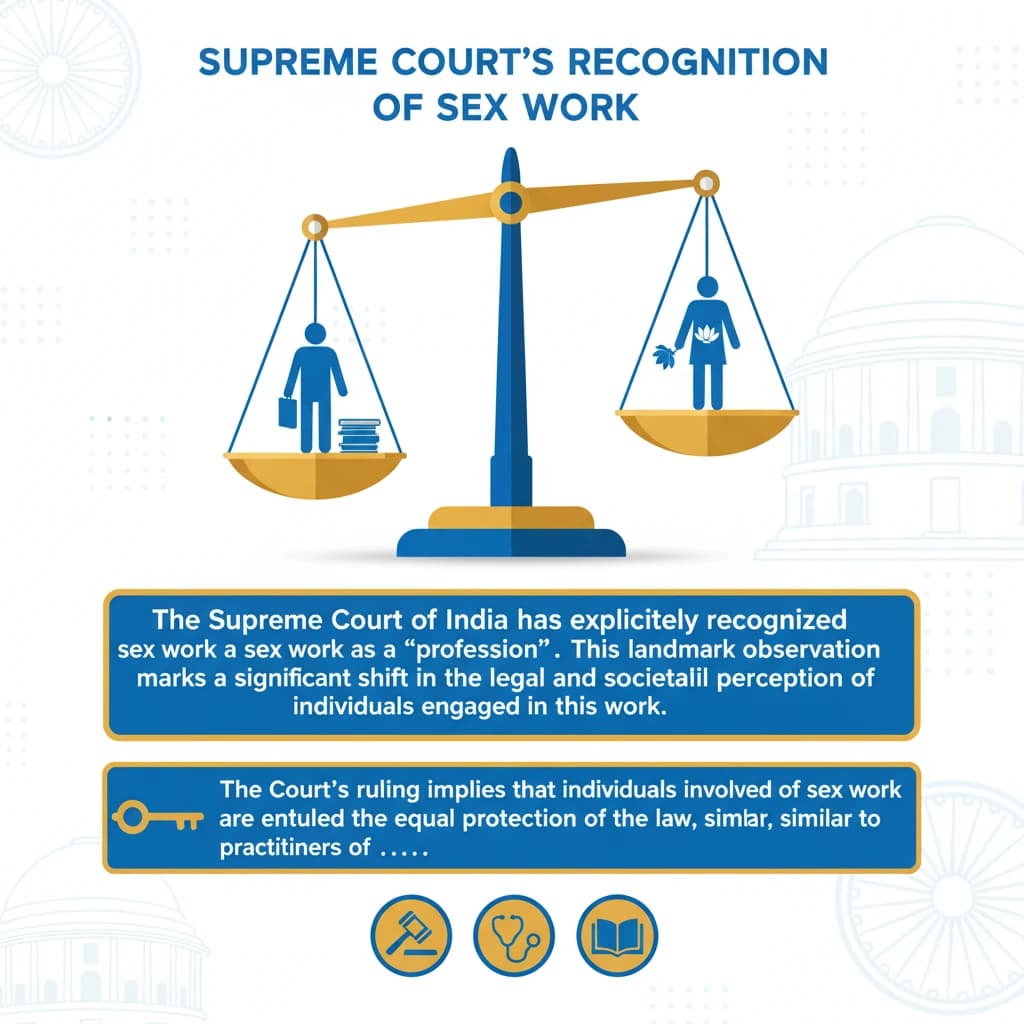
The Supreme Court of India has explicitly recognized sex work as a “profession”. This landmark observation marks a significant shift in the legal and societal perception of individuals engaged in this work.
The Court's ruling implies that individuals involved in sex work are entitled to the equal protection of the law, similar to practitioners of any other profession in India. This ensures their fundamental rights are upheld.
Furthermore, the Supreme Court clarified that criminal law must be applied equally to all individuals. This application is contingent on two crucial factors: age and consent.
The ruling emphasizes that voluntary sex, when conducted between consenting adults, is not considered a crime under Indian law. This distinguishes consensual acts from exploitative practices.
This judgment is critical for understanding the evolving legal landscape concerning marginalized communities and fundamental rights in UPSC Mains GS Paper I (Social Issues) and GS Paper II (Polity & Governance).
💡 Key Takeaways
- •Supreme Court recognized sex work as a "profession."
- •Sex workers are entitled to equal protection of the law.
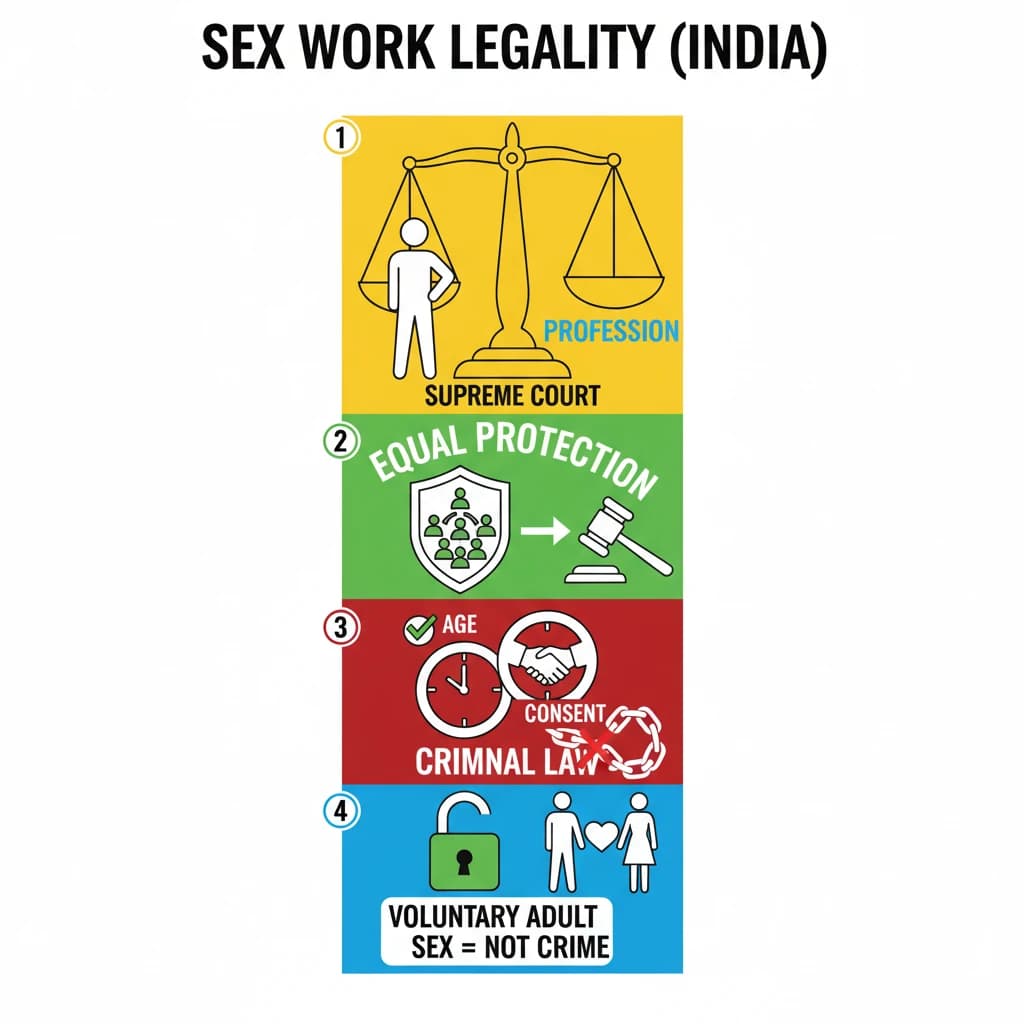
- •Criminal law applies based on 'age' and 'consent.'
- •Voluntary sex between adults is not a crime.
- •Ruling distinguishes consensual adult sex work from trafficking.
🧠 Memory Techniques
95% Verified Content
📚 Reference Sources
•Supreme Court of India judgments (general knowledge of the 2022 ruling)
•Immoral Traffic (Prevention) Act, 1956 (ITPA)