Loading page, please wait…
What is the NAMASTE Scheme? - UPSC Social Issues
What is What is the NAMASTE Scheme? in UPSC Social Issues?
What is the NAMASTE Scheme? is a key topic under Social Issues for UPSC Civil Services Examination. Key points include: NAMASTE is a joint initiative by MoSJE and MoHUA to eliminate manual scavenging.. It aims to cover all 4800+ ULBs by 2025-26 with an outlay of Rs. 349.70 crore.. The scheme replaces the earlier SRMS, shifting focus to mechanization and worker safety.. Understanding this topic is essential for both UPSC Prelims and Mains preparation.
Why is What is the NAMASTE Scheme? important for UPSC exam?
What is the NAMASTE Scheme? is a Medium-level topic in UPSC Social Issues. It is tested in both Prelims (factual MCQs) and Mains (analytical answer writing). Previous year UPSC questions have frequently covered aspects of What is the NAMASTE Scheme?, making it essential for comprehensive IAS preparation.
How to prepare What is the NAMASTE Scheme? for UPSC?
To prepare What is the NAMASTE Scheme? for UPSC: (1) Study the comprehensive notes covering all key concepts on Vaidra. (2) Practice previous year questions on this topic. (3) Connect it with current affairs using daily updates. (4) Revise using key takeaways and mind maps available for Social Issues. (5) Write practice answers linking What is the NAMASTE Scheme? to related GS Paper topics.
Key takeaways of What is the NAMASTE Scheme? for UPSC
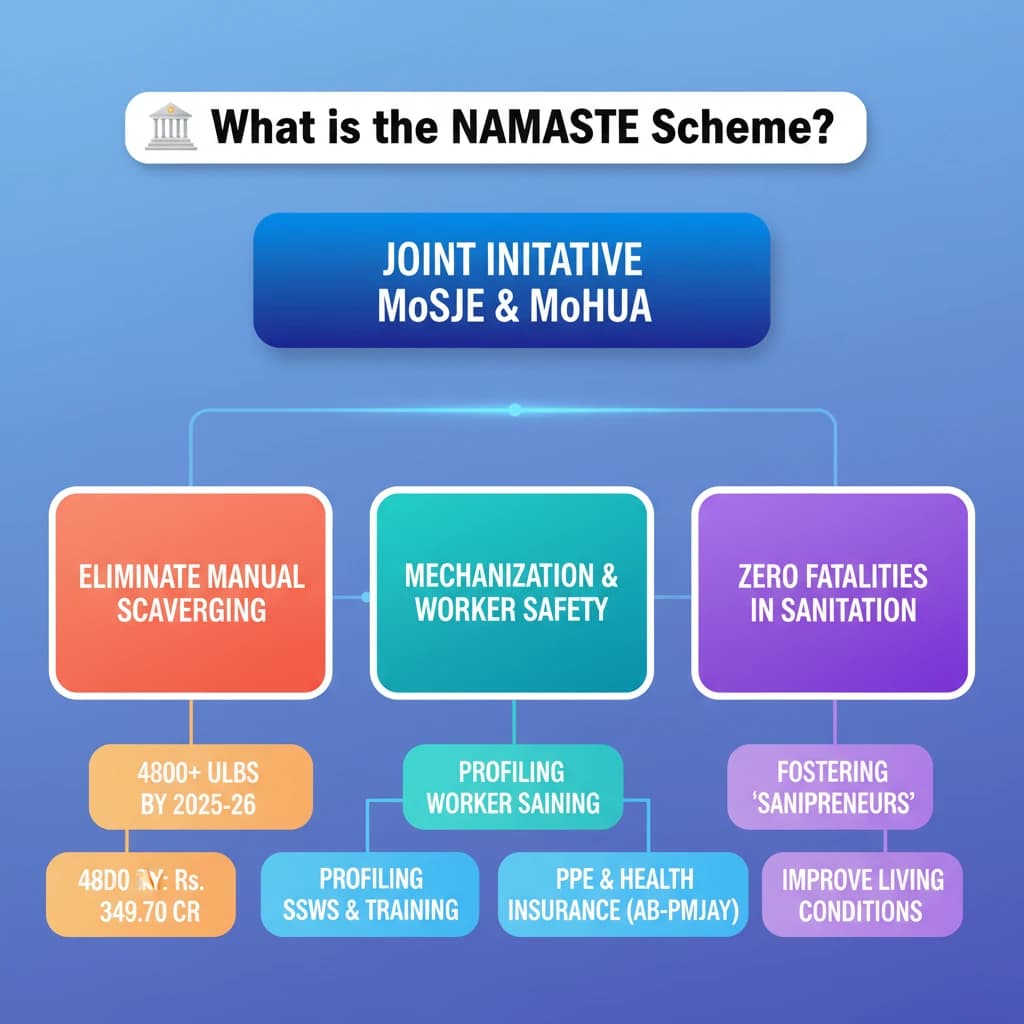
- NAMASTE is a joint initiative by MoSJE and MoHUA to eliminate manual scavenging.
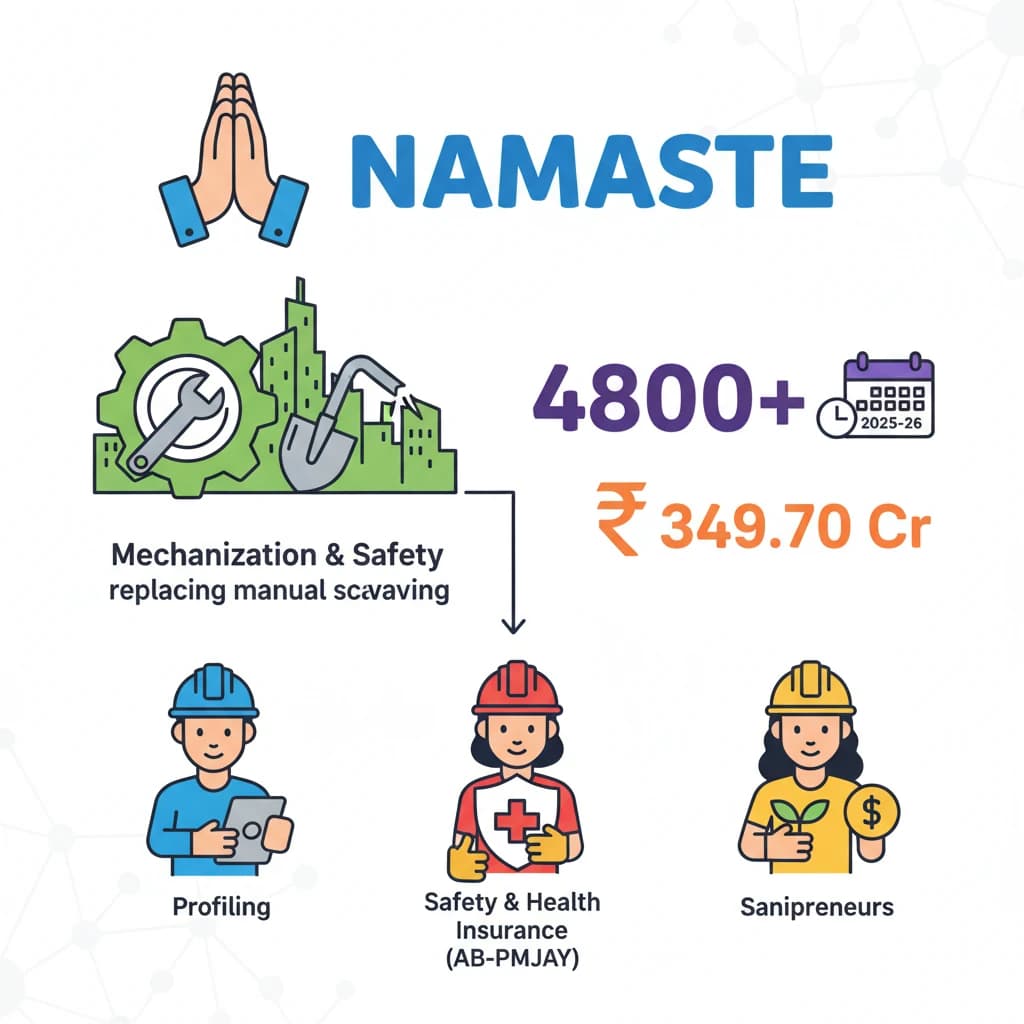
- It aims to cover all 4800+ ULBs by 2025-26 with an outlay of Rs. 349.70 crore.
- The scheme replaces the earlier SRMS, shifting focus to mechanization and worker safety.
- Key goals include profiling SSWs, providing safety training, PPE, health insurance (AB-PMJAY), and fostering 'sanipreneurs'.
- A primary objective is to achieve zero fatalities in sanitation work and improve worker living conditions.
- As of Sept 2024, ~38,000 SSWs profiled across 1,326 ULBs, with 12 states completing the process.
What is the NAMASTE Scheme?
Medium⏱️ 7 min read
social issues
📖 Introduction
Introduction to NAMASTE Scheme
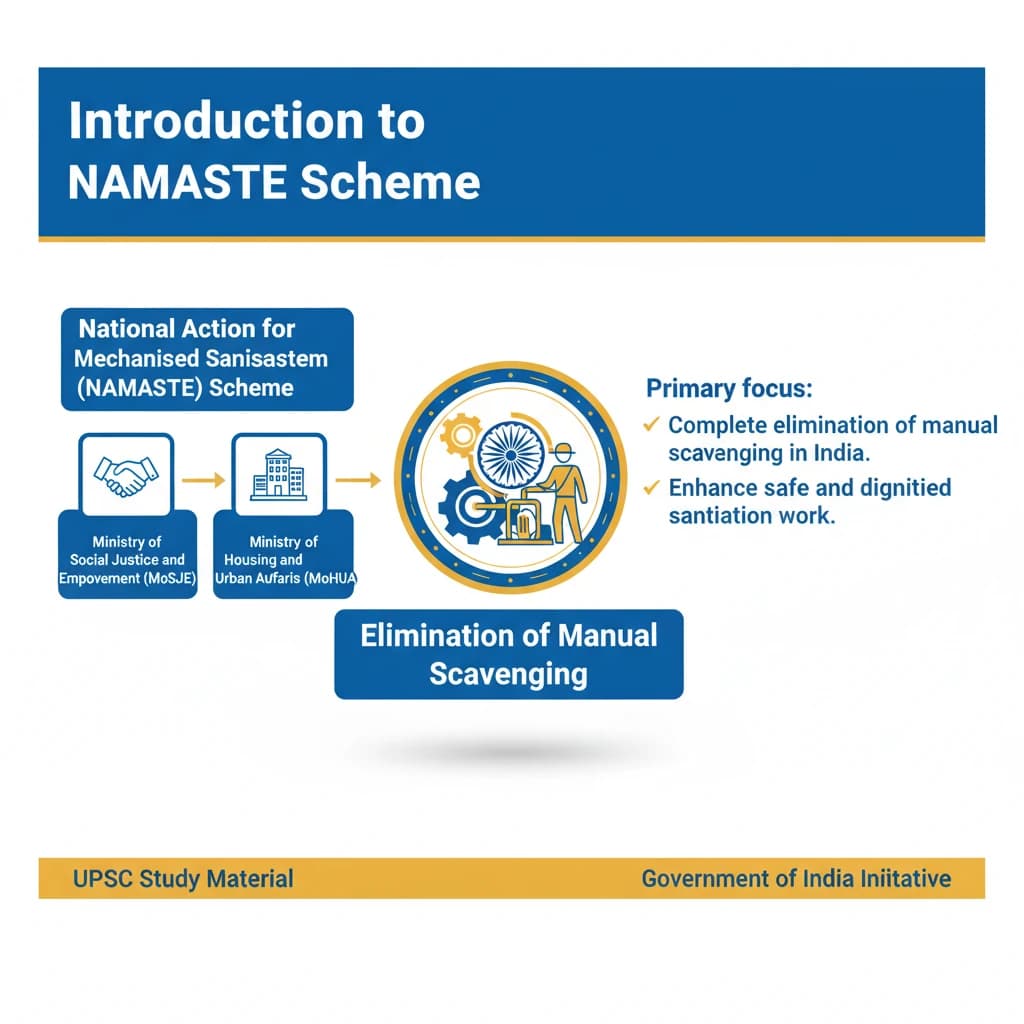
The National Action for Mechanised Sanitation Ecosystem (NAMASTE) scheme is a significant joint initiative. It is spearheaded by the Ministry of Social Justice and Empowerment (MoSJE) and the Ministry of Housing and Urban Affairs (MoHUA).
The primary focus of NAMASTE is the complete elimination of manual scavenging in India. It also aims to significantly enhance the safety and dignity of sanitation workers across the nation.
Funding and Coverage
The NAMASTE scheme has been allocated a substantial outlay of Rs. 349.70 crore. This funding is designed to support its extensive implementation across urban areas.
The scheme aims for comprehensive coverage, targeting all 4800+ Urban Local Bodies (ULBs) throughout India. This ambitious goal is set to be achieved by the fiscal year 2025-26.
Scheme Evolution and Replacement
NAMASTE replaces an earlier government initiative, the Self-Employment Scheme for Rehabilitation of Manual Scavengers (SRMS). This marks a strategic shift in approach towards sanitation worker welfare.
The new modified scheme emphasizes a proactive approach, starting with the profiling of Sewer/Septic Tanks Workers (SSWs). These workers are typically engaged by various Urban Local Bodies (ULBs).
Key Objectives of NAMASTE
The scheme outlines several critical objectives to achieve its overarching goal. These objectives are designed to ensure the safety, well-being, and empowerment of sanitation workers.
- Profiling of SSWs: To accurately identify and register all Sewer/Septic Tanks Workers (SSWs) engaged by ULBs.
- Occupational Safety Training: To provide comprehensive training to SSWs, equipping them with the necessary skills for safe sanitation work.
- Provision of Equipment: To supply Personal Protective Equipment (PPE) kits to all eligible SSWs, ensuring their safety during operations.
- Health Insurance: To extend health insurance coverage under the Ayushman Bharat Pradhan Mantri Jan Arogya Yojana (AB-PMJAY) to SSWs.
- Promoting 'Sanipreneurs': To offer capital subsidies, encouraging SSWs to transition into “sanipreneurs” or sanitation entrepreneurs. This fosters self-employment and formal employment opportunities.
- Eliminating Fatalities: A crucial objective is to achieve zero fatalities in sanitation work, addressing a long-standing and grave issue.
- Improving Living Conditions: To enhance the overall living conditions and health standards of sanitation workers, ensuring a dignified life.
Progress of Profiling (as of September 2024)
Significant progress has been made in the profiling process. As of September 2024, approximately 38,000 SSWs have been profiled across 1,326 ULBs.
Interestingly, 283 ULBs reported having zero SSWs, indicating varying levels of mechanization or local practices. Additionally, 2,364 ULBs reported fewer than 10 SSWs.
State-Level Efforts
Efforts to implement the NAMASTE scheme are underway across various states and Union Territories.
- Completed Profiling: 12 states and Union Territories have successfully completed the profiling process. Notable examples include Kerala and Rajasthan.
- Profiling in Progress: 17 states are currently in the process of profiling their SSWs. This includes states like Andhra Pradesh and Uttar Pradesh.
For UPSC Mains GS-II (Social Justice), understanding the shift from SRMS to NAMASTE and its multi-faceted approach to worker welfare and mechanization is crucial. Focus on the scheme's objectives and implementation challenges.
💡 Key Takeaways
- •NAMASTE is a joint initiative by MoSJE and MoHUA to eliminate manual scavenging.
- •It aims to cover all 4800+ ULBs by 2025-26 with an outlay of Rs. 349.70 crore.
- •The scheme replaces the earlier SRMS, shifting focus to mechanization and worker safety.
- •Key goals include profiling SSWs, providing safety training, PPE, health insurance (AB-PMJAY), and fostering 'sanipreneurs'.
- •A primary objective is to achieve zero fatalities in sanitation work and improve worker living conditions.
- •As of Sept 2024, ~38,000 SSWs profiled across 1,326 ULBs, with 12 states completing the process.
🧠 Memory Techniques
98% Verified Content
📚 Reference Sources
•Ministry of Social Justice and Empowerment (MoSJE) official documents
•Ministry of Housing and Urban Affairs (MoHUA) official documents
•Parliamentary data on sanitation worker fatalities (2019-2023)