Loading page, please wait…
What is the NAMASTE Scheme? - UPSC Social Issues
What is What is the NAMASTE Scheme? in UPSC Social Issues?
What is the NAMASTE Scheme? is a key topic under Social Issues for UPSC Civil Services Examination. Key points include: NAMASTE is a joint MoSJE-MoHUA scheme to eliminate manual scavenging and ensure sanitation worker safety.. It has an outlay of Rs. 343.76 crore, aiming to cover all 4800+ ULBs by 2025-26, replacing SRMS.. Key provisions include profiling Sewer/Septic Tanks Workers (SSWs), providing safety training, PPE kits, health insurance (AB-PMJAY), and capital subsidies for 'sanipreneurs'.. Understanding this topic is essential for both UPSC Prelims and Mains preparation.
Why is What is the NAMASTE Scheme? important for UPSC exam?
What is the NAMASTE Scheme? is a Medium-level topic in UPSC Social Issues. It is tested in both Prelims (factual MCQs) and Mains (analytical answer writing). Previous year UPSC questions have frequently covered aspects of What is the NAMASTE Scheme?, making it essential for comprehensive IAS preparation.
How to prepare What is the NAMASTE Scheme? for UPSC?
To prepare What is the NAMASTE Scheme? for UPSC: (1) Study the comprehensive notes covering all key concepts on Vaidra. (2) Practice previous year questions on this topic. (3) Connect it with current affairs using daily updates. (4) Revise using key takeaways and mind maps available for Social Issues. (5) Write practice answers linking What is the NAMASTE Scheme? to related GS Paper topics.
Key takeaways of What is the NAMASTE Scheme? for UPSC
- NAMASTE is a joint MoSJE-MoHUA scheme to eliminate manual scavenging and ensure sanitation worker safety.
- It has an outlay of Rs. 343.76 crore, aiming to cover all 4800+ ULBs by 2025-26, replacing SRMS.
- Key provisions include profiling Sewer/Septic Tanks Workers (SSWs), providing safety training, PPE kits, health insurance (AB-PMJAY), and capital subsidies for 'sanipreneurs'.
- A primary goal is to eliminate fatalities in sanitation work; 377 deaths occurred between 2019-2023.
- As of Sept 2024, ~38,000 SSWs profiled across 3,326 ULBs; some states run independent programs.
- The scheme promotes mechanization, rehabilitation, and formal employment for sanitation workers.
What is the NAMASTE Scheme?
Medium⏱️ 8 min read
social issues
📖 Introduction
Introduction to NAMASTE
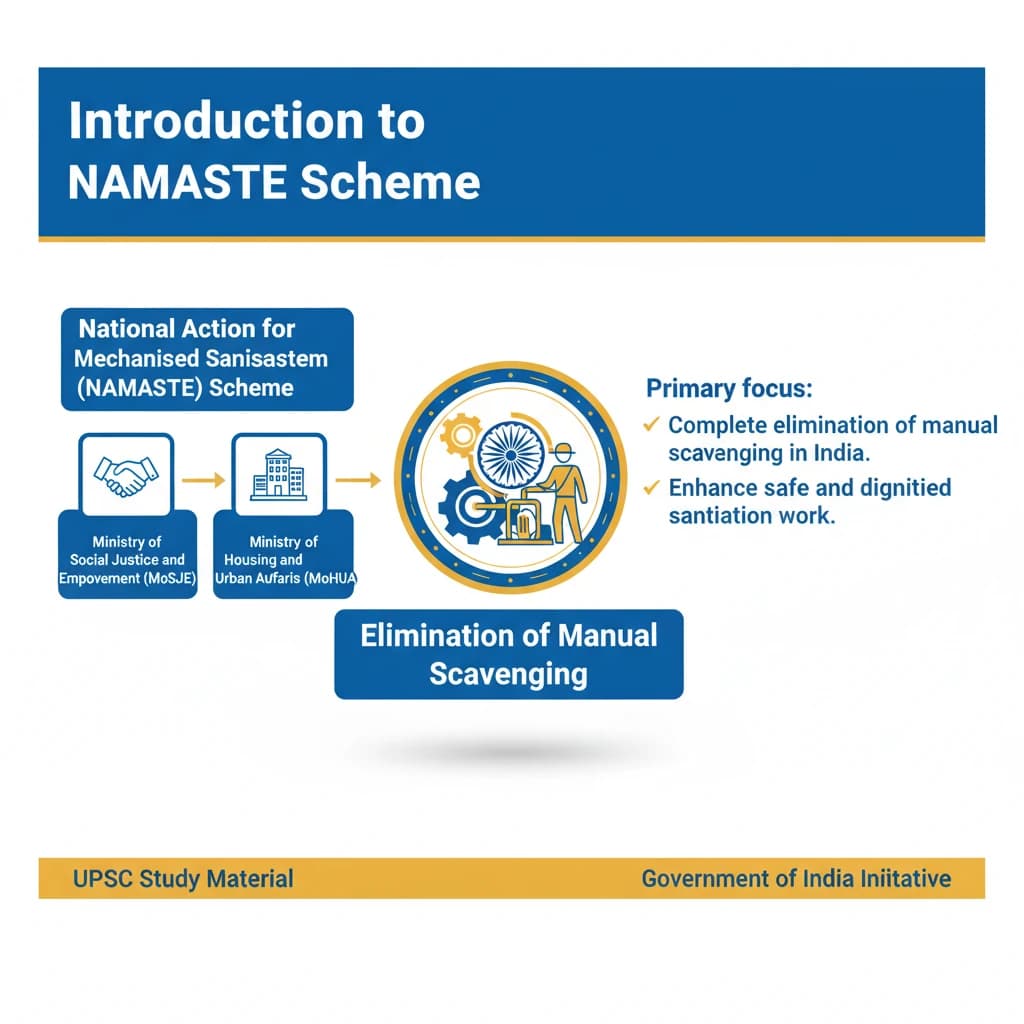
The National Action for Mechanised Sanitation Ecosystem (NAMASTE) scheme is a crucial initiative aimed at transforming sanitation practices in India. It is a joint effort by the Ministry of Social Justice and Empowerment (MoSJE) and the Ministry of Housing and Urban Affairs (MoHUA).
The primary focus of NAMASTE is the complete elimination of manual scavenging. It also seeks to significantly enhance the safety and dignity of sanitation workers across the country.
NAMASTE replaces the earlier Self-Employment Scheme for Rehabilitation of Manual Scavengers (SRMS), signifying a shift towards a more comprehensive and technology-driven approach.
Financial Outlay and Coverage
The NAMASTE scheme has been allocated a substantial budget to achieve its ambitious goals. This financial commitment underscores the government's resolve to address the issue of unsafe sanitation work.
Outlay: Rs. 343.76 crore
Coverage Target: All 4800+ Urban Local Bodies (ULBs) across India
Timeline: By the financial year 2025-26
Profiling of Sanitation Workers
A fundamental step under the modified NAMASTE scheme is the systematic profiling of individuals involved in sanitation work. This ensures targeted interventions and benefits reach the intended beneficiaries.
The scheme specifically focuses on Sewer/Septic Tanks Workers (SSWs) who are engaged by Urban Local Bodies (ULBs). This profiling helps in understanding their numbers, working conditions, and needs.
Key Provisions for Sanitation Workers
NAMASTE outlines several critical provisions designed to safeguard and empower SSWs. These measures aim to provide them with the necessary tools, training, and social security.
- Occupational Safety Training: SSWs receive comprehensive training to perform their duties safely.
- Personal Protective Equipment (PPE) Kits: Provision of essential gear to protect workers from hazards.
- Health Insurance: Inclusion under the Ayushman Bharat Pradhan Mantri Jan Arogya Yojana (AB-PMJAY), ensuring access to healthcare.
- Capital Subsidies: Support to enable SSWs to transition into “sanipreneurs” or sanitation entrepreneurs.
Goals and Objectives of NAMASTE
The overarching goals of the NAMASTE scheme are multifaceted, addressing both the immediate safety concerns and the long-term socio-economic upliftment of sanitation workers.
Primary Goal: To eliminate fatalities in sanitation work, particularly in sewers and septic tanks.
Another crucial objective is to improve the overall living conditions and health outcomes for sanitation workers. This holistic approach aims to restore dignity to their profession.
The scheme also promotes self-employment and formal employment opportunities for SSWs, encouraging their transition into recognized roles within the sanitation ecosystem.
Impact of Hazardous Sanitation Work
Despite ongoing efforts, the dangers associated with hazardous cleaning of sewers and septic tanks remain a grim reality. Government data highlights the tragic loss of life in recent years.
Between 2019 and 2023, at least 377 people across the country have died due to hazardous cleaning of sewers and septic tanks, as reported in Parliament.
Progress of Profiling (as of September 2024)
Significant progress has been made in profiling Sewer/Septic Tanks Workers (SSWs) under the NAMASTE scheme, although challenges remain in comprehensive data collection.
- Total ULBs Profiled: 3,326 ULBs
- Approximate SSWs Profiled: 38,000 SSWs
- ULBs Reporting Zero SSWs: 283 ULBs
- ULBs Reporting Fewer than 10 SSWs: 2,364 ULBs
State-Level Efforts and Challenges
The implementation and reporting of NAMASTE vary across different states and Union Territories, indicating a need for more uniform and coordinated efforts.
Some states have successfully completed the profiling process, demonstrating effective local governance and commitment to the scheme's objectives.
- States/UTs Completed Profiling: 12 states and Union Territories, including Kerala and Rajasthan.
- States Still in Process: 17 states, such as Andhra Pradesh and Uttar Pradesh.
A challenge is that certain states are running their own parallel programs and are not fully integrating their data with the central NAMASTE framework.
Examples of Independent Programs: Tamil Nadu and Odisha are running their own separate sanitation worker programs.
The Ministry of Housing and Urban Affairs estimates a larger population of sanitation workers, indicating the scale of the task ahead for comprehensive profiling and support.
Estimated SSWs in Urban Areas: Around 100,000 SSWs based on urban population statistics and decadal growth rates.
For UPSC Mains GS-II (Social Justice), understanding the shift from SRMS to NAMASTE and its multi-pronged approach (safety, rehabilitation, entrepreneurship) is crucial. Emphasize the humane aspect and dignity of labour.
💡 Key Takeaways
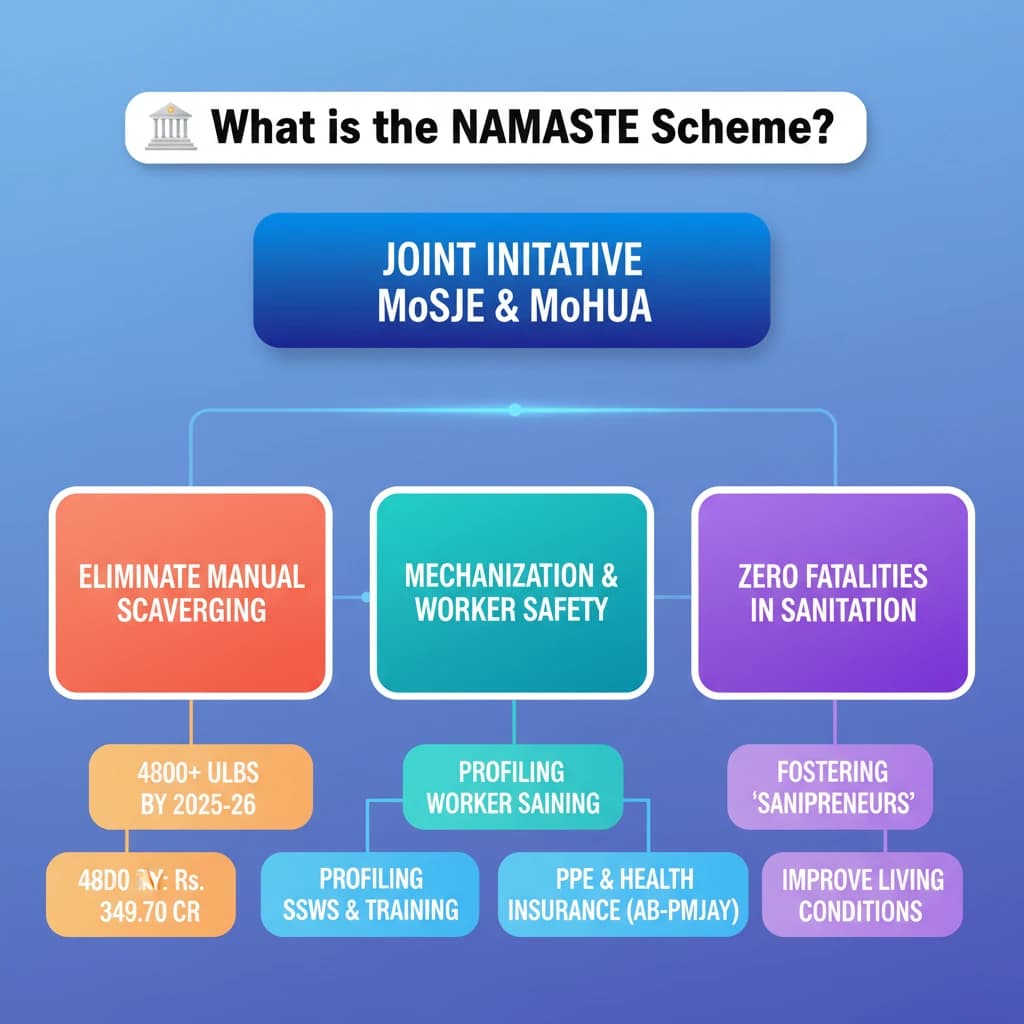
- •NAMASTE is a joint MoSJE-MoHUA scheme to eliminate manual scavenging and ensure sanitation worker safety.
- •It has an outlay of Rs. 343.76 crore, aiming to cover all 4800+ ULBs by 2025-26, replacing SRMS.
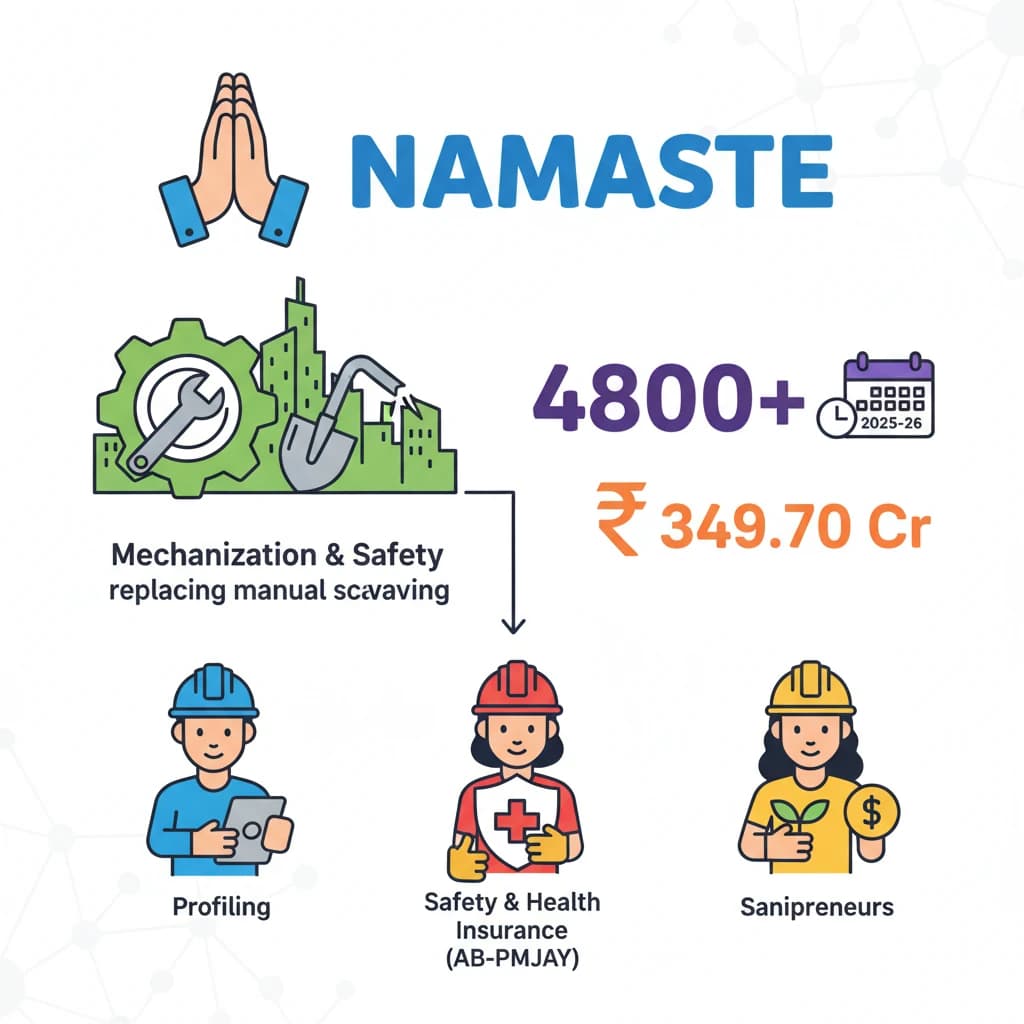
- •Key provisions include profiling Sewer/Septic Tanks Workers (SSWs), providing safety training, PPE kits, health insurance (AB-PMJAY), and capital subsidies for 'sanipreneurs'.
- •A primary goal is to eliminate fatalities in sanitation work; 377 deaths occurred between 2019-2023.
- •As of Sept 2024, ~38,000 SSWs profiled across 3,326 ULBs; some states run independent programs.
- •The scheme promotes mechanization, rehabilitation, and formal employment for sanitation workers.
🧠 Memory Techniques
95% Verified Content
📚 Reference Sources
•Ministry of Social Justice and Empowerment (MoSJE) official documents
•Ministry of Housing and Urban Affairs (MoHUA) official documents
•Parliamentary data on sanitation worker deaths