Loading page, please wait…
What is the State of HIV Infection in India? - UPSC Social Issues
What is What is the State of HIV Infection in India? in UPSC Social Issues?
What is the State of HIV Infection in India? is a key topic under Social Issues for UPSC Civil Services Examination. Key points include: India has approximately 2.4 million people living with HIV (PLHIV) as of 2021, with an adult prevalence rate of 0.22%.. The country is witnessing a downward trend in new HIV infections, indicating successful control efforts.. The epidemic is concentrated among high-risk populations like injecting drug users (5.33%) and female sex workers (1.13%).. Understanding this topic is essential for both UPSC Prelims and Mains preparation.
Why is What is the State of HIV Infection in India? important for UPSC exam?
What is the State of HIV Infection in India? is a Medium-level topic in UPSC Social Issues. It is tested in both Prelims (factual MCQs) and Mains (analytical answer writing). Previous year UPSC questions have frequently covered aspects of What is the State of HIV Infection in India?, making it essential for comprehensive IAS preparation.
How to prepare What is the State of HIV Infection in India? for UPSC?
To prepare What is the State of HIV Infection in India? for UPSC: (1) Study the comprehensive notes covering all key concepts on Vaidra. (2) Practice previous year questions on this topic. (3) Connect it with current affairs using daily updates. (4) Revise using key takeaways and mind maps available for Social Issues. (5) Write practice answers linking What is the State of HIV Infection in India? to related GS Paper topics.
Key takeaways of What is the State of HIV Infection in India? for UPSC
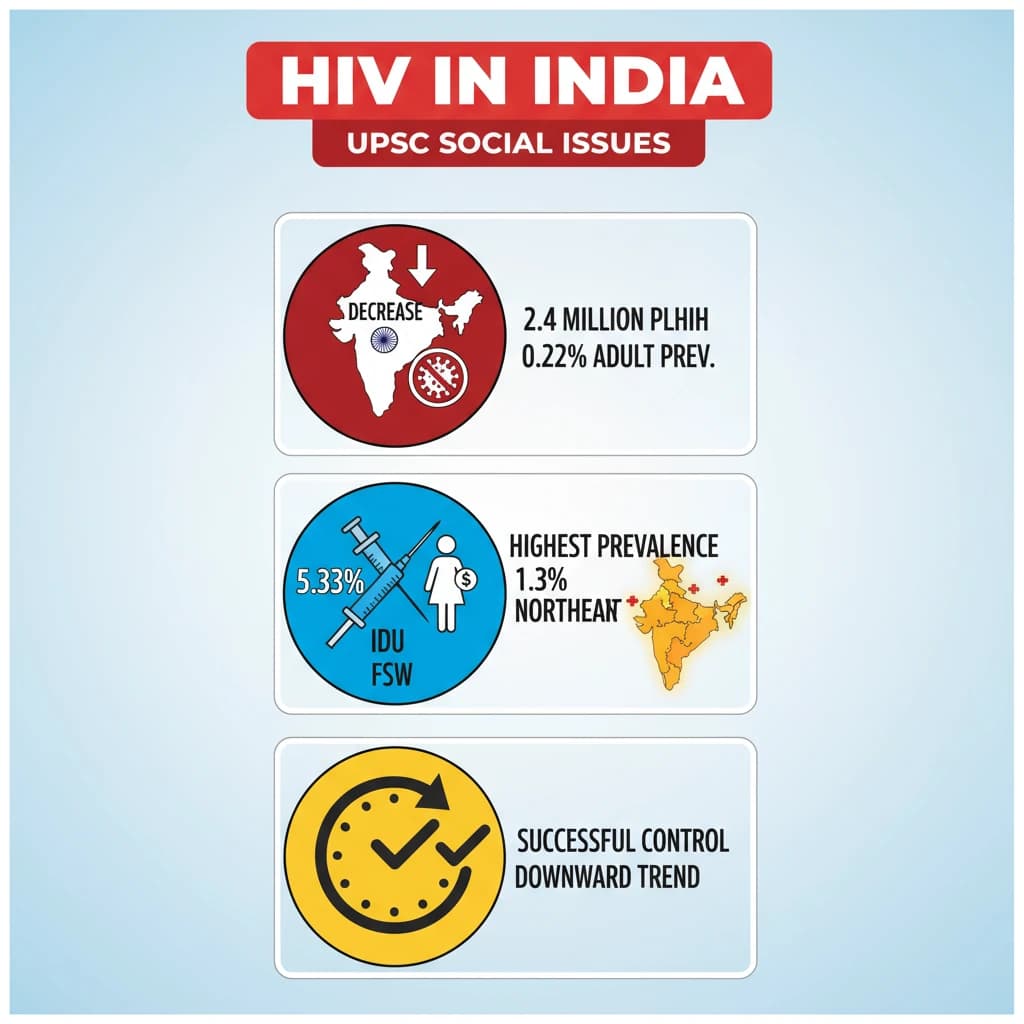
- India has approximately 2.4 million people living with HIV (PLHIV) as of 2021, with an adult prevalence rate of 0.22%.
- The country is witnessing a downward trend in new HIV infections, indicating successful control efforts.
- The epidemic is concentrated among high-risk populations like injecting drug users (5.33%) and female sex workers (1.13%).
- Northeast states (Mizoram, Nagaland, Manipur) have the highest adult HIV prevalence rates.
- Southern states (Maharashtra, Andhra Pradesh, Karnataka) account for the largest absolute numbers of PLHIV.
- Women constitute a significant portion (39%) of the total HIV-positive population.
What is the State of HIV Infection in India?
Medium⏱️ 7 min read
social issues
📖 Introduction
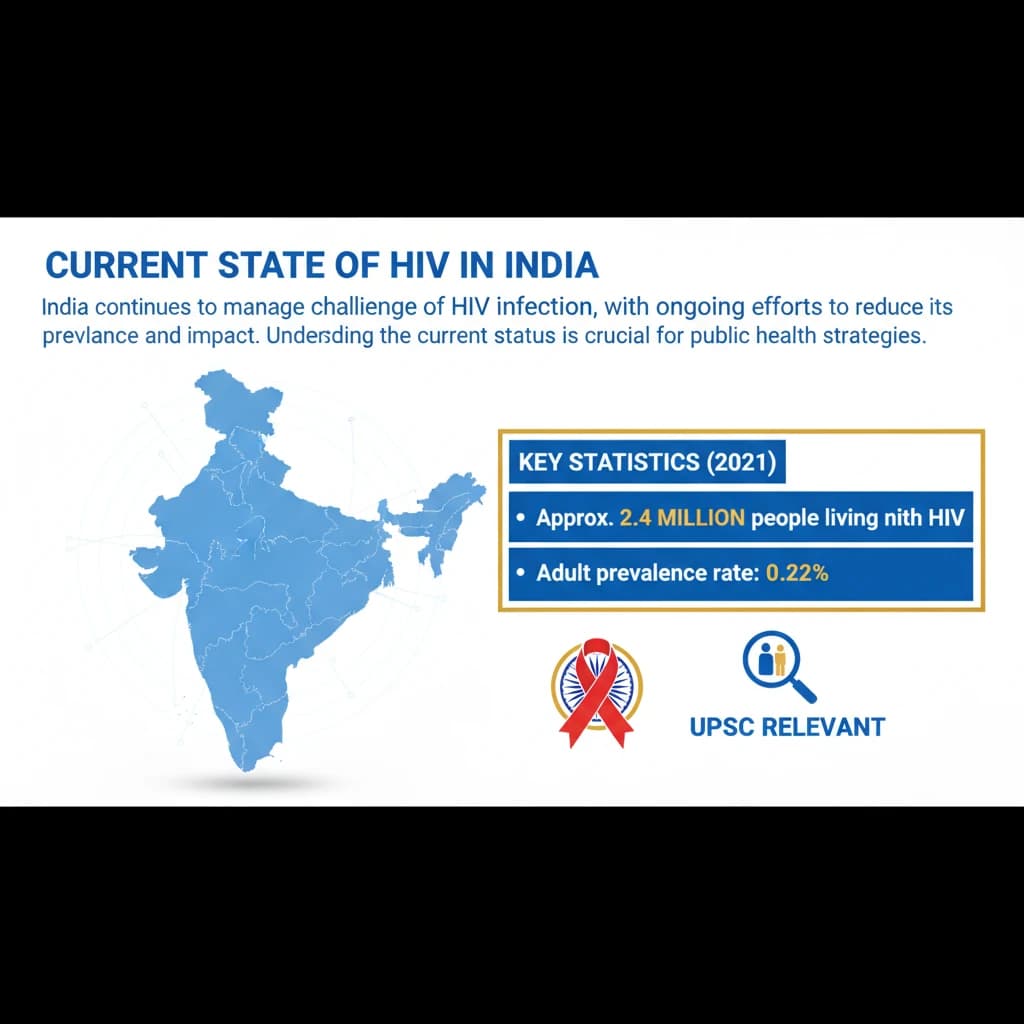
Current State of HIV in India
India continues to manage the challenge of HIV infection, with ongoing efforts to reduce its prevalence and impact. Understanding the current status is crucial for public health strategies.
- As of 2021, approximately 2.4 million people are living with HIV in India.
- The adult prevalence rate stands at 0.22%.
- The India HIV Estimates 2021 report indicated about 2.3 million PLHIV, showing a positive downward trend in new infections.
Demographic Distribution of HIV Infection
The HIV epidemic in India is not uniformly distributed but is largely concentrated within specific high-risk populations and demographic groups.
Key demographic segments with higher prevalence rates include:
- Female sex workers: Prevalence rate of 1.13%.
- Injecting drug users: Significantly higher prevalence at 5.33%.
Certain age groups and genders also show distinct patterns in the overall HIV-positive population.
- Children under 15 years account for about 2.5% of all infections.
- Women represent approximately 39% of the total HIV-positive population in India.
Geographical Concentration: High-Prevalence States
Geographically, the HIV epidemic shows significant variations across different states, with certain regions reporting higher adult prevalence rates.
The Northeast region States exhibit the highest adult HIV prevalence:
- Mizoram: 2.70%
- Nagaland: 1.36%
- Manipur: 1.05%
Following the Northeast, the Southern States also report notable prevalence rates, indicating a regional concentration of the epidemic.
Adult HIV prevalence in Southern States:
- Andhra Pradesh: 0.67%
- Telangana: 0.47%
- Karnataka: 0.46%
When considering the absolute number of People Living with HIV (PLHIV), the Southern States account for the largest share.
The total number of PLHIV is estimated at around 24 lakhs (2.4 million).
The top three states with the largest number of PLHIV are:
- Maharashtra
- Andhra Pradesh
- Karnataka
💡 Key Takeaways
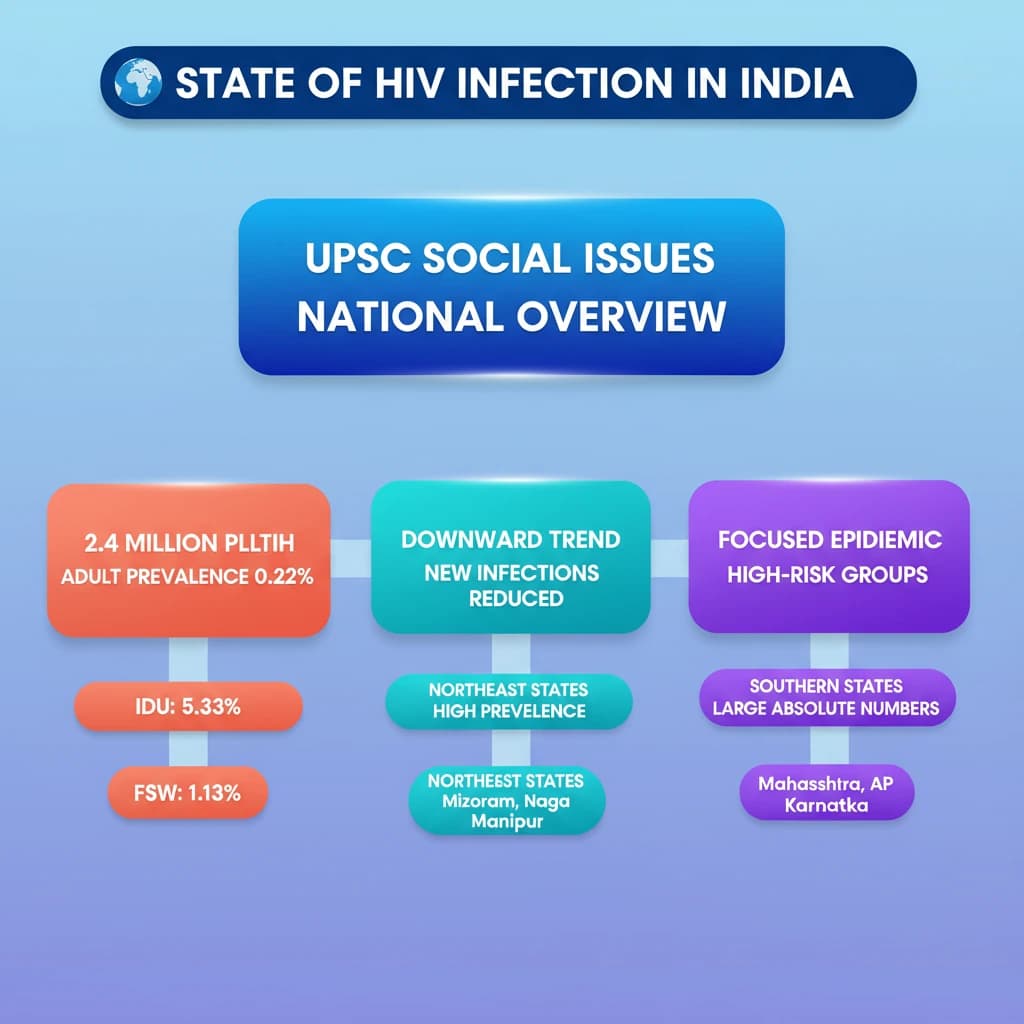
- •India has approximately 2.4 million people living with HIV (PLHIV) as of 2021, with an adult prevalence rate of 0.22%.
- •The country is witnessing a downward trend in new HIV infections, indicating successful control efforts.
- •The epidemic is concentrated among high-risk populations like injecting drug users (5.33%) and female sex workers (1.13%).
- •Northeast states (Mizoram, Nagaland, Manipur) have the highest adult HIV prevalence rates.
- •Southern states (Maharashtra, Andhra Pradesh, Karnataka) account for the largest absolute numbers of PLHIV.
- •Women constitute a significant portion (39%) of the total HIV-positive population.
🧠 Memory Techniques
95% Verified Content
📚 Reference Sources
•India HIV Estimates 2021 report
•Drishti IAS Summary