Loading page, please wait…
What is the Statistics Related to Suicide in India? - UPSC Social Issues
What is What is the Statistics Related to Suicide in India? in UPSC Social Issues?
What is the Statistics Related to Suicide in India? is a key topic under Social Issues for UPSC Civil Services Examination. Key points include: Student suicides in India are rising significantly faster (4.5% annually) than the overall suicide rate (2%).. NCRB data, based on police FIRs, likely underreports actual student suicide cases.. Gender disparity exists: male students account for 53% of suicides, but female student suicides saw a higher annual increase (5% vs 1%).. Understanding this topic is essential for both UPSC Prelims and Mains preparation.
Why is What is the Statistics Related to Suicide in India? important for UPSC exam?
What is the Statistics Related to Suicide in India? is a Medium-level topic in UPSC Social Issues. It is tested in both Prelims (factual MCQs) and Mains (analytical answer writing). Previous year UPSC questions have frequently covered aspects of What is the Statistics Related to Suicide in India?, making it essential for comprehensive IAS preparation.
How to prepare What is the Statistics Related to Suicide in India? for UPSC?
To prepare What is the Statistics Related to Suicide in India? for UPSC: (1) Study the comprehensive notes covering all key concepts on Vaidra. (2) Practice previous year questions on this topic. (3) Connect it with current affairs using daily updates. (4) Revise using key takeaways and mind maps available for Social Issues. (5) Write practice answers linking What is the Statistics Related to Suicide in India? to related GS Paper topics.
Key takeaways of What is the Statistics Related to Suicide in India? for UPSC
- Student suicides in India are rising significantly faster (4.5% annually) than the overall suicide rate (2%).
- NCRB data, based on police FIRs, likely underreports actual student suicide cases.
- Gender disparity exists: male students account for 53% of suicides, but female student suicides saw a higher annual increase (5% vs 1%).
- Over the last decade, student suicides nearly doubled from 6,654 to 13,044, despite a slight decrease in the 0-24 age group.
- Maharashtra, Tamil Nadu, and Madhya Pradesh are hotspots, collectively accounting for one-third of national student suicides.
- The statistics highlight an urgent need for targeted mental health interventions and policy reforms in the education sector.
What is the Statistics Related to Suicide in India?
Medium⏱️ 7 min read
social issues
📖 Introduction
Understanding Suicide Statistics in India
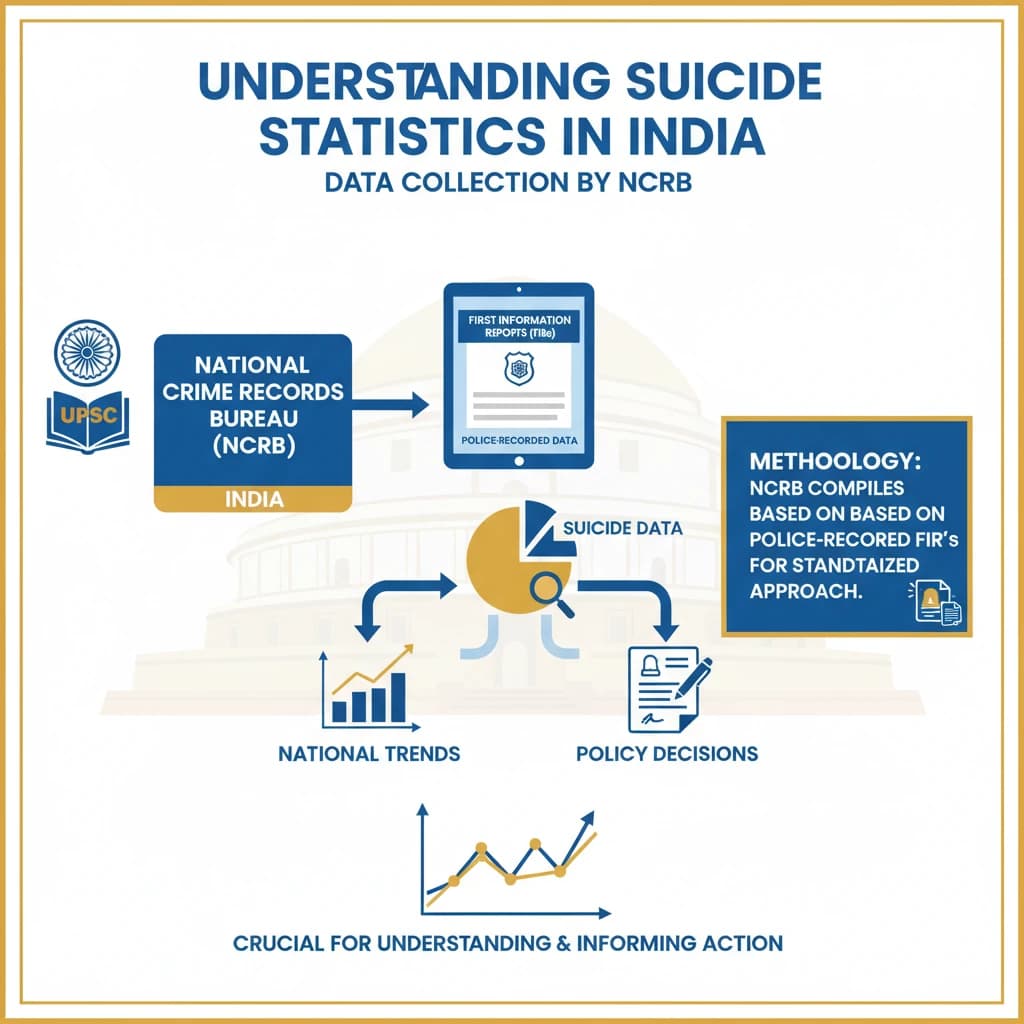
The collection of suicide statistics in India is primarily managed by the National Crime Records Bureau (NCRB). This data is crucial for understanding national trends and informing policy decisions.
The NCRB compiles its data based on police-recorded First Information Reports (FIRs). This methodology ensures a standardized approach to data collection across the country.
Surge in Student Suicides
India has witnessed a significant increase in student suicides. This alarming trend indicates growing pressures and challenges faced by the student community.
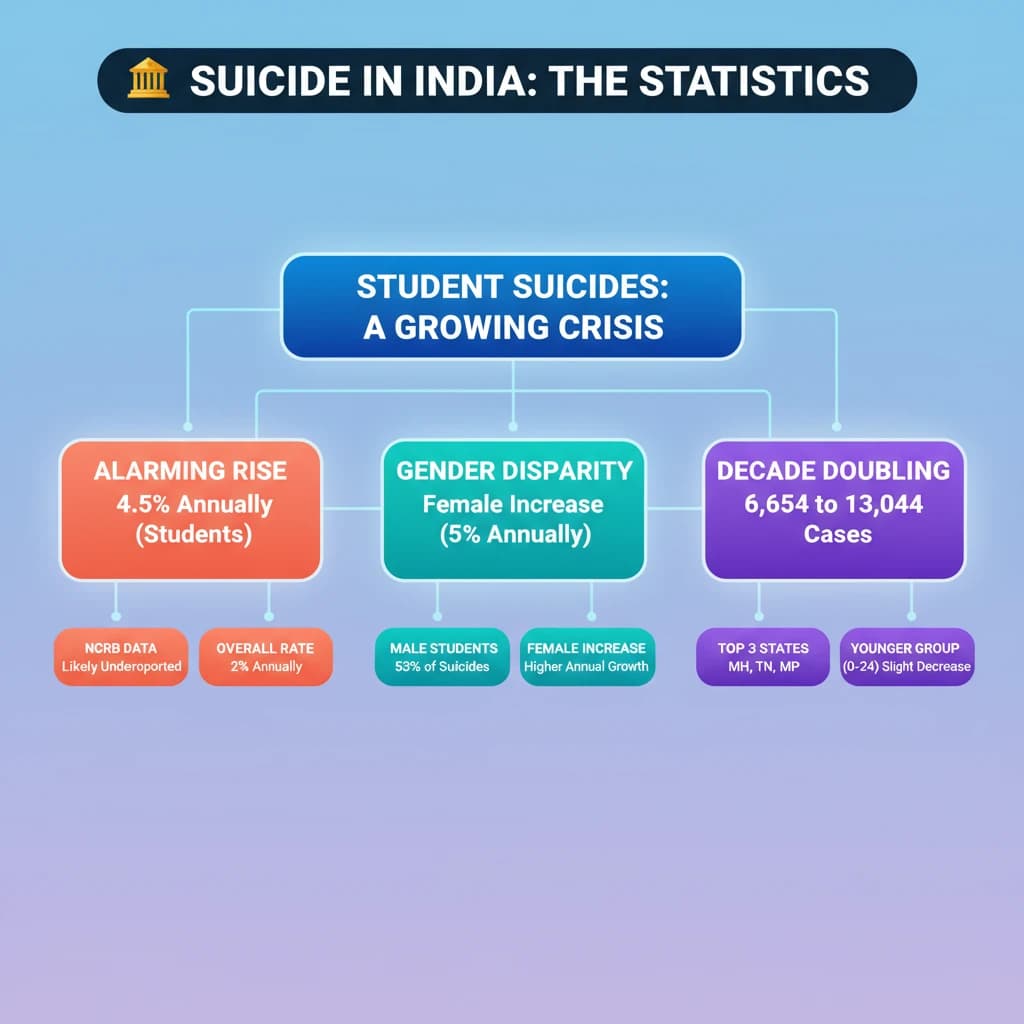
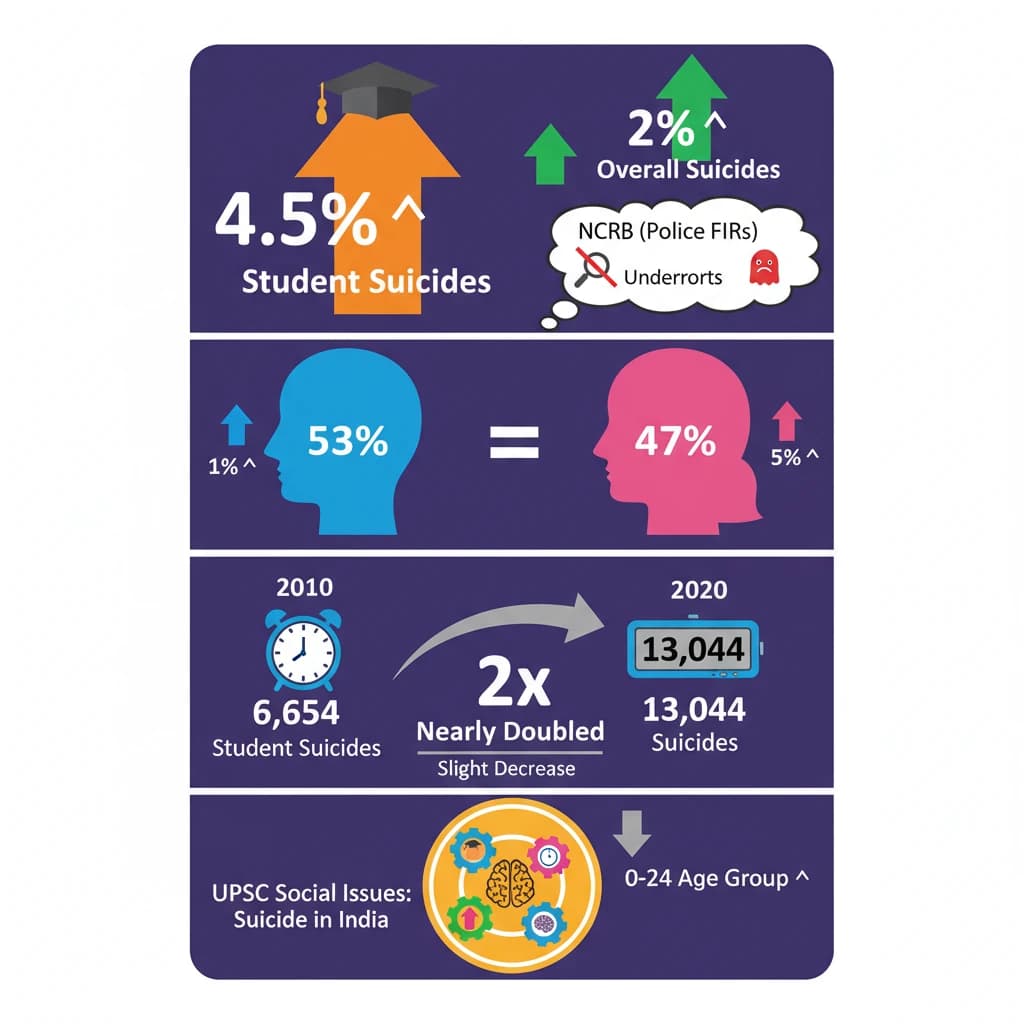
Student suicides have surged by 4.5% annually. This rate is notably higher than the overall suicide rate increase of 2%, highlighting a specific vulnerability within this demographic.
Despite these figures, there is a likely phenomenon of "underreporting" of student suicide cases. This suggests the actual numbers might be even higher, posing a greater challenge.
Gender Disparity in Student Suicides
A noticeable gender disparity exists within the statistics for student suicides. This requires a nuanced understanding of the differing pressures faced by male and female students.
In 2022, male students accounted for 53% of the total student suicides. While male suicides increased by 1% from 2021, female student suicides saw a more significant rise of 5%.
Decade-Long Trend
Analyzing the data over the past decade reveals a disturbing long-term trend in student suicides. The numbers have risen substantially despite demographic shifts.
Over the past decade, the number of student suicides rose significantly from 6,654 to 13,044. This occurred despite a slight decrease in the 0-24 age group population during the same period.
State-Wise Distribution
The incidence of student suicides is not uniformly distributed across India. Certain states report a disproportionately higher number of cases.
Maharashtra, Tamil Nadu, and Madhya Pradesh reported the highest numbers of student suicides. Collectively, these three states accounted for one-third of the national total.
💡 Key Takeaways
- •Student suicides in India are rising significantly faster (4.5% annually) than the overall suicide rate (2%).
- •NCRB data, based on police FIRs, likely underreports actual student suicide cases.
- •Gender disparity exists: male students account for 53% of suicides, but female student suicides saw a higher annual increase (5% vs 1%).
- •Over the last decade, student suicides nearly doubled from 6,654 to 13,044, despite a slight decrease in the 0-24 age group.
- •Maharashtra, Tamil Nadu, and Madhya Pradesh are hotspots, collectively accounting for one-third of national student suicides.
- •The statistics highlight an urgent need for targeted mental health interventions and policy reforms in the education sector.
🧠 Memory Techniques
95% Verified Content
📚 Reference Sources
•National Crime Records Bureau (NCRB) Reports (implied)