Loading page, please wait…
What is the Status of Women’s Representation in Indian Parliament? - UPSC Social Issues
What is What is the Status of Women’s Representation in Indian Parliament? in UPSC Social Issues?
What is the Status of Women’s Representation in Indian Parliament? is a key topic under Social Issues for UPSC Civil Services Examination. Key points include: Women's representation in Lok Sabha is 13.6% (18th LS) and in Rajya Sabha is 13%.. This is a significant rise from ~5% until 2009 but still below global averages.. The Nari Shakti Vandan Adhiniyam, 2023, reserves 33% of seats for women in Lok Sabha and State Assemblies, to be implemented post-delimitation.. Understanding this topic is essential for both UPSC Prelims and Mains preparation.
Why is What is the Status of Women’s Representation in Indian Parliament? important for UPSC exam?
What is the Status of Women’s Representation in Indian Parliament? is a Medium-level topic in UPSC Social Issues. It is tested in both Prelims (factual MCQs) and Mains (analytical answer writing). Previous year UPSC questions have frequently covered aspects of What is the Status of Women’s Representation in Indian Parliament?, making it essential for comprehensive IAS preparation.
How to prepare What is the Status of Women’s Representation in Indian Parliament? for UPSC?
To prepare What is the Status of Women’s Representation in Indian Parliament? for UPSC: (1) Study the comprehensive notes covering all key concepts on Vaidra. (2) Practice previous year questions on this topic. (3) Connect it with current affairs using daily updates. (4) Revise using key takeaways and mind maps available for Social Issues. (5) Write practice answers linking What is the Status of Women’s Representation in Indian Parliament? to related GS Paper topics.
Key takeaways of What is the Status of Women’s Representation in Indian Parliament? for UPSC
- Women's representation in Lok Sabha is 13.6% (18th LS) and in Rajya Sabha is 13%.
- This is a significant rise from ~5% until 2009 but still below global averages.
- The Nari Shakti Vandan Adhiniyam, 2023, reserves 33% of seats for women in Lok Sabha and State Assemblies, to be implemented post-delimitation.
- Panchayati Raj Institutions already have 33% women's reservation, serving as a successful model.
- Low representation is due to socio-cultural, economic, and political barriers.
What is the Status of Women’s Representation in Indian Parliament?
Medium⏱️ 8 min read
social issues
📖 Introduction
Understanding Women's Representation in Parliament
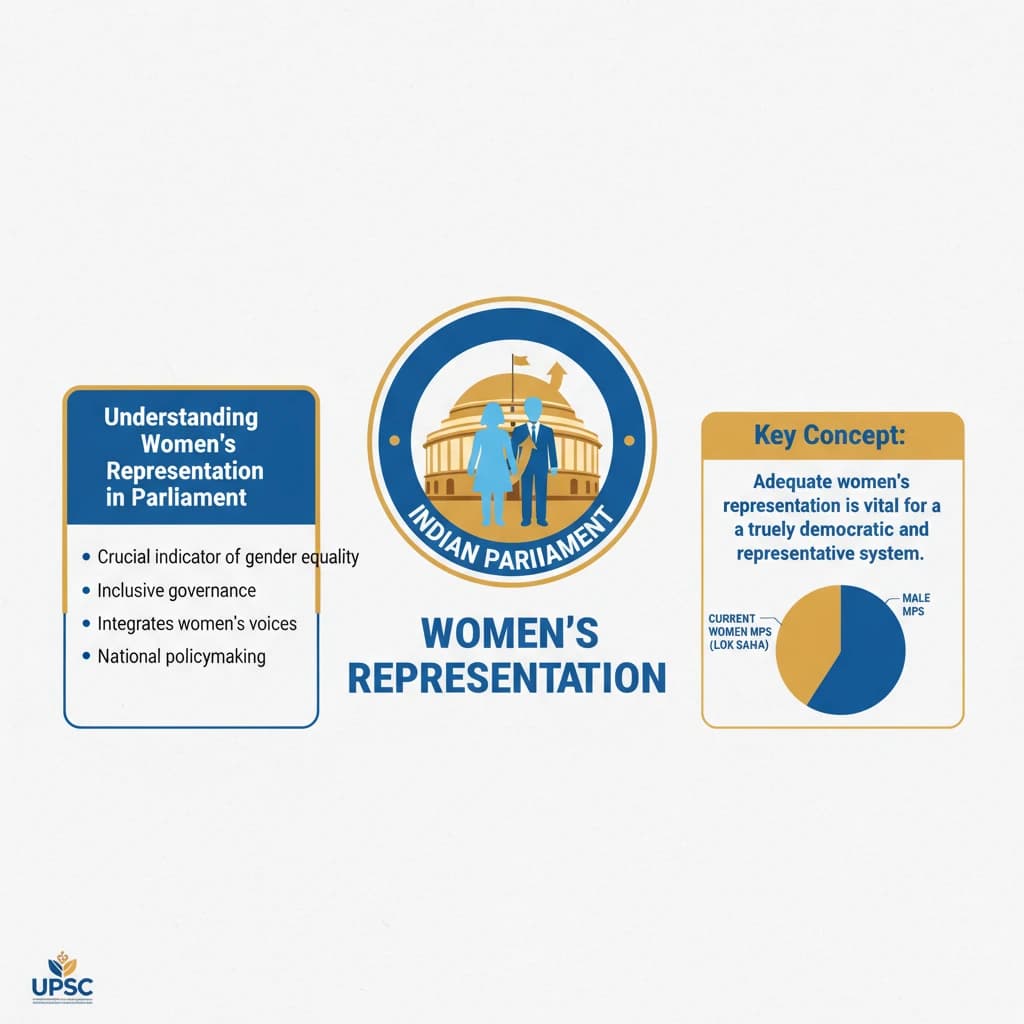
Women's representation in the Indian Parliament is a crucial indicator of gender equality and inclusive governance. It reflects the extent to which women's voices and perspectives are integrated into national policymaking and legislative processes.
Key Concept: Adequate women's representation is vital for a truly democratic and representative system, ensuring diverse societal needs are addressed.
Current Status in Lok Sabha
The Lok Sabha, India's lower house of Parliament, has seen a gradual but slow increase in the percentage of its women members. This trend highlights ongoing efforts, albeit with significant room for improvement.
Lok Sabha Women Representation:
- Until 2009: Approximately 5.0%
- Current 18th Lok Sabha: Risen to 13.6%
This increase, while positive, still places India significantly below the global average for women in national parliaments, which stood at 26.9% as of January 2024, according to the Inter-Parliamentary Union (IPU).
Current Status in Rajya Sabha
The Rajya Sabha, the upper house of Parliament, also reflects a similar scenario regarding women's representation. Its composition is crucial for deliberative legislative functions.
Rajya Sabha Women Representation:
- Current percentage: 13%
The figures for both houses underscore the persistent challenge of achieving equitable gender balance in India's highest legislative bodies.
UPSC Insight: Be prepared to analyze the causes for low representation, its implications, and potential solutions, including constitutional amendments and electoral reforms. Quote specific percentages and the Nari Shakti Vandan Adhiniyam, 2023.
Challenges to Increased Representation
Several factors contribute to the relatively low representation of women in the Indian Parliament. These include socio-cultural barriers, economic disparities, and political dynamics.
- Patriarchal Mindset: Traditional societal norms often limit women's participation in public life.
- Financial Constraints: Election campaigns are expensive, posing a barrier for many women candidates.
- Lack of Political Will: Political parties often do not field enough women candidates.
- Electoral System Issues: The 'first-past-the-post' system can make it harder for women to win against established male candidates.
💡 Key Takeaways
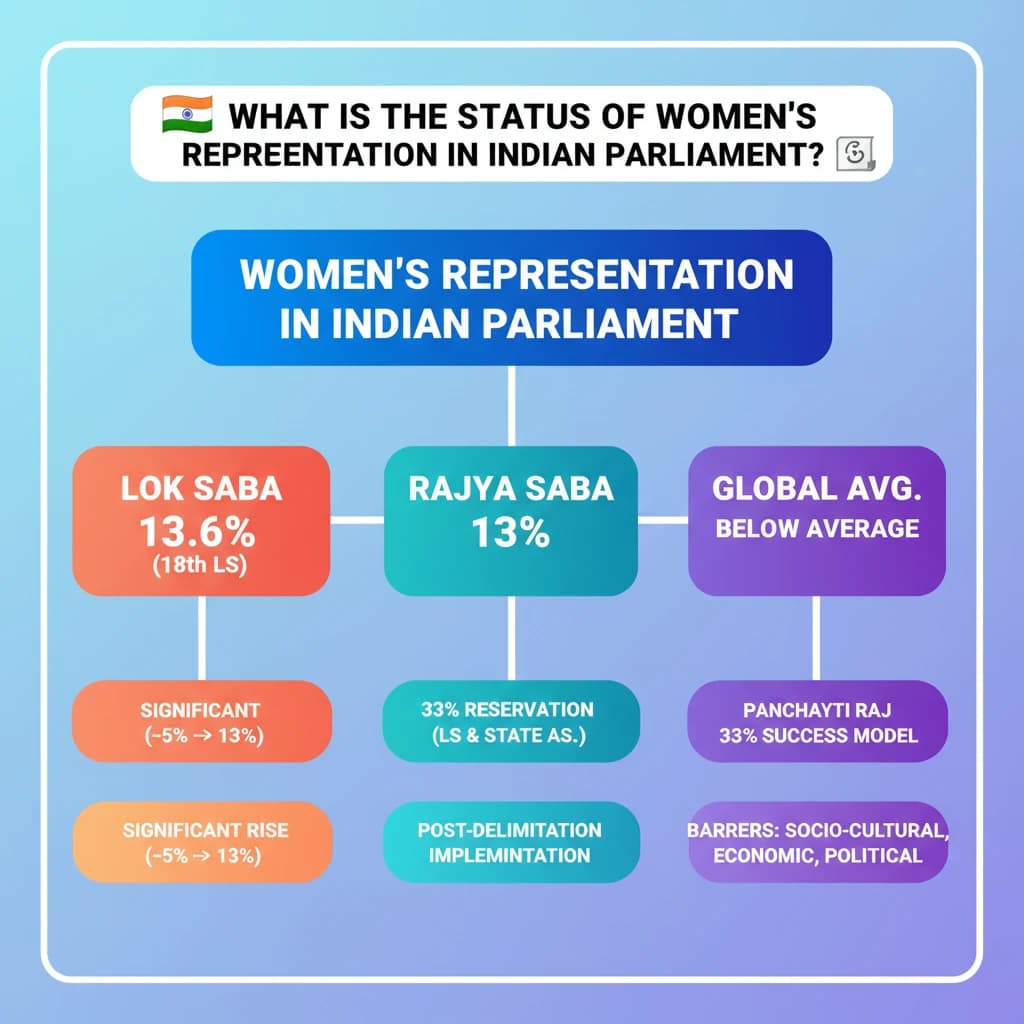
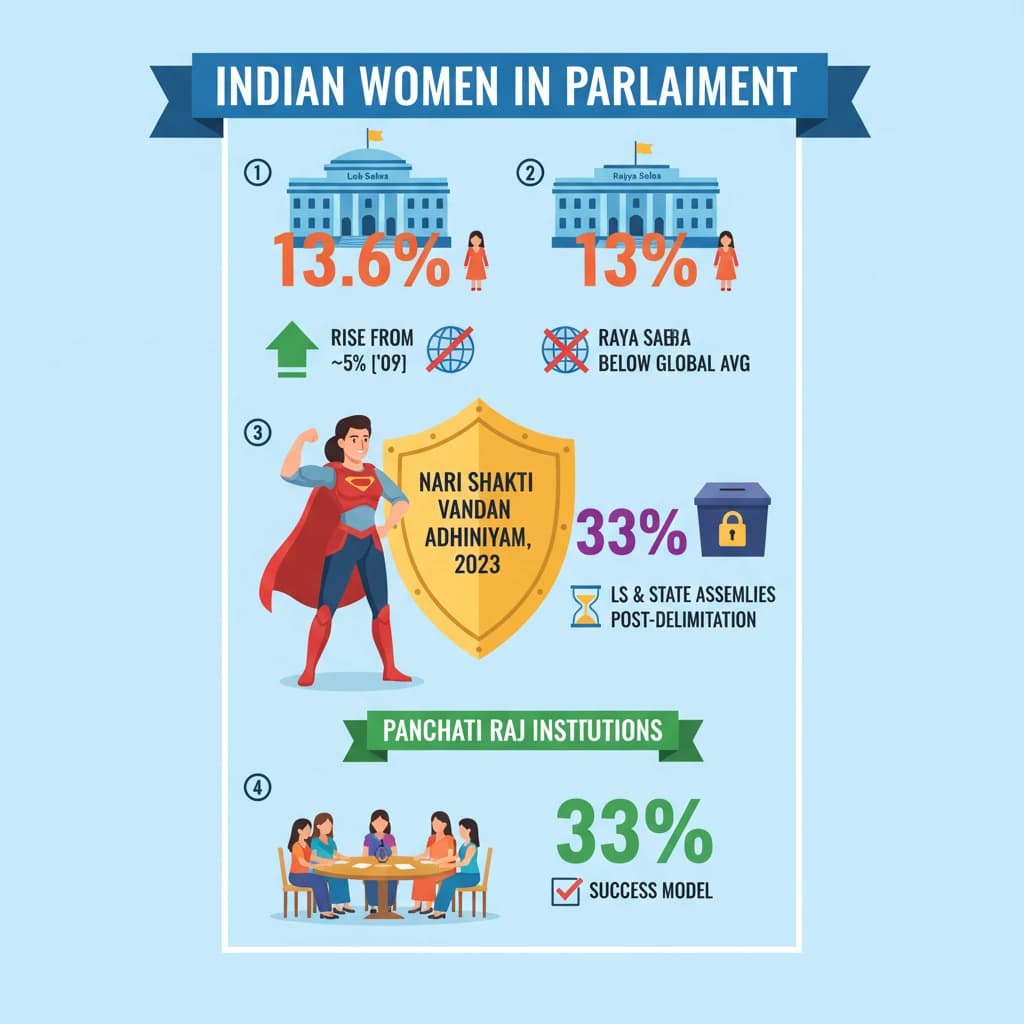
- •Women's representation in Lok Sabha is 13.6% (18th LS) and in Rajya Sabha is 13%.
- •This is a significant rise from ~5% until 2009 but still below global averages.
- •The Nari Shakti Vandan Adhiniyam, 2023, reserves 33% of seats for women in Lok Sabha and State Assemblies, to be implemented post-delimitation.
- •Panchayati Raj Institutions already have 33% women's reservation, serving as a successful model.
- •Low representation is due to socio-cultural, economic, and political barriers.
🧠 Memory Techniques
95% Verified Content
📚 Reference Sources
•Parliament of India (Lok Sabha and Rajya Sabha official websites)
•Election Commission of India
•Inter-Parliamentary Union (IPU) data
•The Constitution of India