Loading page, please wait…
What is the Swachh Bharat Mission? - UPSC Social Issues
What is What is the Swachh Bharat Mission? in UPSC Social Issues?
What is the Swachh Bharat Mission? is a key topic under Social Issues for UPSC Civil Services Examination. Key points include: Swachh Bharat Mission (SBM) launched on October 2, 2014, as India's largest cleanliness drive.. Initial goal was to achieve Open Defecation Free (ODF) status by October 2019.. Phase II, approved in Feb 2020, focuses on sustaining ODF and comprehensive Solid and Liquid Waste Management (SLWM) (ODF Plus).. Understanding this topic is essential for both UPSC Prelims and Mains preparation.
Why is What is the Swachh Bharat Mission? important for UPSC exam?
What is the Swachh Bharat Mission? is a Medium-level topic in UPSC Social Issues. It is tested in both Prelims (factual MCQs) and Mains (analytical answer writing). Previous year UPSC questions have frequently covered aspects of What is the Swachh Bharat Mission?, making it essential for comprehensive IAS preparation.
How to prepare What is the Swachh Bharat Mission? for UPSC?
To prepare What is the Swachh Bharat Mission? for UPSC: (1) Study the comprehensive notes covering all key concepts on Vaidra. (2) Practice previous year questions on this topic. (3) Connect it with current affairs using daily updates. (4) Revise using key takeaways and mind maps available for Social Issues. (5) Write practice answers linking What is the Swachh Bharat Mission? to related GS Paper topics.
Key takeaways of What is the Swachh Bharat Mission? for UPSC
- Swachh Bharat Mission (SBM) launched on October 2, 2014, as India's largest cleanliness drive.
- Initial goal was to achieve Open Defecation Free (ODF) status by October 2019.
- Phase II, approved in Feb 2020, focuses on sustaining ODF and comprehensive Solid and Liquid Waste Management (SLWM) (ODF Plus).
- Key principles include toilet construction, monitoring usage, public awareness, and behavioural change.
- Significant government funding (approx. $1.25 billion USD annually) and public contributions (Swachh Bharat Kosh) support the mission.
- It has broad impacts on public health, women's safety, and environmental sustainability, aligning with SDGs.
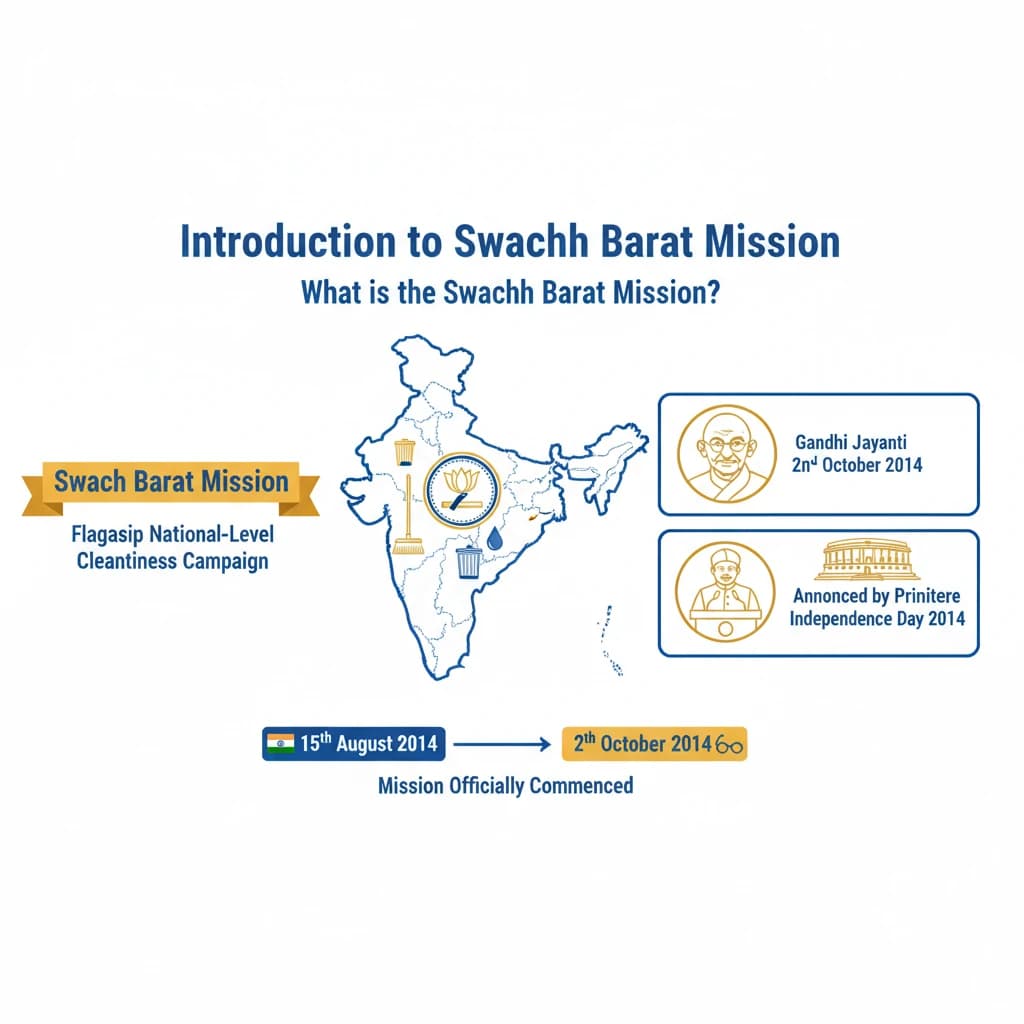
What is the Swachh Bharat Mission?
Medium⏱️ 8 min read
social issues
📖 Introduction
Introduction to Swachh Bharat Mission
The Swachh Bharat Mission (SBM) is a flagship national-level cleanliness campaign launched by the Government of India. It was initially announced by the Prime Minister on Independence Day 2014.
The mission officially commenced on 2nd October 2014, a date strategically chosen to coincide with Gandhi Jayanti, honoring Mahatma Gandhi's vision of cleanliness.
Scale of SBM: Considered India’s largest-ever cleanliness drive, SBM actively engaged approximately 3 million government employees, along with numerous school and college students, across the nation.
Evolution: Swachh Bharat Mission Phase II
Recognizing the need for sustained efforts, Phase II of the Swachh Bharat Mission was officially approved in February 2020. This subsequent phase builds upon the achievements of Phase I.
Phase II primarily focuses on sustaining the Open Defecation Free (ODF) status achieved in the first phase. It also places a strong emphasis on comprehensive Solid and Liquid Waste Management (SLWM) in rural areas.
Key Principles and Goals of SBM
The mission is guided by several core principles aimed at transforming India's sanitation landscape:
- Toilet Construction: A primary goal was the construction of individual, cluster, and community toilets. This was crucial for eliminating or significantly reducing open defecation, a major contributor to child mortality and various health issues.
- Monitoring Usage: Beyond mere construction, SBM established an accountable mechanism to actively monitor toilet use. The focus was on ensuring behavioral change, not just infrastructure development.
- Public Awareness: A significant component involved promoting widespread public awareness about the severe drawbacks of open defecation. This aimed to encourage consistent and proper toilet use.
- Behavioural Change: The mission sought to fundamentally change people’s attitudes, mindsets, and behaviours towards sanitation. This was achieved through dedicated ground staff and extensive awareness campaigns.
- Clean Villages: SBM aimed to ensure overall cleanliness in villages. This included effective implementation of Solid and Liquid Waste Management (SLWM) strategies, primarily through the involvement of Gram Panchayats.
- Water Supply: A crucial enabling factor was the installation of water pipelines. This initiative ensured a consistent water supply to all households, making toilet usage practical and hygienic.
Funding and Budget Allocation
The government demonstrated substantial commitment through significant financial investment. From 2015 to 2020, SBM had an average annual budget of approximately 1.25 billion USD.
This substantial investment underscored the government’s dedication to improving national sanitation and public health outcomes across the country.
The central government provided financial incentives and technical support to state governments. These incentives covered various sanitation efforts, including toilet construction and waste management initiatives.
The Swachh Bharat Kosh was established to facilitate broader participation. It allows for contributions from the public, corporate entities, and individuals, specifically for sanitation infrastructure purposes.
UPSC Insight: Understanding the phases, funding mechanisms, and the shift from ODF to ODF Plus (SLWM) is crucial for both Prelims (facts) and Mains (policy analysis, socio-economic impact).
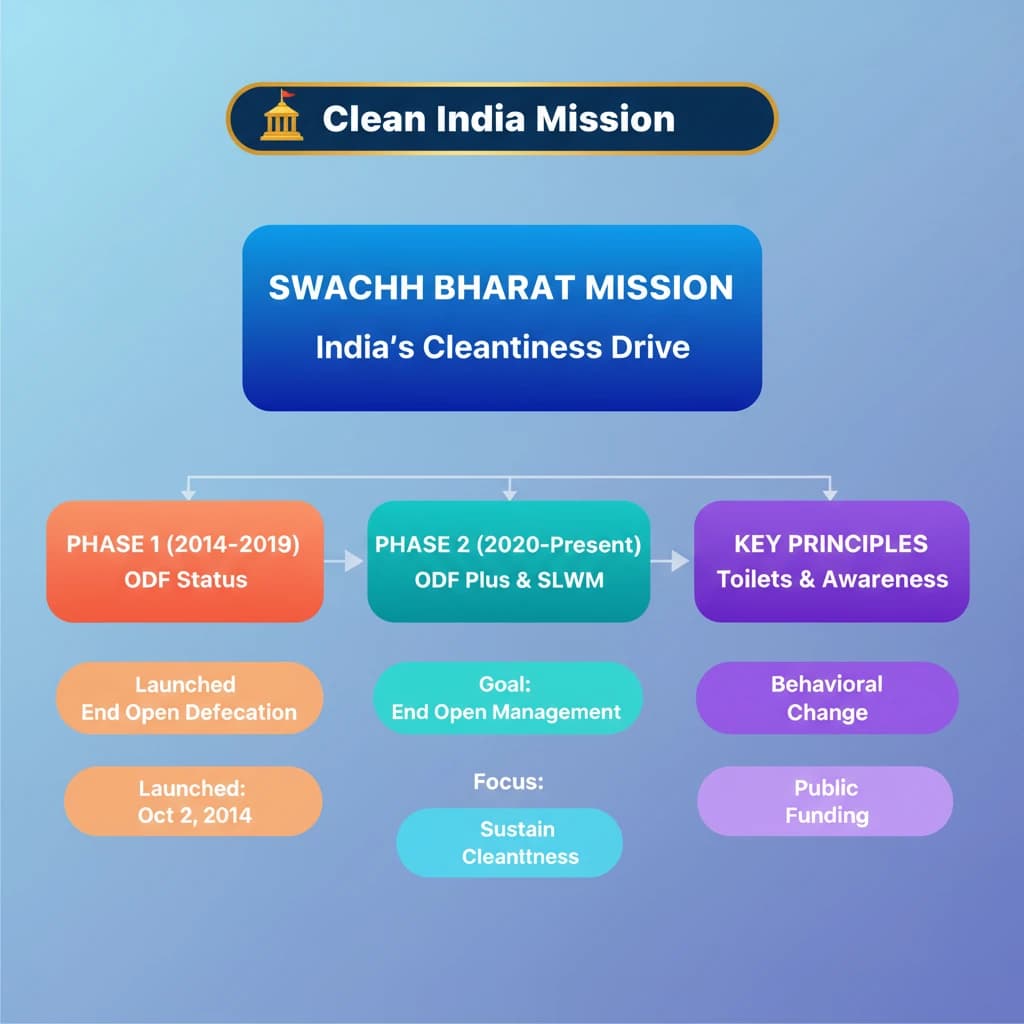
💡 Key Takeaways
- •Swachh Bharat Mission (SBM) launched on October 2, 2014, as India's largest cleanliness drive.
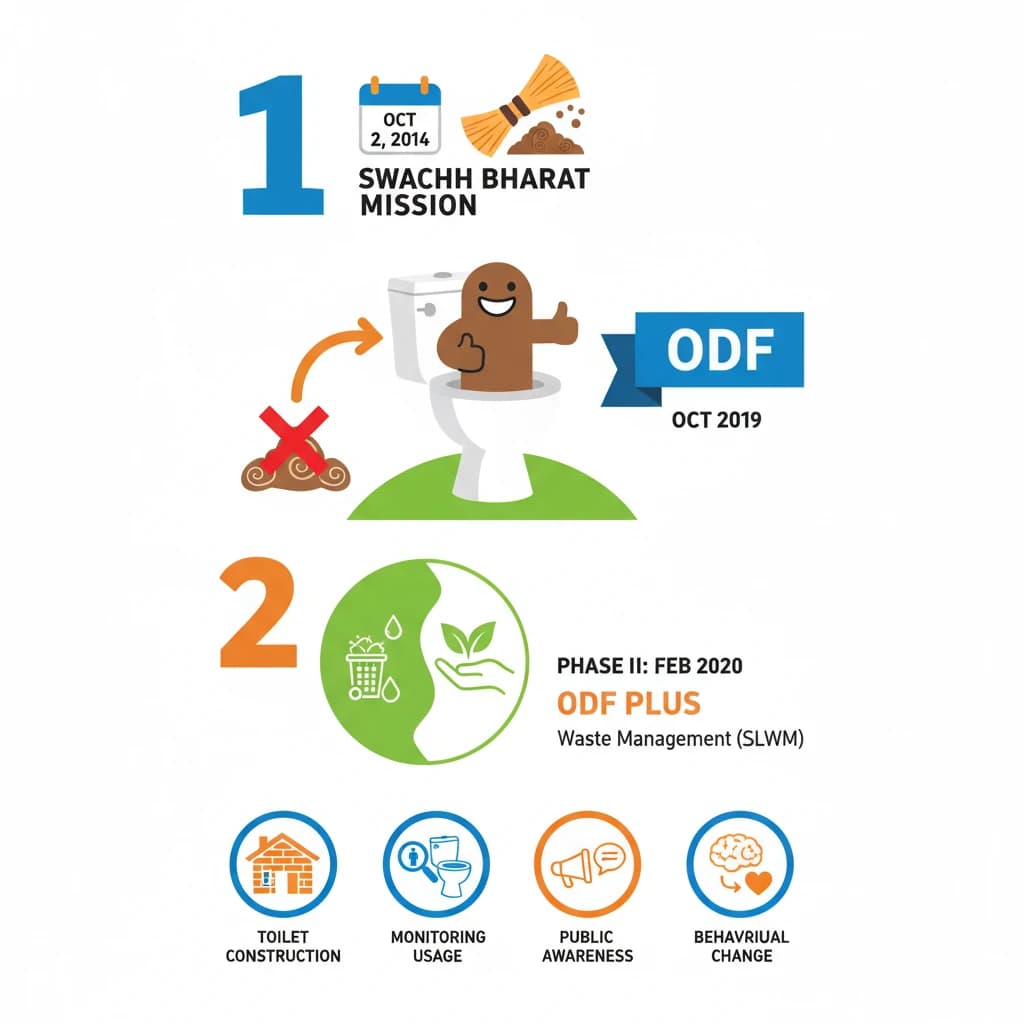
- •Initial goal was to achieve Open Defecation Free (ODF) status by October 2019.
- •Phase II, approved in Feb 2020, focuses on sustaining ODF and comprehensive Solid and Liquid Waste Management (SLWM) (ODF Plus).
- •Key principles include toilet construction, monitoring usage, public awareness, and behavioural change.
- •Significant government funding (approx. $1.25 billion USD annually) and public contributions (Swachh Bharat Kosh) support the mission.
- •It has broad impacts on public health, women's safety, and environmental sustainability, aligning with SDGs.
🧠 Memory Techniques
98% Verified Content
📚 Reference Sources
•Ministry of Jal Shakti, Department of Drinking Water and Sanitation (DDWS) - Swachh Bharat Mission (Grameen) website
•Press Information Bureau (PIB) releases on SBM Phase II
•NITI Aayog reports on sanitation and rural development