Loading page, please wait…
What is Tuberculosis? - UPSC Social Issues
What is What is Tuberculosis? in UPSC Social Issues?
What is Tuberculosis? is a key topic under Social Issues for UPSC Civil Services Examination. Key points include: Tuberculosis (TB) is a bacterial infection caused by Mycobacterium tuberculosis.. It is an airborne disease, spreading through close contact, particularly in crowded, poorly ventilated areas.. TB primarily affects the lungs but can impact almost any organ, including lymph nodes, spine, and brain.. Understanding this topic is essential for both UPSC Prelims and Mains preparation.
Why is What is Tuberculosis? important for UPSC exam?
What is Tuberculosis? is a Medium-level topic in UPSC Social Issues. It is tested in both Prelims (factual MCQs) and Mains (analytical answer writing). Previous year UPSC questions have frequently covered aspects of What is Tuberculosis?, making it essential for comprehensive IAS preparation.
How to prepare What is Tuberculosis? for UPSC?
To prepare What is Tuberculosis? for UPSC: (1) Study the comprehensive notes covering all key concepts on Vaidra. (2) Practice previous year questions on this topic. (3) Connect it with current affairs using daily updates. (4) Revise using key takeaways and mind maps available for Social Issues. (5) Write practice answers linking What is Tuberculosis? to related GS Paper topics.
Key takeaways of What is Tuberculosis? for UPSC
- Tuberculosis (TB) is a bacterial infection caused by Mycobacterium tuberculosis.
- It is an airborne disease, spreading through close contact, particularly in crowded, poorly ventilated areas.
- TB primarily affects the lungs but can impact almost any organ, including lymph nodes, spine, and brain.
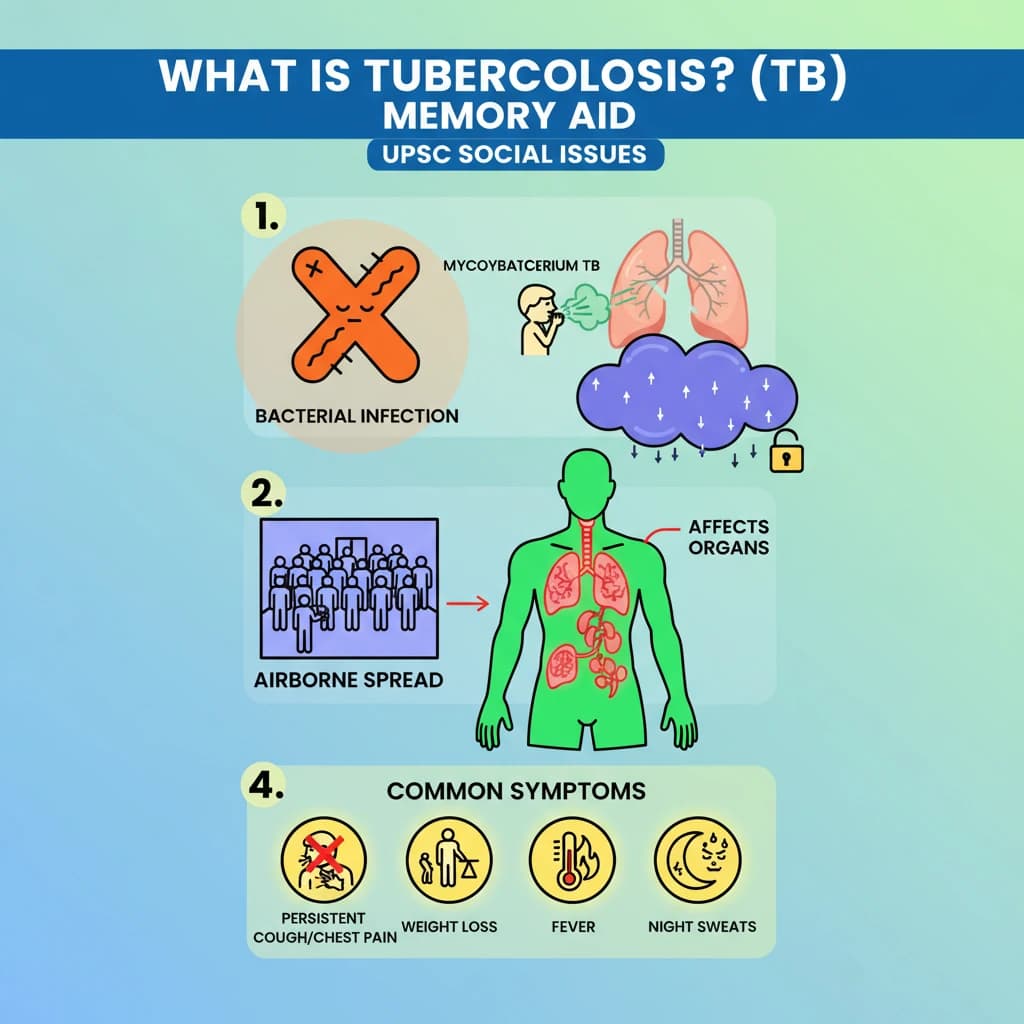
- Common symptoms include persistent cough, chest pains, weight loss, fever, and night sweats.
- TB is curable with a 6-month course of antimicrobial drugs, but drug resistance (MDR-TB) is a growing concern.
- India aims to eliminate TB by 2025 through programs like NTEP and Nikshay Poshan Yojana.
What is Tuberculosis?
Medium⏱️ 8 min read
social issues
📖 Introduction
What is Tuberculosis?
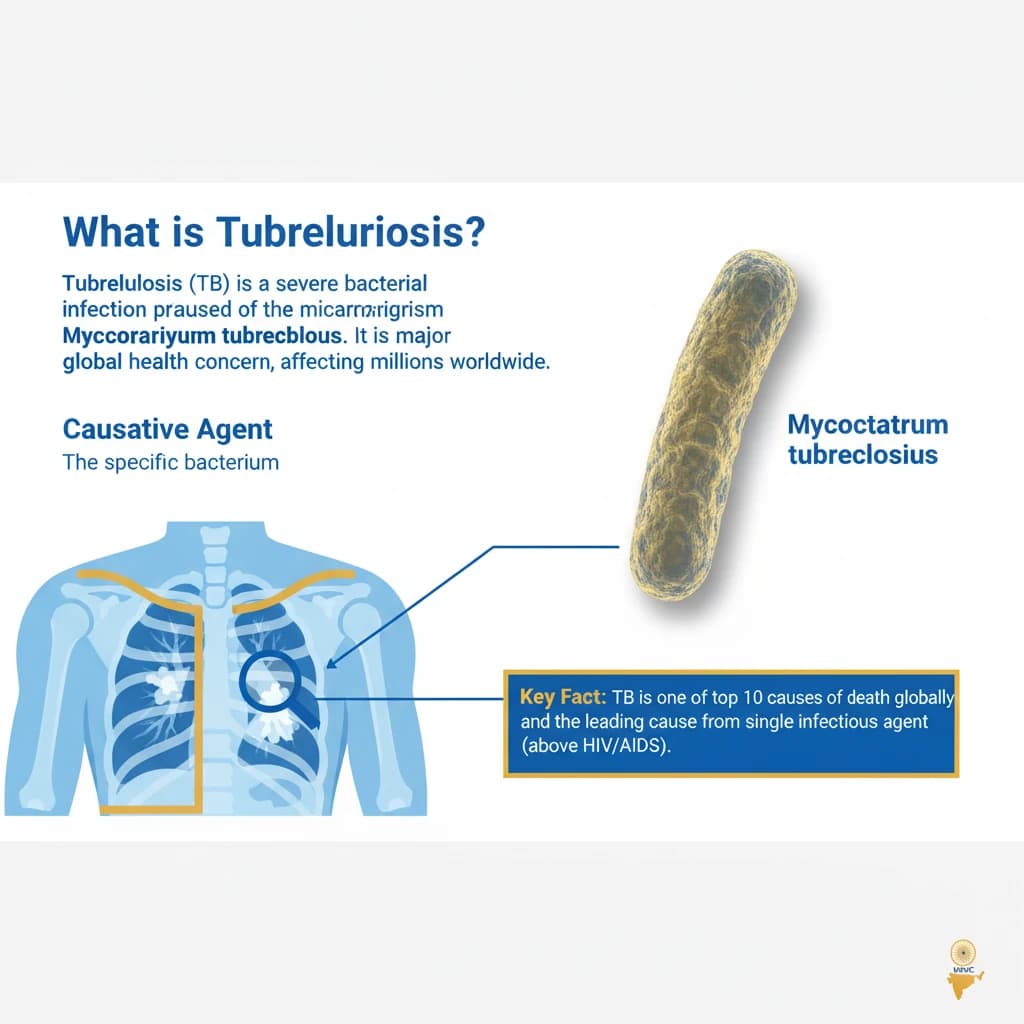
Tuberculosis (TB) is a severe bacterial infection primarily caused by the microorganism Mycobacterium tuberculosis. It is a major global health concern, affecting millions worldwide.
Key Fact: TB is one of the top 10 causes of death globally and the leading cause from a single infectious agent (above HIV/AIDS).
Causative Agent
The specific bacterium responsible for TB is Mycobacterium tuberculosis. This bacterium has unique characteristics that allow it to survive and multiply within the human body, particularly in the lungs.
Organs Affected by TB
While commonly associated with the lungs, Tuberculosis can practically affect almost any organ in the body. This makes it a systemic disease with diverse manifestations.
- Lungs: The most common site of infection (pulmonary TB).
- Pleura: The lining around the lungs.
- Lymph Nodes: Often seen in children and immunocompromised individuals.
- Intestines: Leading to abdominal TB.
- Spine: Known as Pott's disease, causing bone destruction.
- Brain: Leading to tuberculous meningitis, a severe form.
Transmission of Tuberculosis
TB is primarily an airborne infection. It spreads when people with active lung TB cough, sneeze, or spit, expelling TB germs into the air.
Close and prolonged contact with an infected individual is the primary mode of transmission. The risk increases significantly in certain environments.
High-Risk Environments: Densely populated spaces with poor ventilation, such as crowded households, prisons, or public transport, facilitate the spread of Mycobacterium tuberculosis.
Common Symptoms of Active Lung TB
Recognizing the symptoms of active lung TB is crucial for early diagnosis and treatment. These symptoms can often be non-specific initially.
- Persistent Cough: Often with sputum, and at times, blood (haemoptysis).
- Chest Pains: Discomfort or pain in the chest region.
- Weakness: General feeling of fatigue and lack of energy.
- Weight Loss: Unexplained and significant reduction in body weight.
- Fever: Low-grade fever, especially in the evenings.
- Night Sweats: Excessive sweating during sleep.
Treatment for Tuberculosis
Tuberculosis is a curable disease, provided that patients adhere to a full course of treatment. The standard regimen involves multiple drugs.
Standard Treatment: TB is treated with a standard 6-month course involving four antimicrobial drugs. This regimen is critical for effective eradication of the bacteria.
The treatment is usually provided under direct observation and support. A health worker or trained volunteer offers information, supervision, and support to the patient, ensuring adherence and completion of the regimen.
UPSC Insight: The concept of Directly Observed Treatment, Short-course (DOTS), a key strategy for TB control, emphasizes supervision and support to ensure treatment completion and prevent drug resistance.
Challenge of Drug Resistance
Anti-TB medicines have been in use for decades. Over time, some strains of Mycobacterium tuberculosis have developed resistance to one or more of these drugs.
This phenomenon leads to Drug-Resistant TB (DR-TB), including Multi-Drug Resistant TB (MDR-TB) and Extensively Drug-Resistant TB (XDR-TB), which are much harder and longer to treat, posing a significant public health challenge.
💡 Key Takeaways
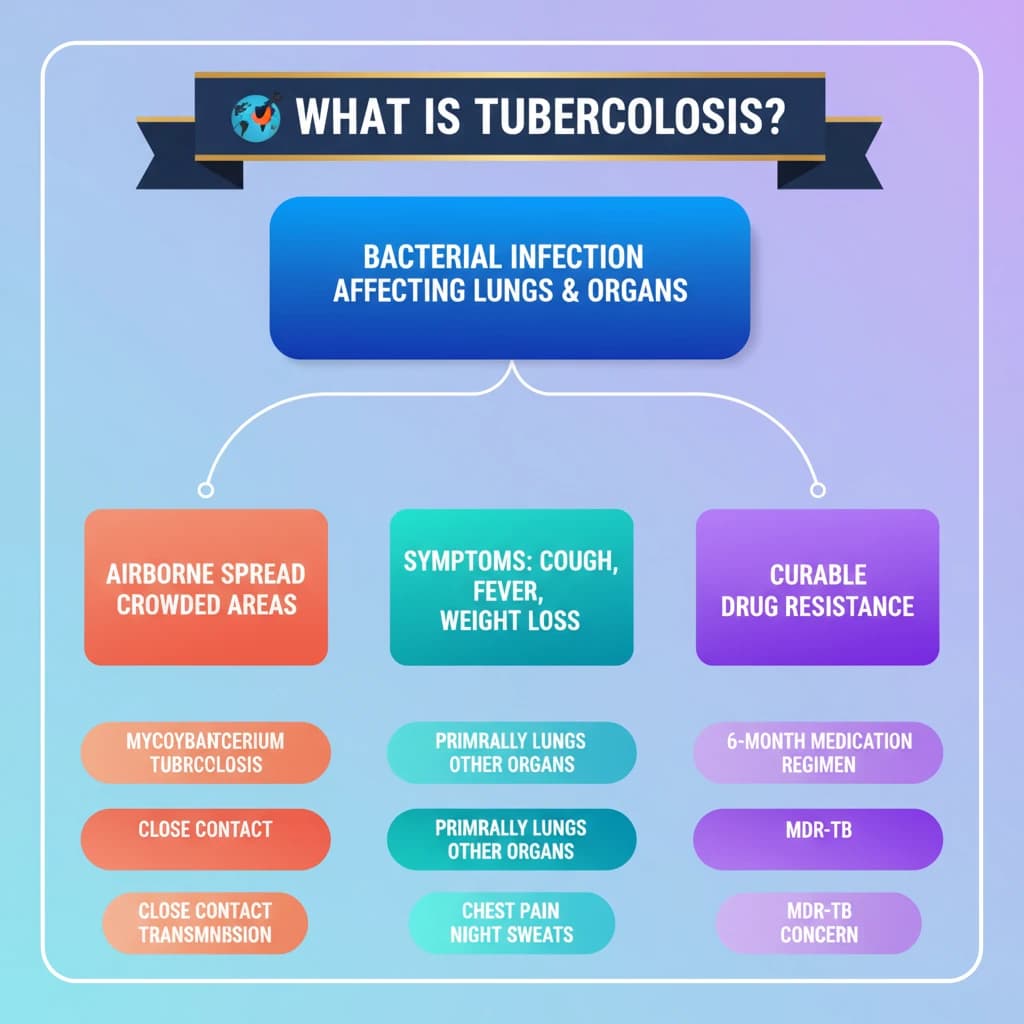
- •Tuberculosis (TB) is a bacterial infection caused by Mycobacterium tuberculosis.
- •It is an airborne disease, spreading through close contact, particularly in crowded, poorly ventilated areas.
- •TB primarily affects the lungs but can impact almost any organ, including lymph nodes, spine, and brain.
- •Common symptoms include persistent cough, chest pains, weight loss, fever, and night sweats.
- •TB is curable with a 6-month course of antimicrobial drugs, but drug resistance (MDR-TB) is a growing concern.
- •India aims to eliminate TB by 2025 through programs like NTEP and Nikshay Poshan Yojana.
🧠 Memory Techniques
98% Verified Content
📚 Reference Sources
•World Health Organization (WHO) Tuberculosis Fact Sheets
•Ministry of Health & Family Welfare, Government of India - National Tuberculosis Elimination Programme (NTEP) documents