Loading page, please wait…
What Measures Have Been Taken to Address the Underrepresentation of Women in Indian Politics? - UPSC Social Issues
What is What Measures Have Been Taken to Address the Underrepresentation of Women in Indian Politics? in UPSC Social Issues?
What Measures Have Been Taken to Address the Underrepresentation of Women in Indian Politics? is a key topic under Social Issues for UPSC Civil Services Examination. Key points include: India's women representation in Parliament is below the global average of 25%.. The 73rd and 74th CAs (1992-93) mandated one-third reservation for women in Panchayats and Municipalities.. The 106th CA (2023) proposes one-third reservation for women in Lok Sabha and State Assemblies.. Understanding this topic is essential for both UPSC Prelims and Mains preparation.
Why is What Measures Have Been Taken to Address the Underrepresentation of Women in Indian Politics? important for UPSC exam?
What Measures Have Been Taken to Address the Underrepresentation of Women in Indian Politics? is a Medium-level topic in UPSC Social Issues. It is tested in both Prelims (factual MCQs) and Mains (analytical answer writing). Previous year UPSC questions have frequently covered aspects of What Measures Have Been Taken to Address the Underrepresentation of Women in Indian Politics?, making it essential for comprehensive IAS preparation.
How to prepare What Measures Have Been Taken to Address the Underrepresentation of Women in Indian Politics? for UPSC?
To prepare What Measures Have Been Taken to Address the Underrepresentation of Women in Indian Politics? for UPSC: (1) Study the comprehensive notes covering all key concepts on Vaidra. (2) Practice previous year questions on this topic. (3) Connect it with current affairs using daily updates. (4) Revise using key takeaways and mind maps available for Social Issues. (5) Write practice answers linking What Measures Have Been Taken to Address the Underrepresentation of Women in Indian Politics? to related GS Paper topics.
Key takeaways of What Measures Have Been Taken to Address the Underrepresentation of Women in Indian Politics? for UPSC
- India's women representation in Parliament is below the global average of 25%.
- The 73rd and 74th CAs (1992-93) mandated one-third reservation for women in Panchayats and Municipalities.
- The 106th CA (2023) proposes one-third reservation for women in Lok Sabha and State Assemblies.
- Implementation of the 106th CA is contingent on the next census and subsequent delimitation exercise.
- Enhancing women's political participation is crucial for inclusive governance and democratic deepening in India.
What Measures Have Been Taken to Address the Underrepresentation of Women in Indian Politics?
Medium⏱️ 7 min read
social issues
📖 Introduction
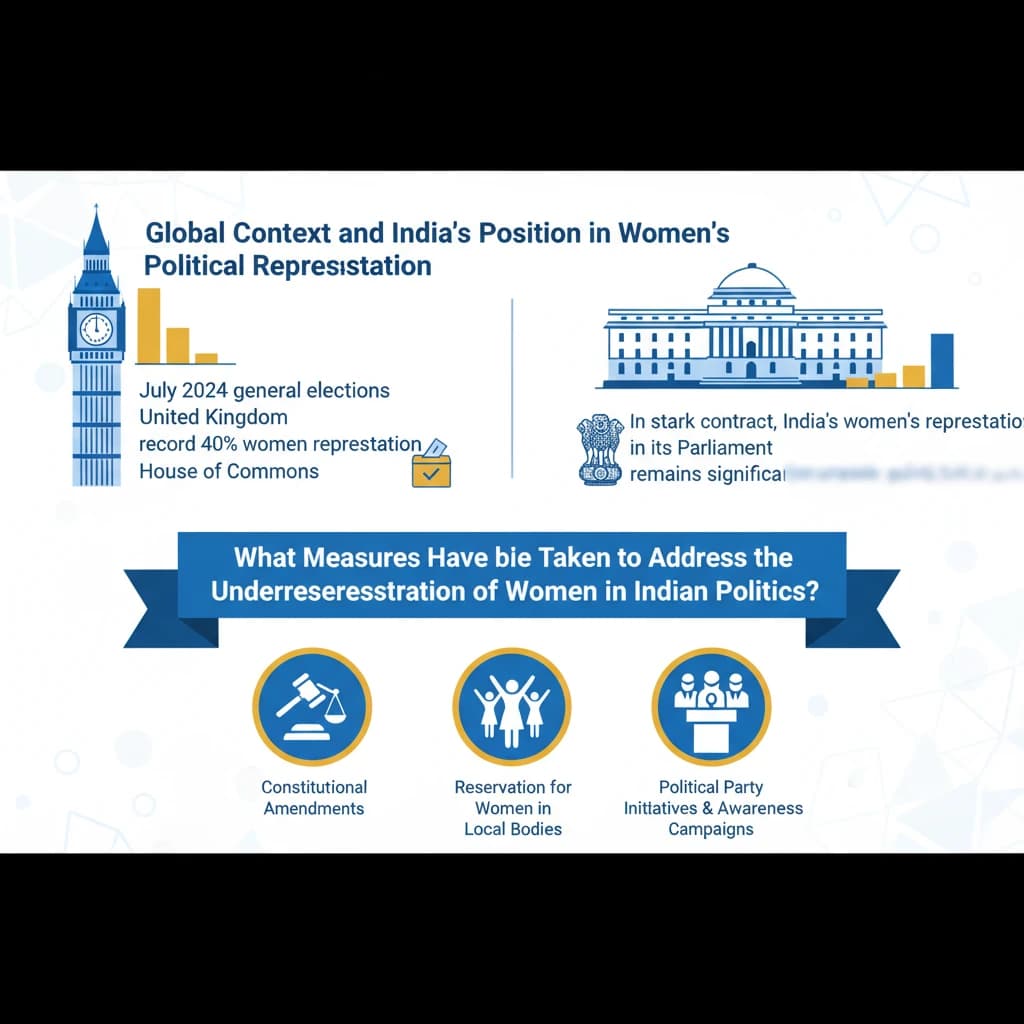
Global Context and India's Position in Women's Political Representation
The global landscape shows significant progress in enhancing women's political participation. For instance, the July 2024 general elections in the United Kingdom saw a record 40% women representation in the House of Commons.
In stark contrast, India's women's representation in its Parliament remains significantly lower. It is well below the global average of 25%, highlighting a critical area for democratic reform.
Key Statistics:
- UK House of Commons (July 2024): 40% women representation
- Global Average for Women in Parliament: 25%
- India's Women Representation in Parliament: Below 25% global average
Constitutional Measures to Address Underrepresentation
India has taken significant constitutional steps to address the historical underrepresentation of women in politics, primarily through reservations at different levels of governance.
73rd and 74th Constitutional Amendments (1992-1993)
These landmark amendments were pivotal in empowering women at the grassroots level. They mandated a specific reservation for women in local self-governing bodies.
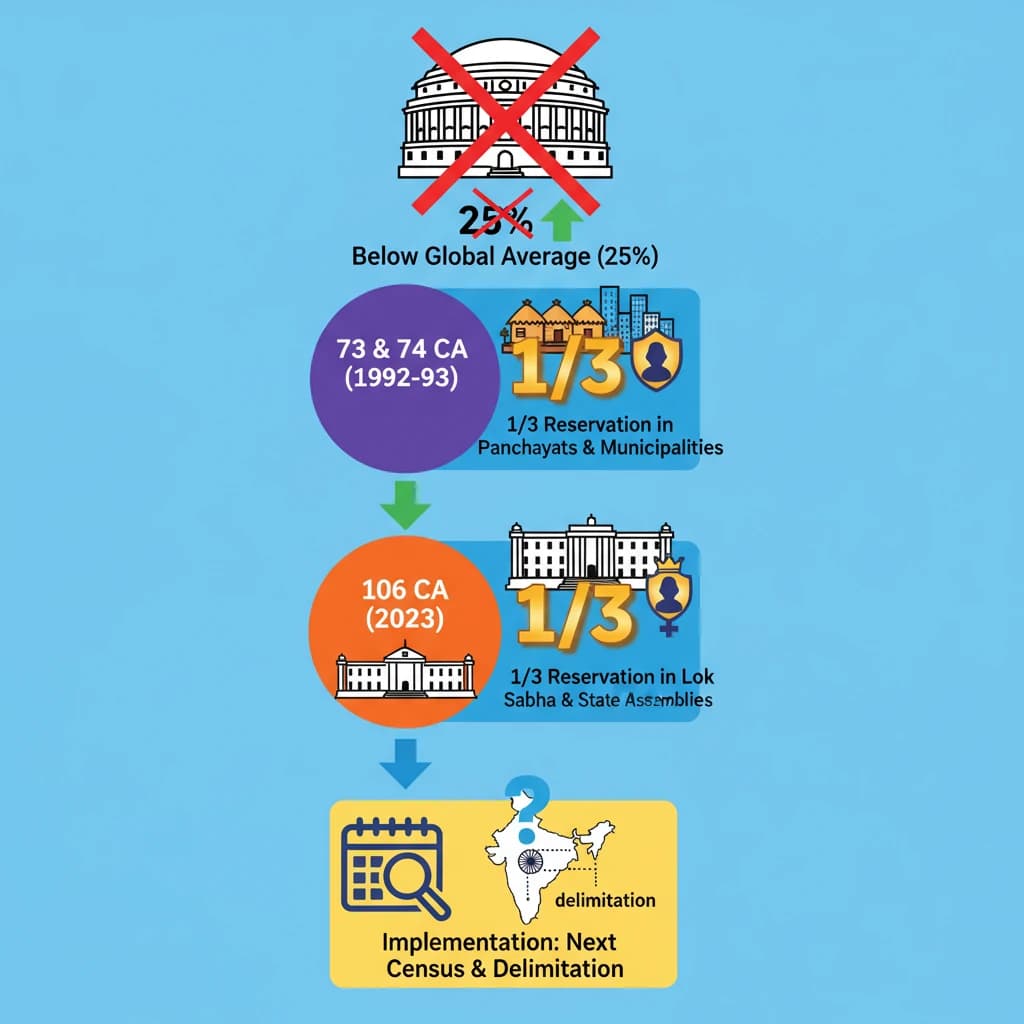
The 73rd and 74th Constitutional Amendments (1992/1993) provided for one-third reservation of seats for women in Panchayats and Municipalities. This measure significantly increased their participation in local governance, bringing women into decision-making roles at the village and urban local body levels.
106th Constitutional Amendment (2023): Women's Reservation Bill
Building on the success of local body reservations, a more ambitious step was taken to ensure women's representation at the national and state levels. The 106th Constitutional Amendment (2023), also known as the Nari Shakti Vandan Adhiniyam, was passed to address the underrepresentation in higher legislative bodies.
The 106th Constitutional Amendment (2023) proposes a one-third reservation of seats for women in the Lok Sabha (the lower house of India's Parliament) and all state legislative assemblies.
Implementation of the 106th Amendment
While the 106th Amendment Act has been passed, its actual implementation is not immediate. It is contingent upon specific administrative and demographic exercises.
UPSC Insight: Implementation Timeline
The reservation under the 106th Amendment Act will be implemented only after the first census following the commencement of the Act. This census will be followed by a comprehensive delimitation exercise, which involves redrawing electoral constituencies based on population data. Candidates should note that the implementation is not immediate and depends on these future processes.
💡 Key Takeaways
- •India's women representation in Parliament is below the global average of 25%.
- •The 73rd and 74th CAs (1992-93) mandated one-third reservation for women in Panchayats and Municipalities.
- •The 106th CA (2023) proposes one-third reservation for women in Lok Sabha and State Assemblies.
- •Implementation of the 106th CA is contingent on the next census and subsequent delimitation exercise.
- •Enhancing women's political participation is crucial for inclusive governance and democratic deepening in India.
🧠 Memory Techniques
98% Verified Content
📚 Reference Sources
•The Constitution of India (73rd, 74th, 106th Amendments)
•PRS Legislative Research (for details on the 106th Constitutional Amendment Bill/Act)
•Election Commission of India reports (for representation statistics)