Loading page, please wait…
What was the Chipko Movement All About? - UPSC Social Issues
What is What was the Chipko Movement All About? in UPSC Social Issues?
What was the Chipko Movement All About? is a key topic under Social Issues for UPSC Civil Services Examination. Key points include: Chipko Movement originated in the 1970s in Chamoli, Uttarakhand.. It was a non-violent protest against commercial deforestation by outside contractors.. Villagers, especially women, 'hugged' trees to prevent felling.. Understanding this topic is essential for both UPSC Prelims and Mains preparation.
Why is What was the Chipko Movement All About? important for UPSC exam?
What was the Chipko Movement All About? is a Medium-level topic in UPSC Social Issues. It is tested in both Prelims (factual MCQs) and Mains (analytical answer writing). Previous year UPSC questions have frequently covered aspects of What was the Chipko Movement All About?, making it essential for comprehensive IAS preparation.
How to prepare What was the Chipko Movement All About? for UPSC?
To prepare What was the Chipko Movement All About? for UPSC: (1) Study the comprehensive notes covering all key concepts on Vaidra. (2) Practice previous year questions on this topic. (3) Connect it with current affairs using daily updates. (4) Revise using key takeaways and mind maps available for Social Issues. (5) Write practice answers linking What was the Chipko Movement All About? to related GS Paper topics.
Key takeaways of What was the Chipko Movement All About? for UPSC
- Chipko Movement originated in the 1970s in Chamoli, Uttarakhand.
- It was a non-violent protest against commercial deforestation by outside contractors.
- Villagers, especially women, 'hugged' trees to prevent felling.
- Key figures include Sunderlal Bahuguna, Chandi Prasad Bhatt, and Gaura Devi.
- Emphasized sustainable resource management, community rights, and women's role.
- Led to a ban on tree felling in the Himalayas and raised global environmental awareness.
What was the Chipko Movement All About?
Medium⏱️ 8 min read
social issues
📖 Introduction
The Genesis of the Chipko Movement
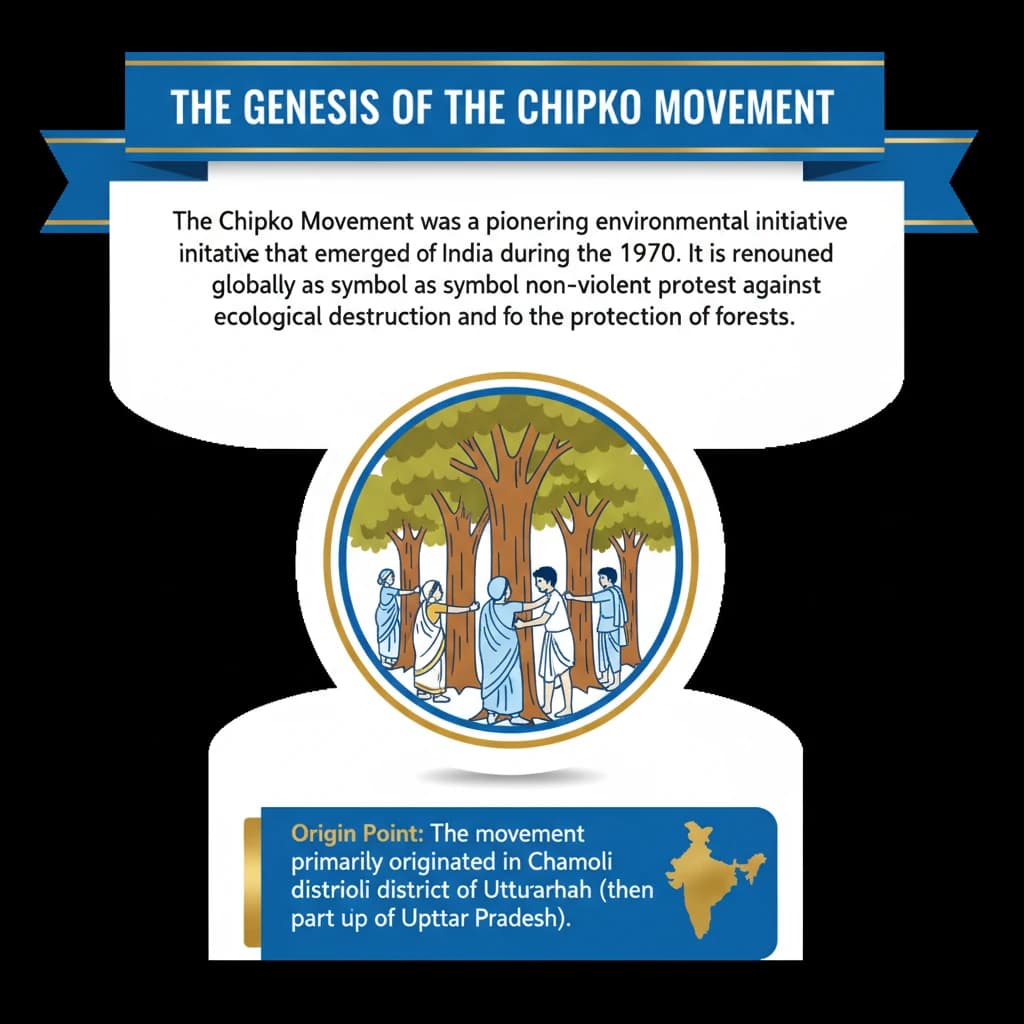
The Chipko Movement was a pioneering environmental initiative that emerged in India during the 1970s. It is renowned globally as a symbol of non-violent protest against ecological destruction and for the protection of forests.
Origin Point: The movement primarily originated in the Chamoli district of Uttarakhand (then part of Uttar Pradesh).
Core Issue: It was a direct response to rampant deforestation caused by commercial logging activities.
Causes of Deforestation and Community Response
The region of Chamoli was experiencing extensive tree felling due to contracts awarded to outside commercial contractors. These activities threatened the ecological balance and the livelihoods of local communities who depended on the forests for their sustenance.
The term 'Chipko' literally means 'to hug' or 'to cling to'. Villagers, predominantly women, adopted the strategy of hugging trees to prevent loggers from felling them, thereby physically interposing themselves between the trees and the axes.
Key Figures and Principles
While a spontaneous grassroots movement, several prominent figures provided leadership and direction. These included Sunderlal Bahuguna, Chandi Prasad Bhatt, and Gaura Devi, who played crucial roles in mobilizing communities and articulating the movement's philosophy.
The movement was deeply rooted in Gandhian principles of non-violent resistance (Satyagraha) and emphasized the interconnectedness of human well-being with environmental health.
Impact and Legacy
The Chipko Movement successfully pressured the government to ban tree felling in the Himalayan regions for a period, leading to a significant reduction in deforestation. It also raised national and international awareness about forest conservation and the rights of indigenous communities.
For UPSC Mains (GS-I, GS-III), understanding Chipko's grassroots nature, its Gandhian methods, and its role in promoting sustainable development and women's empowerment is crucial. It serves as an excellent case study for environmental movements.
💡 Key Takeaways
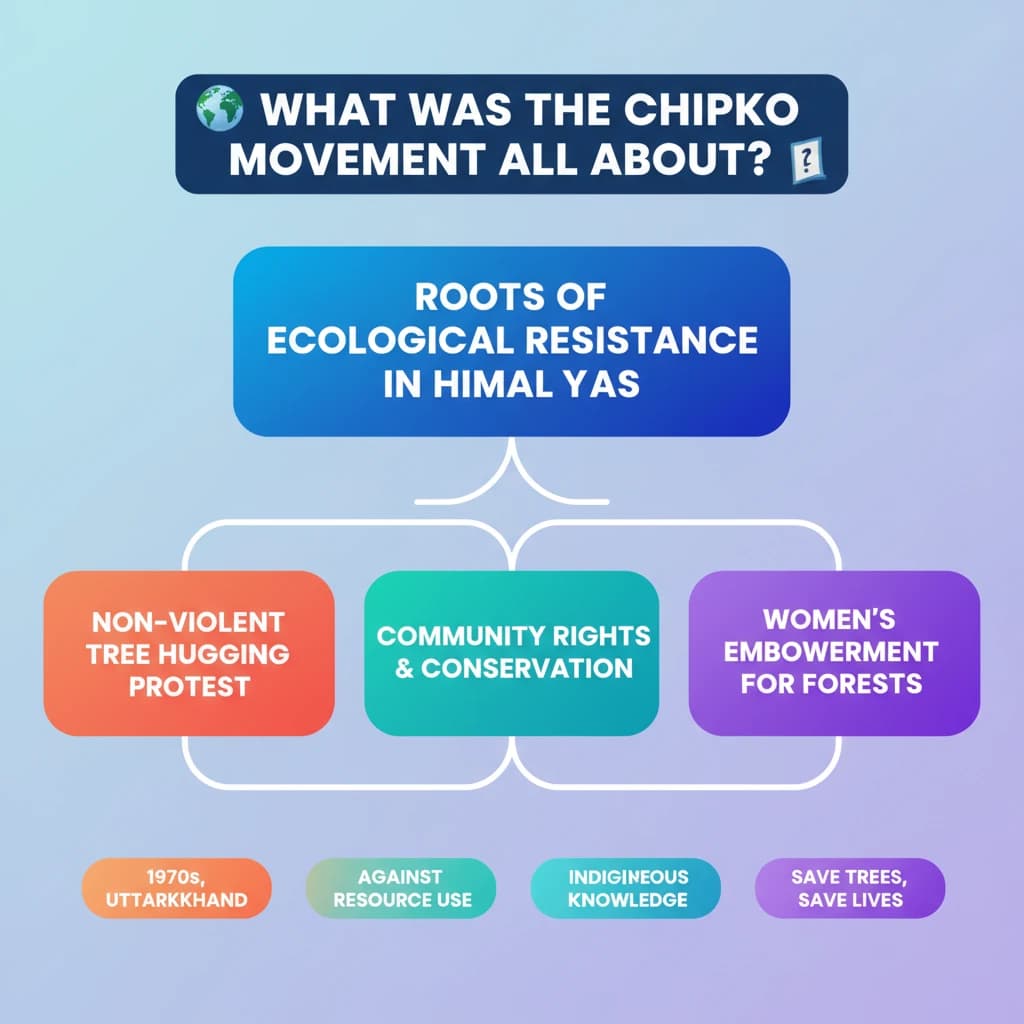
- •Chipko Movement originated in the 1970s in Chamoli, Uttarakhand.
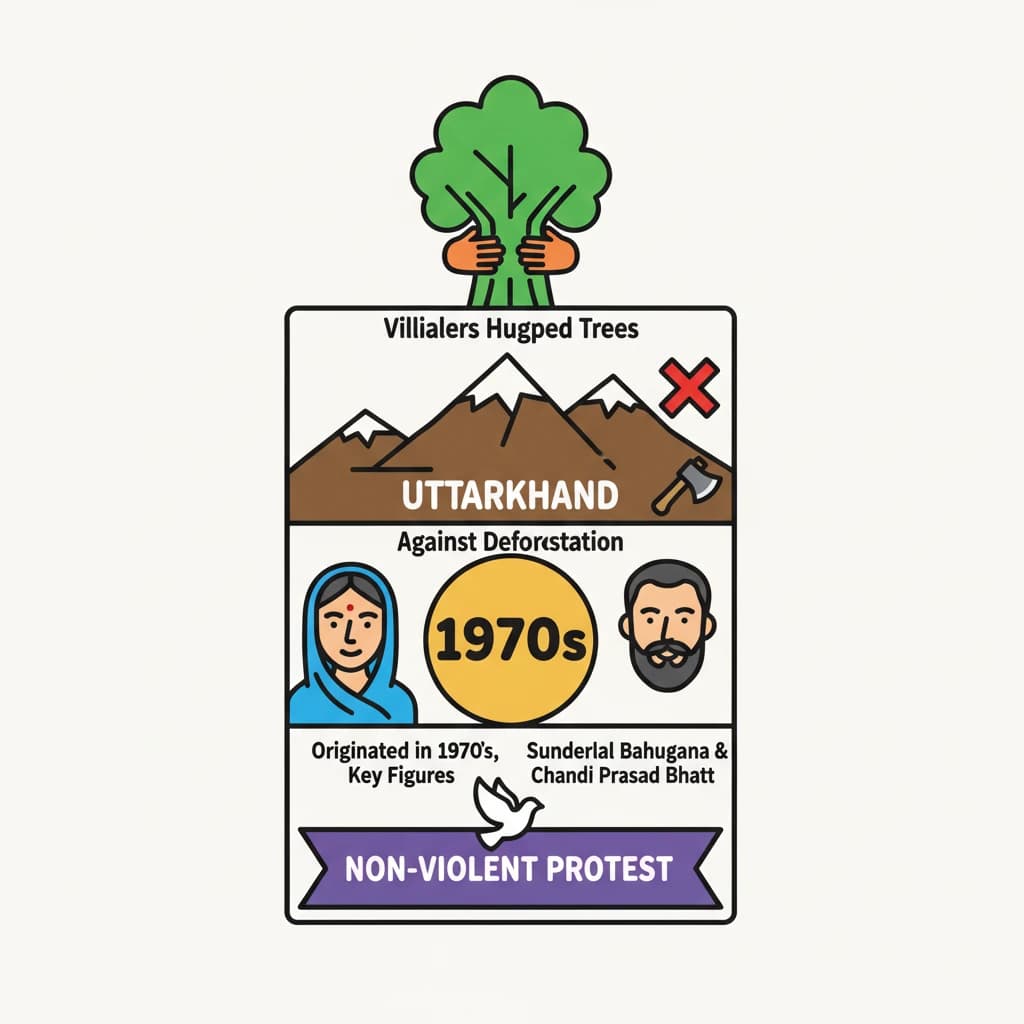
- •It was a non-violent protest against commercial deforestation by outside contractors.
- •Villagers, especially women, 'hugged' trees to prevent felling.
- •Key figures include Sunderlal Bahuguna, Chandi Prasad Bhatt, and Gaura Devi.
- •Emphasized sustainable resource management, community rights, and women's role.
- •Led to a ban on tree felling in the Himalayas and raised global environmental awareness.
🧠 Memory Techniques
95% Verified Content
📚 Reference Sources
•NCERT Textbooks (Social Science)
•Ministry of Environment, Forest and Climate Change (MoEFCC) Reports
•Academic papers on Indian Environmental Movements