Loading page, please wait…
World Leprosy Day - UPSC Social Issues
What is World Leprosy Day in UPSC Social Issues?
World Leprosy Day is a key topic under Social Issues for UPSC Civil Services Examination. Key points include: World Leprosy Day is observed globally on the last Sunday of January, and on January 30th in India (Gandhi's death anniversary).. Leprosy (Hansen's disease) is a chronic infectious disease caused by Mycobacterium leprae, affecting skin, nerves, and respiratory tract.. It is transmitted via droplets from untreated cases during close contact, not inherited.. Understanding this topic is essential for both UPSC Prelims and Mains preparation.
Why is World Leprosy Day important for UPSC exam?
World Leprosy Day is a Medium-level topic in UPSC Social Issues. It is tested in both Prelims (factual MCQs) and Mains (analytical answer writing). Previous year UPSC questions have frequently covered aspects of World Leprosy Day, making it essential for comprehensive IAS preparation.
How to prepare World Leprosy Day for UPSC?
To prepare World Leprosy Day for UPSC: (1) Study the comprehensive notes covering all key concepts on Vaidra. (2) Practice previous year questions on this topic. (3) Connect it with current affairs using daily updates. (4) Revise using key takeaways and mind maps available for Social Issues. (5) Write practice answers linking World Leprosy Day to related GS Paper topics.
Key takeaways of World Leprosy Day for UPSC
- World Leprosy Day is observed globally on the last Sunday of January, and on January 30th in India (Gandhi's death anniversary).
- Leprosy (Hansen's disease) is a chronic infectious disease caused by Mycobacterium leprae, affecting skin, nerves, and respiratory tract.
- It is transmitted via droplets from untreated cases during close contact, not inherited.
- Classified as Paucibacillary (PB) or Multibacillary (MB) based on bacterial load and infectivity.
- Leprosy is curable with Multi-Drug Therapy (MDT – dapsone, rifampicin, clofazimine), provided free by WHO since 1995.
- It remains a Neglected Tropical Disease (NTD) with over 200,000 new cases annually across 120+ countries.
World Leprosy Day
Medium⏱️ 7 min read
social issues
📖 Introduction
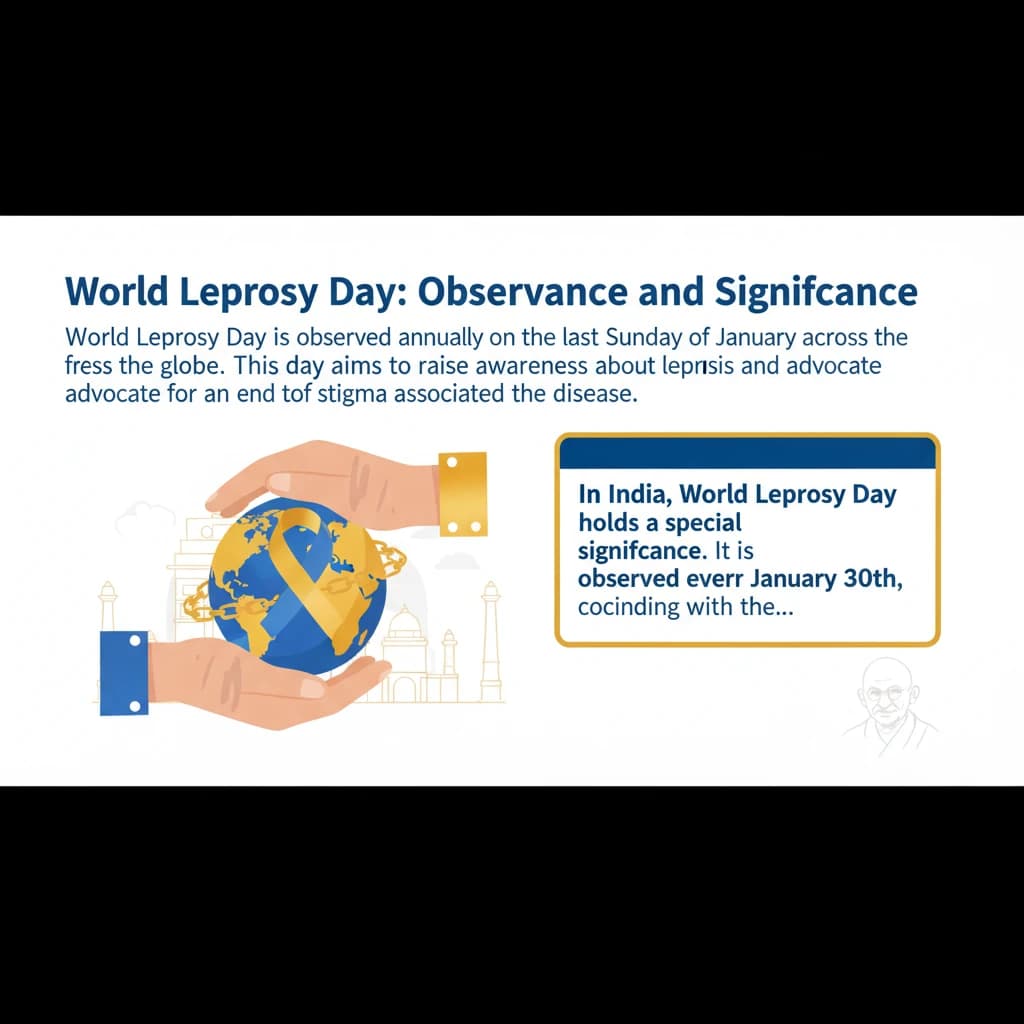
World Leprosy Day: Observance and Significance
World Leprosy Day is observed annually on the last Sunday of January across the globe. This day aims to raise awareness about leprosy and advocate for an end to the stigma associated with the disease.
In India, World Leprosy Day holds a special significance. It is observed every year on January 30th, coinciding with the death anniversary of Mahatma Gandhi. This date honors Gandhi's lifelong efforts to eliminate leprosy and the social stigma faced by those affected.
Understanding Leprosy (Hansen's Disease)
Leprosy, also medically known as Hansen’s disease, is a chronic infectious disease. It is caused by a specific type of bacteria, Mycobacterium leprae.
This disease primarily affects several key areas of the human body. These include the skin, peripheral nerves, mucosal surfaces of the upper respiratory tract, and the eyes.
Leprosy can affect individuals across all age groups, from early childhood to old age. It is crucial to understand that leprosy is not inherited.
Transmission of Leprosy
The transmission of Mycobacterium leprae occurs through respiratory droplets. These droplets are expelled from the nose and mouth of untreated individuals with the disease.
Transmission typically requires close and frequent contact with untreated cases. It is not easily spread through casual contact.
Classification of Leprosy
Leprosy cases are primarily classified into two main types based on bacterial load:
- Paucibacillary (PB) leprosy: This classification includes all cases that are smear-negative. These individuals have a smaller bacterial load and are generally less infectious.
- Multibacillary (MB) leprosy: This classification comprises all cases that are smear-positive. Individuals with MB leprosy have a higher bacterial load and are considered more infectious compared to PB cases.
Treatment and Cure for Leprosy
A significant advancement in public health is that leprosy is curable. Early diagnosis and treatment are vital to prevent long-term disabilities associated with the disease.
The current recommended treatment regimen is known as Multi-Drug Therapy (MDT). This therapy combines three specific drugs:
- Dapsone
- Rifampicin
- Clofazimine
Since 1995, the World Health Organization (WHO) has made MDT available free of cost to all patients worldwide. This global initiative has been instrumental in reducing the burden of leprosy.
UPSC Insight: Understanding the components of MDT and the role of WHO in its global distribution is important for questions on public health initiatives and neglected tropical diseases in GS-II.
Global Burden of Leprosy
Despite being curable, leprosy remains a significant global health challenge. It is classified as a neglected tropical disease (NTD).
The disease still occurs in more than 120 countries globally. Over 200,000 new cases are reported every year, highlighting the ongoing need for surveillance and treatment.
In 2022, a total of 182 countries reported over 1.65 lakh cases of leprosy. This figure included 774,087 new cases, indicating the persistent spread and detection of the disease.
💡 Key Takeaways
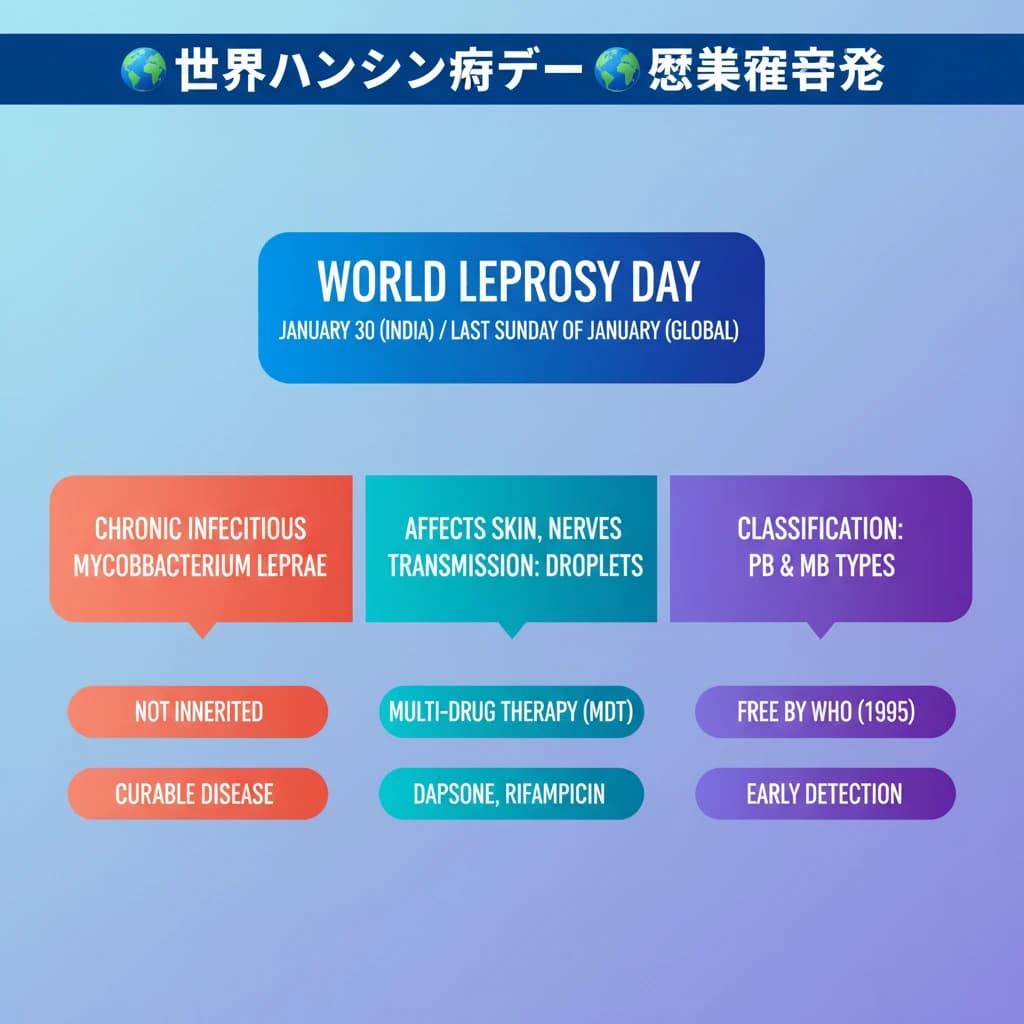
- •World Leprosy Day is observed globally on the last Sunday of January, and on January 30th in India (Gandhi's death anniversary).
- •Leprosy (Hansen's disease) is a chronic infectious disease caused by Mycobacterium leprae, affecting skin, nerves, and respiratory tract.
- •It is transmitted via droplets from untreated cases during close contact, not inherited.
- •Classified as Paucibacillary (PB) or Multibacillary (MB) based on bacterial load and infectivity.
- •Leprosy is curable with Multi-Drug Therapy (MDT – dapsone, rifampicin, clofazimine), provided free by WHO since 1995.
- •It remains a Neglected Tropical Disease (NTD) with over 200,000 new cases annually across 120+ countries.
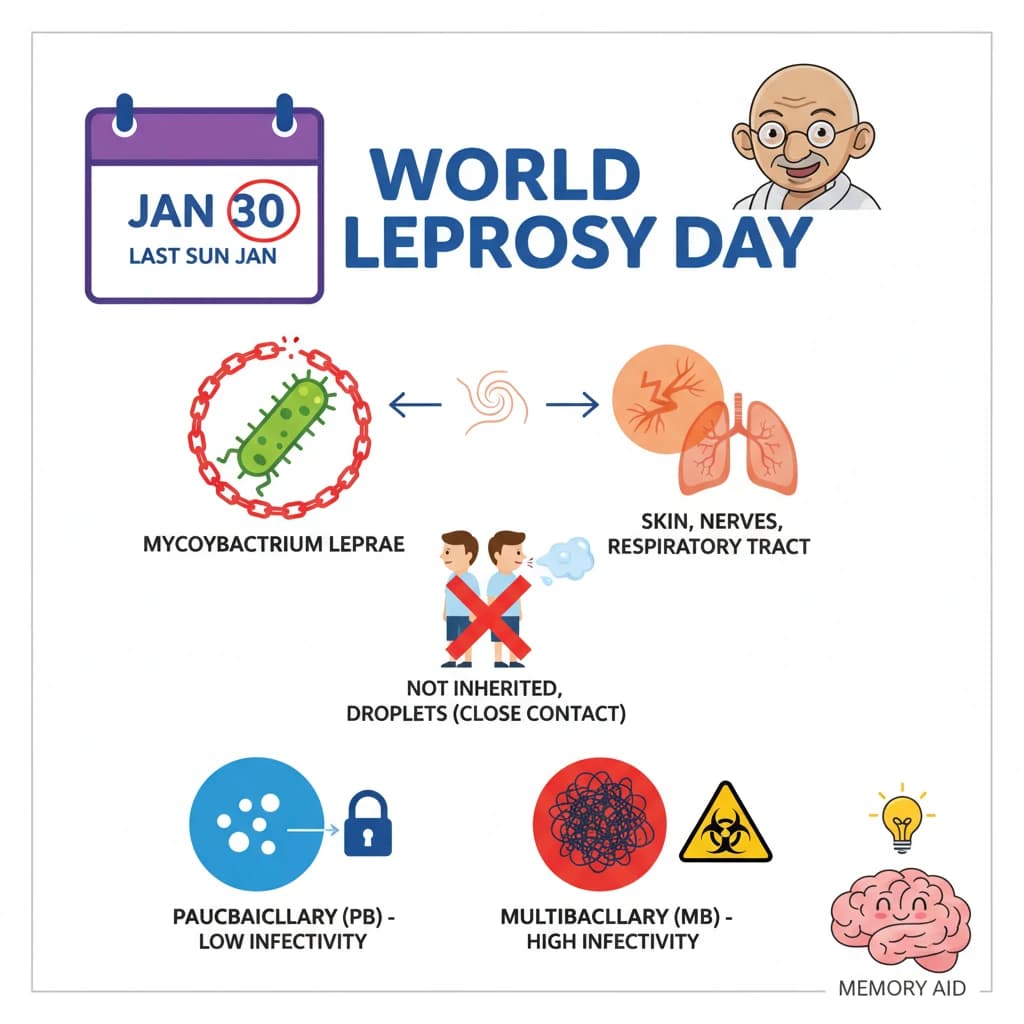
🧠 Memory Techniques
98% Verified Content
📚 Reference Sources
•World Health Organization (WHO) fact sheets on Leprosy