Loading page, please wait…
World Toilet Day - UPSC Social Issues
What is World Toilet Day in UPSC Social Issues?
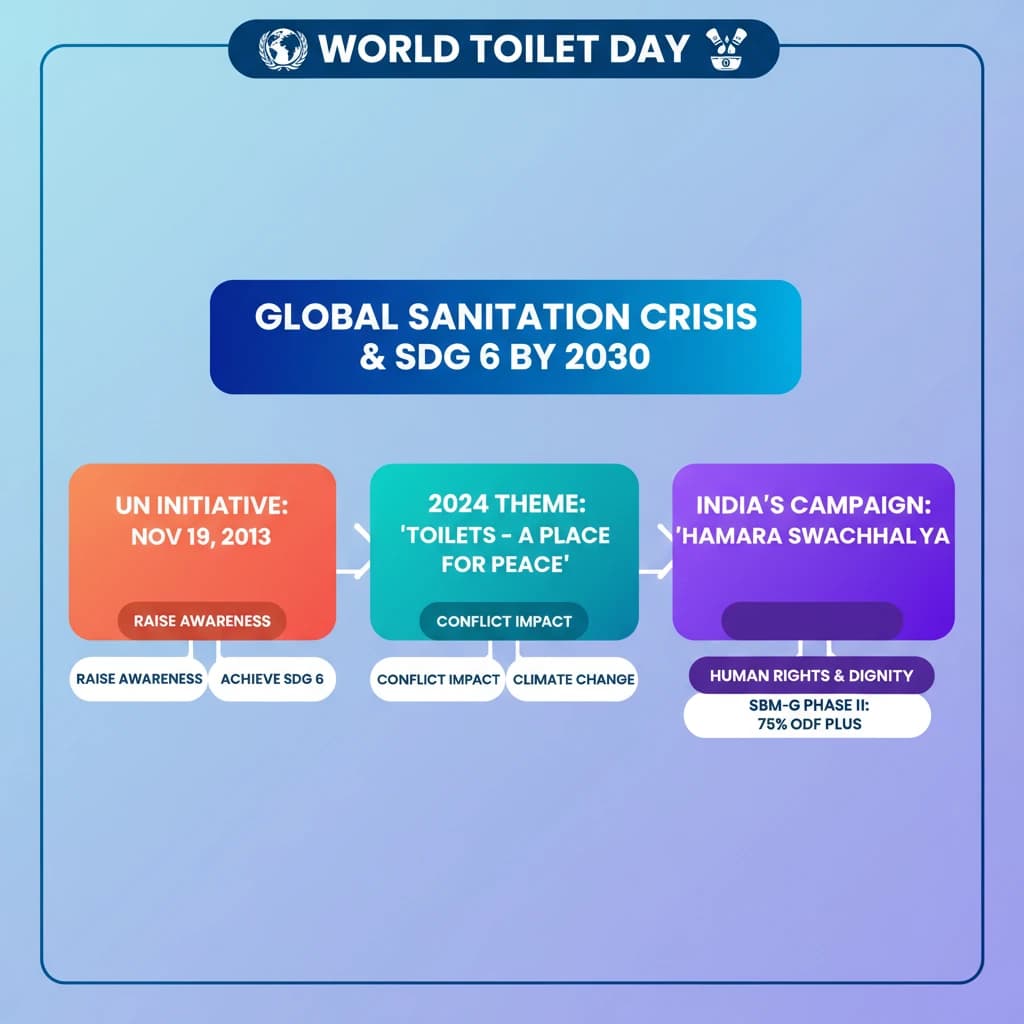
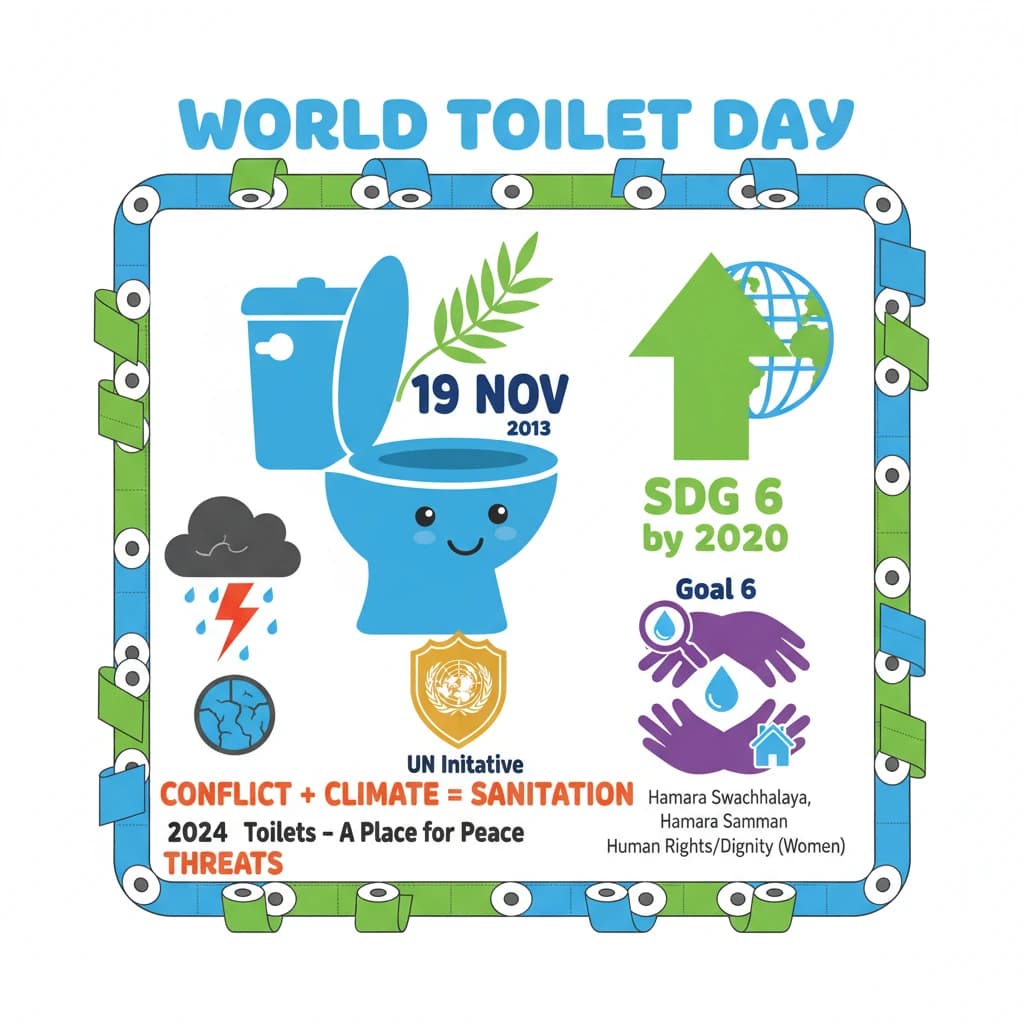
World Toilet Day is a key topic under Social Issues for UPSC Civil Services Examination. Key points include: World Toilet Day is observed on 19th November, a UN initiative since 2013.. Its goal is to raise awareness about the global sanitation crisis and achieve SDG 6 by 2030.. The 2024 theme is 'Toilets - A Place for Peace', highlighting sanitation threats from conflict and climate change.. Understanding this topic is essential for both UPSC Prelims and Mains preparation.
Why is World Toilet Day important for UPSC exam?
World Toilet Day is a Medium-level topic in UPSC Social Issues. It is tested in both Prelims (factual MCQs) and Mains (analytical answer writing). Previous year UPSC questions have frequently covered aspects of World Toilet Day, making it essential for comprehensive IAS preparation.
How to prepare World Toilet Day for UPSC?
To prepare World Toilet Day for UPSC: (1) Study the comprehensive notes covering all key concepts on Vaidra. (2) Practice previous year questions on this topic. (3) Connect it with current affairs using daily updates. (4) Revise using key takeaways and mind maps available for Social Issues. (5) Write practice answers linking World Toilet Day to related GS Paper topics.
Key takeaways of World Toilet Day for UPSC
- World Toilet Day is observed on 19th November, a UN initiative since 2013.
- Its goal is to raise awareness about the global sanitation crisis and achieve SDG 6 by 2030.
- The 2024 theme is 'Toilets - A Place for Peace', highlighting sanitation threats from conflict and climate change.
- India's 'Hamara Swachhalaya, Hamara Samman' campaign links sanitation with human rights and dignity, especially for women.
- Swachh Bharat Mission (Grameen) Phase II achieved 75% ODF Plus (+) status in villages.
- SBM-Urban constructed 63.63 lakh household and 6.36 lakh community toilets.
- Improved sanitation significantly enhances security and dignity for women, with 93% reporting positive impact in ODF regions.
World Toilet Day
Medium⏱️ 6 min read
social issues
📖 Introduction
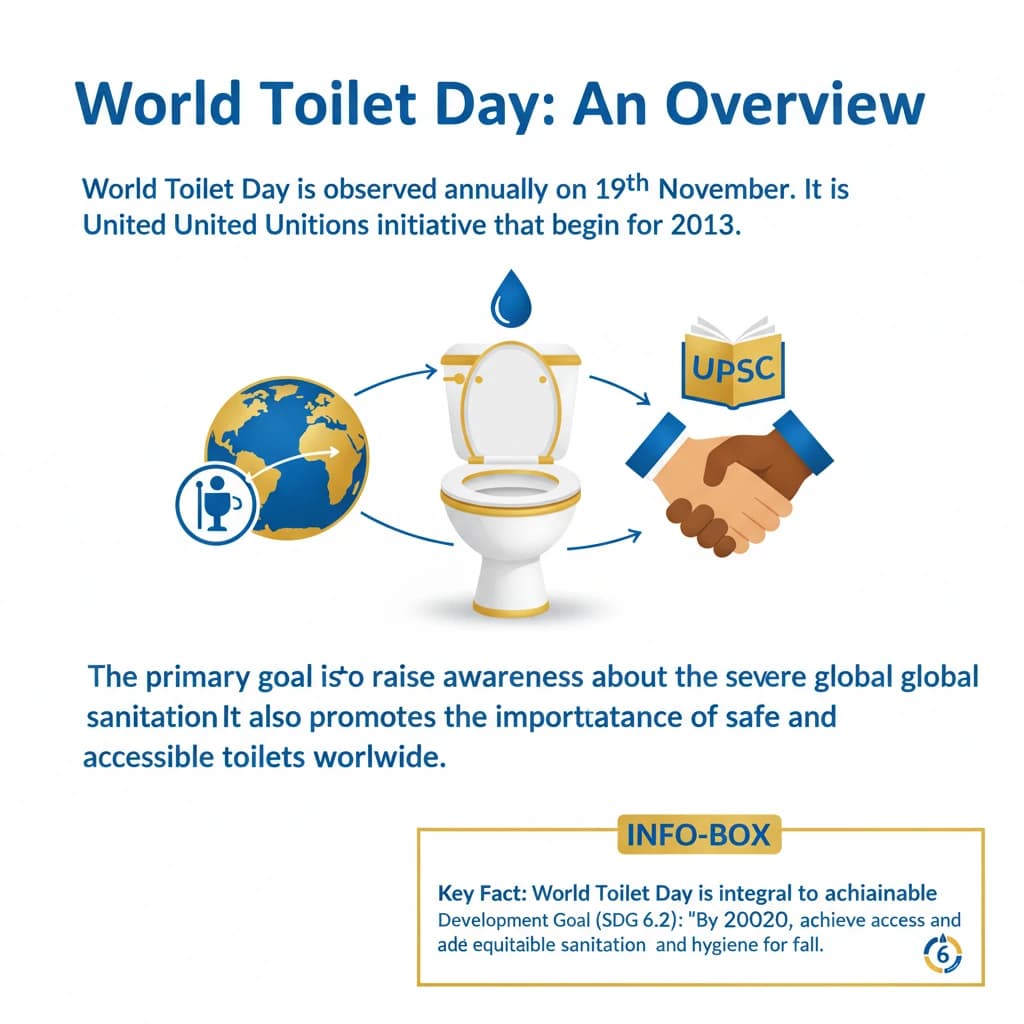
World Toilet Day: An Overview
World Toilet Day is observed annually on 19th November. It is a United Nations initiative that began in 2013.
The primary goal is to raise awareness about the severe global sanitation crisis. It also promotes the importance of safe and accessible toilets worldwide.
Key Fact: World Toilet Day is integral to achieving Sustainable Development Goal (SDG) 6, which aims to ensure water and sanitation for all by 2030.
2024 Theme: Toilets - A Place for Peace
The theme for World Toilet Day 2024 is 'Toilets - A Place for Peace'. This theme highlights the critical link between sanitation and stability.
It emphasizes that billions of people globally face heightened threats to their sanitation due to various factors. These include conflict, climate change, natural disasters, and systemic neglect.
India's Efforts for Safe Sanitation
India has launched significant initiatives to promote safe sanitation. One such campaign is “Hamara Swachhalaya, Hamara Samman”.
This campaign directly links sanitation with fundamental human rights and dignity. It particularly focuses on enhancing these aspects for women and girls across the nation.
Swachh Bharat Mission (Grameen) Achievements
Under Phase II of the Swachh Bharat Mission (SBM) Grameen, significant progress has been made. A remarkable 75% of villages in India have achieved Open Defecation Free (ODF) Plus (+) status.
ODF Plus (+) Status: This goes beyond basic ODF, ensuring visual cleanliness, management of solid and liquid waste, and access to sanitation facilities.
Swachh Bharat Mission (Urban) Achievements
The SBM-Urban component has also shown substantial results. It has led to the construction of a large number of sanitation facilities in urban areas.
- Approximately 63.63 lakh household latrines have been constructed.
- Around 6.36 lakh community toilets have also been built.
Impact on Women's Security and Dignity
The efforts towards achieving ODF status have had a profound positive impact, especially on women. A significant 93% of women in ODF regions reported enhanced feelings of security and dignity.
UPSC Insight: Understanding the socio-economic impact of sanitation, particularly on vulnerable groups like women and girls, is crucial for GS-I (Social Issues) and GS-II (Governance & Social Justice) answers.
💡 Key Takeaways
- •World Toilet Day is observed on 19th November, a UN initiative since 2013.
- •Its goal is to raise awareness about the global sanitation crisis and achieve SDG 6 by 2030.
- •The 2024 theme is 'Toilets - A Place for Peace', highlighting sanitation threats from conflict and climate change.
- •India's 'Hamara Swachhalaya, Hamara Samman' campaign links sanitation with human rights and dignity, especially for women.
- •Swachh Bharat Mission (Grameen) Phase II achieved 75% ODF Plus (+) status in villages.
- •SBM-Urban constructed 63.63 lakh household and 6.36 lakh community toilets.
- •Improved sanitation significantly enhances security and dignity for women, with 93% reporting positive impact in ODF regions.
🧠 Memory Techniques
98% Verified Content
📚 Reference Sources
•Swachh Bharat Mission (Grameen) official website
•Swachh Bharat Mission (Urban) official website
•Drishti IAS current affairs summaries