Loading page, please wait…
Key Animal Species of the Nilgiri Biosphere Reserve - UPSC Art And Culture
What is Key Animal Species of the Nilgiri Biosphere Reserve in UPSC Art And Culture?
Key Animal Species of the Nilgiri Biosphere Reserve is a key topic under Art And Culture for UPSC Civil Services Examination. Key points include: The Nilgiri region, part of the Western Ghats, is a critical biodiversity hotspot.. Key mammalian fauna include the endangered Nilgiri Tahr, Nilgiri Langur, Gaur, and Indian Elephant.. Endemic freshwater fish like Nilgiri Danio and Nilgiri Barb highlight unique aquatic biodiversity.. Understanding this topic is essential for both UPSC Prelims and Mains preparation.
Why is Key Animal Species of the Nilgiri Biosphere Reserve important for UPSC exam?
Key Animal Species of the Nilgiri Biosphere Reserve is a Medium-level topic in UPSC Art And Culture. It is tested in both Prelims (factual MCQs) and Mains (analytical answer writing). Previous year UPSC questions have frequently covered aspects of Key Animal Species of the Nilgiri Biosphere Reserve, making it essential for comprehensive IAS preparation.
How to prepare Key Animal Species of the Nilgiri Biosphere Reserve for UPSC?
To prepare Key Animal Species of the Nilgiri Biosphere Reserve for UPSC: (1) Study the comprehensive notes covering all key concepts on Vaidra. (2) Practice previous year questions on this topic. (3) Connect it with current affairs using daily updates. (4) Revise using key takeaways and mind maps available for Art And Culture. (5) Write practice answers linking Key Animal Species of the Nilgiri Biosphere Reserve to related GS Paper topics.
Key takeaways of Key Animal Species of the Nilgiri Biosphere Reserve for UPSC
- The Nilgiri region, part of the Western Ghats, is a critical biodiversity hotspot.
- Key mammalian fauna include the endangered Nilgiri Tahr, Nilgiri Langur, Gaur, and Indian Elephant.
- Endemic freshwater fish like Nilgiri Danio and Nilgiri Barb highlight unique aquatic biodiversity.
- High endemism in the region necessitates focused conservation efforts.
- Major threats include habitat loss, climate change, poaching, and human-wildlife conflict.
- India implements conservation through protected areas, species-specific projects like Project Elephant, and community involvement.
- Understanding specific species and their conservation status is vital for UPSC exams.
Key Animal Species of the Nilgiri Biosphere Reserve
Medium⏱️ 7 min read
art and culture
📖 Introduction
Introduction to Significant Fauna of the Nilgiri Region
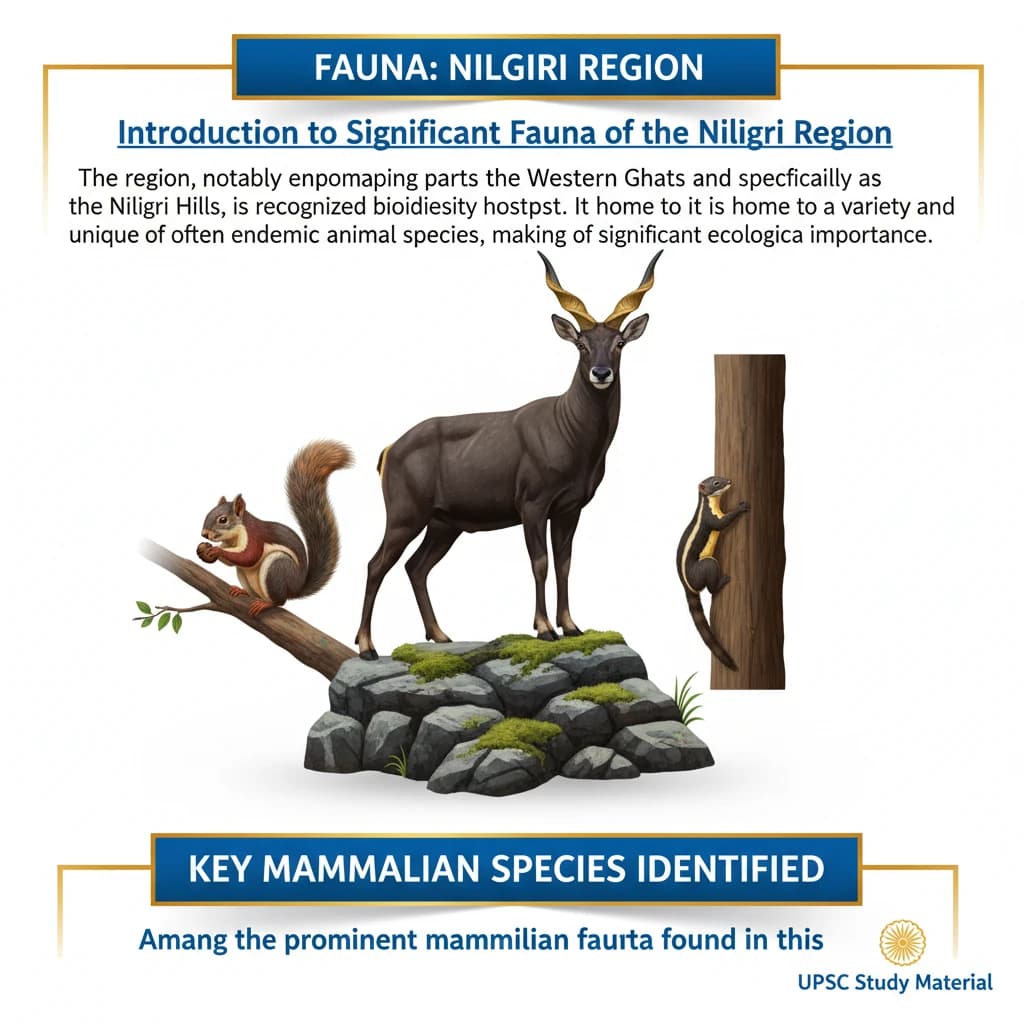
The region, notably encompassing parts of the Western Ghats and specifically the Nilgiri Hills, is recognized as a crucial biodiversity hotspot. It is home to a variety of unique and often endemic animal species, making it an area of significant ecological importance.
Key Mammalian Species Identified
Among the prominent mammalian fauna found in this ecologically rich area are several iconic species. These include the Nilgiri Tahr, Nilgiri Langur, Gaur (also known as the Indian Bison), and the majestic Indian Elephant.
- Nilgiri Tahr: An endangered mountain goat species, strictly endemic to the Nilgiri Hills and parts of the Western Ghats.
- Nilgiri Langur: A primate species characterized by its glossy black fur, found exclusively in the evergreen forests of the Western Ghats.
- Gaur (Indian Bison): The largest extant bovine, playing a vital role in forest ecosystems through grazing.
- Indian Elephant: A keystone species, critical for seed dispersal and maintaining forest health.
Unique Freshwater Fish Species
Beyond the terrestrial mammals, the freshwater ecosystems within this region are also remarkably diverse. They support a range of unique fish species, indicating healthy aquatic environments.
- Nilgiri Danio (Devario neilgheriensis): A small, colourful freshwater fish species, endemic to hill streams in the Nilgiri region.
- Nilgiri Barb: Another endemic freshwater fish, signifying the unique aquatic biodiversity of the area.
Ecological and Conservation Significance
The presence of these diverse and often endemic species underscores the immense ecological value of the region. Many of these animals are found nowhere else globally, highlighting their irreplaceable nature.
The high degree of endemism in the Western Ghats makes it one of the world's top biodiversity hotspots, demanding focused conservation efforts and sustainable management practices.
UPSC Exam Perspective
For UPSC Prelims (Environment & Ecology), questions often target endangered and endemic species, their habitats, and associated conservation initiatives. In Mains (GS III), this knowledge is crucial for answering questions on biodiversity conservation, human-wildlife conflict, and environmental policy.
💡 Key Takeaways
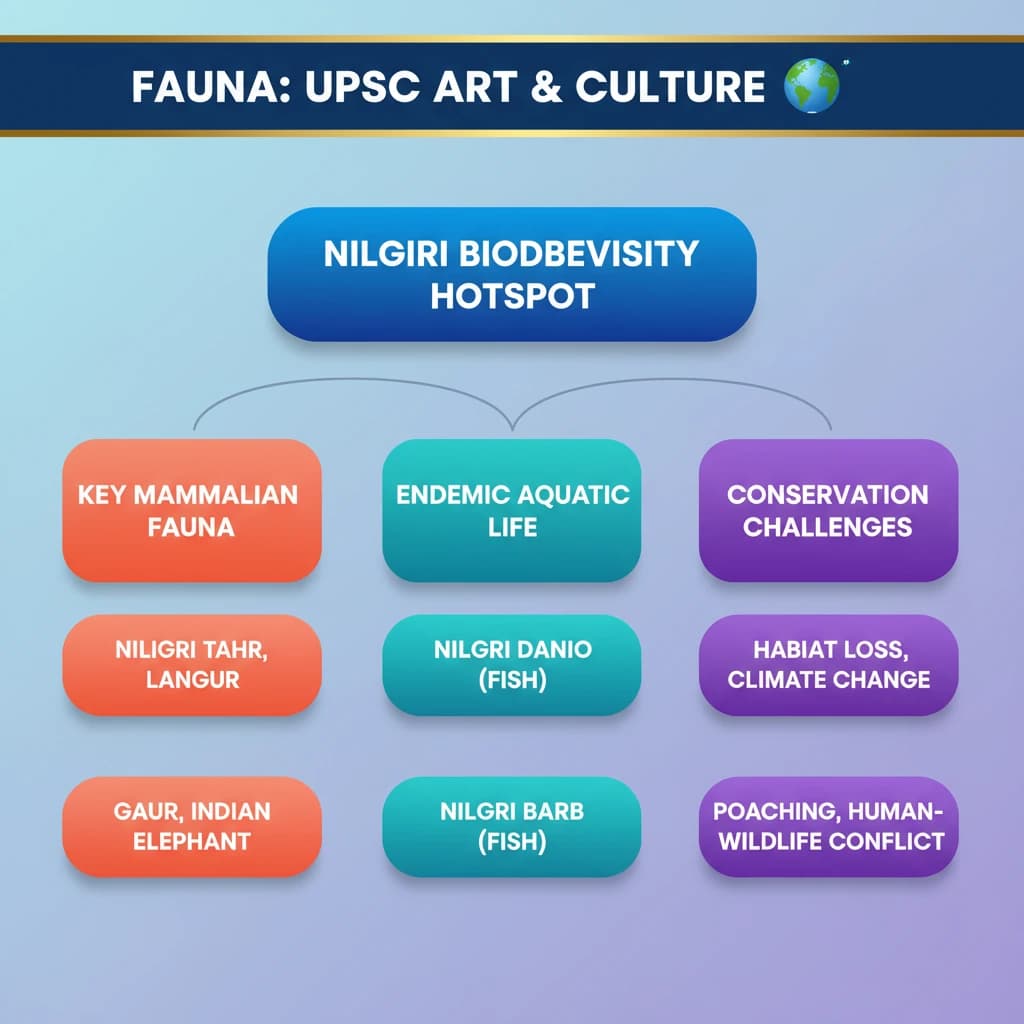
- •The Nilgiri region, part of the Western Ghats, is a critical biodiversity hotspot.
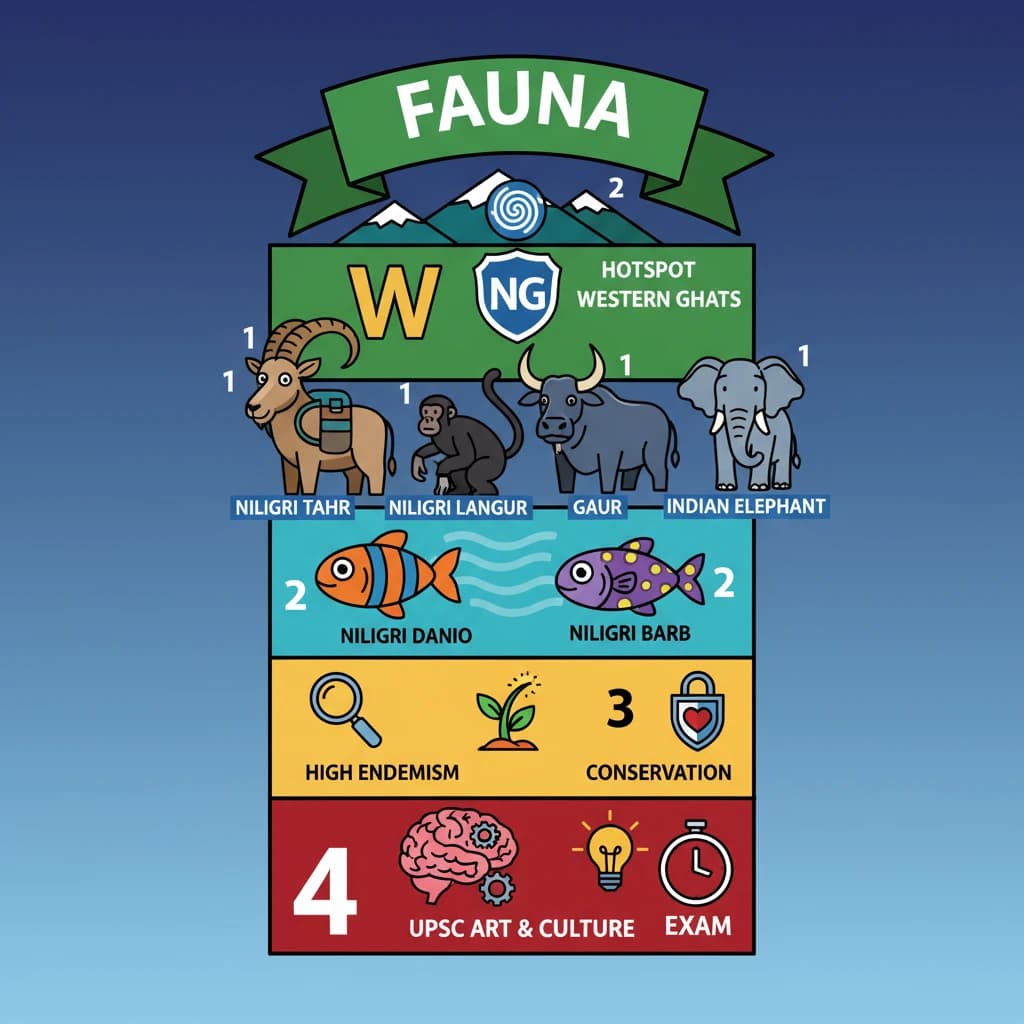
- •Key mammalian fauna include the endangered Nilgiri Tahr, Nilgiri Langur, Gaur, and Indian Elephant.
- •Endemic freshwater fish like Nilgiri Danio and Nilgiri Barb highlight unique aquatic biodiversity.
- •High endemism in the region necessitates focused conservation efforts.
- •Major threats include habitat loss, climate change, poaching, and human-wildlife conflict.
- •India implements conservation through protected areas, species-specific projects like Project Elephant, and community involvement.
- •Understanding specific species and their conservation status is vital for UPSC exams.
🧠 Memory Techniques
95% Verified Content
📚 Reference Sources
•IUCN Red List of Threatened Species
•Ministry of Environment, Forest and Climate Change (MoEFCC), Government of India reports
•Wildlife Protection Act, 1972
•National Parks and Wildlife Sanctuaries data