Loading page, please wait…
Narasapur Lace: Challenges of Stagnant Market & Chinese Competition - UPSC Art And Culture
What is Narasapur Lace: Challenges of Stagnant Market & Chinese Competition in UPSC Art And Culture?
Narasapur Lace: Challenges of Stagnant Market & Chinese Competition is a key topic under Art And Culture for UPSC Civil Services Examination. Key points include: Narasapur lace artisans face market stagnation, low active participation, and competition from cheap machine products.. The Covid-19 pandemic severely impacted demand and production for traditional crafts.. Only a small fraction of associated women artisans are actively engaged in regular production.. Understanding this topic is essential for both UPSC Prelims and Mains preparation.
Why is Narasapur Lace: Challenges of Stagnant Market & Chinese Competition important for UPSC exam?
Narasapur Lace: Challenges of Stagnant Market & Chinese Competition is a Medium-level topic in UPSC Art And Culture. It is tested in both Prelims (factual MCQs) and Mains (analytical answer writing). Previous year UPSC questions have frequently covered aspects of Narasapur Lace: Challenges of Stagnant Market & Chinese Competition, making it essential for comprehensive IAS preparation.
How to prepare Narasapur Lace: Challenges of Stagnant Market & Chinese Competition for UPSC?
To prepare Narasapur Lace: Challenges of Stagnant Market & Chinese Competition for UPSC: (1) Study the comprehensive notes covering all key concepts on Vaidra. (2) Practice previous year questions on this topic. (3) Connect it with current affairs using daily updates. (4) Revise using key takeaways and mind maps available for Art And Culture. (5) Write practice answers linking Narasapur Lace: Challenges of Stagnant Market & Chinese Competition to related GS Paper topics.
Key takeaways of Narasapur Lace: Challenges of Stagnant Market & Chinese Competition for UPSC
- Narasapur lace artisans face market stagnation, low active participation, and competition from cheap machine products.
- The Covid-19 pandemic severely impacted demand and production for traditional crafts.
- Only a small fraction of associated women artisans are actively engaged in regular production.
- Inexpensive machine-made products, particularly from China, pose a significant threat to market demand.
- These challenges are common to many traditional Indian handicrafts.
- Government support, market linkages, and skill development are crucial for craft revival.
Narasapur Lace: Challenges of Stagnant Market & Chinese Competition
Medium⏱️ 8 min read
art and culture
📖 Introduction
Introduction to Narasapur Lace Craft
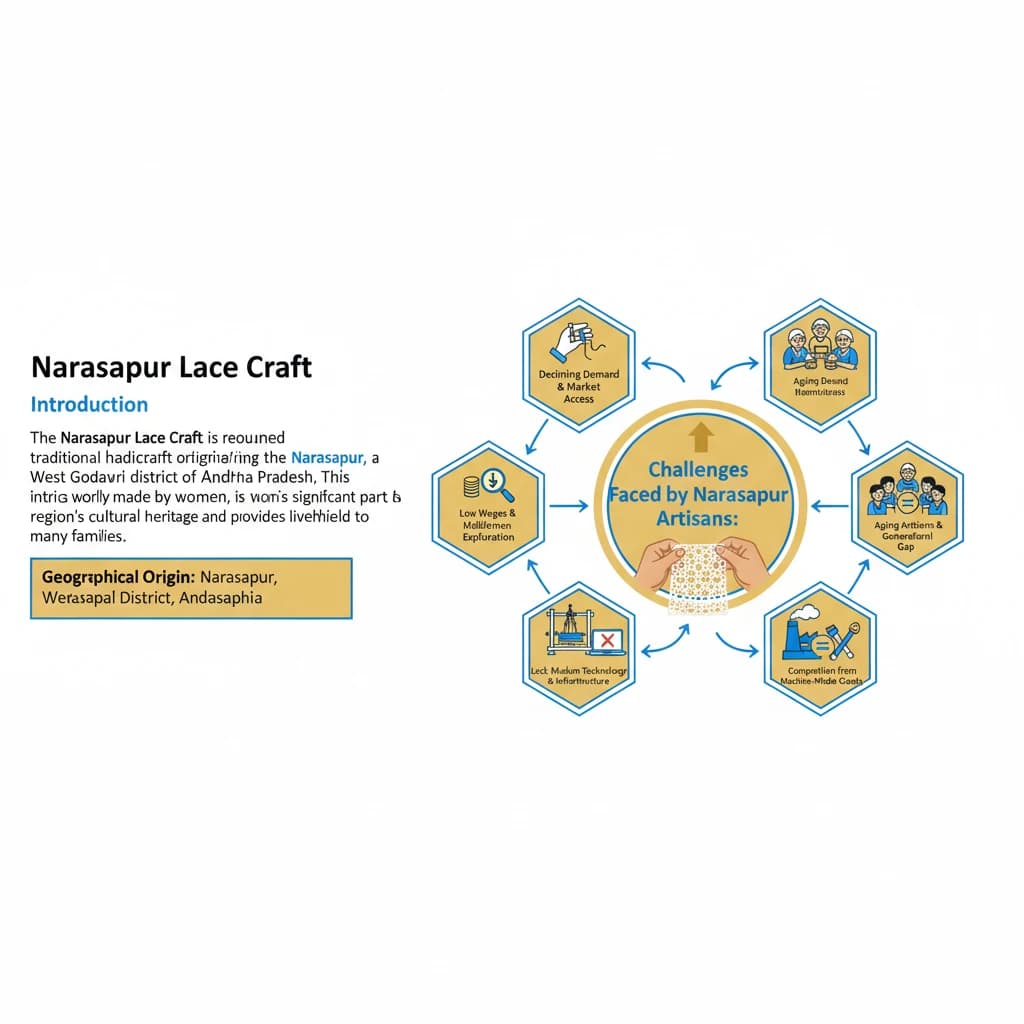
The Narasapur Lace Craft is a renowned traditional handicraft originating from Narasapur, a town in the West Godavari district of Andhra Pradesh. This intricate lace work, primarily made by women, is a significant part of the region's cultural heritage and provides livelihood to many families.
Geographical Origin: Narasapur, West Godavari District, Andhra Pradesh
Primary Artisans: Women
Craft Type: Hand-made lace products
Primary Artisans: Women
Craft Type: Hand-made lace products
Challenge 1: Market Stagnation Post-Pandemic
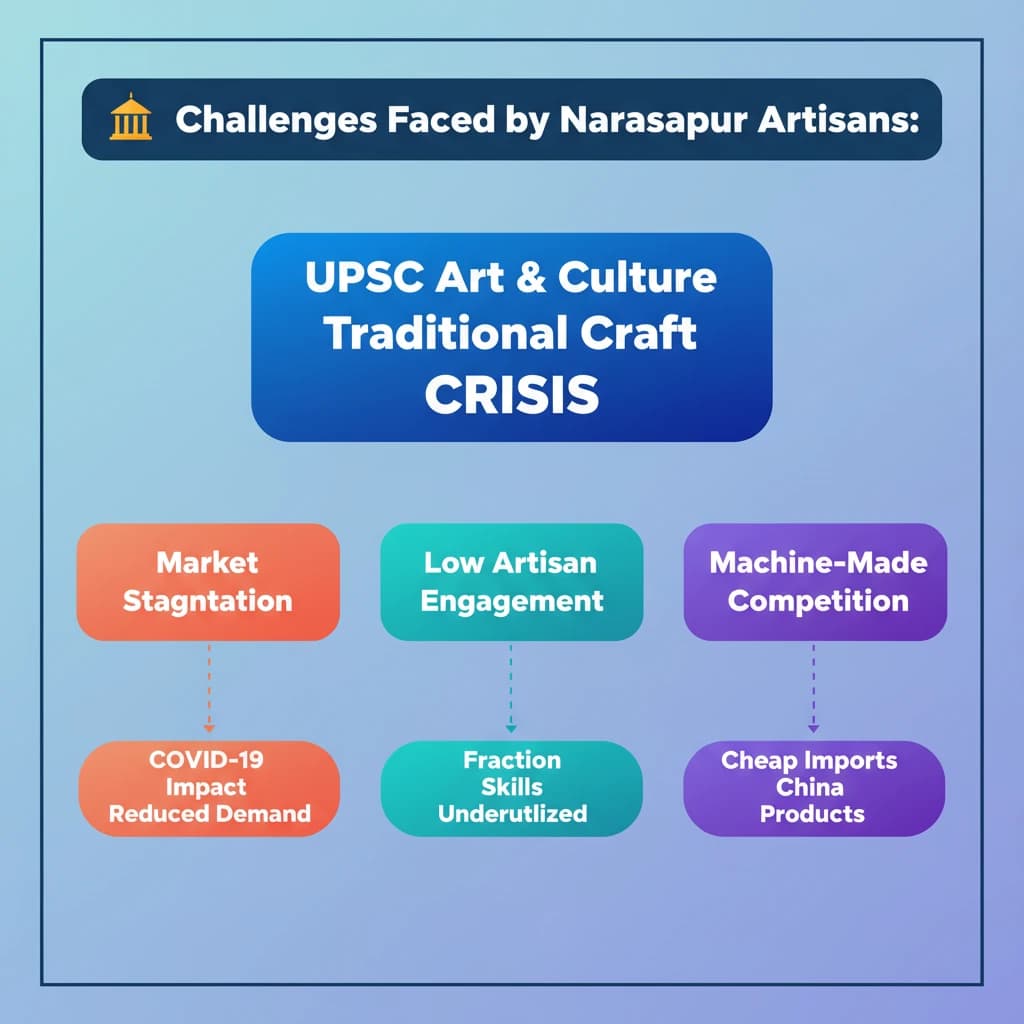
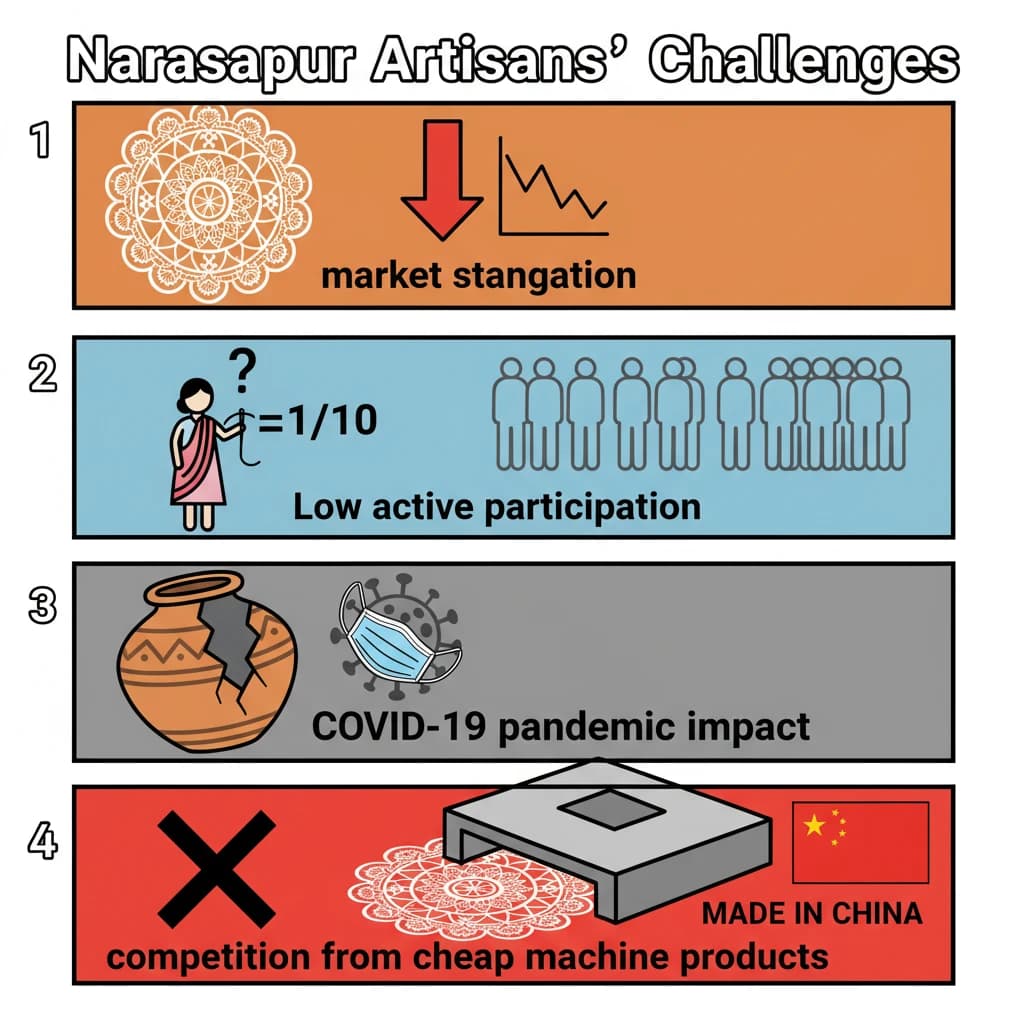
One of the most significant hurdles faced by Narasapur artisans is the persistent market stagnation. This issue has been particularly severe since the onset of the Covid-19 pandemic, disrupting established supply chains and consumer behavior.
The stagnation has directly led to a severe lack of new orders for their handcrafted lace products. Consequently, the overall production volume has significantly decreased, impacting the artisans' income and stability.
Impact: Reduced orders, decreased production, economic instability for artisans.
Challenge 2: Low Active Artisan Involvement
Despite a large number of individuals associated with the craft, active participation remains critically low. While over 15,000 women are formally associated with the Narasapur lace craft, only a fraction are regularly involved in production.
Currently, only around 200 women are actively engaged in consistent, regular production. This disparity highlights underlying issues such as inconsistent demand, inadequate training, or lack of sustained economic incentives.
Associated Artisans: Over 15,000 women
Actively Producing Artisans: Approximately 200 women
Actively Producing Artisans: Approximately 200 women
Challenge 3: Competition from Inexpensive Machine Products
The traditional Narasapur lace products face immense competition from mass-produced, inexpensive alternatives. These machine-made goods often mimic the aesthetics of handcrafted items but are sold at significantly lower prices.
Specifically, inexpensive machine products from China have heavily infiltrated the market. This influx poses a substantial threat to the demand for authentic Narasapur lace products, as consumers often opt for cheaper options.
UPSC Insight: This challenge is common across many traditional Indian handicrafts. When discussing solutions, consider policies for promoting authentic products, GI tags, and market linkages.
💡 Key Takeaways
- •Narasapur lace artisans face market stagnation, low active participation, and competition from cheap machine products.
- •The Covid-19 pandemic severely impacted demand and production for traditional crafts.
- •Only a small fraction of associated women artisans are actively engaged in regular production.
- •Inexpensive machine-made products, particularly from China, pose a significant threat to market demand.
- •These challenges are common to many traditional Indian handicrafts.
- •Government support, market linkages, and skill development are crucial for craft revival.
🧠 Memory Techniques
90% Verified Content
📚 Reference Sources
•Ministry of Textiles, Government of India reports on handicrafts
•Art & Culture books for UPSC preparation
•News articles and reports on Indian handicrafts