Loading page, please wait…
What is the Bhojshala Temple-Kamal Maula Mosque Complex? - UPSC Art And Culture
What is What is the Bhojshala Temple-Kamal Maula Mosque Complex? in UPSC Art And Culture?
What is the Bhojshala Temple-Kamal Maula Mosque Complex? is a key topic under Art And Culture for UPSC Civil Services Examination. Key points include: The Bhojshala complex was originally a Saraswati temple built by Paramara King Bhoja in the 11th century AD.. A mosque was later built using structural components of the original temple.. The site contains slabs inscribed with Sanskrit and Prakrit literary works.. Understanding this topic is essential for both UPSC Prelims and Mains preparation.
Why is What is the Bhojshala Temple-Kamal Maula Mosque Complex? important for UPSC exam?
What is the Bhojshala Temple-Kamal Maula Mosque Complex? is a Medium-level topic in UPSC Art And Culture. It is tested in both Prelims (factual MCQs) and Mains (analytical answer writing). Previous year UPSC questions have frequently covered aspects of What is the Bhojshala Temple-Kamal Maula Mosque Complex?, making it essential for comprehensive IAS preparation.
How to prepare What is the Bhojshala Temple-Kamal Maula Mosque Complex? for UPSC?
To prepare What is the Bhojshala Temple-Kamal Maula Mosque Complex? for UPSC: (1) Study the comprehensive notes covering all key concepts on Vaidra. (2) Practice previous year questions on this topic. (3) Connect it with current affairs using daily updates. (4) Revise using key takeaways and mind maps available for Art And Culture. (5) Write practice answers linking What is the Bhojshala Temple-Kamal Maula Mosque Complex? to related GS Paper topics.
Key takeaways of What is the Bhojshala Temple-Kamal Maula Mosque Complex? for UPSC
- The Bhojshala complex was originally a Saraswati temple built by Paramara King Bhoja in the 11th century AD.
- A mosque was later built using structural components of the original temple.
- The site contains slabs inscribed with Sanskrit and Prakrit literary works.
- King Bhoja was a significant patron of art and literature, establishing the Bhojshala school.
- An ASI agreement allows Hindus to perform puja on Tuesdays and Muslims to offer Namaz on Fridays.
- The core dispute concerns the site's original status as a temple, with calls for an archaeological survey.
What is the Bhojshala Temple-Kamal Maula Mosque Complex?
Medium⏱️ 7 min read
art and culture
📖 Introduction
Introduction to the Bhojshala Complex
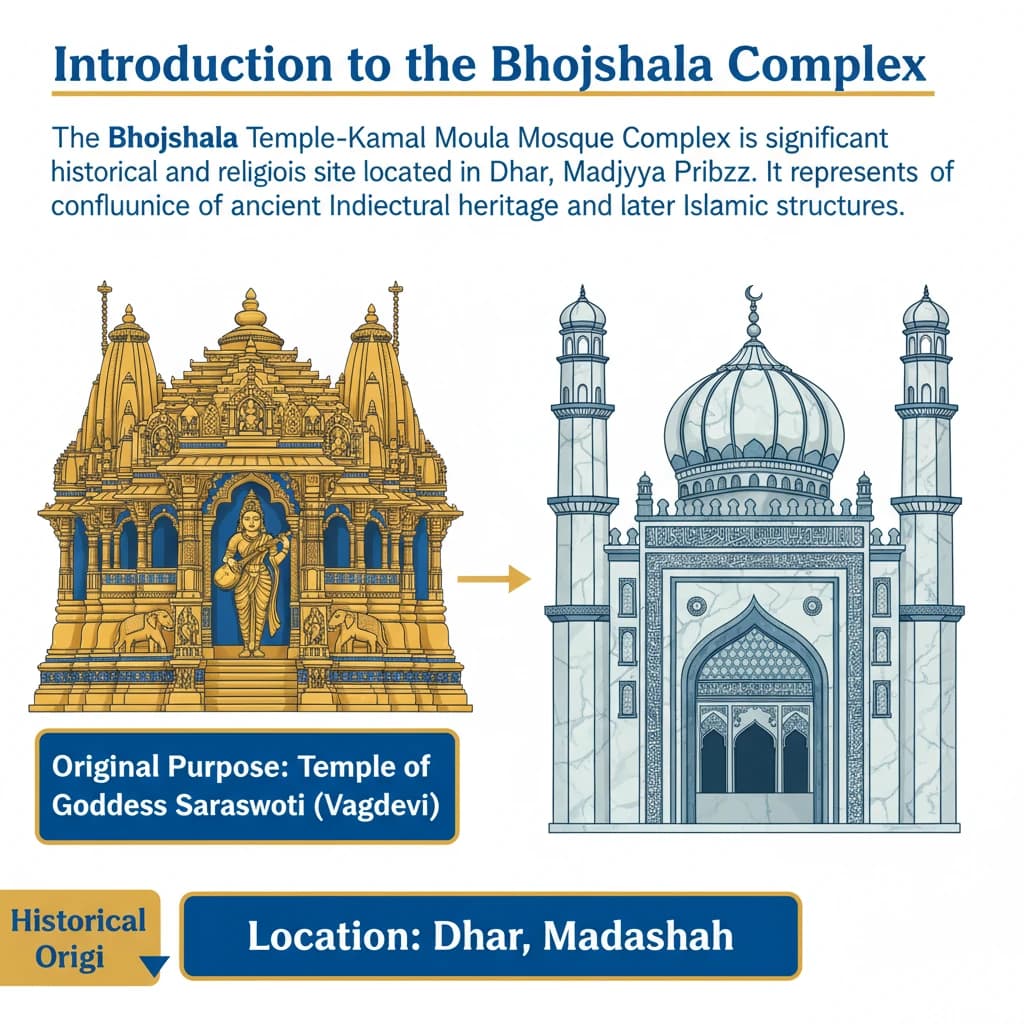
The Bhojshala Temple-Kamal Maula Mosque Complex is a significant historical and religious site located in Dhar, Madhya Pradesh. It represents a confluence of ancient Indian architectural heritage and later Islamic structures.
Location: Dhar, Madhya Pradesh
Original Purpose: Temple of Goddess Saraswati (Vagdevi)
Original Purpose: Temple of Goddess Saraswati (Vagdevi)
Historical Origins and Construction
The complex was originally conceived as a grand temple dedicated to Goddess Saraswati, also known as Vagdevi. This sacred structure was built by the illustrious Paramara King Bhoja during the 11th century AD.
Historical accounts and architectural evidence suggest that a mosque was later constructed on the site. This construction utilized the existing structural members of the original Hindu temple, a common practice during certain historical periods.
Key Builder: Paramara King Bhoja
Period: 11th century AD
Architectural Feature: Mosque built using existing temple components.
Period: 11th century AD
Architectural Feature: Mosque built using existing temple components.
Architectural and Literary Significance
Beyond its religious identity, the monument holds immense cultural value. It preserves several stone slabs inscribed with ancient Sanskrit and Prakrit literary works.
King Bhoja was renowned as a great patron of art, literature, and learning. He is credited with establishing a prominent school at this site, which is now famously known as Bhojshala, meaning 'Hall of Bhoja'.
Current Arrangement and ASI Role
Under a specific agreement facilitated by the Archaeological Survey of India (ASI), a unique arrangement for worship is observed at the complex. This agreement aims to accommodate both Hindu and Muslim devotees.
- Hindus are permitted to perform puja (worship) in the temple area every Tuesday.
- Muslims are allowed to offer Namaz (prayers) in the mosque area every Friday.
This arrangement highlights the role of the ASI in managing sensitive religious sites and attempting to balance conflicting claims, a topic often relevant for UPSC GS Paper 1 (Art & Culture) and GS Paper 2 (Governance).
The Core of the Dispute
The primary controversy surrounding the Bhojshala-Kamal Maula Mosque Complex revolves around the original and historical status of the site. Petitioners argue that the site was unequivocally a Hindu temple before the mosque's construction.
This dispute reflects broader historical debates regarding the transformation of religious sites in India over centuries.
Evidence and Demands for Survey
A key piece of evidence cited by petitioners is an ASI report. This report allegedly claims that the original Bhojshala and Vagdevi temples were demolished to facilitate the construction of a mosque.
Consequently, there has been a persistent demand for a comprehensive survey of the complex. The objective of such a survey is to definitively determine the actual historical sequence and original nature of the site.
💡 Key Takeaways
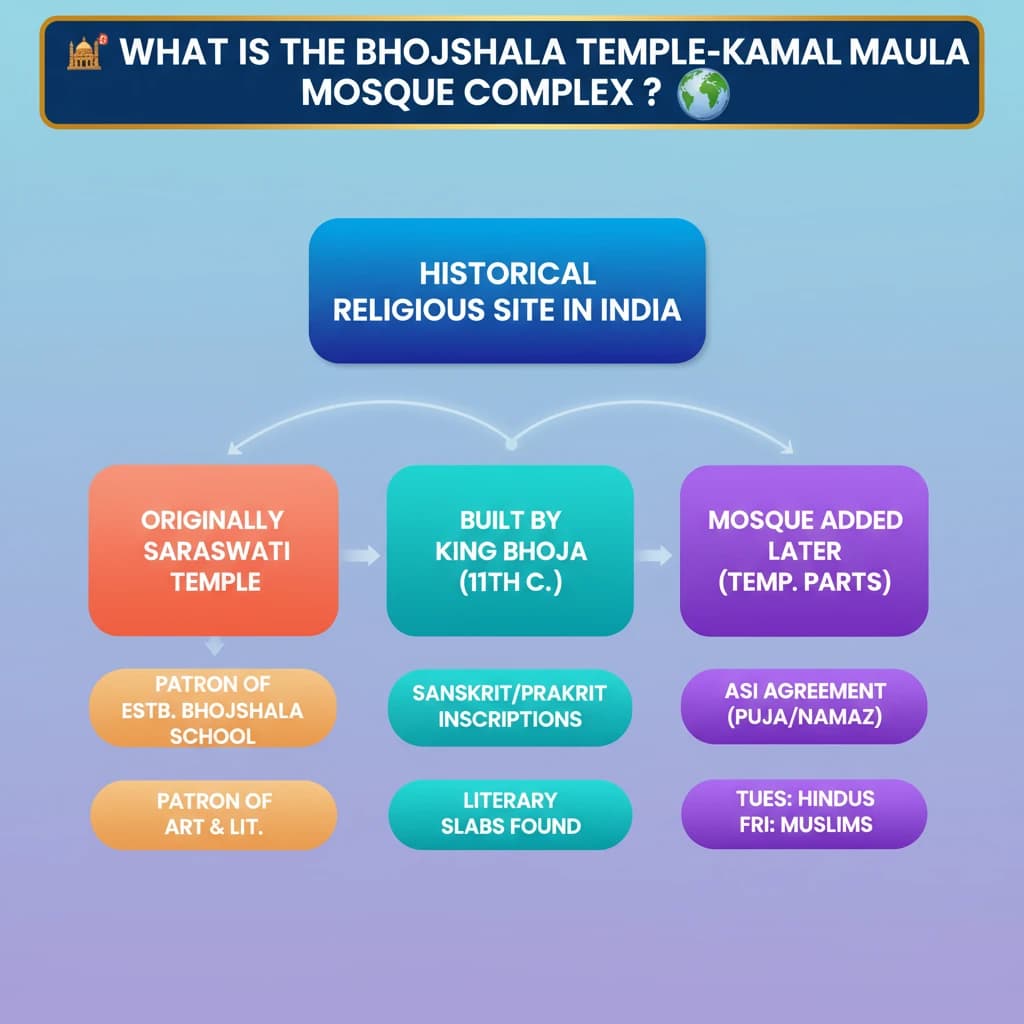
- •The Bhojshala complex was originally a Saraswati temple built by Paramara King Bhoja in the 11th century AD.
- •A mosque was later built using structural components of the original temple.
- •The site contains slabs inscribed with Sanskrit and Prakrit literary works.
- •King Bhoja was a significant patron of art and literature, establishing the Bhojshala school.
- •An ASI agreement allows Hindus to perform puja on Tuesdays and Muslims to offer Namaz on Fridays.
- •The core dispute concerns the site's original status as a temple, with calls for an archaeological survey.
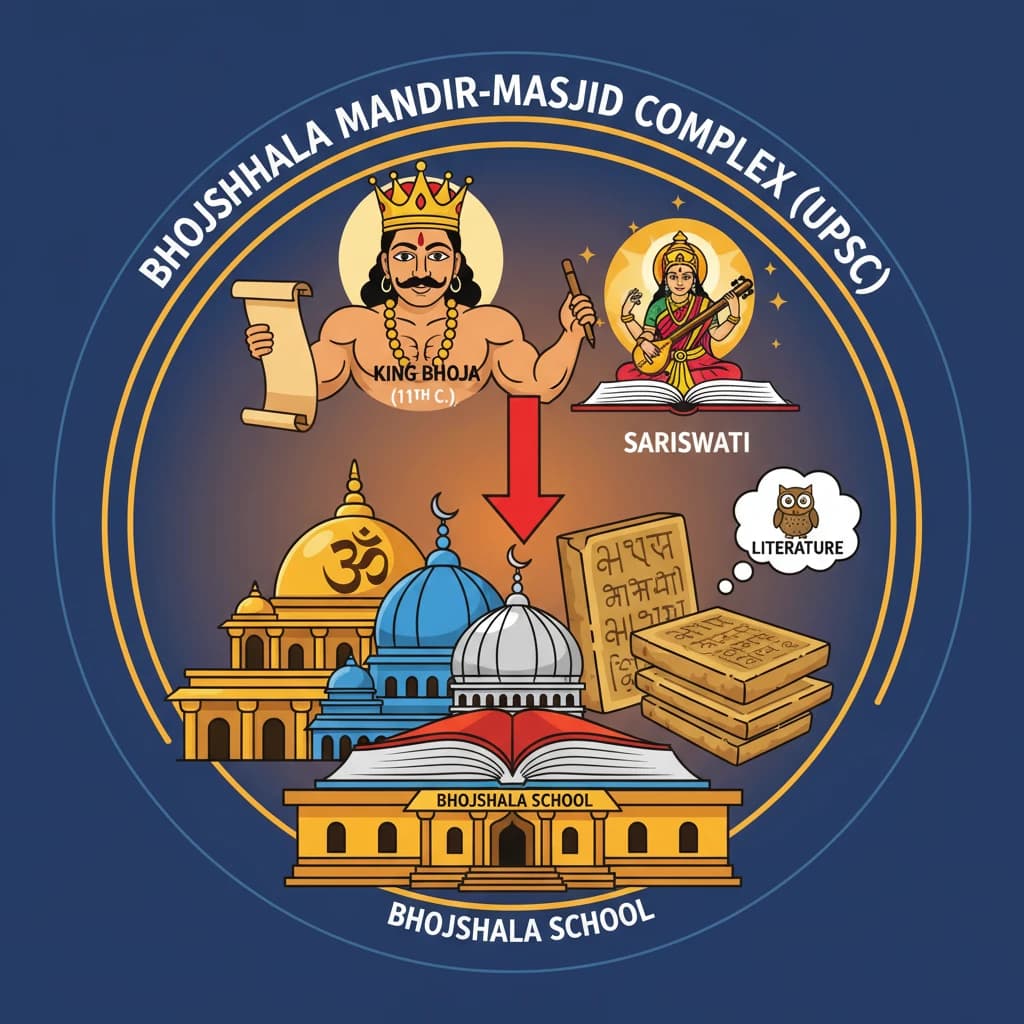
🧠 Memory Techniques
95% Verified Content
📚 Reference Sources
•Archaeological Survey of India (ASI) official records and historical reports (general knowledge)
•Reputable news sources covering the Bhojshala dispute (e.g., The Hindu, Indian Express)
•Academic texts on Indian medieval history and architecture