Loading page, please wait…
What are Dragon Drones? - UPSC Defence And Security
What is What are Dragon Drones? in UPSC Defence And Security?
What are Dragon Drones? is a key topic under Defence And Security for UPSC Civil Services Examination. Key points include: Dragon Drones are UAVs equipped with thermite for incendiary attacks.. Thermite is an aluminium and iron oxide mixture, producing intense, self-sustaining heat.. Used tactically in the Russia-Ukraine War to clear cover and expose enemy forces.. Understanding this topic is essential for both UPSC Prelims and Mains preparation.
Why is What are Dragon Drones? important for UPSC exam?
What are Dragon Drones? is a Medium-level topic in UPSC Defence And Security. It is tested in both Prelims (factual MCQs) and Mains (analytical answer writing). Previous year UPSC questions have frequently covered aspects of What are Dragon Drones?, making it essential for comprehensive IAS preparation.
How to prepare What are Dragon Drones? for UPSC?
To prepare What are Dragon Drones? for UPSC: (1) Study the comprehensive notes covering all key concepts on Vaidra. (2) Practice previous year questions on this topic. (3) Connect it with current affairs using daily updates. (4) Revise using key takeaways and mind maps available for Defence And Security. (5) Write practice answers linking What are Dragon Drones? to related GS Paper topics.
Key takeaways of What are Dragon Drones? for UPSC
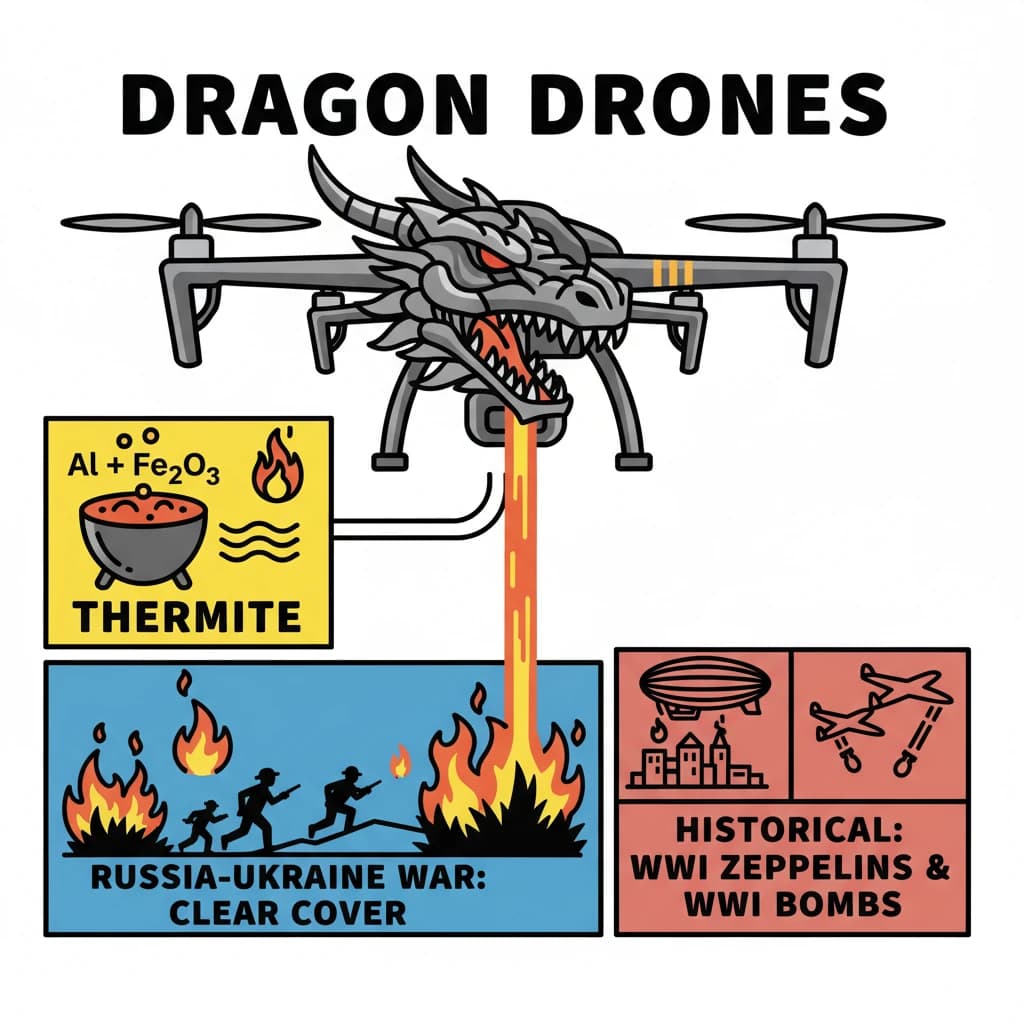
- Dragon Drones are UAVs equipped with thermite for incendiary attacks.
- Thermite is an aluminium and iron oxide mixture, producing intense, self-sustaining heat.
- Used tactically in the Russia-Ukraine War to clear cover and expose enemy forces.
- Historically, thermite was used in WWI (German zeppelins) and WWII (Allied/Axis incendiary bombs).
- Thermite use is not banned, but incendiary weapons are restricted against civilians by CCW Protocol III.
What are Dragon Drones?
Medium⏱️ 6 min read
defence and security
📖 Introduction
Introduction to Dragon Drones
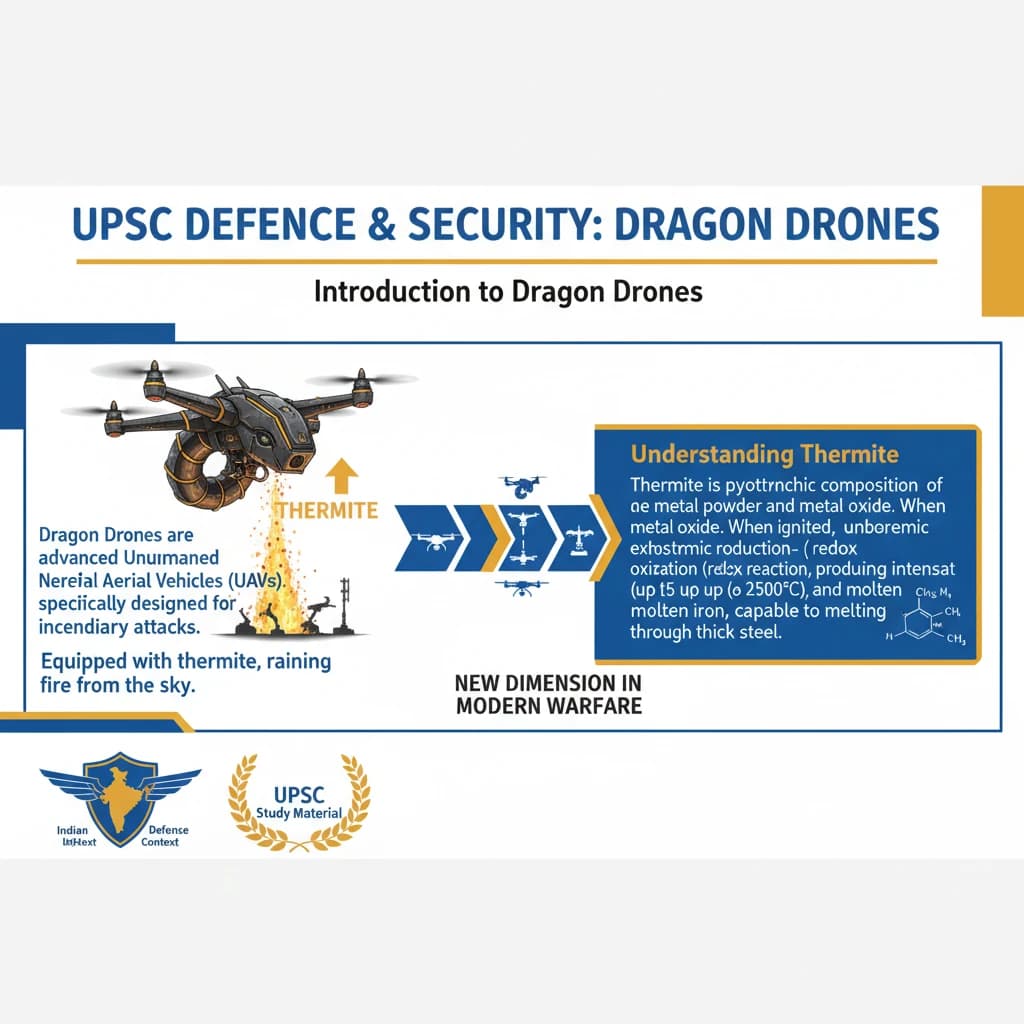
Dragon Drones are advanced Unmanned Aerial Vehicles (UAVs) specifically designed for incendiary attacks. These deadly drones are equipped with thermite, allowing them to rain fire from the sky upon targets.
Their deployment signifies a new dimension in modern warfare, leveraging drone technology for destructive capabilities.
Understanding Thermite
Thermite is a pyrotechnic composition consisting of a metal powder and a metal oxide. The mixture typically comprises aluminium and iron oxide.
Historically, thermite was developed for industrial applications, primarily for welding railroad tracks due to its intense heat output.
Working Mechanism of Dragon Drones
The operational principle of Dragon Drones revolves around the controlled ignition of thermite. An electrical fuse initiates the reaction, which then becomes self-sustaining.
This reaction produces extreme heat, making the resulting fire incredibly difficult to extinguish. The intense heat allows it to burn through various materials, including military vehicles, trees, and even function underwater.
The self-sustaining nature of the thermite reaction is a critical feature, ensuring prolonged and intense combustion.
Deployment in the Russia-Ukraine War
The Russia-Ukraine War has seen the active deployment of Dragon Drones by both sides. Ukrainian troops initially utilized these drones to ignite vegetation.
This tactic aimed to destroy natural cover used by Russian forces, thereby exposing them to direct attacks. In retaliation, Russia soon adopted the use of these incendiary drones.
Historical Context of Thermite in Warfare
The use of thermite in military conflicts dates back over a century. During World War I, German zeppelins deployed thermite-laden bombs, which were considered a significant innovation at the time.
In World War II, thermite became a more widespread component. Both the Allied and Axis powers incorporated thermite into their incendiary bombs and hand grenades.
Incendiary weapons are specifically designed to ignite objects or cause severe burns and respiratory injuries through the emission of flame and heat.
Legal Status of Thermite and Incendiary Weapons
The use of thermite in warfare is currently not banned under international law. However, the deployment of incendiary weapons is subject to specific restrictions.
The Convention on Certain Conventional Weapons (CCW) explicitly prohibits the use of incendiary weapons against civilians. Furthermore, Protocol III of the CCW restricts their use strictly to military targets only.
Understanding the distinction between thermite's legality and the restrictions on incendiary weapons under International Humanitarian Law (IHL) is crucial for UPSC Mains answers, especially in GS Paper 2 and GS Paper 3.
💡 Key Takeaways
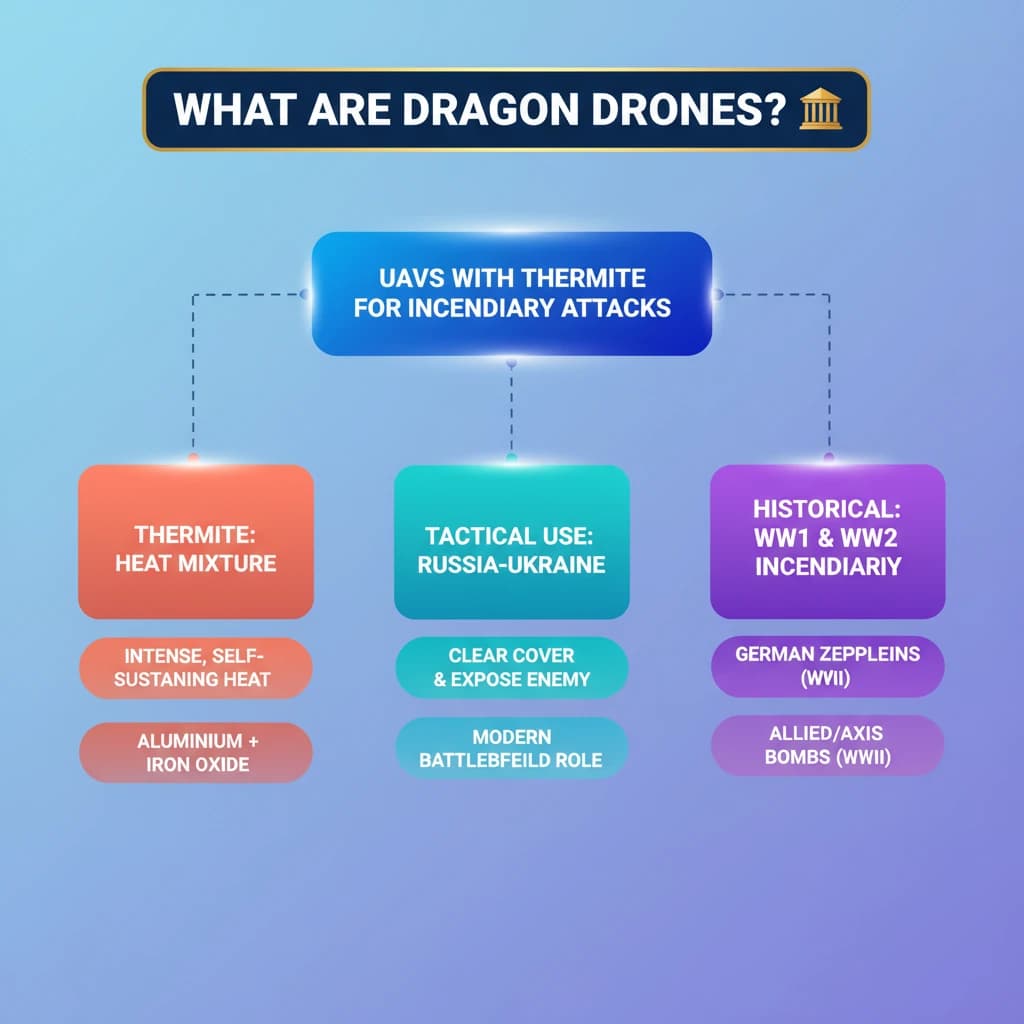
- •Dragon Drones are UAVs equipped with thermite for incendiary attacks.
- •Thermite is an aluminium and iron oxide mixture, producing intense, self-sustaining heat.
- •Used tactically in the Russia-Ukraine War to clear cover and expose enemy forces.
- •Historically, thermite was used in WWI (German zeppelins) and WWII (Allied/Axis incendiary bombs).
- •Thermite use is not banned, but incendiary weapons are restricted against civilians by CCW Protocol III.
🧠 Memory Techniques
95% Verified Content
📚 Reference Sources
•Convention on Certain Conventional Weapons (CCW) Protocol III