Loading page, please wait…
What is the Terminal High Altitude Area Defence (THAAD)? - UPSC Defence And Security
What is What is the Terminal High Altitude Area Defence (THAAD)? in UPSC Defence And Security?
What is the Terminal High Altitude Area Defence (THAAD)? is a key topic under Defence And Security for UPSC Civil Services Examination. Key points include: THAAD is a US anti-ballistic missile system for short, medium, and intermediate-range missiles.. It uses a 'hit-to-kill' approach, destroying targets by direct impact, not explosives.. THAAD cannot detect low-flying objects like drones.. Understanding this topic is essential for both UPSC Prelims and Mains preparation.
Why is What is the Terminal High Altitude Area Defence (THAAD)? important for UPSC exam?
What is the Terminal High Altitude Area Defence (THAAD)? is a Medium-level topic in UPSC Defence And Security. It is tested in both Prelims (factual MCQs) and Mains (analytical answer writing). Previous year UPSC questions have frequently covered aspects of What is the Terminal High Altitude Area Defence (THAAD)?, making it essential for comprehensive IAS preparation.
How to prepare What is the Terminal High Altitude Area Defence (THAAD)? for UPSC?
To prepare What is the Terminal High Altitude Area Defence (THAAD)? for UPSC: (1) Study the comprehensive notes covering all key concepts on Vaidra. (2) Practice previous year questions on this topic. (3) Connect it with current affairs using daily updates. (4) Revise using key takeaways and mind maps available for Defence And Security. (5) Write practice answers linking What is the Terminal High Altitude Area Defence (THAAD)? to related GS Paper topics.
Key takeaways of What is the Terminal High Altitude Area Defence (THAAD)? for UPSC
- THAAD is a US anti-ballistic missile system for short, medium, and intermediate-range missiles.
- It uses a 'hit-to-kill' approach, destroying targets by direct impact, not explosives.
- THAAD cannot detect low-flying objects like drones.
- Its development was spurred by Iraq's Scud missile attacks during the 1991 Gulf War.
- It is a key component of a layered missile defense strategy and has significant geopolitical implications.
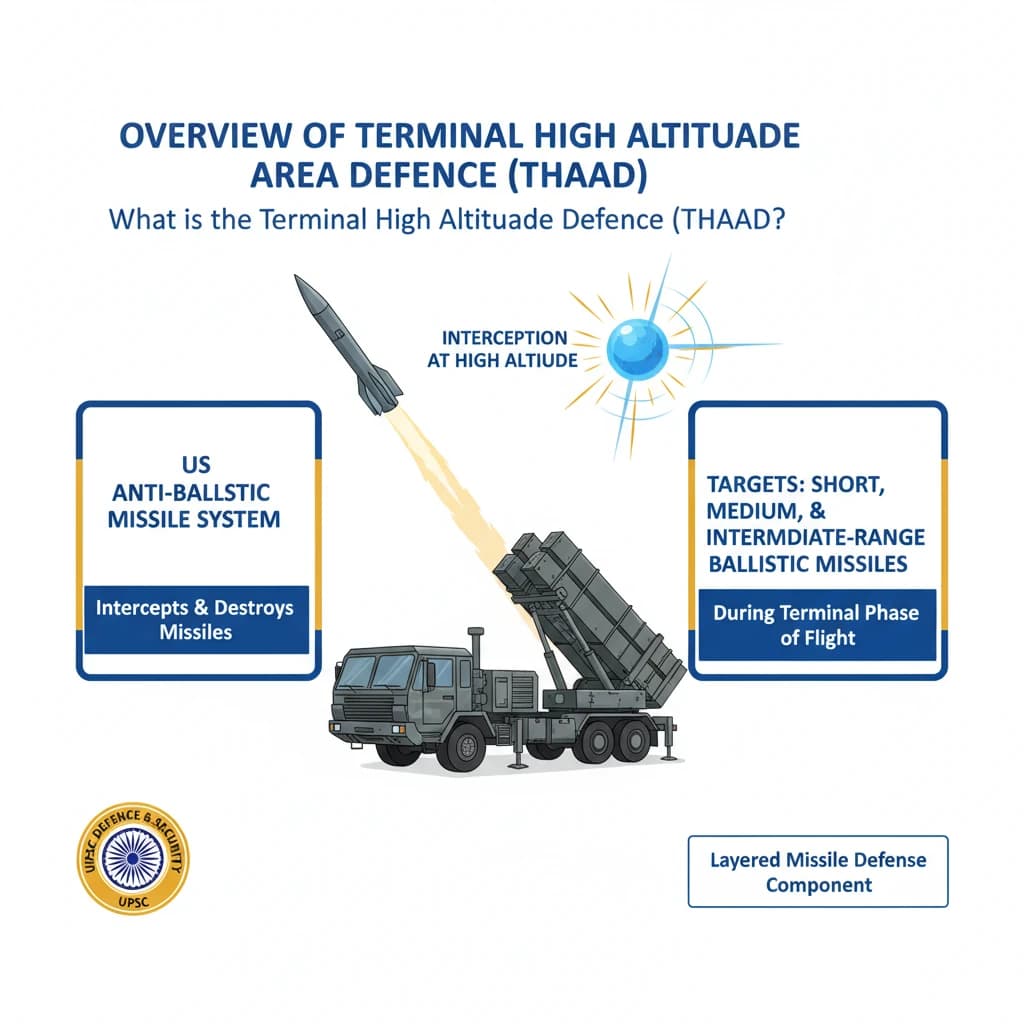
What is the Terminal High Altitude Area Defence (THAAD)?
Medium⏱️ 4 min read
defence and security
📖 Introduction
Overview of Terminal High Altitude Area Defence (THAAD)
The Terminal High Altitude Area Defence (THAAD) is an advanced US anti-ballistic missile system. Its primary design purpose is to intercept and destroy various types of missiles.
It targets short, medium, and intermediate-range ballistic missiles during their terminal phase of flight. This makes it a crucial component of layered missile defense.
What is THAAD?
A ground-based missile defense system developed by the United States to protect against ballistic missile threats.
The "Hit-to-Kill" Approach
THAAD employs a unique "hit-to-kill" approach for missile interception. This method relies on kinetic energy rather than explosive warheads.
An interceptor missile directly collides with its target. The sheer force of this impact is designed to destroy the incoming ballistic missile.
Kinetic Energy Interception: Unlike traditional missiles that use explosives, THAAD destroys targets through direct impact, minimizing collateral damage from warhead detonation.
Operational Limitations
Despite its advanced capabilities, THAAD has specific operational limitations. It is designed to target ballistic missiles at high altitudes.
Crucially, it cannot detect low-flying objects such as drones or cruise missiles. Its radar and interceptors are optimized for high-altitude ballistic threats.
UPSC Insight: Understanding the specific capabilities and limitations of defense systems like THAAD is vital for questions on defense technology and international security. Note the distinction between ballistic missile defense and air defense against drones.
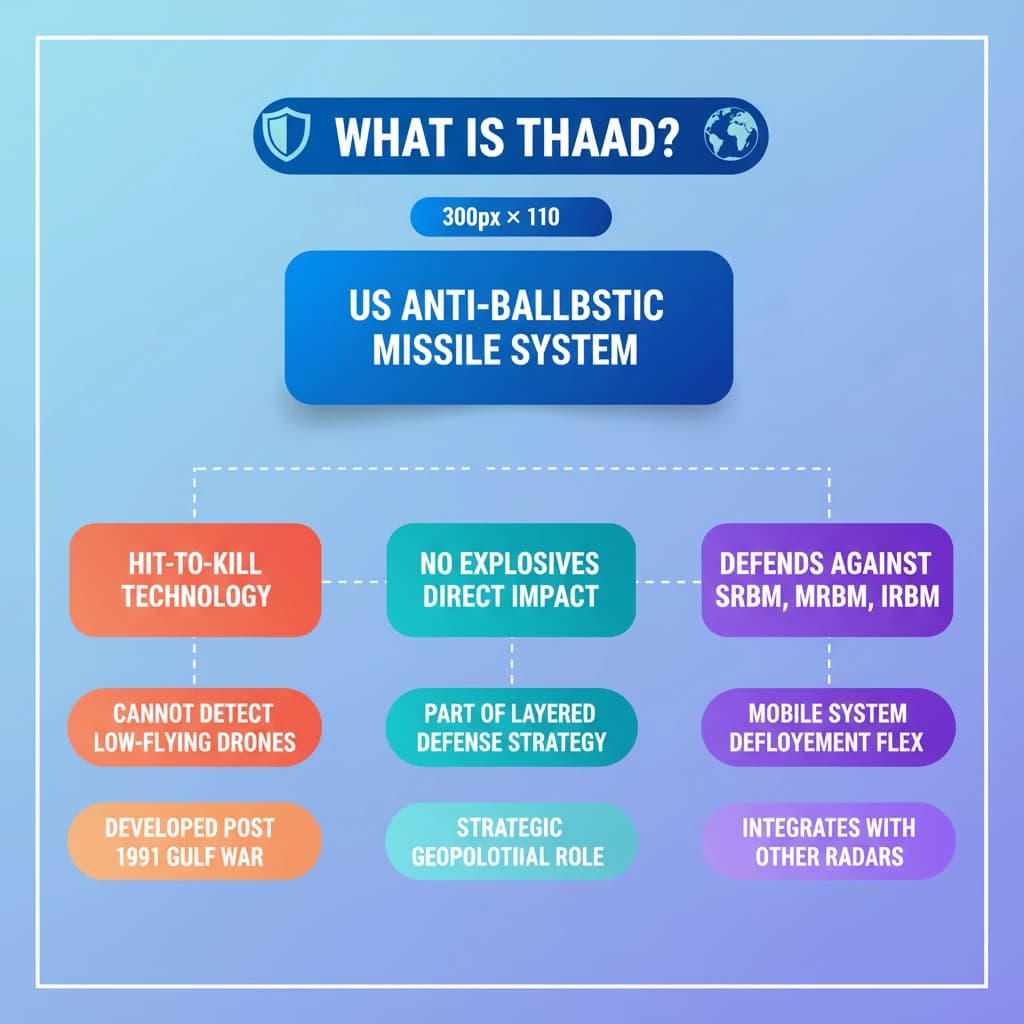
💡 Key Takeaways
- •THAAD is a US anti-ballistic missile system for short, medium, and intermediate-range missiles.
- •It uses a 'hit-to-kill' approach, destroying targets by direct impact, not explosives.
- •THAAD cannot detect low-flying objects like drones.
- •Its development was spurred by Iraq's Scud missile attacks during the 1991 Gulf War.
- •It is a key component of a layered missile defense strategy and has significant geopolitical implications.
🧠 Memory Techniques
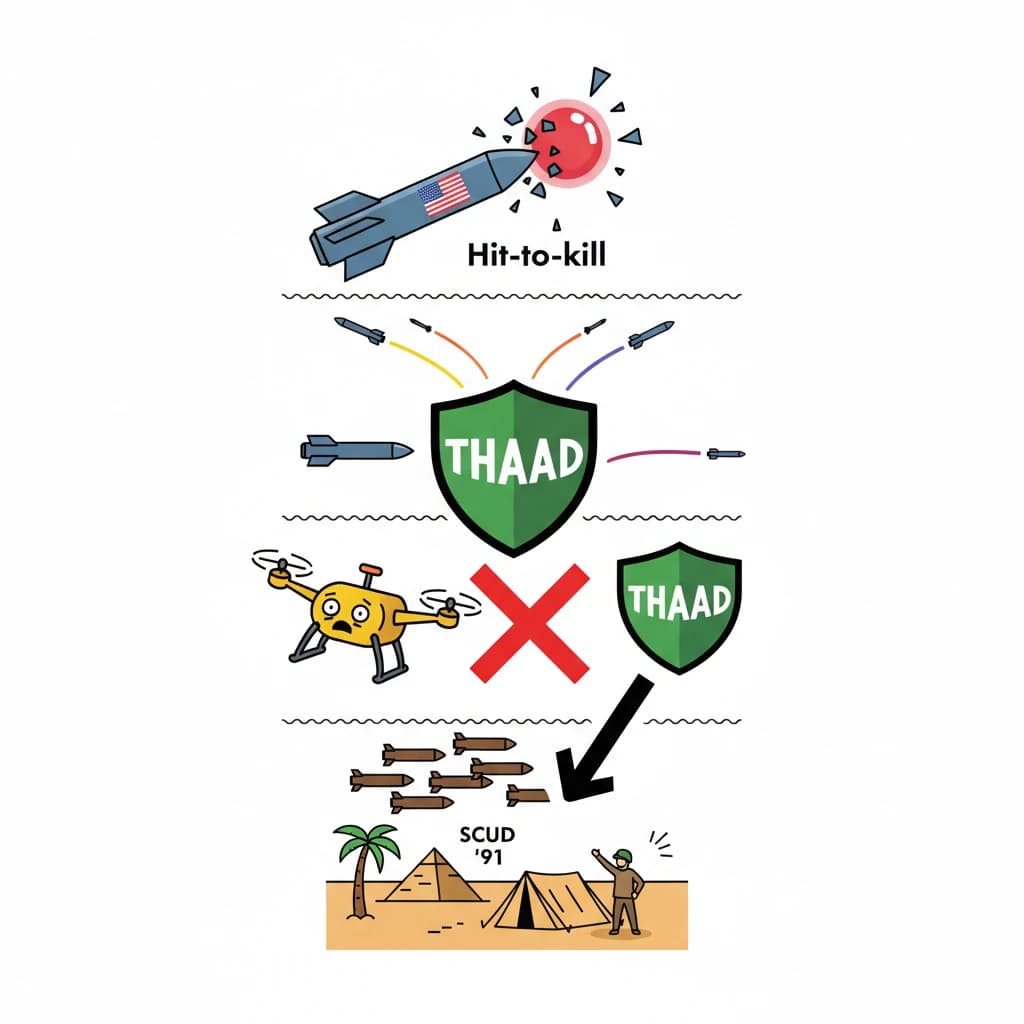
98% Verified Content
📚 Reference Sources
•US Department of Defense (DoD) official statements and factsheets
•Missile Defense Agency (MDA) publications
•Council on Foreign Relations (CFR) analyses