Integrated Air‑Missile Defence Upgrade in 2025 Conflict – New Systems & Strategic Implications — UPSC Current Affairs | March 2, 2026
Integrated Air‑Missile Defence Upgrade in 2025 Conflict – New Systems & Strategic Implications
The 2025 resurgence of hostilities between the U.S.-led coalition and Iran has introduced a more integrated regional air‑defence network, featuring South Korean Cheongung II, newer U.S. prototypes, and expanded use of THAAD, Patriot, and Israeli systems. The conflict underscores the high cost of interceptors, the challenge of Iran's saturation attacks, and the strategic need for layered, cost‑effective missile‑defence capabilities—key considerations for UPSC aspirants studying defence and security.
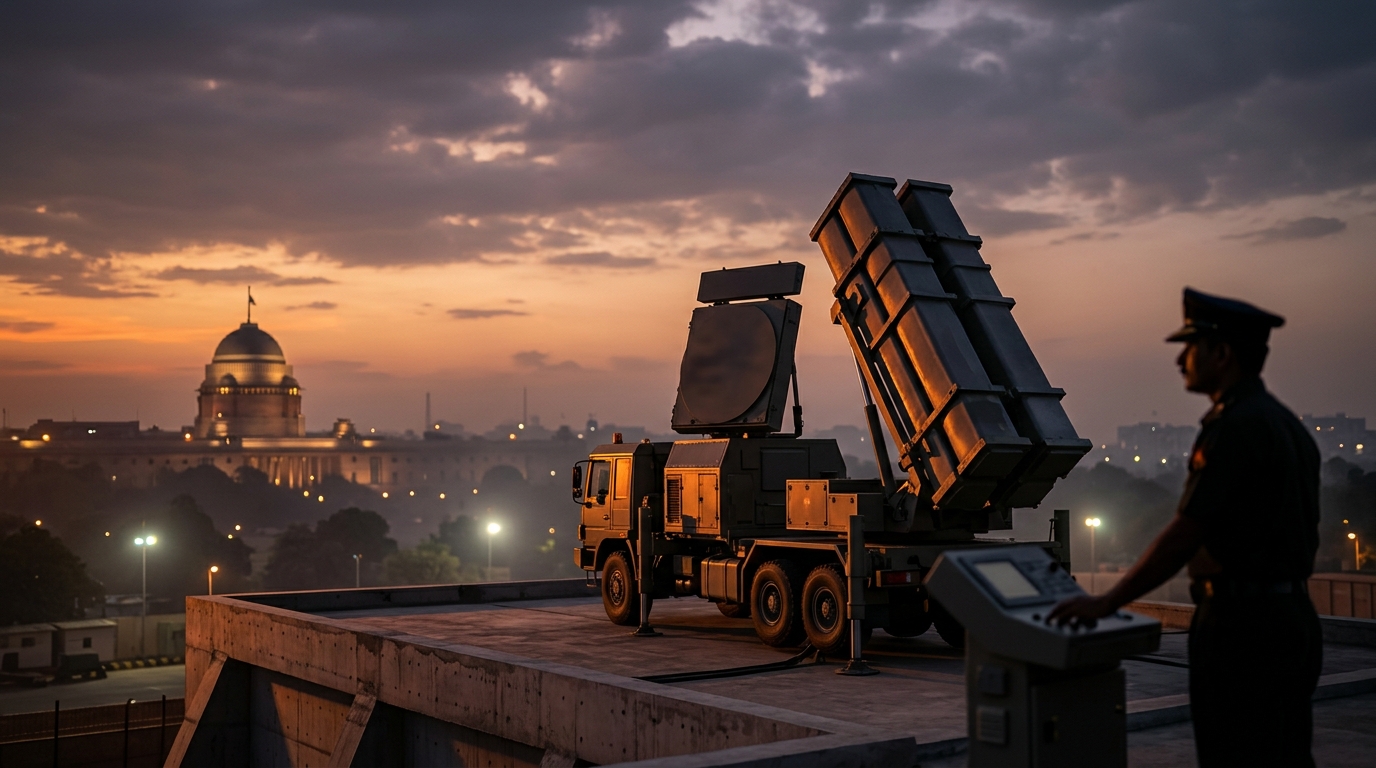
Overview The renewed clash between the Integrated Air and Missile Defence (IAMD) of the U.S.‑led coalition (including Israel and the UAE) and Iran has introduced a more sophisticated regional air‑defence architecture than the one used during the brief but intense June 2025 Twelve‑Day War . The conflict now spans the Persian Gulf, prompting the deployment of South Korean Cheongung II missiles, newer U.S. prototypes, and a broader use of existing systems such as THAAD and Patriot batteries. Key Developments UAE integrates Cheongung II to counter low‑flying Iranian cruise missiles and tactical ballistic missiles over the Gulf. U.S. fields prototype Indirect Fire Protection Capability for bases in UAE and Kuwait, easing the load on Patriot. Israel relies on Iron Dome and the high‑energy laser Iron Beam to counter drone swarms, while rationing its Arrow 3 and Stunner missiles. U.S. Navy deploys SM‑6 missiles in a dual‑role configuration to intercept ballistic missiles and fast‑attack craft. Iran continues a saturation attack , using cheap missiles and drones to exhaust coalition interceptors. Important Facts • Cost per PAC‑3 MSE interceptor is about $4 million , making extensive use financially taxing. • Hit‑to‑kill technology is employed by newer interceptors, including Cheongung II and Patriot PAC‑3. • The U.S. GMD programme shows limited reliability (55 % success). • Iran’s most advanced indigenous system, the upgraded 300 km coverage (GS2: Polity)">Bavar‑373 , claims 300 km range but its stealth‑aircraft detection remains unproven. UPSC Relevance Understanding the evolving IAMD architecture is crucial for GS 2 (Defence & Security) as it illustrates: How coalition partners integrate heterogeneous systems (U.S., Israel, UAE, South Korea) to create a layered defence. The strategic implications of high‑cost interceptors and the need for rationing in prolonged conflicts. Iran’s asymmetric saturation attack doctrine, highlighting the importance of indigenous missile‑defence development for national security. Technological trends such as hit‑to‑kill interceptors and directed‑energy weapons, which may shape future Indian defence procurement. Way Forward • Accelerate domestic production of interceptors (e.g., indigenous Akash and Barak‑8 ) to reduce reliance on costly foreign systems. • Invest in modular, 360° radar and vertical‑launch technologies similar to Cheongung II to counter low‑altitude threats. • Develop cost‑effective directed‑energy solutions to complement kinetic interceptors, thereby mitigating the financial strain of saturation attacks . • Enhance joint training and data‑link integration among allied forces to ensure seamless sensor‑fusion and rapid decision‑making in high‑tempo scenarios.
Login to bookmark articles
Login to mark articles as complete
Overview
IAMD upgrades in 2025 Gulf clash underscore need for layered, cost‑effective defence for India
Key Facts
June 2025 Twelve‑Day War saw deployment of Cheongung II, THAAD, Patriot and Iron Dome across the Persian Gulf.
UAE integrated South Korean Cheongung II to counter low‑altitude Iranian cruise missiles and tactical ballistic missiles.
U.S. prototype Indirect Fire Protection Capability employs AIM‑9X Sidewinder missiles as interceptors, easing Patriot load.
A Patriot PAC‑3 MSE interceptor costs roughly US$4 million, making large‑scale use financially taxing.
Iran’s upgraded Bavar‑373, equipped with Sayyad‑4B missiles, claims 300 km range but its stealth‑aircraft detection is unverified.
Hit‑to‑kill technology is used by Cheongung II and Patriot PAC‑3 for kinetic interception.
U.S. Navy’s SM‑6 missiles are now fielded in a dual‑role configuration to intercept both ballistic missiles and fast‑attack craft.
Background & Context
The 2025 Gulf conflict illustrates how a coalition of diverse nations integrates heterogeneous air‑missile defence systems to create a multi‑layered shield, a key theme under GS‑2 (Defence & Security). It also highlights the financial strain of high‑cost interceptors and Iran’s saturation‑attack doctrine, underscoring the strategic imperative for indigenous, cost‑effective IAMD solutions in South Asia.
UPSC Syllabus Connections
Prelims_GS•Physics and Chemistry in Everyday LifeEssay•International Relations and GeopoliticsPrelims_GS•Science and Technology ApplicationsGS1•World Wars and redrawal of national boundariesPrelims_GS•National Current AffairsGS3•Various security forces and agenciesGS2•Government policies and interventions for developmentPrelims_CSAT•Basic Numeracy
Mains Answer Angle
In GS‑2, candidates can analyse the strategic implications of the upgraded IAMD architecture for India’s security, focusing on cost, technology transfer and the need for a layered indigenous defence network.