Loading page, please wait…
Industries & Key Reports: LEADS, B-READY, Jute Reforms & Land Digitisation - UPSC Economy
What is Industries & Key Reports: LEADS, B-READY, Jute Reforms & Land Digitisation in UPSC Economy?
Industries & Key Reports: LEADS, B-READY, Jute Reforms & Land Digitisation is a key topic under Economy for UPSC Civil Services Examination. Key points include: The LEADS Report assesses state-level logistics efficiency, critical for India's economic competitiveness and PM Gati Shakti.. DILRMP aims to modernize land records through digitization, enhancing transparency and reducing property disputes.. The World Bank's new B-READY Report replaces the EoDB, providing a comprehensive assessment of the business environment.. Understanding this topic is essential for both UPSC Prelims and Mains preparation.
Why is Industries & Key Reports: LEADS, B-READY, Jute Reforms & Land Digitisation important for UPSC exam?
Industries & Key Reports: LEADS, B-READY, Jute Reforms & Land Digitisation is a Medium-level topic in UPSC Economy. It is tested in both Prelims (factual MCQs) and Mains (analytical answer writing). Previous year UPSC questions have frequently covered aspects of Industries & Key Reports: LEADS, B-READY, Jute Reforms & Land Digitisation, making it essential for comprehensive IAS preparation.
How to prepare Industries & Key Reports: LEADS, B-READY, Jute Reforms & Land Digitisation for UPSC?
To prepare Industries & Key Reports: LEADS, B-READY, Jute Reforms & Land Digitisation for UPSC: (1) Study the comprehensive notes covering all key concepts on Vaidra. (2) Practice previous year questions on this topic. (3) Connect it with current affairs using daily updates. (4) Revise using key takeaways and mind maps available for Economy. (5) Write practice answers linking Industries & Key Reports: LEADS, B-READY, Jute Reforms & Land Digitisation to related GS Paper topics.
Key takeaways of Industries & Key Reports: LEADS, B-READY, Jute Reforms & Land Digitisation for UPSC
- The LEADS Report assesses state-level logistics efficiency, critical for India's economic competitiveness and PM Gati Shakti.
- DILRMP aims to modernize land records through digitization, enhancing transparency and reducing property disputes.
- The World Bank's new B-READY Report replaces the EoDB, providing a comprehensive assessment of the business environment.
- The Jute Industry requires significant reforms, including modernization and diversification, to overcome challenges from synthetic alternatives and ensure sustainability.
- These initiatives collectively contribute to improving India's investment climate, fostering industrial growth, and promoting good governance.
Industries & Key Reports: LEADS, B-READY, Jute Reforms & Land Digitisation
Medium⏱️ 10 min read
economy
📖 Introduction
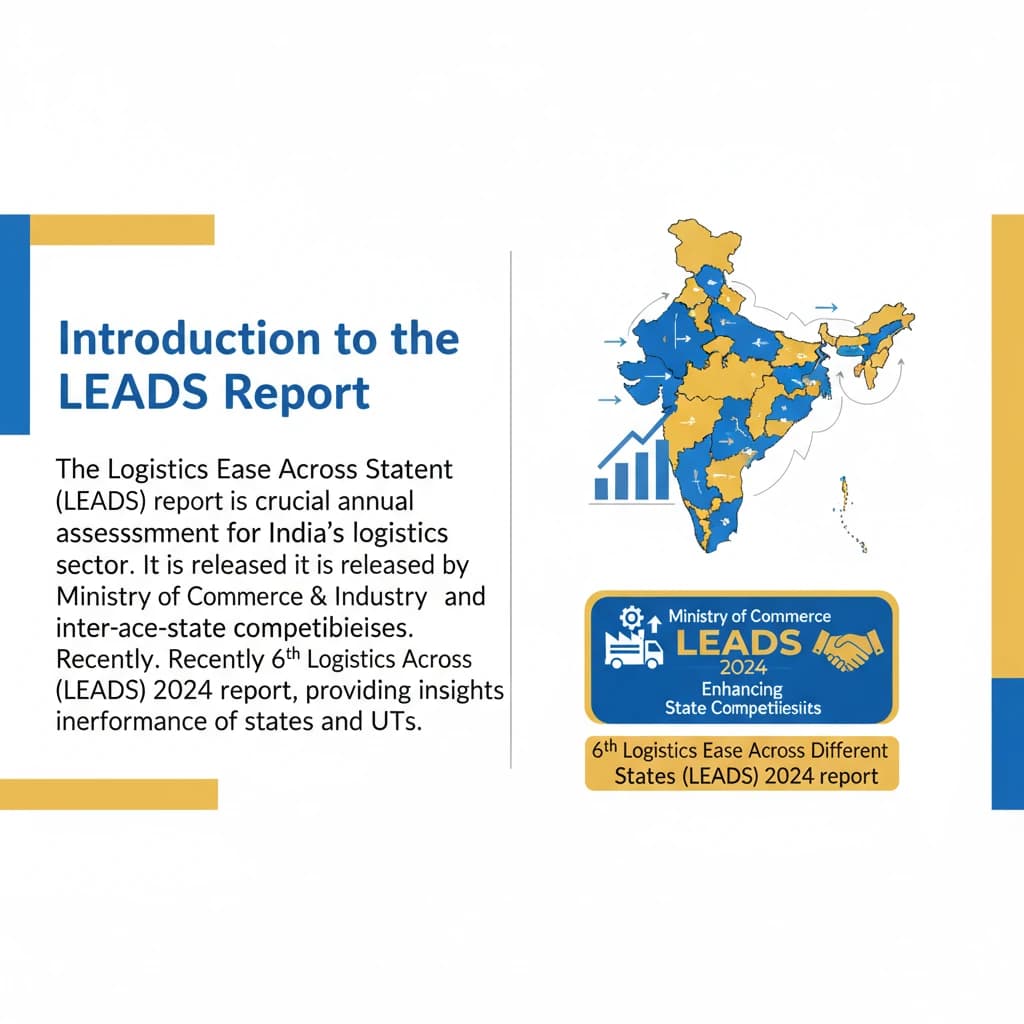
LEADS 2024 Report: Logistics Ease Across Different States
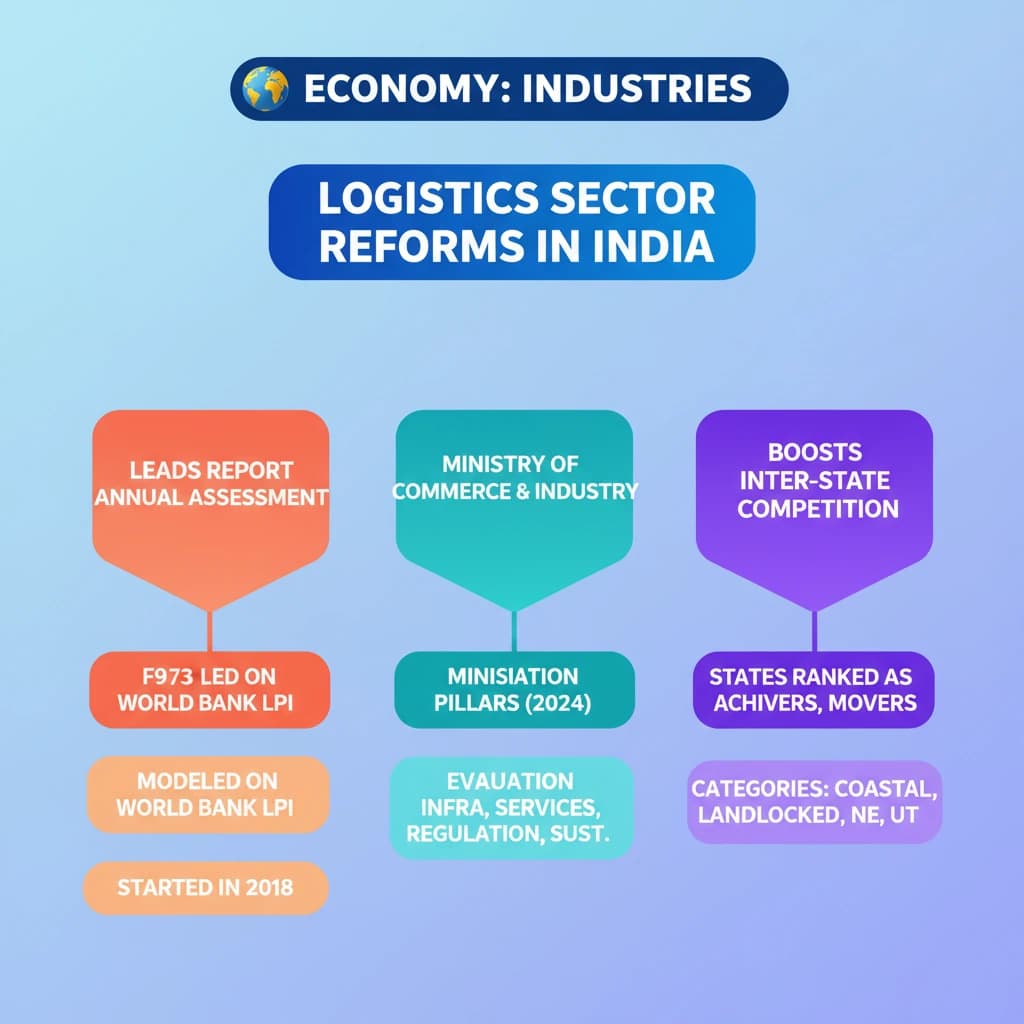
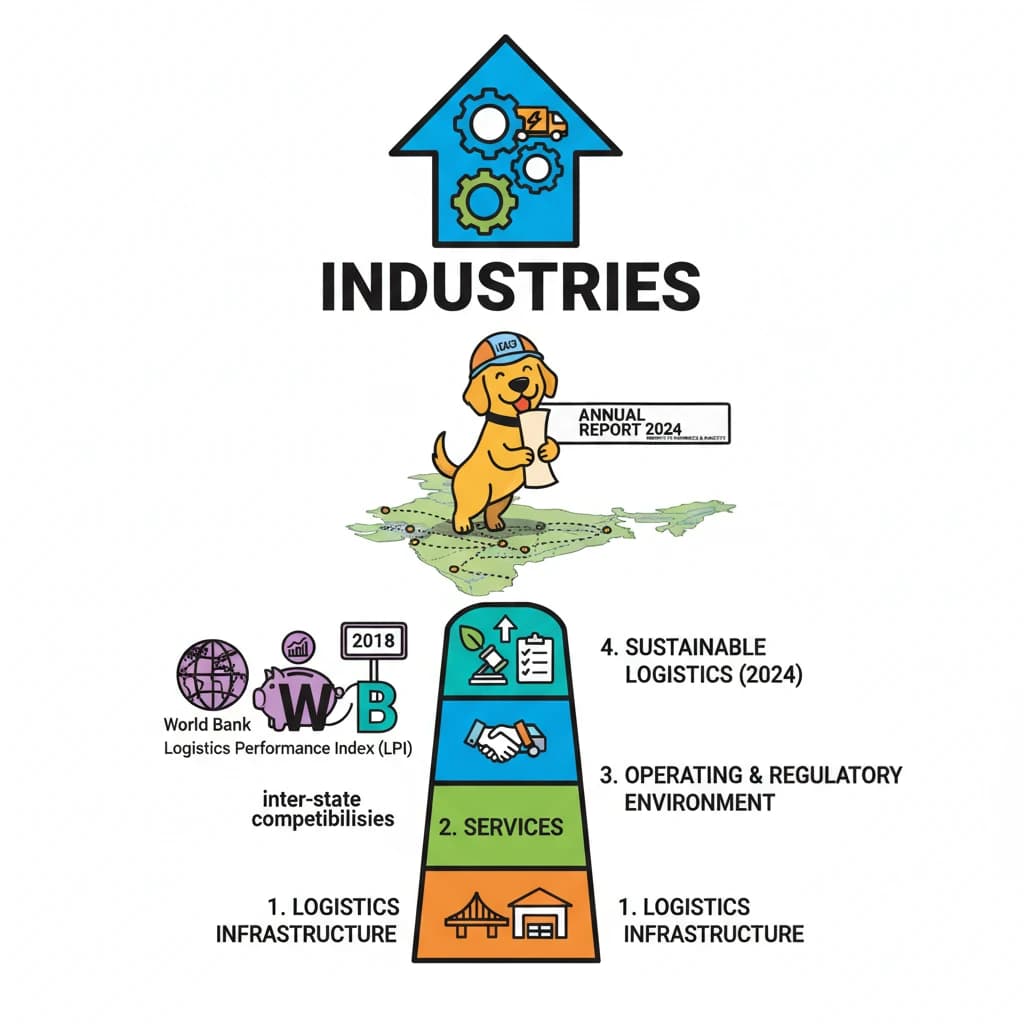
The LEADS (Logistics Ease Across Different States) Report is an annual index that assesses the logistics performance of Indian states and Union Territories. It is a crucial tool for evaluating the efficiency of logistics ecosystems across the country.
Released By: Ministry of Commerce & Industry, Government of India.
Purpose: To identify logistics-related challenges, highlight best practices, and promote reforms to enhance logistical efficiency.
The report provides a comprehensive overview of the logistics infrastructure, services, and regulatory environment in each state. It encourages healthy competition among states to improve their logistics performance, which is vital for economic growth.
UPSC Relevance: Important for GS Paper III (Economy), particularly topics related to infrastructure, industrial policy, and ease of doing business. Understanding state-level logistics performance is key.
DILRMP and Digitisation of Land Records
The Digital India Land Records Modernization Programme (DILRMP) is a flagship initiative aimed at modernizing land records management in India. It seeks to bring transparency and efficiency to land administration.
Launch Year: 2008 (merged the National Land Records Modernization Programme (NLRMP) and the Computerisation of Land Records (CLR) schemes).
Primary Objective: To develop a modern, comprehensive, and transparent land records management system.
The program involves the computerization of all land records, digitization of cadastral maps, and integration of land records with the registration process. This ensures clear titles and reduces land-related disputes significantly.
Digitization of land records enhances the ease of property transactions, provides security of tenure, and facilitates better planning and implementation of development projects. It is a cornerstone of good governance in rural and urban areas.
Business Ready (B-READY) Report 2024
The Business Ready (B-READY) Report is a new initiative by the World Bank, designed to provide a comprehensive assessment of the business and investment climate in economies worldwide. It replaces the controversial Ease of Doing Business (EoDB) Report.
Replacement for: The Ease of Doing Business (EoDB) Report, which was discontinued in 2020 due to data irregularities and ethical concerns.
Focus: A broader and more nuanced approach to evaluating the business environment, emphasizing transparency and data integrity.
The B-READY report assesses various indicators related to the business environment, including starting a business, getting electricity, registering property, paying taxes, resolving insolvency, and more. It aims to provide reliable data for policymakers to implement reforms.
This report is crucial for countries like India, which are actively working to improve their investment climate and attract foreign direct investment. A good ranking in such reports can significantly boost investor confidence.
Need for Reforms in the Jute Industry
The Jute Industry is one of India's oldest traditional industries, playing a vital role in the rural economy, particularly in states like West Bengal, Bihar, and Assam. Despite its historical significance, it faces numerous challenges.
Importance: Provides employment to millions, uses eco-friendly and biodegradable raw material, supports sustainable packaging.
Key Challenges: Stiff competition from synthetic alternatives, outdated machinery and technology, volatile prices of raw jute, low productivity, and labor issues.
Reforms are urgently needed to ensure the industry's sustainability and competitiveness. These include modernization of jute mills, diversification into value-added products like geo-textiles, handicrafts, and non-woven fabrics, and promoting research and development.
UPSC Relevance: Relevant for GS Paper III (Economy) – industrial policy, employment, and sustainable development. Questions often focus on challenges and government initiatives for traditional industries.
Government initiatives such as the Jute Packaging Materials (Compulsory Use in Packing Commodities) Act, 1987 (JPM Act) and the promotion of Jute Mark aim to support the industry. However, comprehensive reforms are essential for its long-term revival.
💡 Key Takeaways
- •The LEADS Report assesses state-level logistics efficiency, critical for India's economic competitiveness and PM Gati Shakti.
- •DILRMP aims to modernize land records through digitization, enhancing transparency and reducing property disputes.
- •The World Bank's new B-READY Report replaces the EoDB, providing a comprehensive assessment of the business environment.
- •The Jute Industry requires significant reforms, including modernization and diversification, to overcome challenges from synthetic alternatives and ensure sustainability.
- •These initiatives collectively contribute to improving India's investment climate, fostering industrial growth, and promoting good governance.
🧠 Memory Techniques
95% Verified Content
📚 Reference Sources
•Ministry of Rural Development, Government of India (for DILRMP)
•World Bank (for Business Ready Report)
•Press Information Bureau (PIB), Government of India
•NITI Aayog publications and reports