Loading page, please wait…
Opposition to NPS - UPSC Economy
What is Opposition to NPS in UPSC Economy?
Opposition to NPS is a key topic under Economy for UPSC Civil Services Examination. Key points include: NPS allows individuals to choose schemes and fund managers, requiring employee contributions.. Opposition to NPS stems from lower guaranteed returns and mandatory employee contributions compared to OPS.. OPS offered higher guaranteed returns and no employee contributions, making it more attractive to employees.. Understanding this topic is essential for both UPSC Prelims and Mains preparation.
Why is Opposition to NPS important for UPSC exam?
Opposition to NPS is a Medium-level topic in UPSC Economy. It is tested in both Prelims (factual MCQs) and Mains (analytical answer writing). Previous year UPSC questions have frequently covered aspects of Opposition to NPS, making it essential for comprehensive IAS preparation.
How to prepare Opposition to NPS for UPSC?
To prepare Opposition to NPS for UPSC: (1) Study the comprehensive notes covering all key concepts on Vaidra. (2) Practice previous year questions on this topic. (3) Connect it with current affairs using daily updates. (4) Revise using key takeaways and mind maps available for Economy. (5) Write practice answers linking Opposition to NPS to related GS Paper topics.
Key takeaways of Opposition to NPS for UPSC
- NPS allows individuals to choose schemes and fund managers, requiring employee contributions.
- Opposition to NPS stems from lower guaranteed returns and mandatory employee contributions compared to OPS.
- OPS offered higher guaranteed returns and no employee contributions, making it more attractive to employees.
- The Union Government formed the TV Somanathan Committee in 2023 to review NPS.
- The committee's recommendations led to the introduction of the new Unified Pension Scheme (UPS).
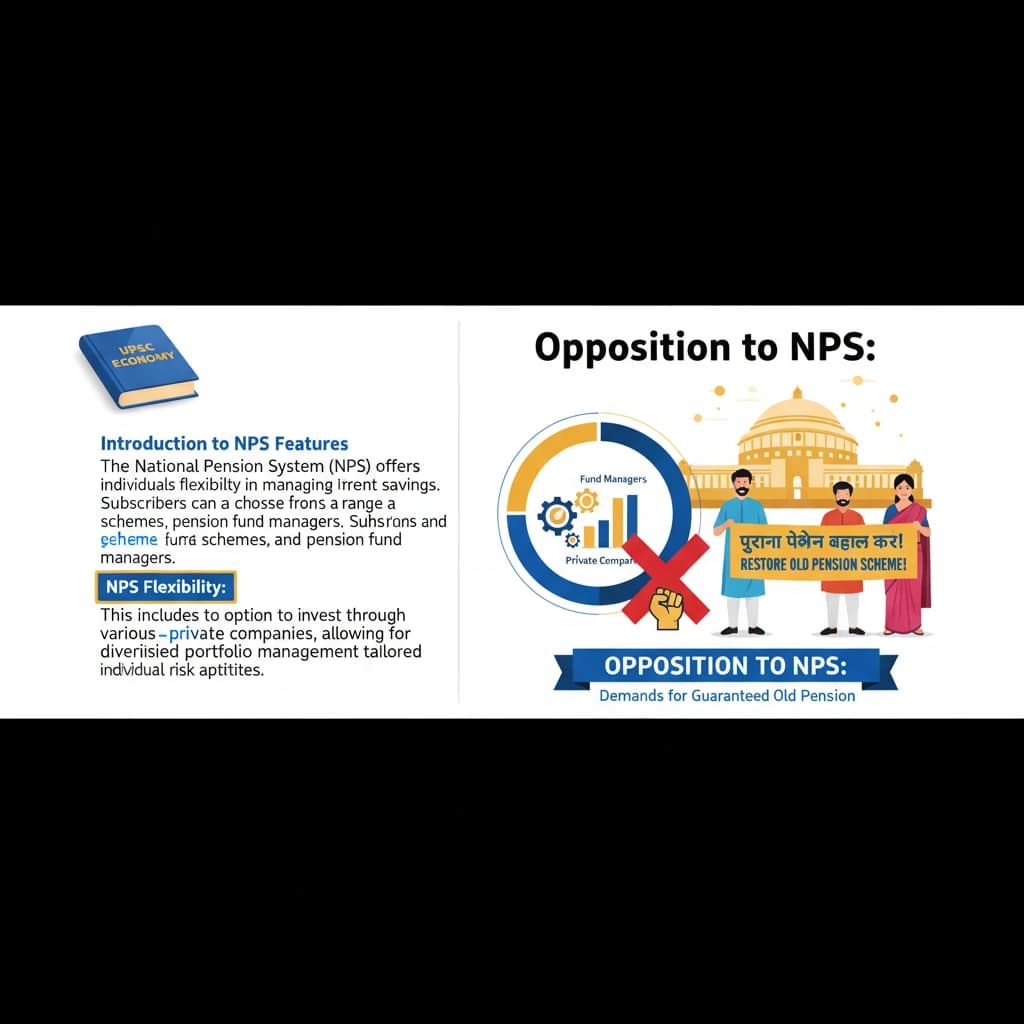
Opposition to NPS
Medium⏱️ 6 min read
economy
📖 Introduction
Introduction to National Pension System (NPS)
The National Pension System (NPS) is a voluntary, defined contribution retirement savings scheme in India. It was designed to encourage individuals to save for their retirement.
Under NPS, individuals have the flexibility to choose from a range of schemes, select various pension fund managers, and invest their money through different private companies.
Reasons for Opposition to NPS
Opposition to the NPS primarily arose from government employees who perceived its benefits to be less favorable compared to the older pension system.
A major concern was that government employees under NPS received lower guaranteed returns on their pension investments.
Additionally, unlike the previous system, employees were required to make a personal contribution to their pension fund, which was a significant change.
Comparison with Old Pension Scheme (OPS)
The Old Pension Scheme (OPS) operated on a different principle, offering distinct advantages that fueled the demand for its return.
- Under OPS, there were no employee contributions required from government personnel.
- The scheme provided higher guaranteed returns, ensuring a more predictable and secure post-retirement income.
This contrast highlighted the perceived disadvantages of NPS for government employees, leading to widespread calls for a return to OPS.
Government's Response: TV Somanathan Committee
Amid persistent demands for a return to the OPS, the Union Government took action in 2023 to address the concerns.
A committee was established, led by TV Somanathan, to review the pension system and propose a viable way forward.
The TV Somanathan Committee, formed in 2023, is a crucial point for UPSC aspirants to note when discussing pension reforms and fiscal policy.
Introduction of Unified Pension Scheme (UPS)
The recommendations put forth by the TV Somanathan Committee ultimately led to the introduction of a new framework.
This new framework has been termed the Unified Pension Scheme (UPS), aiming to balance employee welfare with fiscal sustainability.
The Unified Pension Scheme (UPS) represents the government's latest effort to evolve the pension system, incorporating lessons from both NPS and OPS debates.
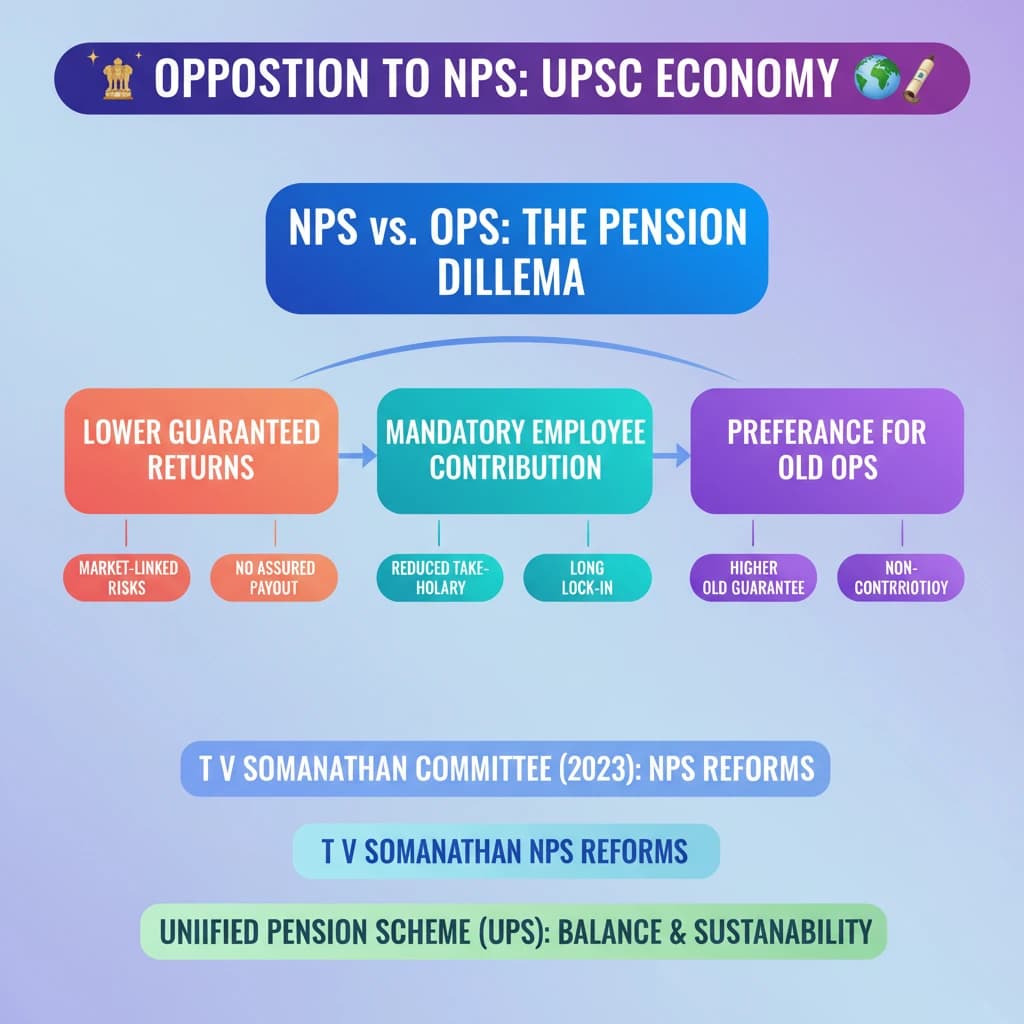
💡 Key Takeaways
- •NPS allows individuals to choose schemes and fund managers, requiring employee contributions.
- •Opposition to NPS stems from lower guaranteed returns and mandatory employee contributions compared to OPS.
- •OPS offered higher guaranteed returns and no employee contributions, making it more attractive to employees.
- •The Union Government formed the TV Somanathan Committee in 2023 to review NPS.
- •The committee's recommendations led to the introduction of the new Unified Pension Scheme (UPS).
🧠 Memory Techniques
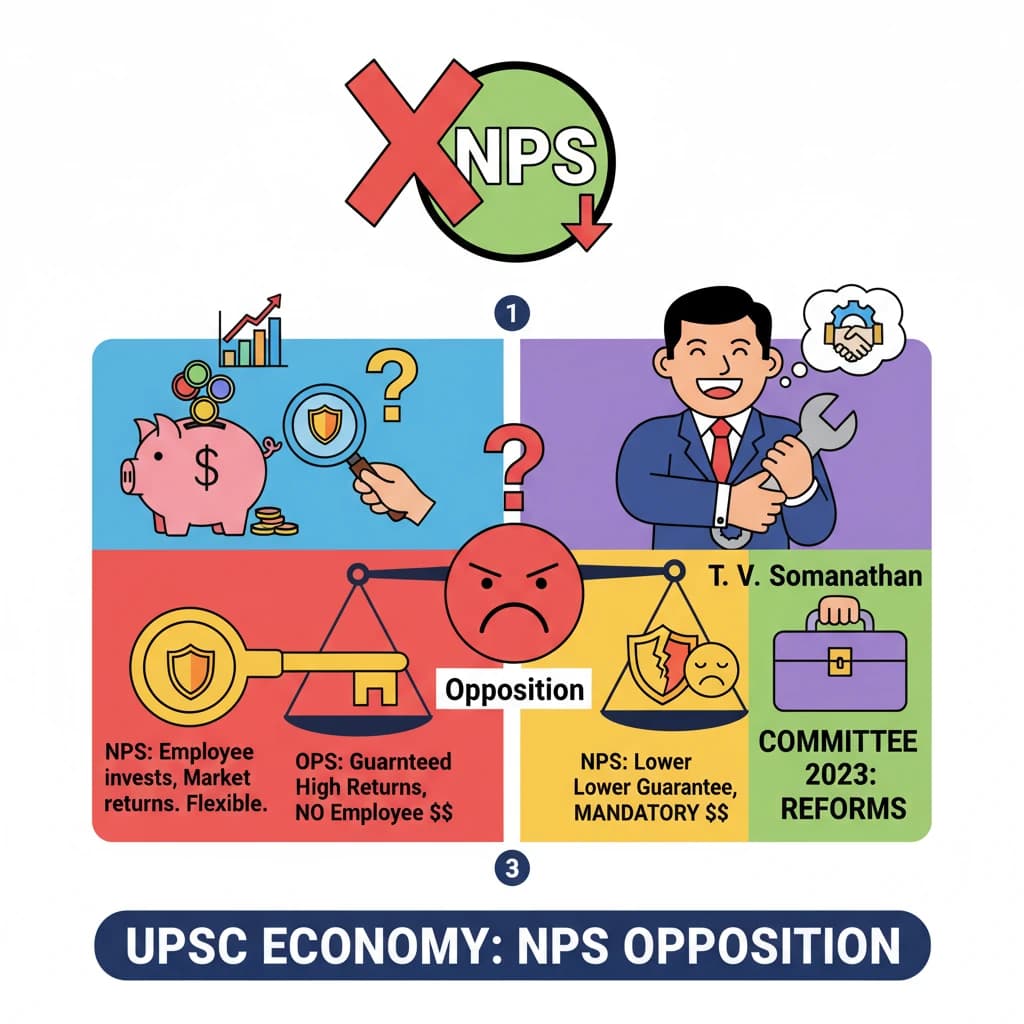
95% Verified Content
📚 Reference Sources
•Reports on TV Somanathan Committee
•RBI Bulletins on State Finances and Pension Liabilities