Loading page, please wait…
Push for Hybrid Electric Vehicles - UPSC Economy
What is Push for Hybrid Electric Vehicles in UPSC Economy?
Push for Hybrid Electric Vehicles is a key topic under Economy for UPSC Civil Services Examination. Key points include: Uttar Pradesh waived registration fees for strong hybrid and plug-in hybrid EVs.. This aligns UP with Tamil Nadu and Chandigarh in promoting cleaner vehicles.. Hybrid Electric Vehicles (HEVs) combine an ICE and electric motor for efficiency.. Understanding this topic is essential for both UPSC Prelims and Mains preparation.
Why is Push for Hybrid Electric Vehicles important for UPSC exam?
Push for Hybrid Electric Vehicles is a Medium-level topic in UPSC Economy. It is tested in both Prelims (factual MCQs) and Mains (analytical answer writing). Previous year UPSC questions have frequently covered aspects of Push for Hybrid Electric Vehicles, making it essential for comprehensive IAS preparation.
How to prepare Push for Hybrid Electric Vehicles for UPSC?
To prepare Push for Hybrid Electric Vehicles for UPSC: (1) Study the comprehensive notes covering all key concepts on Vaidra. (2) Practice previous year questions on this topic. (3) Connect it with current affairs using daily updates. (4) Revise using key takeaways and mind maps available for Economy. (5) Write practice answers linking Push for Hybrid Electric Vehicles to related GS Paper topics.
Key takeaways of Push for Hybrid Electric Vehicles for UPSC
- Uttar Pradesh waived registration fees for strong hybrid and plug-in hybrid EVs.
- This aligns UP with Tamil Nadu and Chandigarh in promoting cleaner vehicles.
- Hybrid Electric Vehicles (HEVs) combine an ICE and electric motor for efficiency.
- Strong Hybrids can run on electric power alone; Plug-in Hybrids have larger, externally chargeable batteries.
- The move supports India's goals for reduced emissions, energy security, and sustainable transport.
Push for Hybrid Electric Vehicles
Medium⏱️ 8 min read
economy
📖 Introduction
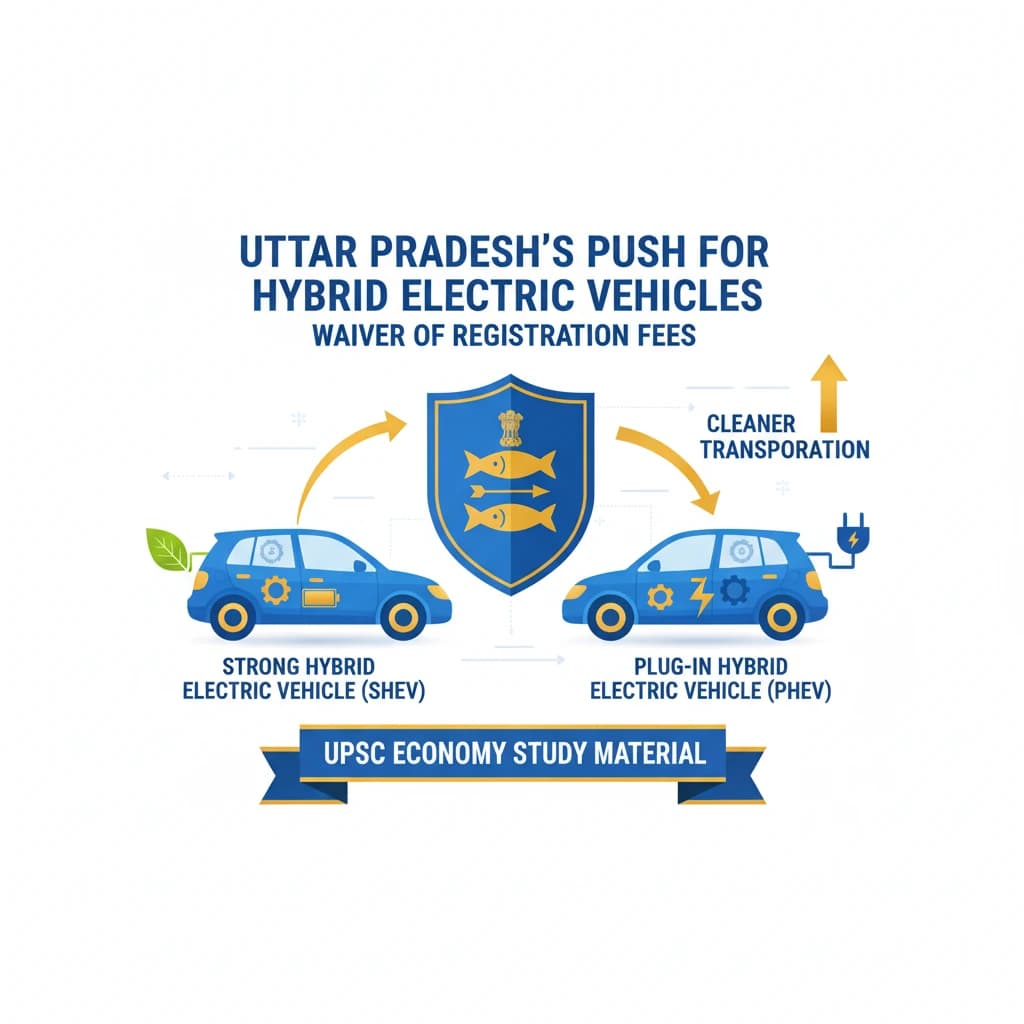
Uttar Pradesh's Push for Hybrid Electric Vehicles
The state government of Uttar Pradesh has recently announced a significant incentive to promote cleaner transportation. This initiative involves the waiver of registration fees for specific categories of electric vehicles.
This policy targets both strong hybrid electric vehicles (SHEVs) and plug-in hybrid electric vehicles (PHEVs). The move aims to encourage consumers to opt for these more environmentally friendly alternatives.
Understanding Hybrid Electric Vehicles (HEVs)
Hybrid Electric Vehicles (HEVs) combine an internal combustion engine (ICE) with an electric motor. This integration allows them to achieve better fuel efficiency and lower emissions compared to conventional petrol or diesel vehicles.
Key Components of an HEV:
- Internal Combustion Engine: Runs on fuel (petrol/diesel).
- Electric Motor: Provides additional power or drives the wheels independently.
- Battery Pack: Stores electrical energy for the motor.
- Generator: Converts mechanical energy from the engine into electricity to charge the battery.
Types of Hybrid Electric Vehicles
The policy specifically mentions strong hybrid and plug-in hybrid vehicles, which represent advanced forms of hybrid technology.
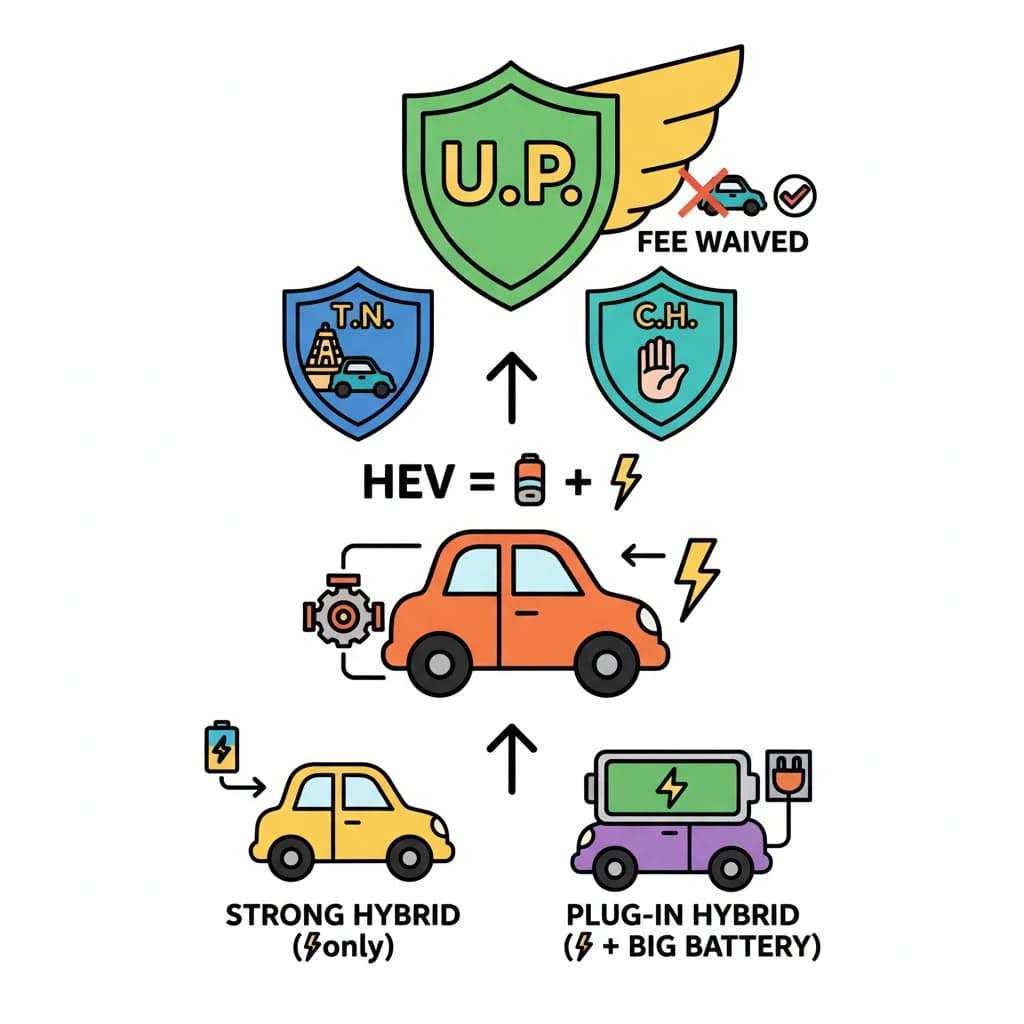
Strong Hybrid Electric Vehicles (SHEVs): These vehicles can run solely on their electric motor for short distances and at low speeds. The electric motor and ICE can work independently or together, offering significant fuel savings and emission reductions.
Plug-in Hybrid Electric Vehicles (PHEVs): PHEVs have larger battery packs than SHEVs and can be charged externally by plugging into an electric power source. They offer a longer all-electric range, often sufficient for daily commutes, before the ICE kicks in.
National Alignment and Precedent States
By offering this incentive, Uttar Pradesh aligns itself with other progressive states in India. This indicates a growing trend among state governments to support green mobility.
States like Tamil Nadu and Chandigarh have already implemented similar incentives. Their policies also aim to promote cleaner alternatives to traditional petrol and diesel vehicles, fostering a national shift towards sustainable transport.
UPSC Insight: Questions on government initiatives for sustainable development and environmental protection are common in GS-III Economy and Environment. Understanding state-level policy pushes for EVs/HEVs demonstrates a comprehensive grasp of current affairs and policy implementation.
Broader Objectives of Promoting Hybrid Vehicles
The push for Hybrid Electric Vehicles is part of a larger national strategy. It aims to address critical issues such as air pollution, energy security, and climate change mitigation.
Promoting these vehicles reduces reliance on fossil fuels and lowers greenhouse gas emissions. This contributes significantly to India's commitments under international climate agreements and improves urban air quality.
💡 Key Takeaways
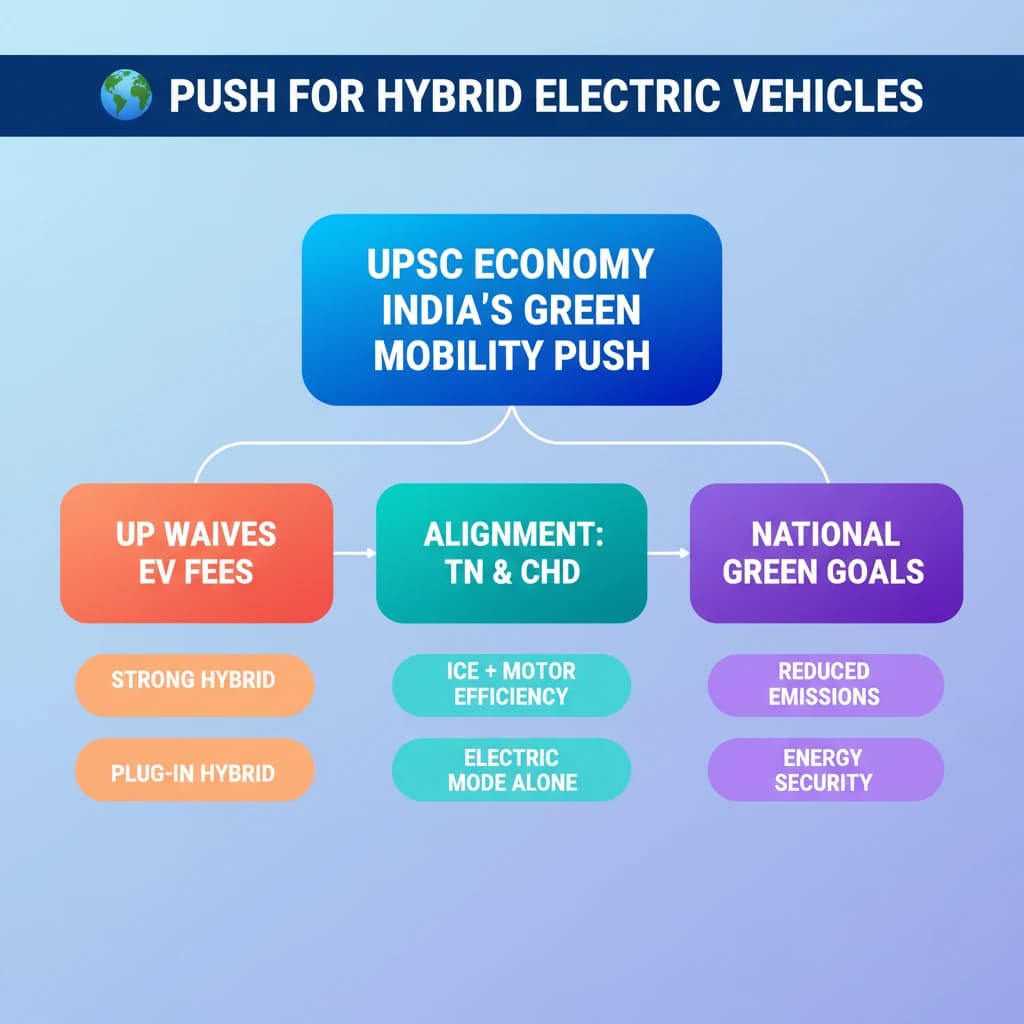
- •Uttar Pradesh waived registration fees for strong hybrid and plug-in hybrid EVs.
- •This aligns UP with Tamil Nadu and Chandigarh in promoting cleaner vehicles.
- •Hybrid Electric Vehicles (HEVs) combine an ICE and electric motor for efficiency.
- •Strong Hybrids can run on electric power alone; Plug-in Hybrids have larger, externally chargeable batteries.
- •The move supports India's goals for reduced emissions, energy security, and sustainable transport.
🧠 Memory Techniques
95% Verified Content
📚 Reference Sources
•Ministry of Road Transport and Highways (MoRTH) notifications
•Uttar Pradesh Transport Department official announcements
•FAME India Scheme documents (Department of Heavy Industry, GoI)
•NITI Aayog reports on Electric Mobility