Loading page, please wait…
RBI’s Framework for Swap Facilities for SAARC - UPSC Economy
What is RBI’s Framework for Swap Facilities for SAARC in UPSC Economy?
RBI’s Framework for Swap Facilities for SAARC is a key topic under Economy for UPSC Civil Services Examination. Key points include: SAARC currency swap facility provides short-term foreign exchange liquidity support to SAARC nations.. Operational since 15th November 2012, managed by RBI.. RBI can offer swaps up to USD 2 billion corpus.. Understanding this topic is essential for both UPSC Prelims and Mains preparation.
Why is RBI’s Framework for Swap Facilities for SAARC important for UPSC exam?
RBI’s Framework for Swap Facilities for SAARC is a Medium-level topic in UPSC Economy. It is tested in both Prelims (factual MCQs) and Mains (analytical answer writing). Previous year UPSC questions have frequently covered aspects of RBI’s Framework for Swap Facilities for SAARC, making it essential for comprehensive IAS preparation.
How to prepare RBI’s Framework for Swap Facilities for SAARC for UPSC?
To prepare RBI’s Framework for Swap Facilities for SAARC for UPSC: (1) Study the comprehensive notes covering all key concepts on Vaidra. (2) Practice previous year questions on this topic. (3) Connect it with current affairs using daily updates. (4) Revise using key takeaways and mind maps available for Economy. (5) Write practice answers linking RBI’s Framework for Swap Facilities for SAARC to related GS Paper topics.
Key takeaways of RBI’s Framework for Swap Facilities for SAARC for UPSC
- SAARC currency swap facility provides short-term foreign exchange liquidity support to SAARC nations.
- Operational since 15th November 2012, managed by RBI.
- RBI can offer swaps up to USD 2 billion corpus.
- Swaps available in US Dollar, Euro, and Indian Rupee, with concessions for INR.
- All SAARC members eligible upon signing bilateral swap agreements with RBI.
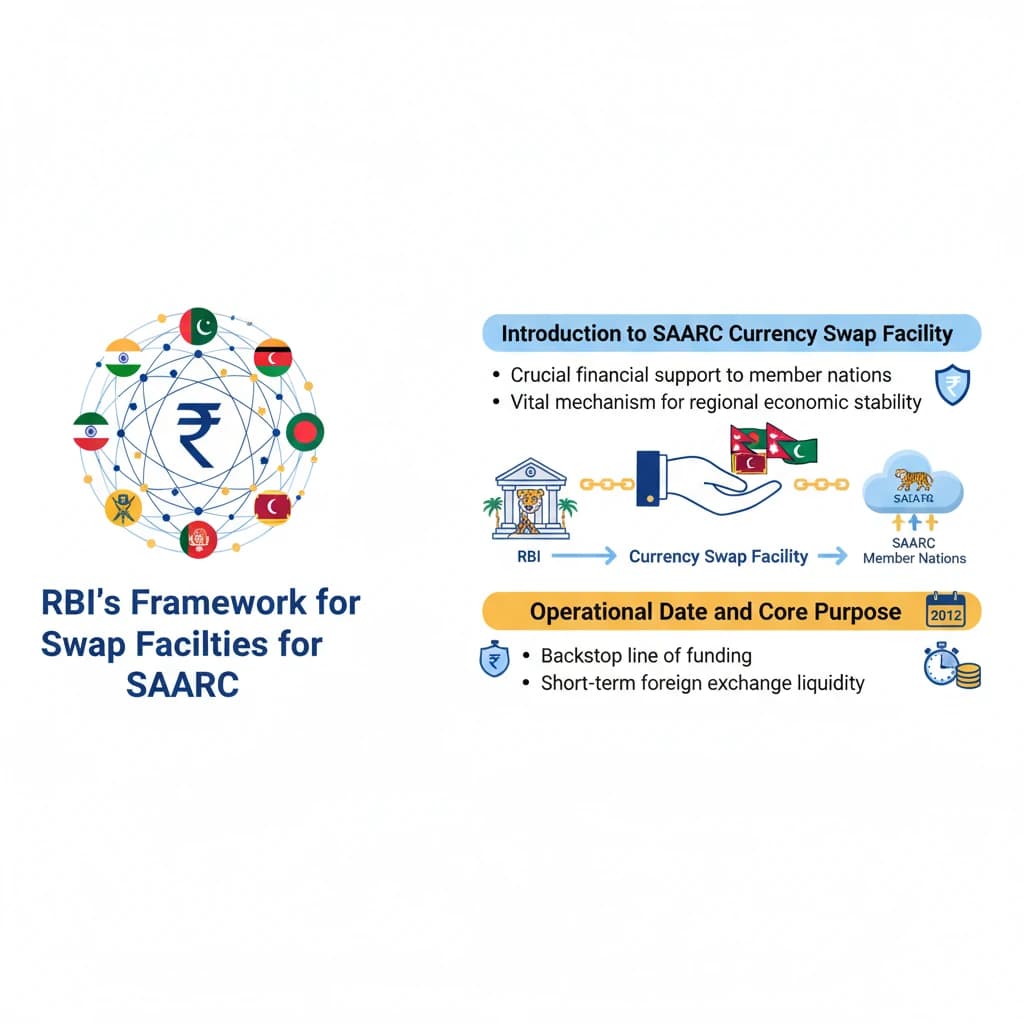
RBI’s Framework for Swap Facilities for SAARC
Medium⏱️ 6 min read
economy
📖 Introduction
Introduction to SAARC Currency Swap Facility
The SAARC currency swap facility was established to provide crucial financial support to member nations. It acts as a vital mechanism for regional economic stability.
This facility offers a backstop line of funding designed to address short-term financial needs. It helps countries facing immediate foreign exchange liquidity requirements.
Operational Date and Core Purpose
The SAARC currency swap facility officially commenced operations on 15th November 2012.
Its primary objective is to assist SAARC countries during periods of balance of payment crises or acute foreign exchange shortages. It provides a temporary buffer.
The facility is intended to bridge financial gaps until more sustainable, longer-term arrangements can be put into place by the affected nation.
RBI's Role and Financial Corpus
The Reserve Bank of India (RBI) is the central authority responsible for administering this swap framework. It manages the operational aspects and disbursals.
The RBI has the capacity to offer swap arrangements within a predefined financial limit. This ensures prudent management of the facility's resources.
The overall corpus available for these swap arrangements is capped at USD 2 billion.
Eligible Currencies and Concessions
The currency swaps under this framework can be denominated in several major currencies. This flexibility allows for broader utility among member states.
The eligible currencies for these transactions include the US Dollar, the Euro, and the Indian Rupee.
An important feature of the framework is the provision of specific concessions for swaps executed in the Indian Rupee. This encourages its use in regional trade.
Eligibility and Bilateral Agreements
The SAARC currency swap facility is open to all member countries of the South Asian Association for Regional Cooperation (SAARC).
However, access to this facility is not automatic. Each interested SAARC member country must formally agree to the terms.
To avail the swap facility, participating nations are required to sign specific bilateral swap agreements with the Reserve Bank of India.
UPSC Insight: Understand the RBI's role as a regional financial stabilizer and the strategic importance of the Indian Rupee in such frameworks for GS Paper 2 (International Relations) and GS Paper 3 (Economy).
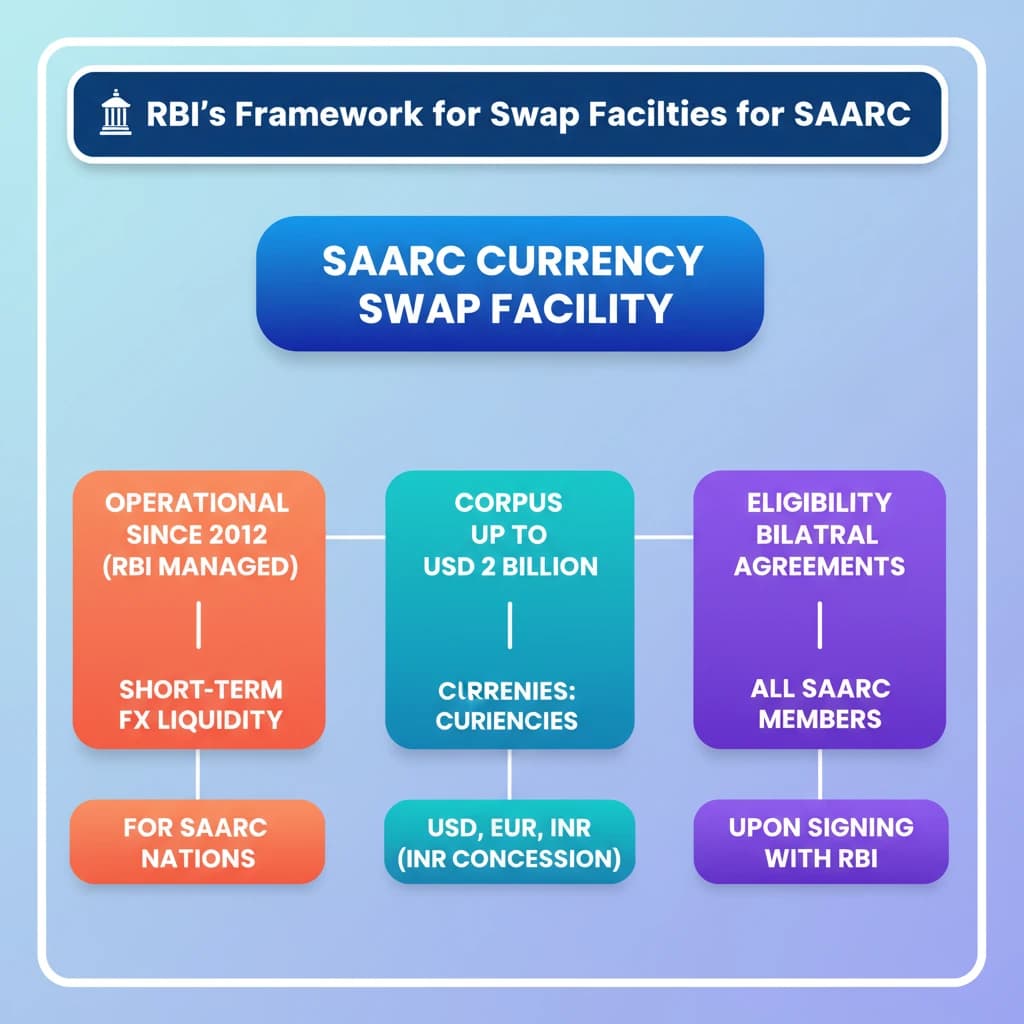
💡 Key Takeaways
- •SAARC currency swap facility provides short-term foreign exchange liquidity support to SAARC nations.
- •Operational since 15th November 2012, managed by RBI.
- •RBI can offer swaps up to USD 2 billion corpus.
- •Swaps available in US Dollar, Euro, and Indian Rupee, with concessions for INR.
- •All SAARC members eligible upon signing bilateral swap agreements with RBI.
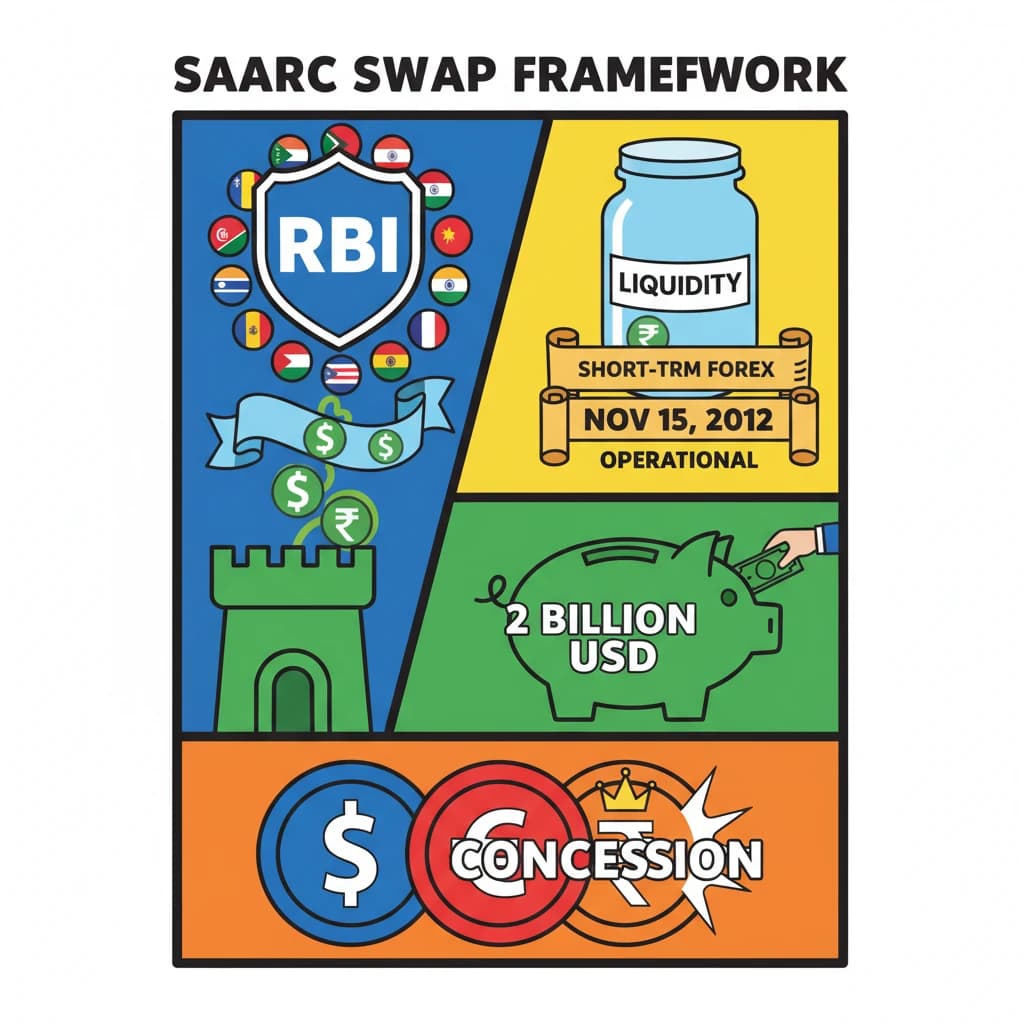
🧠 Memory Techniques
95% Verified Content
📚 Reference Sources
•Ministry of Finance, Government of India documents
•SAARC Secretariat official communications