Loading page, please wait…
SEBI Introduced Specialised Investment Funds (SIFs) - UPSC Economy
What is SEBI Introduced Specialised Investment Funds (SIFs) in UPSC Economy?
SEBI Introduced Specialised Investment Funds (SIFs) is a key topic under Economy for UPSC Civil Services Examination. Key points include: SEBI introduced Specialised Investment Funds (SIFs) for informed, risk-taking investors.. SIFs bridge the gap between Mutual Funds and Portfolio Management Services (PMS).. Minimum investment is Rs 10 lakh, with lower thresholds for accredited investors.. Understanding this topic is essential for both UPSC Prelims and Mains preparation.
Why is SEBI Introduced Specialised Investment Funds (SIFs) important for UPSC exam?
SEBI Introduced Specialised Investment Funds (SIFs) is a Medium-level topic in UPSC Economy. It is tested in both Prelims (factual MCQs) and Mains (analytical answer writing). Previous year UPSC questions have frequently covered aspects of SEBI Introduced Specialised Investment Funds (SIFs), making it essential for comprehensive IAS preparation.
How to prepare SEBI Introduced Specialised Investment Funds (SIFs) for UPSC?
To prepare SEBI Introduced Specialised Investment Funds (SIFs) for UPSC: (1) Study the comprehensive notes covering all key concepts on Vaidra. (2) Practice previous year questions on this topic. (3) Connect it with current affairs using daily updates. (4) Revise using key takeaways and mind maps available for Economy. (5) Write practice answers linking SEBI Introduced Specialised Investment Funds (SIFs) to related GS Paper topics.
Key takeaways of SEBI Introduced Specialised Investment Funds (SIFs) for UPSC
- SEBI introduced Specialised Investment Funds (SIFs) for informed, risk-taking investors.
- SIFs bridge the gap between Mutual Funds and Portfolio Management Services (PMS).
- Minimum investment is Rs 10 lakh, with lower thresholds for accredited investors.
- They offer open-ended, close-ended, and interval investment strategies.
- An asset class is a group of investments with similar characteristics and regulations (e.g., equities, bonds, real estate).

SEBI Introduced Specialised Investment Funds (SIFs)
Medium⏱️ 8 min read
economy
📖 Introduction
SEBI Introduces Specialised Investment Funds (SIFs)
The Securities and Exchange Board of India (SEBI) has recently unveiled a new category of investment vehicles known as Specialised Investment Funds (SIFs). This introduction aims to broaden the investment landscape for sophisticated investors in India.
SIFs are specifically designed for informed investors who possess a higher risk appetite and are willing to engage in more complex and potentially higher-yielding investment opportunities.
Bridging the Investment Gap
SIFs are strategically positioned to bridge the existing gap between traditional Mutual Funds (MFs) and bespoke Portfolio Management Services (PMS). They offer a middle ground, combining elements of both to cater to a specific segment of the market.
While Mutual Funds are generally accessible to retail investors with diverse risk profiles, PMS offers highly customized portfolios for high-net-worth individuals. SIFs provide a structured yet flexible alternative for those seeking specialized strategies.
Investment Requirements and Strategies
To invest in a Specialised Investment Fund, a minimum investment of Rs 10 lakh is typically required. This threshold ensures that only investors with substantial capital and understanding participate.
Lower Thresholds for Accredited Investors: For accredited investors, SEBI may allow for lower minimum investment thresholds, acknowledging their expertise and financial capacity.
SIFs will offer a variety of investment strategies to suit different market conditions and investor preferences. These include open-ended, close-ended, and interval investment strategies, providing flexibility in liquidity and fund structure.
Understanding Asset Classes
An asset class refers to a group of investments that share similar financial characteristics and are typically governed by the same regulations. Understanding different asset classes is fundamental to portfolio diversification.
Definition: An asset class is a category of investments with similar risk and return characteristics, often subject to common regulatory frameworks.
Examples of common asset classes include equities (stocks), fixed income (bonds), cash and cash equivalents, real estate, commodities, and currencies. SIFs can potentially invest across these, or specialize in particular ones.
UPSC Insight: Differentiate between various investment vehicles like Mutual Funds, PMS, AIFs (Alternative Investment Funds), and now SIFs. Focus on their target investors, minimum investment, and regulatory oversight under SEBI.
💡 Key Takeaways
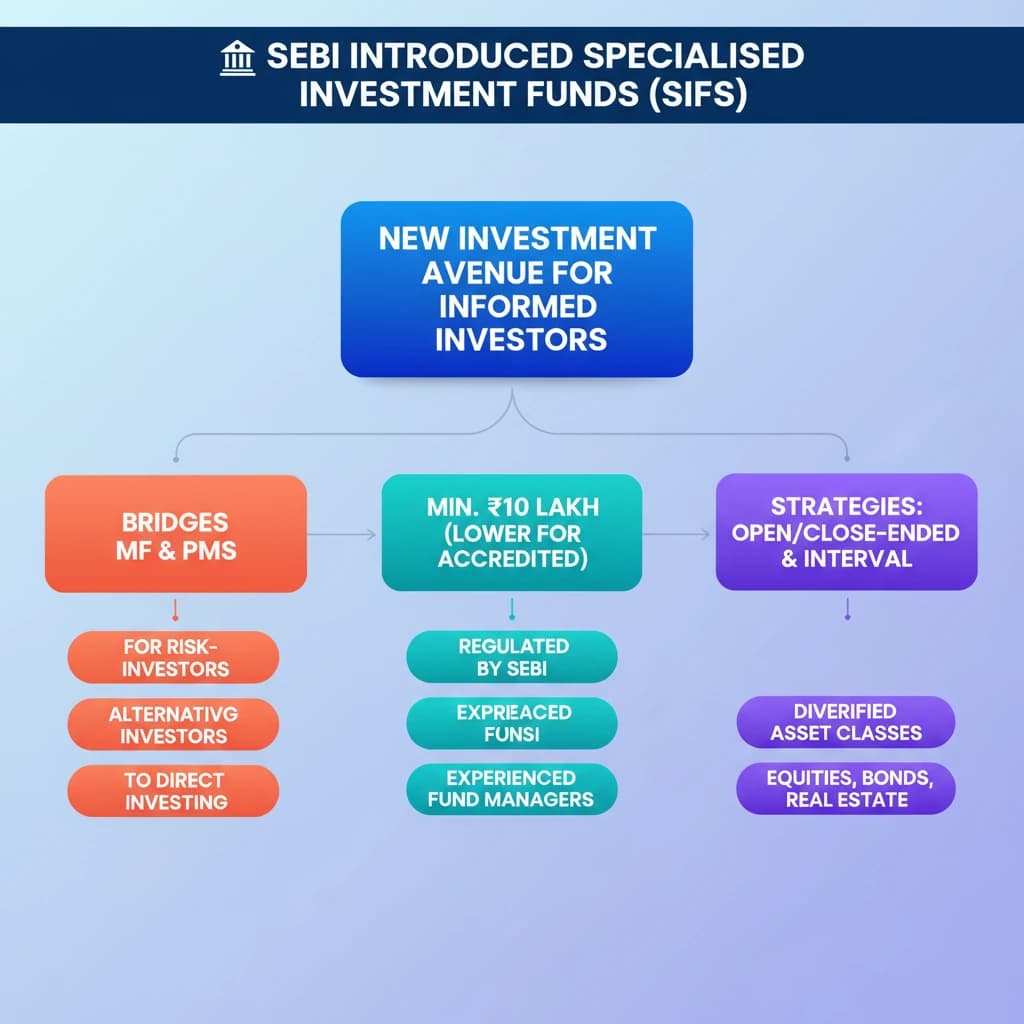
- •SEBI introduced Specialised Investment Funds (SIFs) for informed, risk-taking investors.
- •SIFs bridge the gap between Mutual Funds and Portfolio Management Services (PMS).
- •Minimum investment is Rs 10 lakh, with lower thresholds for accredited investors.
- •They offer open-ended, close-ended, and interval investment strategies.
- •An asset class is a group of investments with similar characteristics and regulations (e.g., equities, bonds, real estate).
🧠 Memory Techniques

95% Verified Content
📚 Reference Sources
•SEBI (Securities and Exchange Board of India) official notifications and press releases (general knowledge of SEBI's role and regulations)
•Financial market news and analysis on investment funds in India