Loading page, please wait…
Shortage of Natural Rubber in India - UPSC Economy
What is Shortage of Natural Rubber in India in UPSC Economy?
Shortage of Natural Rubber in India is a key topic under Economy for UPSC Civil Services Examination. Key points include: India faces a significant 5.5 lakh tonne natural rubber (NR) shortage.. The primary cause is a widening demand-supply gap: consumption is growing faster than domestic production.. The tyre industry consumes 70% of NR, while non-tyre MSMEs consume 30% and are disproportionately affected.. Understanding this topic is essential for both UPSC Prelims and Mains preparation.
Why is Shortage of Natural Rubber in India important for UPSC exam?
Shortage of Natural Rubber in India is a Medium-level topic in UPSC Economy. It is tested in both Prelims (factual MCQs) and Mains (analytical answer writing). Previous year UPSC questions have frequently covered aspects of Shortage of Natural Rubber in India, making it essential for comprehensive IAS preparation.
How to prepare Shortage of Natural Rubber in India for UPSC?
To prepare Shortage of Natural Rubber in India for UPSC: (1) Study the comprehensive notes covering all key concepts on Vaidra. (2) Practice previous year questions on this topic. (3) Connect it with current affairs using daily updates. (4) Revise using key takeaways and mind maps available for Economy. (5) Write practice answers linking Shortage of Natural Rubber in India to related GS Paper topics.
Key takeaways of Shortage of Natural Rubber in India for UPSC
- India faces a significant 5.5 lakh tonne natural rubber (NR) shortage.
- The primary cause is a widening demand-supply gap: consumption is growing faster than domestic production.
- The tyre industry consumes 70% of NR, while non-tyre MSMEs consume 30% and are disproportionately affected.
- India has a historical dependence on NR imports, mainly from Vietnam and Indonesia.
- The shortage impacts industrial competitiveness, MSME viability, and India's 'Atmanirbhar Bharat' goals.
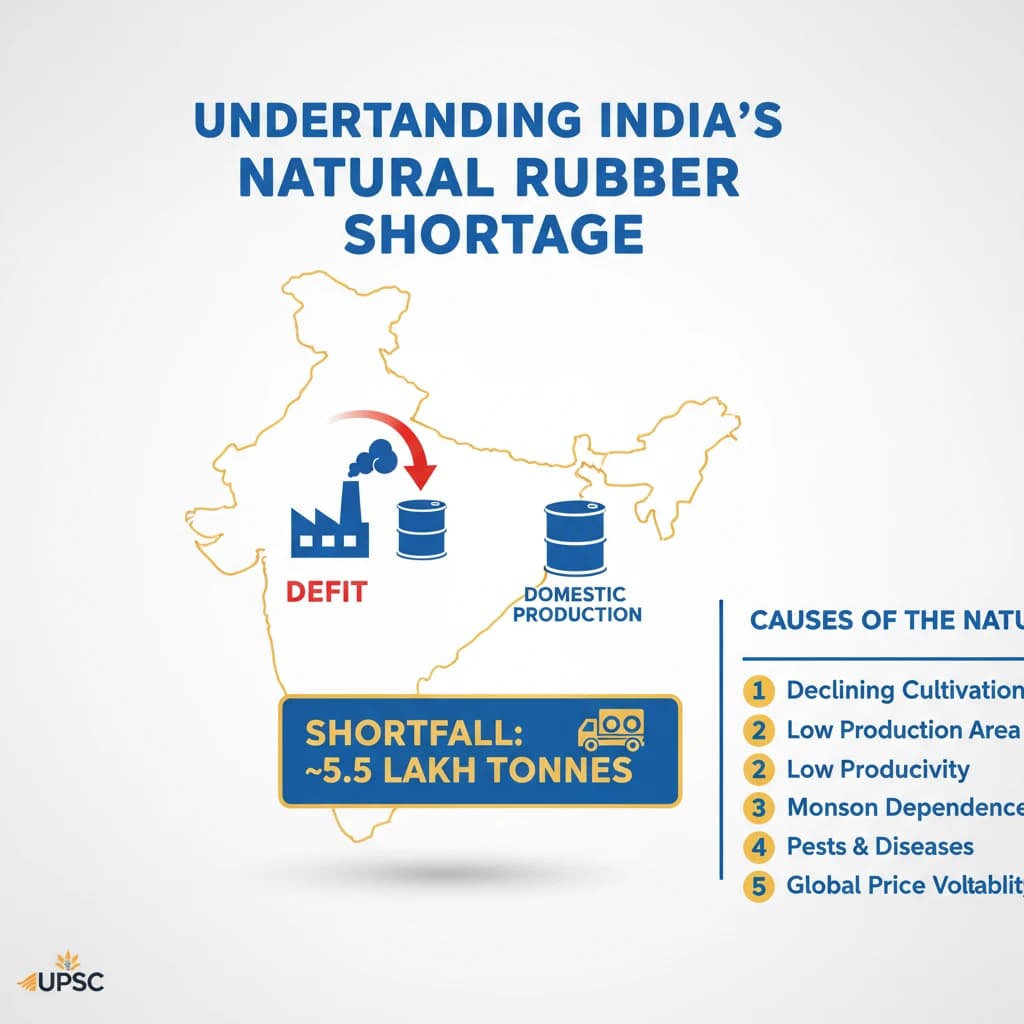
Shortage of Natural Rubber in India
Medium⏱️ 7 min read
economy
📖 Introduction
Understanding India's Natural Rubber Shortage
India is currently facing a significant deficit in its natural rubber (NR) supply. Domestic production is substantially lower than the national demand, leading to a considerable gap.
The estimated shortfall between domestic production and consumption stands at approximately 5.5 lakh tonnes, highlighting a critical challenge for various industries.
Causes of the Natural Rubber Shortage
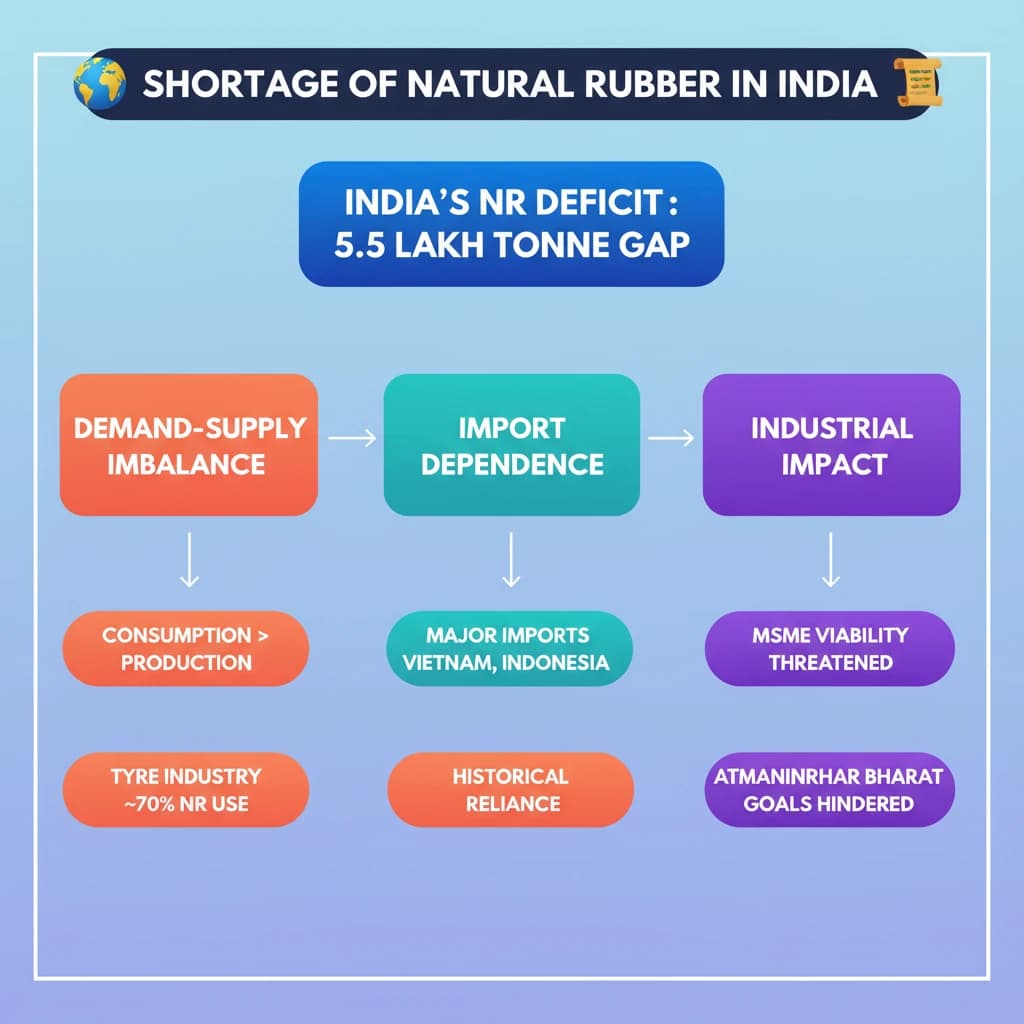
The primary reason for the shortage is a widening demand-supply gap within the country. While production has shown some growth, consumption has increased at a much faster pace.
Demand-Supply Dynamics
Domestic NR production saw a modest increase from 8.39 lakh tonnes in 2022-23 to 8.57 lakh tonnes in 2023-24. This indicates a positive, albeit insufficient, trend in cultivation.
However, NR consumption has surged significantly, rising from 13.5 lakh tonnes to 14.14 lakh tonnes during the same period. This rapid increase in demand outstrips the growth in supply.
The disparity between the incremental rise in production and the substantial jump in consumption is the core driver of the ongoing natural rubber shortage.
Sectoral Consumption Patterns
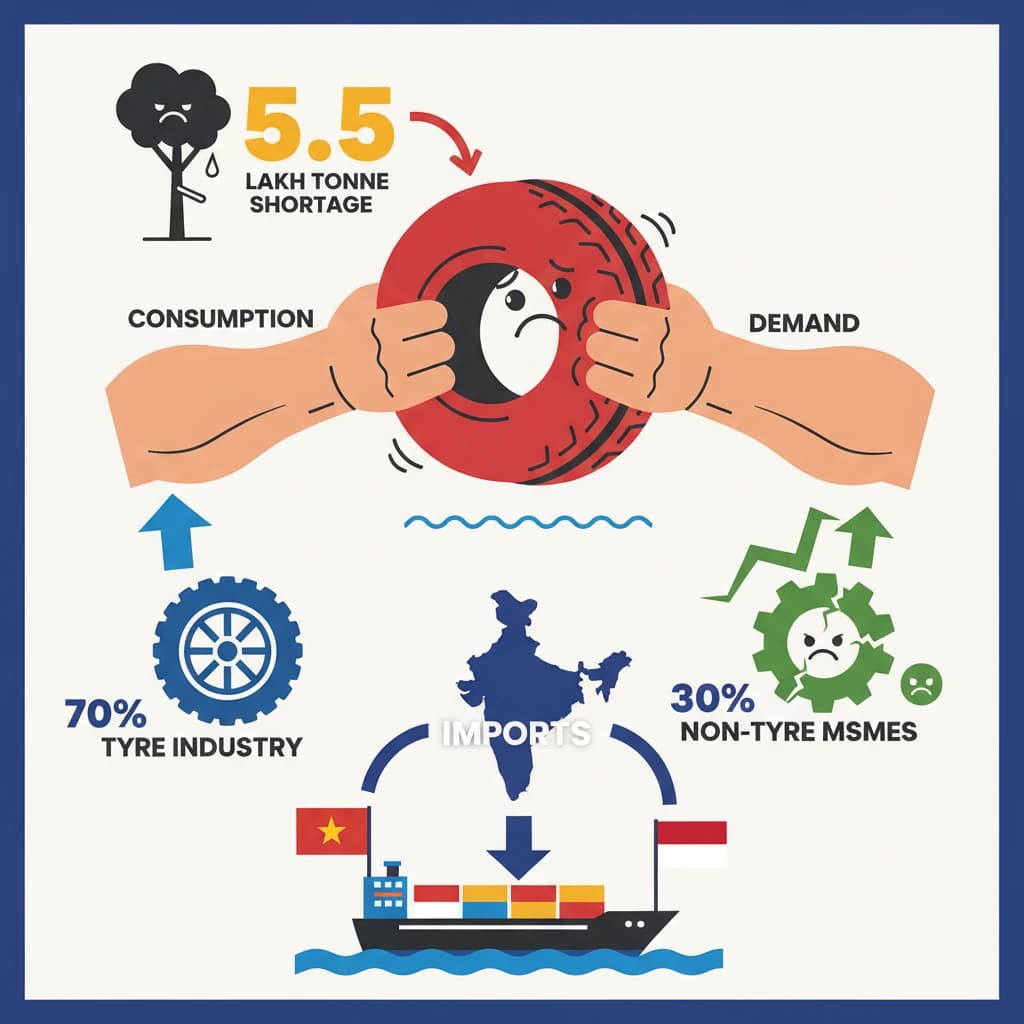
The tyre industry is the largest consumer of natural rubber in India, accounting for roughly 70% of the total domestic consumption. This sector's demand heavily influences overall NR requirements.
The remaining 30% of natural rubber is utilized by various non-tyre companies. A significant portion of these are small and micro enterprises, which are particularly vulnerable to supply shortages and price fluctuations.
Understanding the sectoral breakdown of consumption is crucial for policy formulation. Questions on industrial raw material security or MSME challenges often relate to such issues in UPSC GS Paper III.
India's Import Dependence
Due to persistent insufficient domestic production, India has historically maintained a reliance on NR imports to meet its local demand. This dependence makes the country susceptible to global market dynamics.
India primarily imports natural rubber to meet local demand from neighboring countries. Key suppliers include nations like Vietnam and Indonesia, which are major global producers of the commodity.
Key Import Sources:
- Vietnam
- Indonesia
💡 Key Takeaways
- •India faces a significant 5.5 lakh tonne natural rubber (NR) shortage.
- •The primary cause is a widening demand-supply gap: consumption is growing faster than domestic production.
- •The tyre industry consumes 70% of NR, while non-tyre MSMEs consume 30% and are disproportionately affected.
- •India has a historical dependence on NR imports, mainly from Vietnam and Indonesia.
- •The shortage impacts industrial competitiveness, MSME viability, and India's 'Atmanirbhar Bharat' goals.
🧠 Memory Techniques
95% Verified Content