Loading page, please wait…
The 2023 amendment to the Offshore Areas Mineral (Development and Regulation) Act (OAMDR), 2002 - UPSC Economy
What is The 2023 amendment to the Offshore Areas Mineral (Development and Regulation) Act (OAMDR), 2002 in UPSC Economy?
The 2023 amendment to the Offshore Areas Mineral (Development and Regulation) Act (OAMDR), 2002 is a key topic under Economy for UPSC Civil Services Examination. Key points include: The 2023 amendment to the OAMDR Act, 2002, modernizes offshore mineral allocation.. It introduces a transparent auction process for offshore mineral rights.. The amendment incorporates composite licenses, combining exploration and production.. Understanding this topic is essential for both UPSC Prelims and Mains preparation.
Why is The 2023 amendment to the Offshore Areas Mineral (Development and Regulation) Act (OAMDR), 2002 important for UPSC exam?
The 2023 amendment to the Offshore Areas Mineral (Development and Regulation) Act (OAMDR), 2002 is a Medium-level topic in UPSC Economy. It is tested in both Prelims (factual MCQs) and Mains (analytical answer writing). Previous year UPSC questions have frequently covered aspects of The 2023 amendment to the Offshore Areas Mineral (Development and Regulation) Act (OAMDR), 2002, making it essential for comprehensive IAS preparation.
How to prepare The 2023 amendment to the Offshore Areas Mineral (Development and Regulation) Act (OAMDR), 2002 for UPSC?
To prepare The 2023 amendment to the Offshore Areas Mineral (Development and Regulation) Act (OAMDR), 2002 for UPSC: (1) Study the comprehensive notes covering all key concepts on Vaidra. (2) Practice previous year questions on this topic. (3) Connect it with current affairs using daily updates. (4) Revise using key takeaways and mind maps available for Economy. (5) Write practice answers linking The 2023 amendment to the Offshore Areas Mineral (Development and Regulation) Act (OAMDR), 2002 to related GS Paper topics.
Key takeaways of The 2023 amendment to the Offshore Areas Mineral (Development and Regulation) Act (OAMDR), 2002 for UPSC
- The 2023 amendment to the OAMDR Act, 2002, modernizes offshore mineral allocation.
- It introduces a transparent auction process for offshore mineral rights.
- The amendment incorporates composite licenses, combining exploration and production.
- Aims to enhance transparency, efficiency, and ease of doing business in offshore mining.
- Expected to boost investment, accelerate project timelines, and contribute to India's Blue Economy and resource security.
The 2023 amendment to the Offshore Areas Mineral (Development and Regulation) Act (OAMDR), 2002
Medium⏱️ 6 min read
economy
📖 Introduction
Introduction to the OAMDR Amendment, 2023
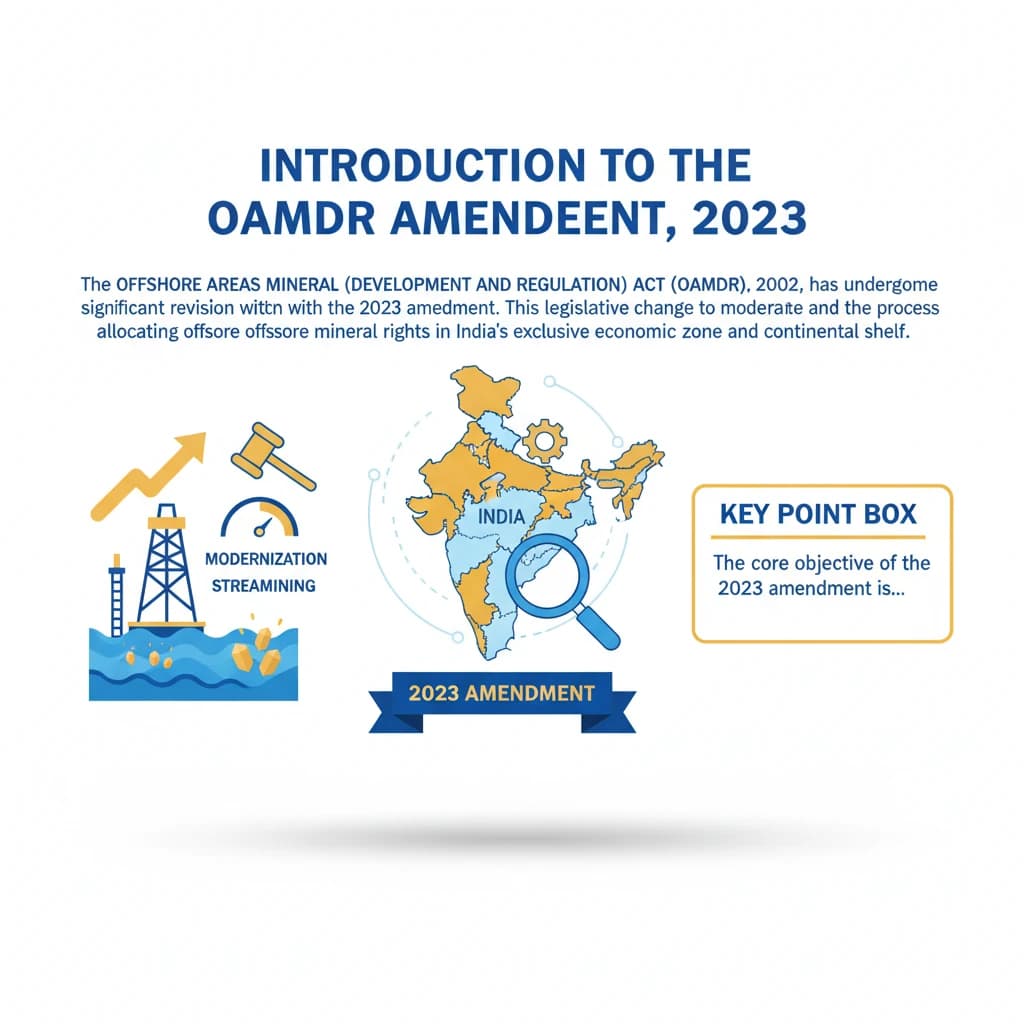
The Offshore Areas Mineral (Development and Regulation) Act (OAMDR), 2002, has undergone a significant revision with the 2023 amendment. This legislative change aims to modernize and streamline the process of allocating offshore mineral rights in India's exclusive economic zone and continental shelf.
The core objective of the 2023 amendment is to foster greater transparency and efficiency in the offshore mining sector, attracting more investment and ensuring sustainable resource utilization.
Transparent Auction Process
A pivotal feature of the 2023 amendment is the introduction of a transparent auction process for granting offshore mineral rights. This moves away from previous discretionary allocation methods, promoting fairness and competition.
The new system ensures that all eligible entities have an equal opportunity to bid for mineral blocks, thereby maximizing revenue for the government and minimizing scope for arbitrary decisions.
The auction process is designed to be online and time-bound, ensuring a level playing field for both domestic and international bidders.
Incorporation of Composite Licenses
Another crucial aspect of the 2023 amendment is the provision for composite licenses. These licenses combine the stages of exploration and production into a single grant.
Previously, separate licenses were required for exploration and subsequent production, which often led to delays and increased procedural complexities. The new integrated approach simplifies the regulatory framework.
Composite licenses are expected to significantly reduce bureaucratic hurdles, accelerate project timelines, and enhance the overall ease of doing business in the offshore mining sector.
Benefits of the Amendment
The 2023 amendment is anticipated to bring multiple benefits. It will likely boost investment in offshore mineral exploration and production, contributing to India's resource security.
Enhanced transparency through auctions will also improve governance and reduce potential for corruption. The simplified licensing regime makes India a more attractive destination for global mining companies.
For UPSC Mains, understand how this amendment aligns with India's broader economic reforms, 'Ease of Doing Business' initiatives, and resource management strategies. Relate it to GS Paper III: Economy and Environment.
💡 Key Takeaways
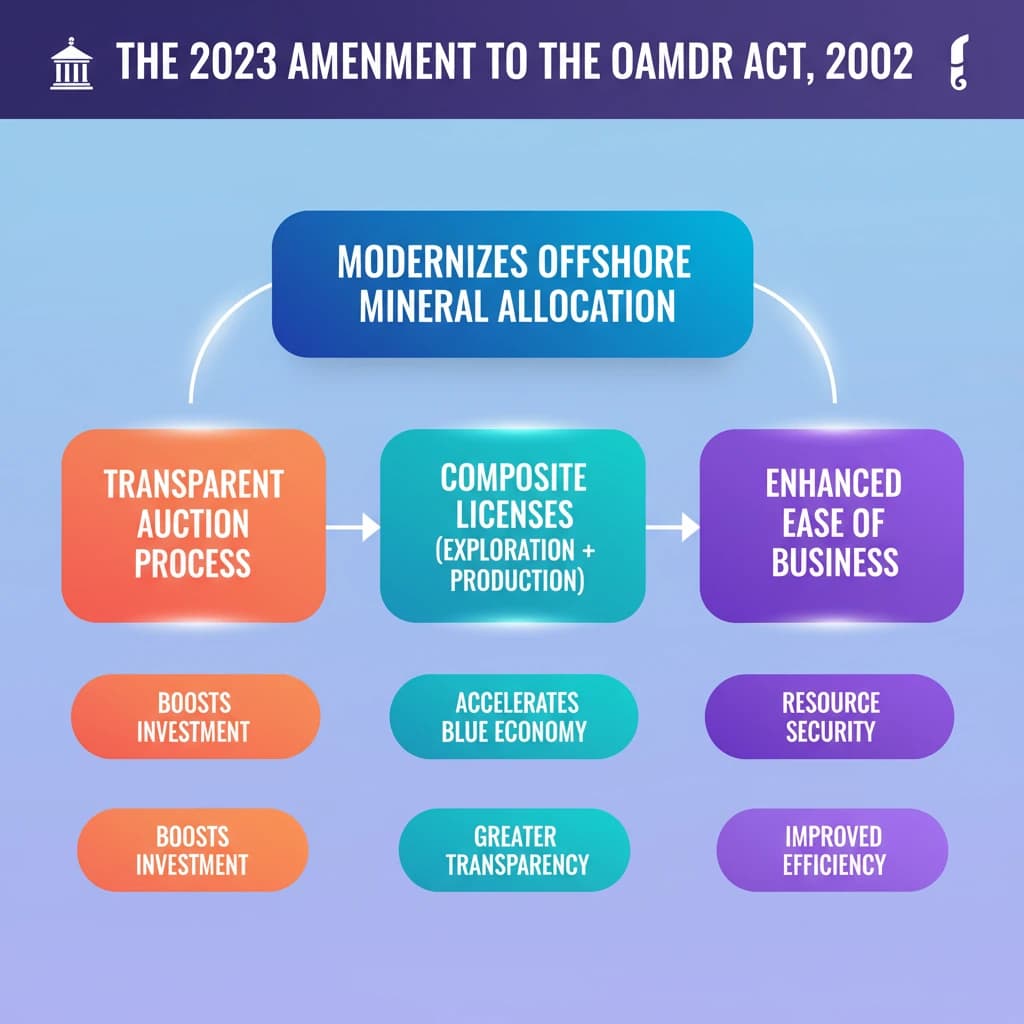
- •The 2023 amendment to the OAMDR Act, 2002, modernizes offshore mineral allocation.
- •It introduces a transparent auction process for offshore mineral rights.
- •The amendment incorporates composite licenses, combining exploration and production.
- •Aims to enhance transparency, efficiency, and ease of doing business in offshore mining.
- •Expected to boost investment, accelerate project timelines, and contribute to India's Blue Economy and resource security.
🧠 Memory Techniques

95% Verified Content
📚 Reference Sources
•The Offshore Areas Mineral (Development and Regulation) Amendment Act, 2023 (Official Gazette)
•Press Information Bureau (PIB) releases on the amendment