Loading page, please wait…
What are India’s Economic Challenges According to the Economic Survey 2024-25? - UPSC Economy
What is What are India’s Economic Challenges According to the Economic Survey 2024-25? in UPSC Economy?
What are India’s Economic Challenges According to the Economic Survey 2024-25? is a key topic under Economy for UPSC Civil Services Examination. Key points include: Private investment remains cautious due to global uncertainties and regulatory concerns.. Public Capex grew significantly (38.8% CAGR FY20-FY24), but private sector lags.. High logistics costs (13-14% of GDP) hinder industrial competitiveness despite NLP.. Understanding this topic is essential for both UPSC Prelims and Mains preparation.
Why is What are India’s Economic Challenges According to the Economic Survey 2024-25? important for UPSC exam?
What are India’s Economic Challenges According to the Economic Survey 2024-25? is a Medium-level topic in UPSC Economy. It is tested in both Prelims (factual MCQs) and Mains (analytical answer writing). Previous year UPSC questions have frequently covered aspects of What are India’s Economic Challenges According to the Economic Survey 2024-25?, making it essential for comprehensive IAS preparation.
How to prepare What are India’s Economic Challenges According to the Economic Survey 2024-25? for UPSC?
To prepare What are India’s Economic Challenges According to the Economic Survey 2024-25? for UPSC: (1) Study the comprehensive notes covering all key concepts on Vaidra. (2) Practice previous year questions on this topic. (3) Connect it with current affairs using daily updates. (4) Revise using key takeaways and mind maps available for Economy. (5) Write practice answers linking What are India’s Economic Challenges According to the Economic Survey 2024-25? to related GS Paper topics.
Key takeaways of What are India’s Economic Challenges According to the Economic Survey 2024-25? for UPSC
- Private investment remains cautious due to global uncertainties and regulatory concerns.
- Public Capex grew significantly (38.8% CAGR FY20-FY24), but private sector lags.
- High logistics costs (13-14% of GDP) hinder industrial competitiveness despite NLP.
- Unplanned urbanization leads to traffic congestion, poor public transport, and high housing costs.
- Smart City and urban transport projects face delays due to regulatory hurdles and financing gaps.
- Addressing these challenges is crucial for India's 2047 development vision.
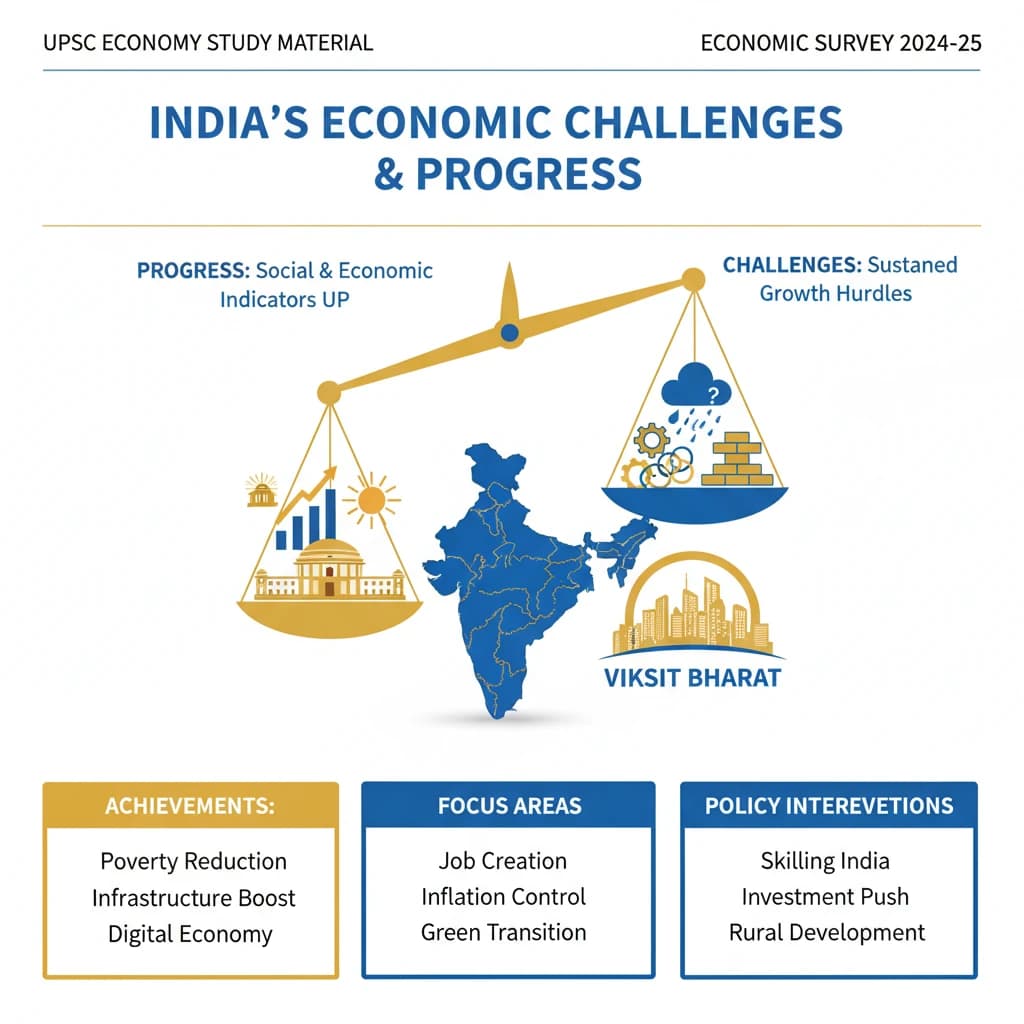
What are India’s Economic Challenges According to the Economic Survey 2024-25?
Medium⏱️ 7 min read
economy
📖 Introduction
Understanding India's Economic Challenges: Economic Survey 2024-25
The Economic Survey 2024-25 highlights several critical impediments to India's sustained economic growth and competitiveness. These challenges span across investment, infrastructure, logistics, and urbanization, demanding focused policy interventions.
UPSC Insight: The Economic Survey is a vital source for Mains GS-III (Economy) and Prelims. Understanding its key findings, especially on challenges, helps in structuring answers on economic policy and development.
Investment and Infrastructure Bottlenecks
Despite robust government efforts, private investment remains cautious. This hesitancy is primarily attributed to prevailing global uncertainties and specific regulatory concerns within the domestic economy.
While public Capex (capital expenditure) has shown significant growth, the private sector's reluctance creates a demand-side gap and limits overall economic expansion.
Key Data: Public Capex grew at a substantial 38.8% CAGR (Compound Annual Growth Rate) between FY20 and FY24, indicating strong government push for infrastructure development.
High Logistics Costs
India continues to grapple with persistently high logistics costs. These elevated expenses significantly impact the overall competitiveness of Indian industries, both domestically and internationally.
Despite the implementation of the National Logistics Policy, aimed at streamlining logistics and reducing costs, the desired efficiency gains are yet to be fully realized across all sectors.
Economic Burden: Logistics costs in India are estimated to be around 13-14% of GDP. This figure is considerably higher than in many developed economies, where it typically ranges from 8-10%.
Unplanned Urbanization
A significant challenge stems from the lack of planned urbanization. Rapid, often haphazard, growth in urban centers leads to a multitude of problems that strain existing infrastructure and services.
Consequences include severe traffic congestion, which hampers productivity and quality of life, and inadequate provision of efficient public transport systems.
Furthermore, the unchecked growth contributes to rapidly rising housing costs in major cities, making affordable living a distant dream for many urban residents and exacerbating social inequalities.
Delays in Smart City and Urban Transport Projects
Key initiatives aimed at improving urban living, such as Smart City projects and various urban transport projects, frequently encounter significant delays in their execution.
These delays are often a result of complex regulatory hurdles that slow down approvals and implementation processes. Additionally, persistent financing gaps pose a major obstacle, preventing projects from progressing at the intended pace.
Impact: Delays in these crucial projects not only inflate costs but also postpone the benefits intended for urban populations, affecting livability and economic efficiency.
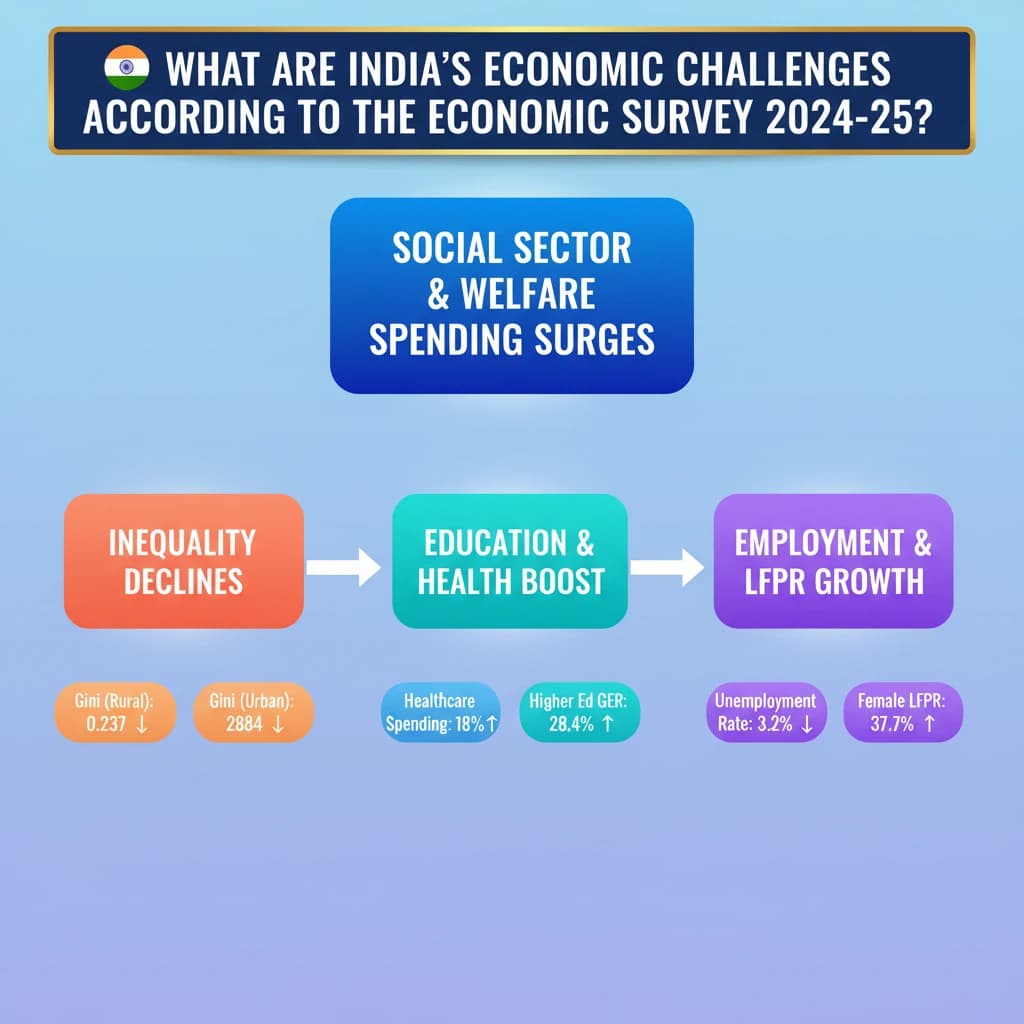
💡 Key Takeaways
- •Private investment remains cautious due to global uncertainties and regulatory concerns.
- •Public Capex grew significantly (38.8% CAGR FY20-FY24), but private sector lags.
- •High logistics costs (13-14% of GDP) hinder industrial competitiveness despite NLP.
- •Unplanned urbanization leads to traffic congestion, poor public transport, and high housing costs.
- •Smart City and urban transport projects face delays due to regulatory hurdles and financing gaps.
- •Addressing these challenges is crucial for India's 2047 development vision.
🧠 Memory Techniques
95% Verified Content
📚 Reference Sources
•Ministry of Finance, Government of India (General Economic Survey content)