<h3>Overview</h3>
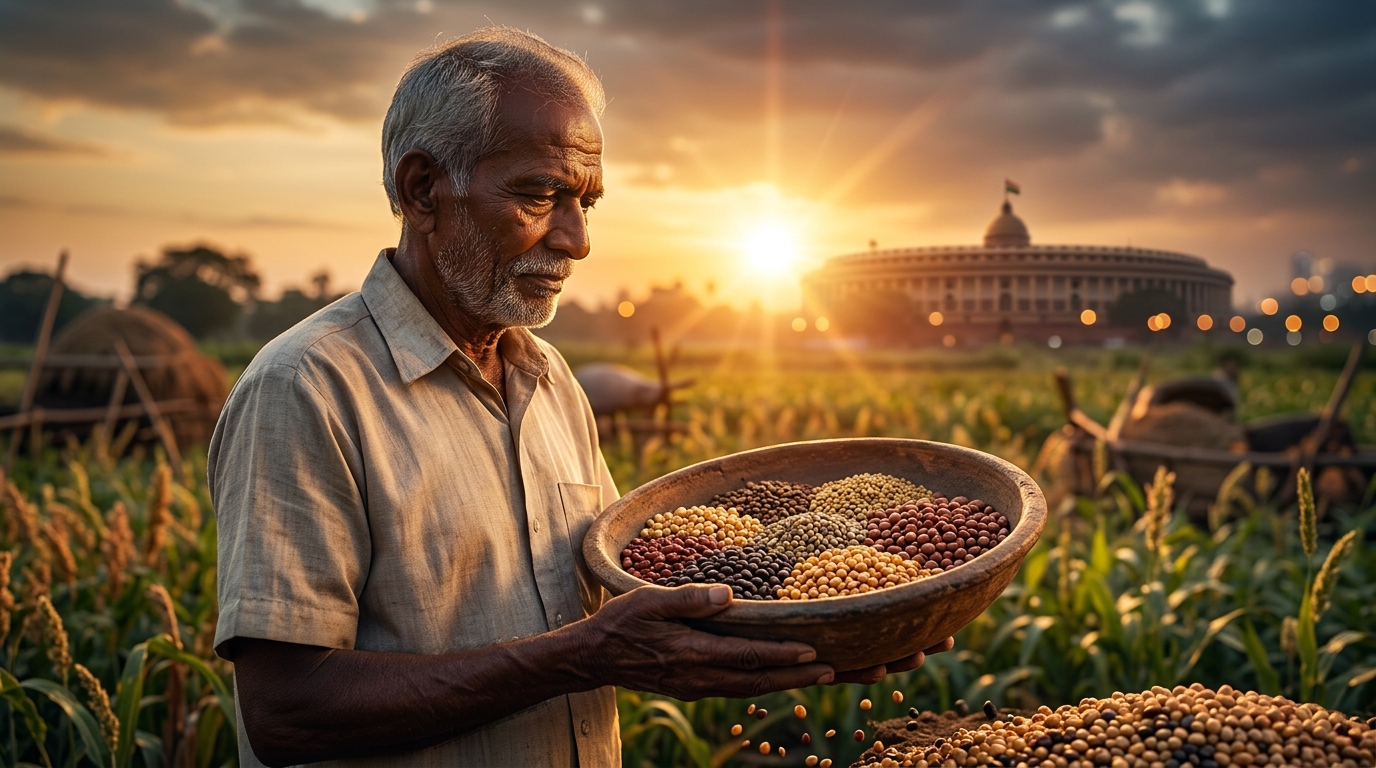
<p>The <span class="key-term" data-definition="Department of Expenditure — a wing of the Ministry of Finance responsible for budgeting, expenditure control and financial policy (GS3: Economy)">Department of Expenditure</span> issued a D.O. letter on <strong>09 January 2026</strong> to the <strong>Chief Secretaries of all States</strong>. The letter is an advisory, not a directive, urging states to align their agricultural bonus schemes with the national goal of promoting <span class="key-term" data-definition="Pulses — grain legumes rich in protein, important for nutritional security (GS3: Economy)">pulses</span>, <span class="key-term" data-definition="Oilseeds — crops grown for oil extraction, such as soybean and mustard (GS3: Economy)">oilseeds</span> and <span class="key-term" data-definition="Millets — small‑seeded cereals tolerant to drought, valuable for food security (GS3: Economy)">millets</span>. The move seeks to strengthen nutritional security, <span class="key-term" data-definition="Aatmanirbharta — policy of self‑reliance aimed at reducing dependence on imports, especially in strategic sectors like food (GS3: Economy)">Aatmanirbharta</span>, and sustainable agriculture.</p>
<h3>Key Developments</h3>
<ul>
<li>States are asked to revise bonus policies that currently favour <strong>wheat</strong> and <strong>paddy</strong> over diversified crops.</li>
<li>The advisory stresses the need to curb monoculture in northern India and promote crop diversification.</li>
<li>It aligns with existing central schemes such as the <span class="key-term" data-definition="National Mission on Edible Oils – Oilseeds — a central government initiative to boost domestic production of oilseeds and edible oils (GS3: Economy)">National Mission on Edible Oils</span> and the <span class="key-term" data-definition="Economic Survey — an annual document presented by the Finance Ministry outlining the state of the economy and policy priorities (GS3: Economy)">Economic Survey 2025‑26</span>, which report falling import dependence on edible oils.</li>
</ul>
<h3>Important Facts</h3>
<ul>
<li>Import dependence on edible oil fell from <strong>63.2 % (2015‑16)</strong> to <strong>56.25 % (2023‑24)</strong>.</li>
<li>Area under oilseeds grew by <strong>18 %</strong>, production by <strong>55 %</strong>, and productivity by <strong>31 %</strong> between <strong>2014‑15 and 2024‑25</strong>.</li>
<li>Under <span class="key-term" data-definition="PM‑KISAN — Pradhan Mantri Kisan Samman Nidhi, a direct cash transfer scheme providing Rs 6,000 per year to small and marginal farmers (GS3: Economy)">PM‑KISAN</span>, more than <strong>9 crore farmers</strong> receive a yearly cash assistance of <strong>Rs 6,000</strong>.</li>
<li>Other farmer‑centric schemes include <span class="key-term" data-definition="PM Fasal Bima Yojana — a crop‑insurance scheme that protects farmers against loss due to natural calamities (GS3: Economy)">PM Fasal Bima Yojana</span> (covering ~4 crore farmers) and the Prime Minister Dhan‑Dhaanya Krishi Yojana targeting 1.7 crore farmers in low‑performing districts.</li>
</ul>
<h3>Relevance for UPSC</h3>
<p>The advisory illustrates the interplay between centre‑state relations, agricultural policy, and food security—core topics for GS II (Polity) and GS III (Economy). Understanding the role of the <span class="key-term" data-definition="Minimum Support Price (MSP) — a price floor set by the Government to purchase certain crops from farmers, ensuring remunerative prices (GS3: Economy)">MSP</span> mechanism, and how bonus incentives can distort crop choices, helps answer questions on agricultural reforms and fiscal federalism.</p>
<h3>Way Forward</h3>
<ul>
<li>States should revise bonus structures to reward cultivation of pulses, oilseeds and millets.</li>
<li>Continuous monitoring of crop‑diversification outcomes through the <span class="key-term" data-definition="Economic Survey — an annual document presented by the Finance Ministry outlining the state of the economy and policy priorities (GS3: Economy)">Economic Survey</span> and state agricultural reports.</li>
<li>Strengthen supply‑chain infrastructure such as Mega Food Parks to ensure profitability for diversified crops.</li>
<li>Integrate farmer‑support schemes (PM‑KISAN, PM Fasal Bima Yojana) with the diversification agenda to safeguard incomes.</li>
</ul>