Loading page, please wait…
What is a Hybrid Electric Vehicle (HEV)? - UPSC Economy
What is What is a Hybrid Electric Vehicle (HEV)? in UPSC Economy?
What is a Hybrid Electric Vehicle (HEV)? is a key topic under Economy for UPSC Civil Services Examination. Key points include: Hybrid Electric Vehicles (HEVs) combine an Internal Combustion Engine (ICE) and an electric motor.. HEVs offer improved fuel efficiency and reduced emissions compared to conventional vehicles.. They are categorized into series, parallel, and series-parallel hybrids based on power flow.. Understanding this topic is essential for both UPSC Prelims and Mains preparation.
Why is What is a Hybrid Electric Vehicle (HEV)? important for UPSC exam?
What is a Hybrid Electric Vehicle (HEV)? is a Medium-level topic in UPSC Economy. It is tested in both Prelims (factual MCQs) and Mains (analytical answer writing). Previous year UPSC questions have frequently covered aspects of What is a Hybrid Electric Vehicle (HEV)?, making it essential for comprehensive IAS preparation.
How to prepare What is a Hybrid Electric Vehicle (HEV)? for UPSC?
To prepare What is a Hybrid Electric Vehicle (HEV)? for UPSC: (1) Study the comprehensive notes covering all key concepts on Vaidra. (2) Practice previous year questions on this topic. (3) Connect it with current affairs using daily updates. (4) Revise using key takeaways and mind maps available for Economy. (5) Write practice answers linking What is a Hybrid Electric Vehicle (HEV)? to related GS Paper topics.
Key takeaways of What is a Hybrid Electric Vehicle (HEV)? for UPSC
- Hybrid Electric Vehicles (HEVs) combine an Internal Combustion Engine (ICE) and an electric motor.
- HEVs offer improved fuel efficiency and reduced emissions compared to conventional vehicles.
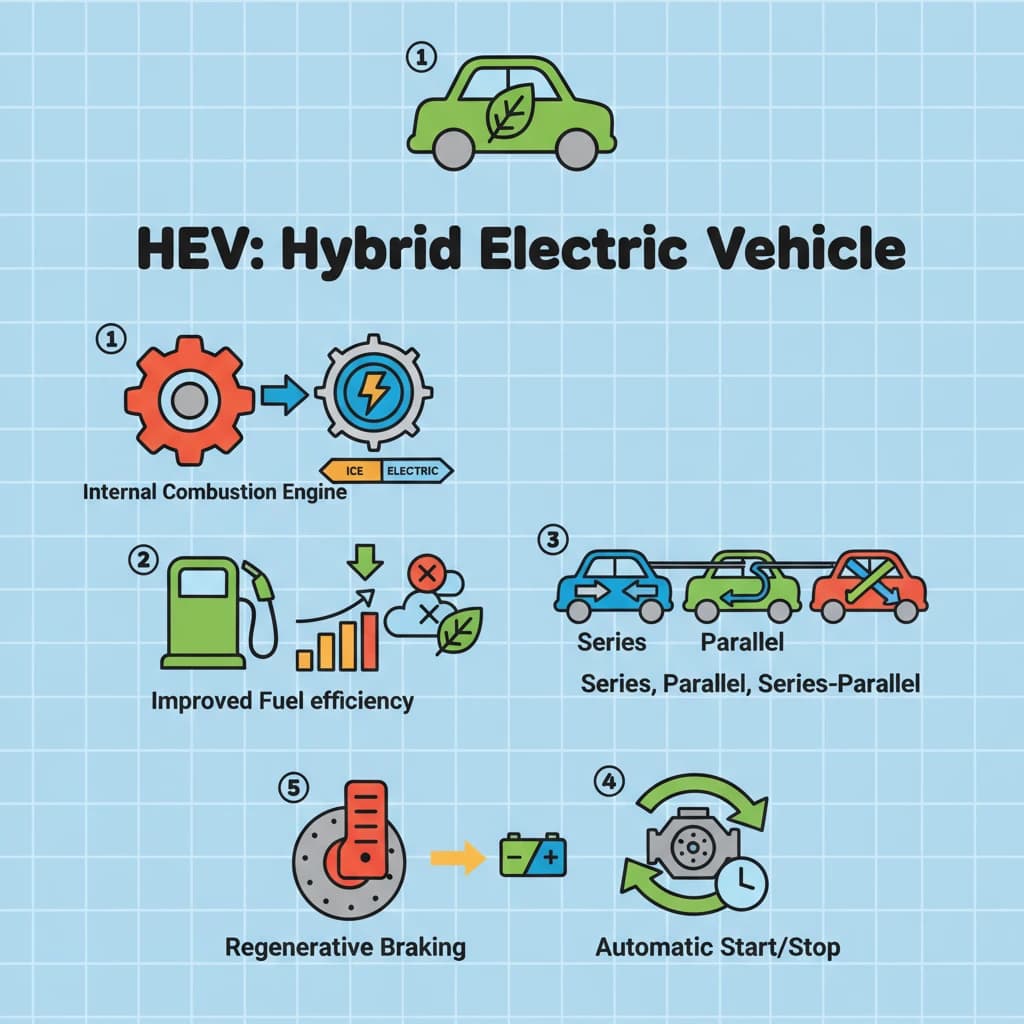
- They are categorized into series, parallel, and series-parallel hybrids based on power flow.
- Key HEV technologies include regenerative braking and automatic start/stop systems.
- HEVs act as a bridge technology towards full electrification, addressing range anxiety and infrastructure gaps.
- Government schemes like FAME India influence HEV adoption and manufacturing in India.
What is a Hybrid Electric Vehicle (HEV)?
Medium⏱️ 8 min read
economy
📖 Introduction
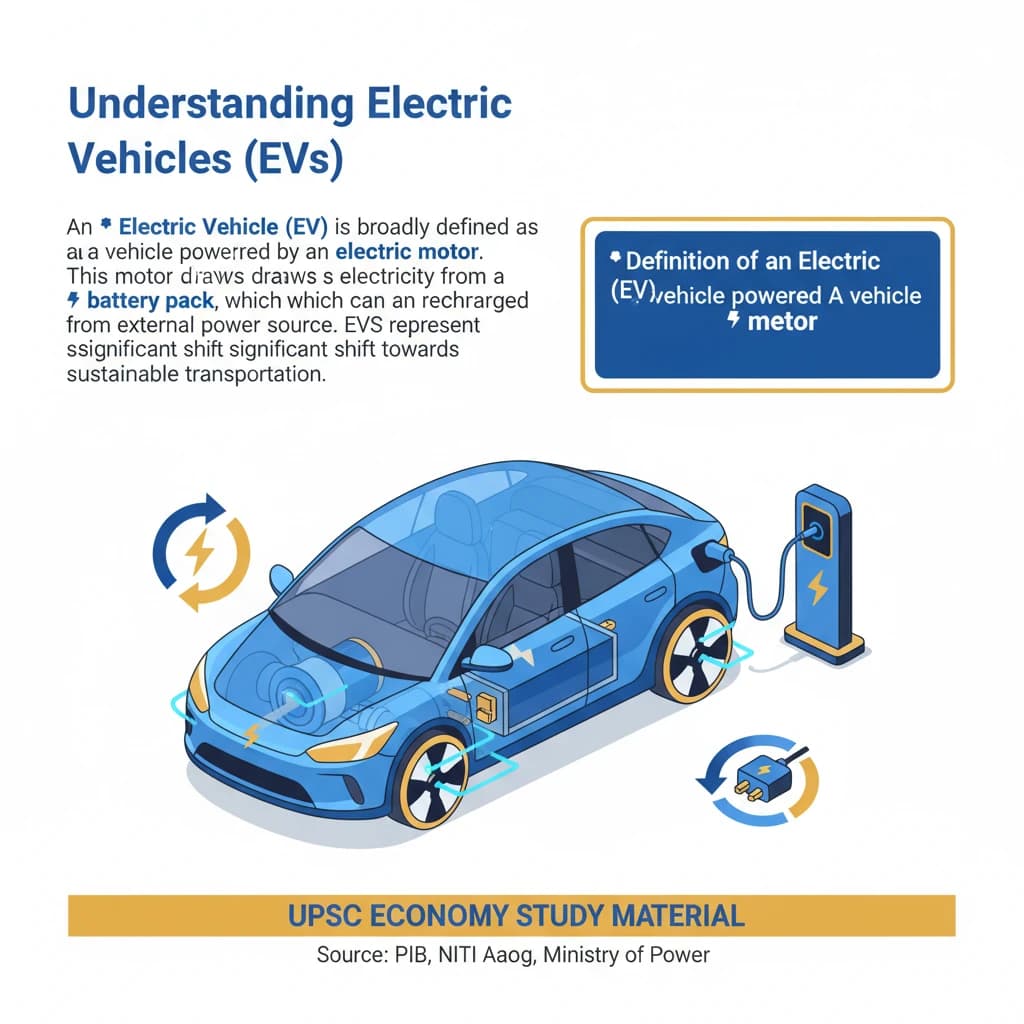
Understanding Electric Vehicles (EVs)
An Electric Vehicle (EV) is broadly defined as a vehicle powered by an electric motor. This motor draws electricity from a battery pack, which can be recharged from an external power source. EVs represent a significant shift towards sustainable transportation.
Definition of an Electric Vehicle (EV): A vehicle powered by an electric motor, drawing electricity from a battery, and capable of being charged from an external source.
Introduction to Hybrid Electric Vehicles (HEVs)
A Hybrid Electric Vehicle (HEV) combines the best of both worlds: an internal combustion engine (ICE) and an electric motor. This integration allows the vehicle to operate on electric power, gasoline power, or a combination of both, optimizing efficiency and performance.
Unlike pure EVs, HEVs do not rely solely on an external charging source for their electric components. The battery in an HEV is often charged by the ICE, through regenerative braking, or both, making them self-sufficient in terms of energy generation for the electric system.
Key Feature of HEVs: They combine an internal combustion engine (ICE) with an electric motor and a battery, allowing for flexible power delivery and improved fuel economy.
Components of an HEV
- Internal Combustion Engine (ICE): Typically a gasoline engine, it provides primary power and can also charge the battery.
- Electric Motor: Provides additional power, especially at lower speeds, and can propel the vehicle independently.
- Battery Pack: Stores electrical energy for the motor. It is usually smaller than in pure EVs.
- Generator: Often integrated with the electric motor, it converts mechanical energy from the ICE or braking into electrical energy to charge the battery.
- Power Control Unit: Manages the flow of electrical and mechanical power between the engine, motor, and battery.
Types of Hybrid Electric Vehicles
HEVs are categorized based on how their engine and motor work together:
Parallel Hybrid
In a parallel hybrid, both the electric motor and the internal combustion engine can directly drive the wheels. They can work together for maximum power or individually for efficiency. This setup offers flexibility in power delivery.
Mechanism: Both ICE and electric motor are connected to the transmission, allowing them to power the wheels simultaneously or independently. Example: Honda Civic Hybrid.
Series Hybrid
A series hybrid uses the internal combustion engine primarily as a generator to charge the battery. The electric motor is the sole source of power to the wheels. The ICE never directly drives the wheels.
Mechanism: The ICE generates electricity for the battery, which then powers the electric motor that drives the wheels. Example: Nissan e-POWER.
Series-Parallel (Complex/Power-Split) Hybrid
This type combines features of both series and parallel hybrids, offering the most complex and efficient power management. It uses a power-split device to blend power from the ICE and electric motor.
Mechanism: Both the ICE and electric motor can drive the wheels directly, and the ICE can also charge the battery. A sophisticated transmission system (e.g., planetary gear set) manages power flow. Example: Toyota Prius.
Advantages of HEVs
- Improved Fuel Efficiency: HEVs use less fuel than conventional vehicles, especially in city driving, due to electric assist and regenerative braking.
- Reduced Emissions: Lower consumption of fossil fuels leads to fewer greenhouse gas emissions and pollutants.
- No Range Anxiety: The presence of a gasoline engine eliminates concerns about battery range, as fuel stations are readily available.
- Regenerative Braking: This system captures energy normally lost during braking and converts it into electricity to recharge the battery.
Disadvantages of HEVs
- Higher Initial Cost: Generally more expensive than comparable conventional gasoline vehicles due to the dual powertrain system.
- Complexity: The integration of two power systems makes HEVs more complex, potentially leading to higher maintenance costs.
- Battery Life: Batteries have a finite lifespan and replacement can be costly.
- Weight: The dual system adds weight to the vehicle, which can slightly impact performance or efficiency.
For UPSC Mains (GS Paper 3 - Economy, Environment), understanding the distinctions between different EV types (BEV, HEV, PHEV) and their respective advantages/disadvantages is crucial. Focus on their role in energy security and climate change mitigation.
💡 Key Takeaways
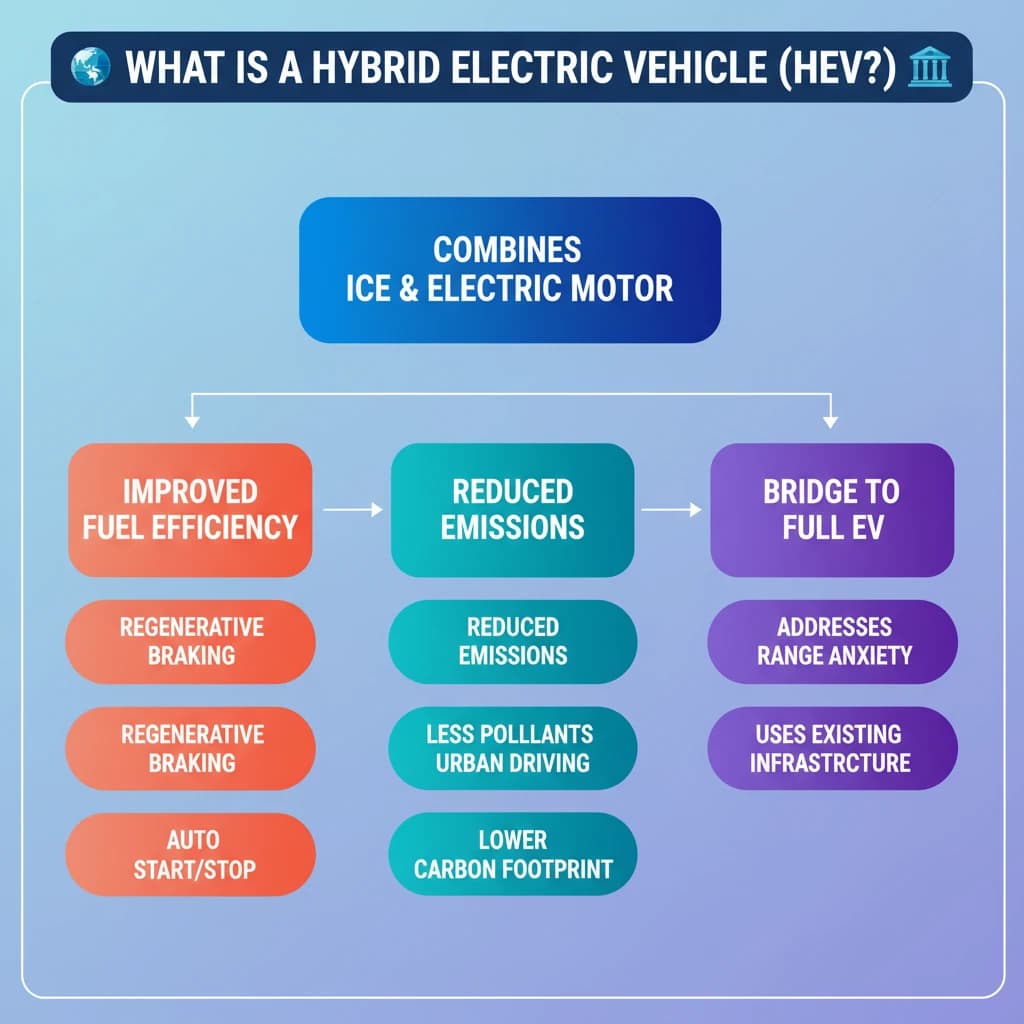
- •Hybrid Electric Vehicles (HEVs) combine an Internal Combustion Engine (ICE) and an electric motor.
- •HEVs offer improved fuel efficiency and reduced emissions compared to conventional vehicles.
- •They are categorized into series, parallel, and series-parallel hybrids based on power flow.
- •Key HEV technologies include regenerative braking and automatic start/stop systems.
- •HEVs act as a bridge technology towards full electrification, addressing range anxiety and infrastructure gaps.
- •Government schemes like FAME India influence HEV adoption and manufacturing in India.
🧠 Memory Techniques
95% Verified Content
📚 Reference Sources
•NITI Aayog reports on Electric Mobility
•Society of Automotive Engineers (SAE) International publications
•Automotive industry reports (e.g., SIAM, ACMA)
•Toyota Global, Honda Global, Maruti Suzuki India official websites