📖 Introduction
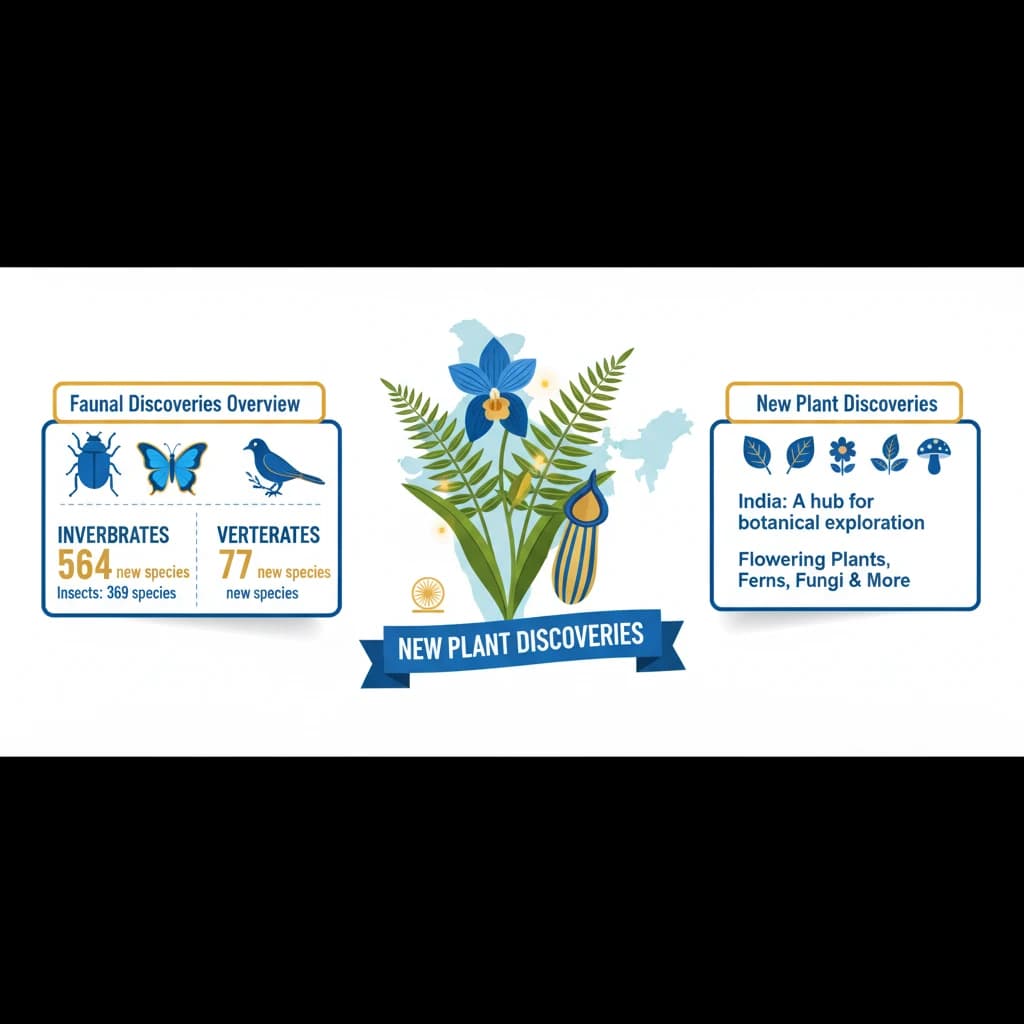
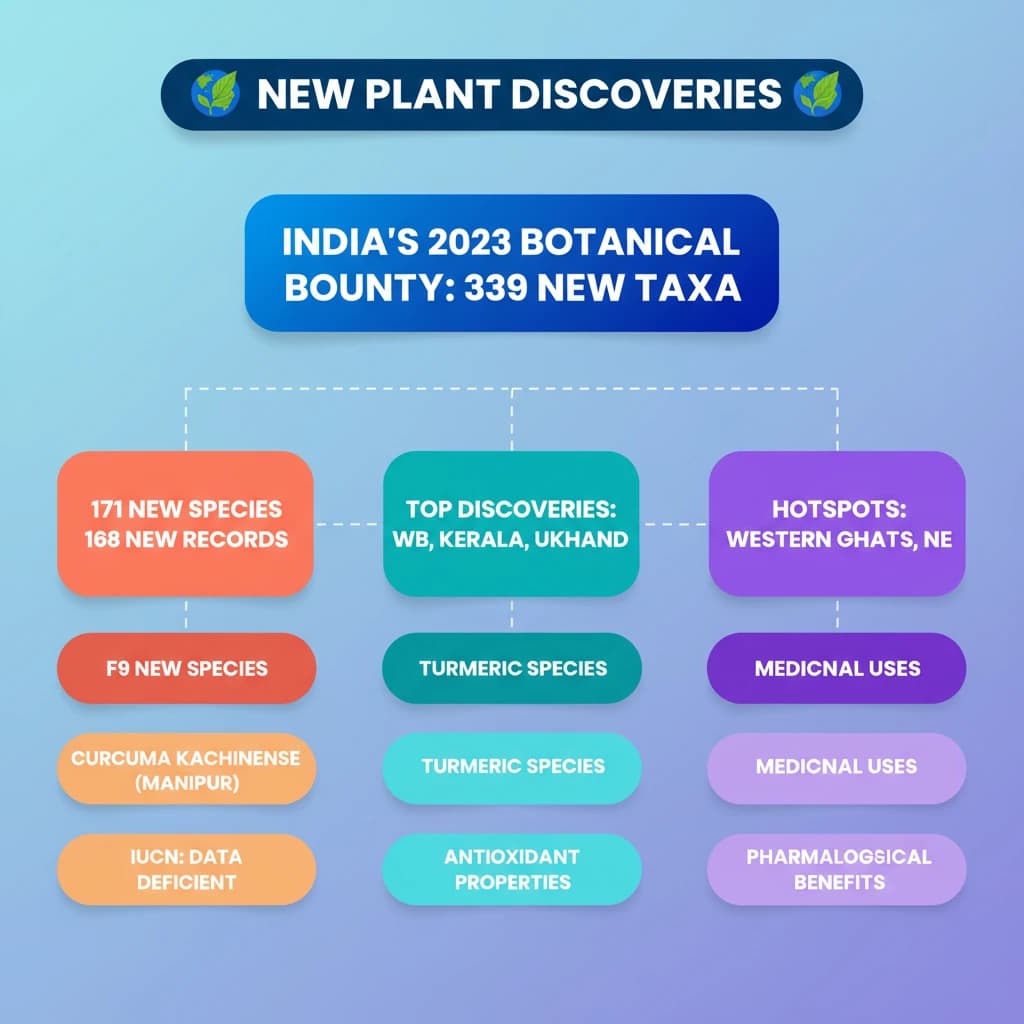
<h4>Faunal Discoveries Overview</h4><p>In the recent period, <strong>invertebrates</strong> accounted for the majority of new faunal discoveries in India, with a total of <strong>564 new species</strong> identified. In contrast, <strong>vertebrates</strong> constituted a smaller number, with <strong>77 new species</strong> discovered.</p><div class='info-box'><p>Among <strong>invertebrates</strong>, <strong>insects</strong> were the largest group, comprising <strong>369 species</strong>. For <strong>vertebrates</strong>, <strong>fish</strong> dominated the discoveries with <strong>47 species</strong>.</p></div><p>Following fish, the new vertebrate discoveries included <strong>reptiles</strong>, <strong>amphibians</strong>, and <strong>mammals</strong>. <strong>Aves</strong> (birds) recorded the least number of new species among vertebrates.</p><h4>Floral Discoveries in India (2023)</h4><p>In <strong>2023</strong>, India significantly expanded its plant database by adding <strong>339 new taxa</strong>. This includes <strong>326 new species</strong> and <strong>13 infraspecific taxa</strong>, highlighting the rich botanical diversity of the country.</p><div class='key-point-box'><p>Of these 339 taxa, <strong>171 taxa</strong> were entirely new to science. The remaining <strong>168 taxa</strong> represent new distributional records, meaning they were found for the first time in India, though known elsewhere.</p></div><p><strong>West Bengal</strong> emerged as the leading state for new plant discoveries, recording the highest number with <strong>52 taxa</strong>. It was closely followed by <strong>Kerala</strong> and <strong>Uttarakhand</strong>, indicating significant botanical exploration in these regions.</p><p>The discoveries encompassed a wide range of plant groups. These included <strong>106 angiosperms</strong>, <strong>2 pteridophytes</strong>, <strong>16 bryophytes</strong>, <strong>44 lichens</strong>, <strong>111 fungi</strong>, <strong>50 algae</strong>, and <strong>10 microbes</strong>, showcasing diverse life forms.</p><div class='exam-tip-box'><p>These new discoveries often include <strong>wild relatives</strong> of important horticultural, agricultural, medicinal, and ornamental plants. Examples include new species of <strong>begonias</strong>, <strong>impatiens</strong>, <strong>legumes</strong>, <strong>zingibers</strong>, and <strong>orchids</strong>, which can be crucial for genetic research and breeding programs.</p></div><p>The <strong>Western Ghats</strong> and the <strong>North Eastern Regions</strong> were identified as biodiversity hotspots, contributing to <strong>14%</strong> of the total new discoveries. These regions are known for their endemic and diverse flora.</p><h4>Curcuma kachinense: A New Turmeric Species</h4><p>A significant floral discovery is <strong>Curcuma kachinense</strong>, a new species of <strong>turmeric</strong> found in <strong>Manipur’s Kakching district</strong>. This discovery was made by three researchers in the region.</p><h4>Characteristics of Curcuma kachinense</h4><ul><li>It is a new <strong>flowering plant species</strong> belonging to the <strong>ginger family (Zingiberaceae)</strong>.</li><li>It closely resembles well-known plants such as <strong>turmeric</strong>, <strong>ginger</strong>, <strong>galangal</strong>, and <strong>cardamom</strong>.</li><li>This plant can grow quite tall, reaching up to <strong>eight feet</strong>, and features large terminal inflorescences.</li><li>It was specifically found thriving along the banks of the stream of <strong>Silver Falls</strong> in the <strong>Kakching district</strong> of Manipur.</li><li>It bears a striking resemblance to <strong>Curcuma longa</strong>, locally known as <strong>yaiying</strong>.</li><li>A distinguished appearance is noted by its <strong>vibrant rhizomes</strong>, which possess a very bitter taste.</li></ul><div class='info-box'><p><strong>Curcuma kachinense</strong> has been classified as <strong>“Data Deficient”</strong> under the guidelines of the <strong>IUCN Red List category</strong>. This classification indicates insufficient information to assess its risk of extinction.</p></div><h4>Medicinal Properties of Curcuma Species</h4><p>Several <strong>Curcuma species</strong>, including the common <strong>turmeric (Curcuma longa)</strong>, have been utilized for centuries. Their applications span traditional medicines, spices, dyes, perfumes, cosmetics, and as ornamental plants.</p><p>The rhizomes of turmeric contain active compounds like <strong>curcumin</strong> and several <strong>curcuminoids</strong>. These compounds are known for their significant <strong>antioxidant</strong> and <strong>anti-inflammatory properties</strong>.</p><div class='key-point-box'><p>The <strong>essential oil</strong> derived from Curcuma species exhibits a broad spectrum of pharmacological activities. These include <strong>anti-inflammatory</strong>, <strong>anti-cancerous</strong>, <strong>anti-diabetic</strong>, <strong>anti-microbial</strong>, <strong>anti-malarial</strong>, <strong>anti-venom</strong>, <strong>anti-oxidant</strong>, <strong>anti-rheumatic</strong>, <strong>hypotensive</strong>, <strong>anti-viral</strong>, and <strong>anti-parasitic</strong> effects.</p></div><h4>Asystasia Venui: Another Notable Discovery</h4><p>Another recent discovery is <strong>Asystasia Venui</strong>, a new flowering plant. It was found in the <strong>Acharya Jagadish Chandra Bose Indian Botanic Garden</strong> at <strong>Howrah, West Bengal</strong>, underscoring the importance of botanical gardens in conservation and discovery efforts.</p>