Loading page, please wait…
Vaidra Logo
Vaidra

Top 4 items + smart groups

UPSC GPT
New
Current Affairs
Daily Solutions
Daily Puzzle
Mains Evaluator

Version 2.0.0 • Built with ❤️ for UPSC aspirants

Loading...
Loading...
Loading...
Loading...
Loading...
Loading...
Loading...
Loading...
Loading...
Loading...
Loading...
Loading...
Loading...
What is Enhanced Vegetation Index (EVI)? - UPSC Environment And Ecology
Back
All Subjects

Topics

0 topics • 0 completed

Loading topics...
Loading...
Loading...
Loading...
Loading...
Loading...
Overall Progress0%

What is Enhanced Vegetation Index (EVI)? - UPSC Environment And Ecology

What is What is Enhanced Vegetation Index (EVI)? in UPSC Environment And Ecology?

What is Enhanced Vegetation Index (EVI)? is a key topic under Environment And Ecology for UPSC Civil Services Examination. Key points include: Enhanced Vegetation Index (EVI) is an advanced vegetation index for monitoring health and density.. EVI is a modified version of NDVI, offering higher sensitivity to biomass, atmospheric, and soil conditions.. It corrects for 'external noises' like atmospheric effects and soil background, which affect NDVI.. Understanding this topic is essential for both UPSC Prelims and Mains preparation.

Why is What is Enhanced Vegetation Index (EVI)? important for UPSC exam?

What is Enhanced Vegetation Index (EVI)? is a Medium-level topic in UPSC Environment And Ecology. It is tested in both Prelims (factual MCQs) and Mains (analytical answer writing). Previous year UPSC questions have frequently covered aspects of What is Enhanced Vegetation Index (EVI)?, making it essential for comprehensive IAS preparation.

How to prepare What is Enhanced Vegetation Index (EVI)? for UPSC?

To prepare What is Enhanced Vegetation Index (EVI)? for UPSC: (1) Study the comprehensive notes covering all key concepts on Vaidra. (2) Practice previous year questions on this topic. (3) Connect it with current affairs using daily updates. (4) Revise using key takeaways and mind maps available for Environment And Ecology. (5) Write practice answers linking What is Enhanced Vegetation Index (EVI)? to related GS Paper topics.

Key takeaways of What is Enhanced Vegetation Index (EVI)? for UPSC

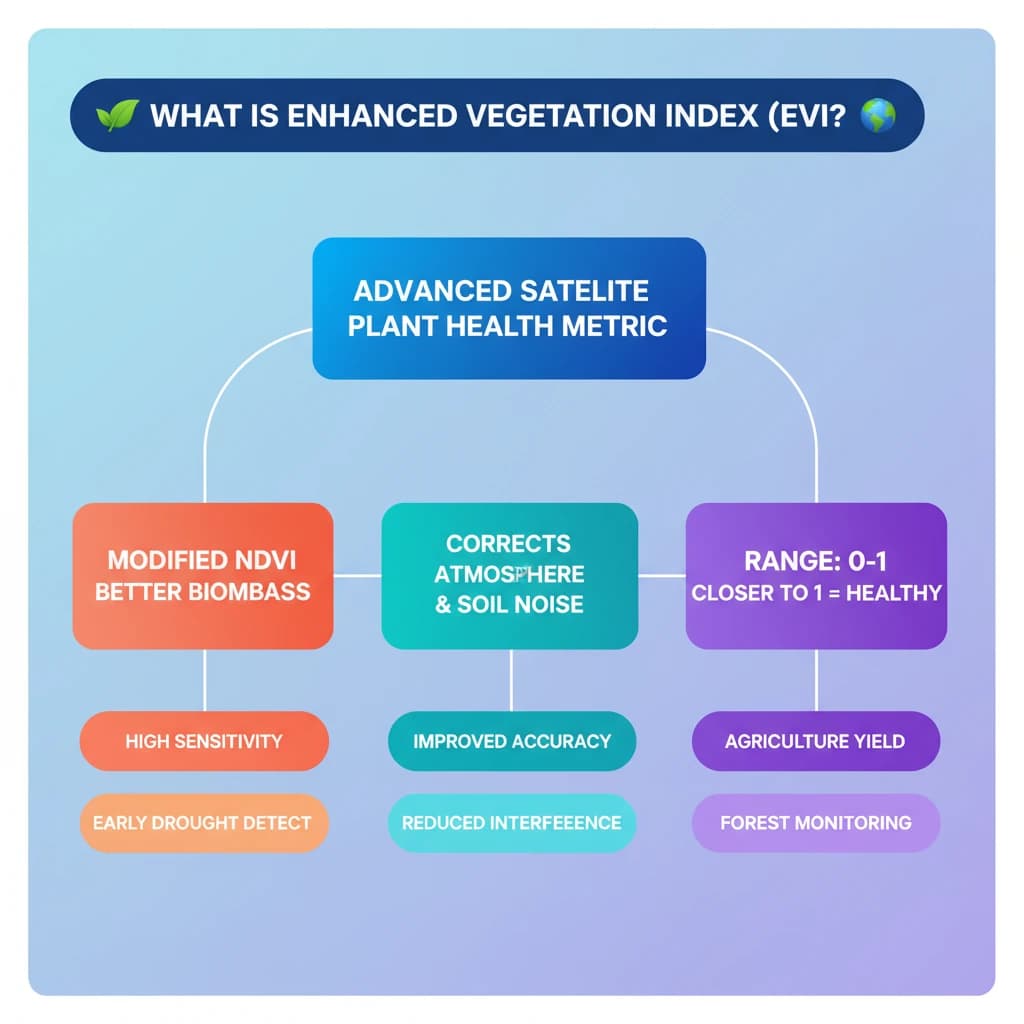
  • Enhanced Vegetation Index (EVI) is an advanced vegetation index for monitoring health and density.
  • EVI is a modified version of NDVI, offering higher sensitivity to biomass, atmospheric, and soil conditions.
  • It corrects for 'external noises' like atmospheric effects and soil background, which affect NDVI.
  • EVI values range from 0 to 1; closer to 1 indicates healthy vegetation, closer to 0 indicates unhealthy/sparse.
  • Used in agriculture for yield prediction, forest monitoring, and drought assessment.
What is Enhanced Vegetation Index (EVI)?

What is Enhanced Vegetation Index (EVI)?

Medium⏱️ 7 min read✓ 95% Verified
environment and ecology

📖 Introduction

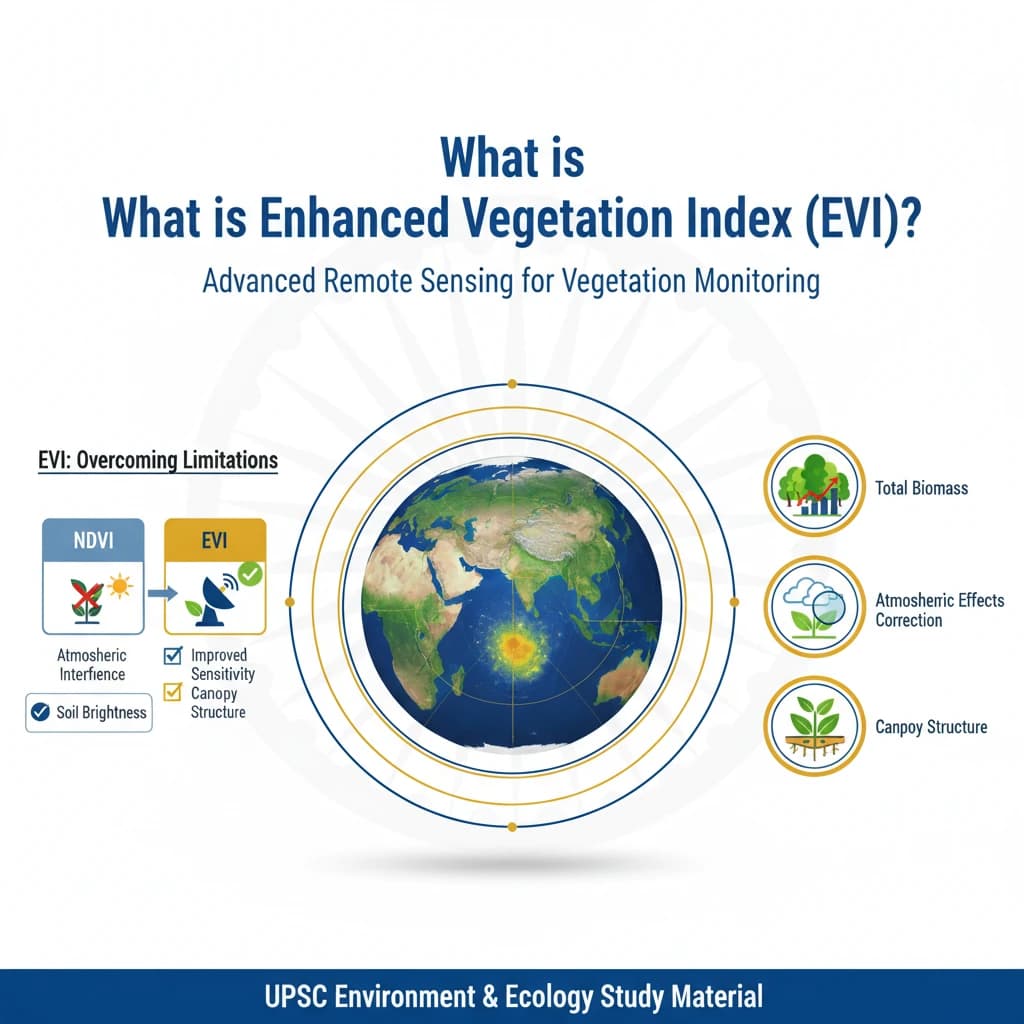
<h4>What is Enhanced Vegetation Index (EVI)?</h4><p>The <strong>Enhanced Vegetation Index (EVI)</strong> is an advanced remote sensing tool used for monitoring vegetation health and density. It was developed to overcome certain limitations of its predecessor, the <strong>Normalized Difference Vegetation Index (NDVI)</strong>.</p><p>EVI offers higher sensitivity to various environmental factors. These include the total <strong>biomass</strong> of vegetation, the effects of the <strong>atmospheric background</strong>, and the underlying <strong>soil condition</strong>. This makes it a more robust indicator for diverse ecological settings.</p><div class='key-point-box'><p><strong>Key Concept: EVI as a Refined Index</strong></p><p>EVI is essentially a modified and improved version of the <strong>Normalized Difference Vegetation Index (NDVI)</strong>. Its primary advantage lies in its enhanced capability for <strong>vegetation monitoring</strong> by actively correcting for <strong>external noises</strong>.</p></div><h4>EVI Value Range and Interpretation</h4><p>The values generated by the <strong>Enhanced Vegetation Index (EVI)</strong> typically range from <strong>0 to 1</strong>. This standardized scale allows for consistent comparison across different regions and time periods.</p><div class='info-box'><p><strong>Interpreting EVI Values:</strong></p><ul><li>Values <strong>closer to 1</strong> indicate very <strong>healthy and dense vegetation</strong>, often associated with high photosynthetic activity.</li><li>Values <strong>closer to 0</strong> suggest <strong>unhealthy or sparse vegetation</strong>, bare soil, or non-vegetated areas.</li></ul></div><p>This range provides a clear and intuitive metric for assessing vegetation vigor, making it invaluable for environmental scientists and policymakers.</p>
Concept Diagram

💡 Key Takeaways

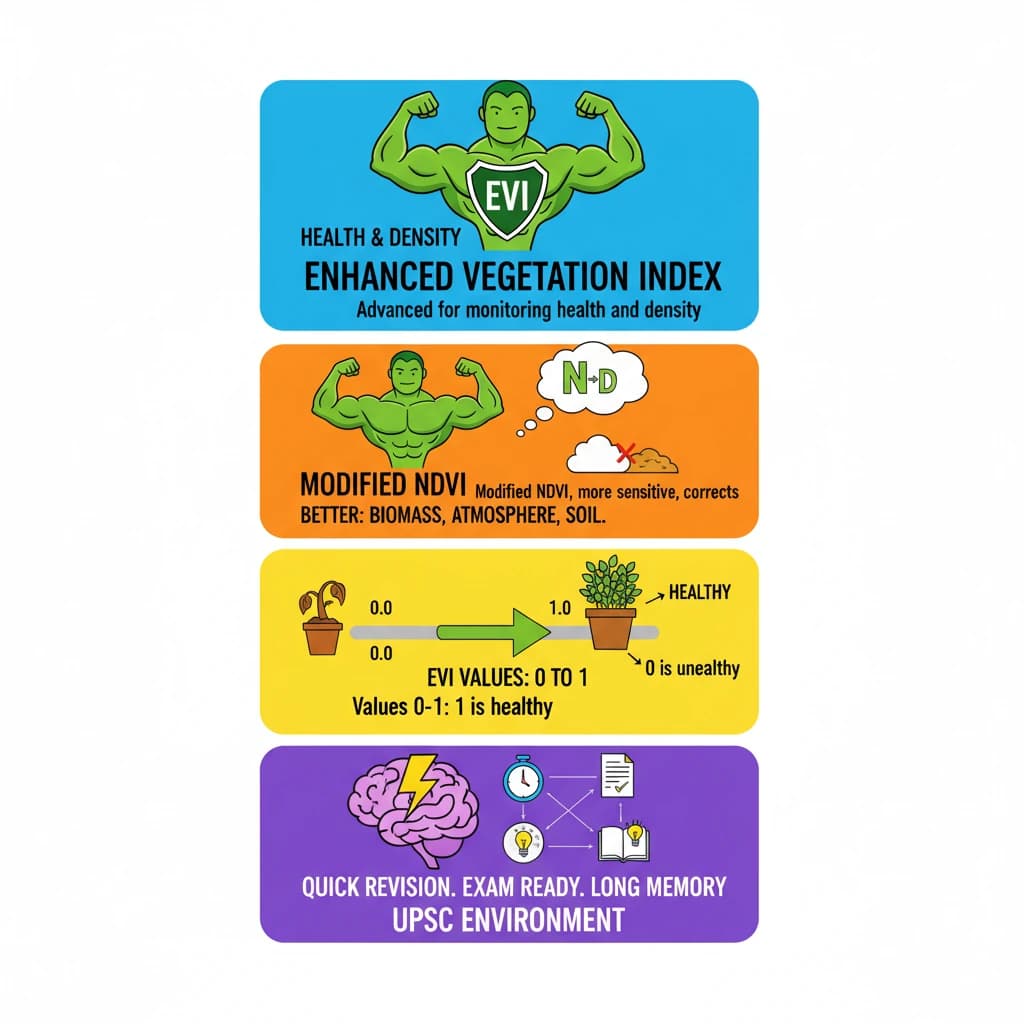
  • •Enhanced Vegetation Index (EVI) is an advanced vegetation index for monitoring health and density.
  • •EVI is a modified version of NDVI, offering higher sensitivity to biomass, atmospheric, and soil conditions.
  • •It corrects for 'external noises' like atmospheric effects and soil background, which affect NDVI.
  • •EVI values range from 0 to 1; closer to 1 indicates healthy vegetation, closer to 0 indicates unhealthy/sparse.
  • •Used in agriculture for yield prediction, forest monitoring, and drought assessment.

🧠 Memory Techniques
Memory Aid
95% Verified Content

📚 Reference Sources

•NASA Earth Observatory - EVI Explained
•USGS - Vegetation Indices
•MODIS Vegetation Index Product User's Guide

Related Topics

Loading related topics...
Explore:Environment And Ecology Topics·All Subjects·Daily Current Affairs·Editorial Analysis·Previous Year Questions·UPSC GPT