Loading page, please wait…
Vaidra Logo
Vaidra

Top 4 items + smart groups

UPSC GPT
New
Current Affairs
Daily Solutions
Daily Puzzle
Mains Evaluator

Version 2.0.0 • Built with ❤️ for UPSC aspirants

Loading...
Loading...
Loading...
Loading...
Loading...
Loading...
Loading...
Loading...
Loading...
Loading...
Loading...
Loading...
Loading...
Back
All Subjects

Topics

0 topics • 0 completed

Loading topics...
Loading...
Loading...
Loading...
Loading...
Loading...
Overall Progress0%

What are Biofuels? - UPSC Environment And Ecology

What is What are Biofuels? in UPSC Environment And Ecology?

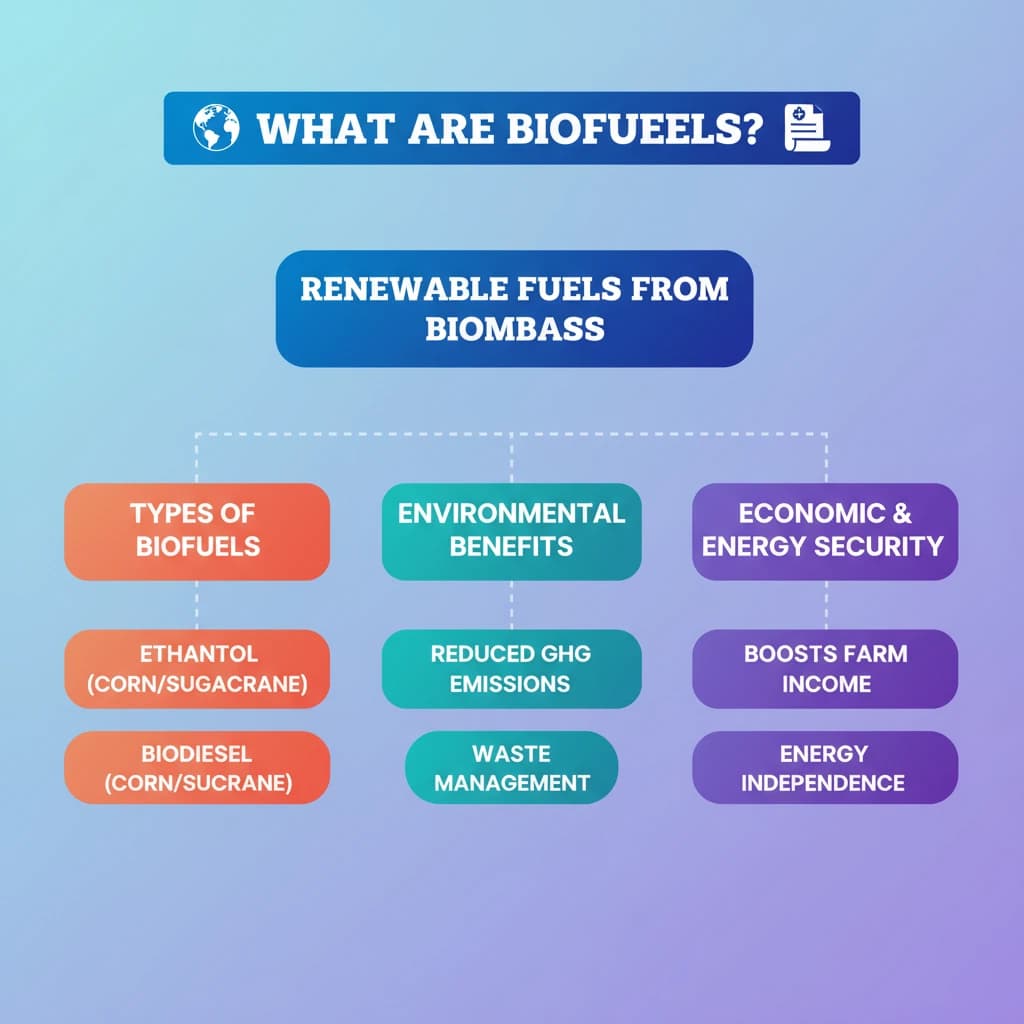
What are Biofuels? is a key topic under Environment And Ecology for UPSC Civil Services Examination. Key points include: Biofuels are renewable fuels derived from plant or animal biomass, like corn, sugarcane, or animal waste.. The most common types are Ethanol (from fermentation of crop residues, blended with petroleum) and Biodiesel (from oils/fats via transesterification).. They offer significant environmental benefits by reducing greenhouse gas emissions and improving waste management.. Understanding this topic is essential for both UPSC Prelims and Mains preparation.

Why is What are Biofuels? important for UPSC exam?

What are Biofuels? is a Medium-level topic in UPSC Environment And Ecology. It is tested in both Prelims (factual MCQs) and Mains (analytical answer writing). Previous year UPSC questions have frequently covered aspects of What are Biofuels?, making it essential for comprehensive IAS preparation.

How to prepare What are Biofuels? for UPSC?

To prepare What are Biofuels? for UPSC: (1) Study the comprehensive notes covering all key concepts on Vaidra. (2) Practice previous year questions on this topic. (3) Connect it with current affairs using daily updates. (4) Revise using key takeaways and mind maps available for Environment And Ecology. (5) Write practice answers linking What are Biofuels? to related GS Paper topics.

Key takeaways of What are Biofuels? for UPSC

  • Biofuels are renewable fuels derived from plant or animal biomass, like corn, sugarcane, or animal waste.
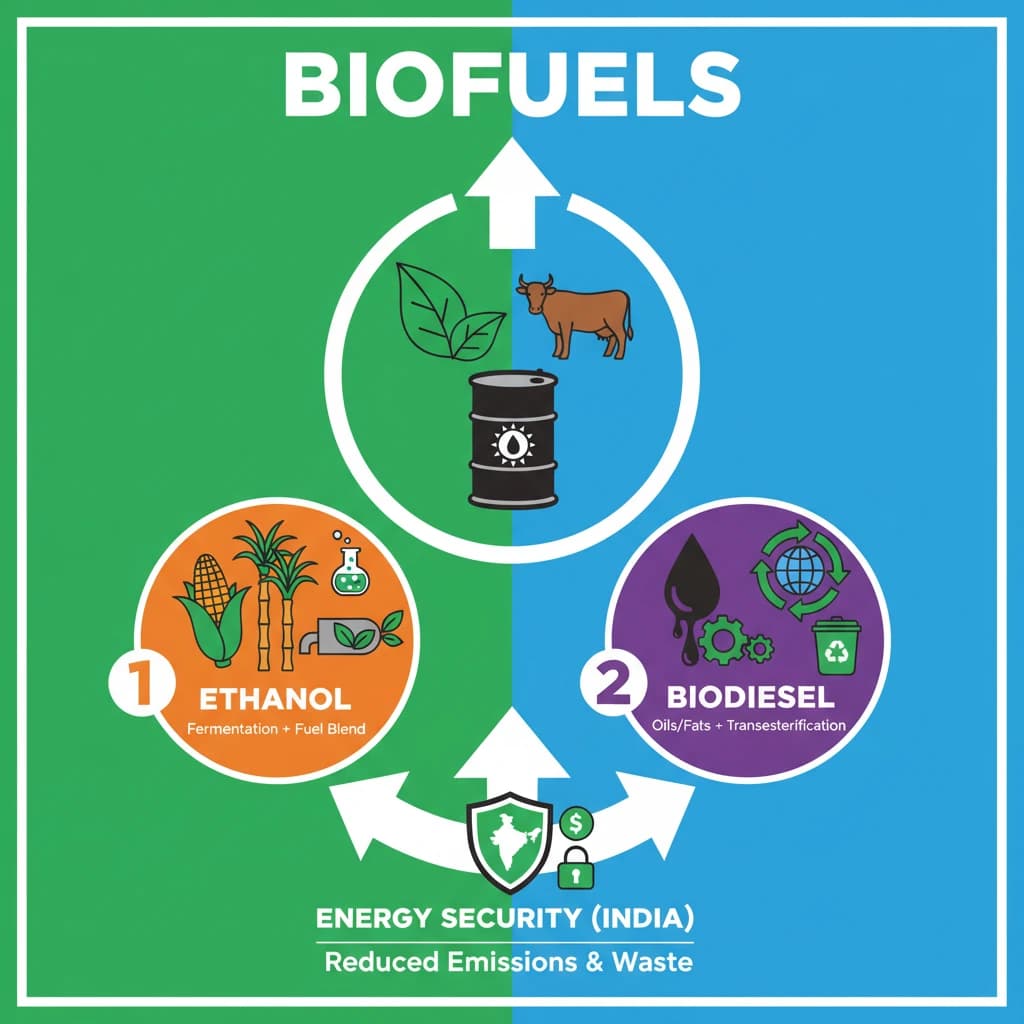
  • The most common types are Ethanol (from fermentation of crop residues, blended with petroleum) and Biodiesel (from oils/fats via transesterification).
  • They offer significant environmental benefits by reducing greenhouse gas emissions and improving waste management.
  • Biofuels enhance energy security, especially for import-dependent nations like India, by providing a domestic energy source.
  • Economically, they reduce import bills, boost farm incomes, and address crop surpluses.
  • India's National Policy on Biofuels (2018) and initiatives like EBP and SATAT highlight their current strategic importance.
What are Biofuels?

What are Biofuels?

Medium⏱️ 7 min read✓ 95% Verified
environment and ecology

📖 Introduction

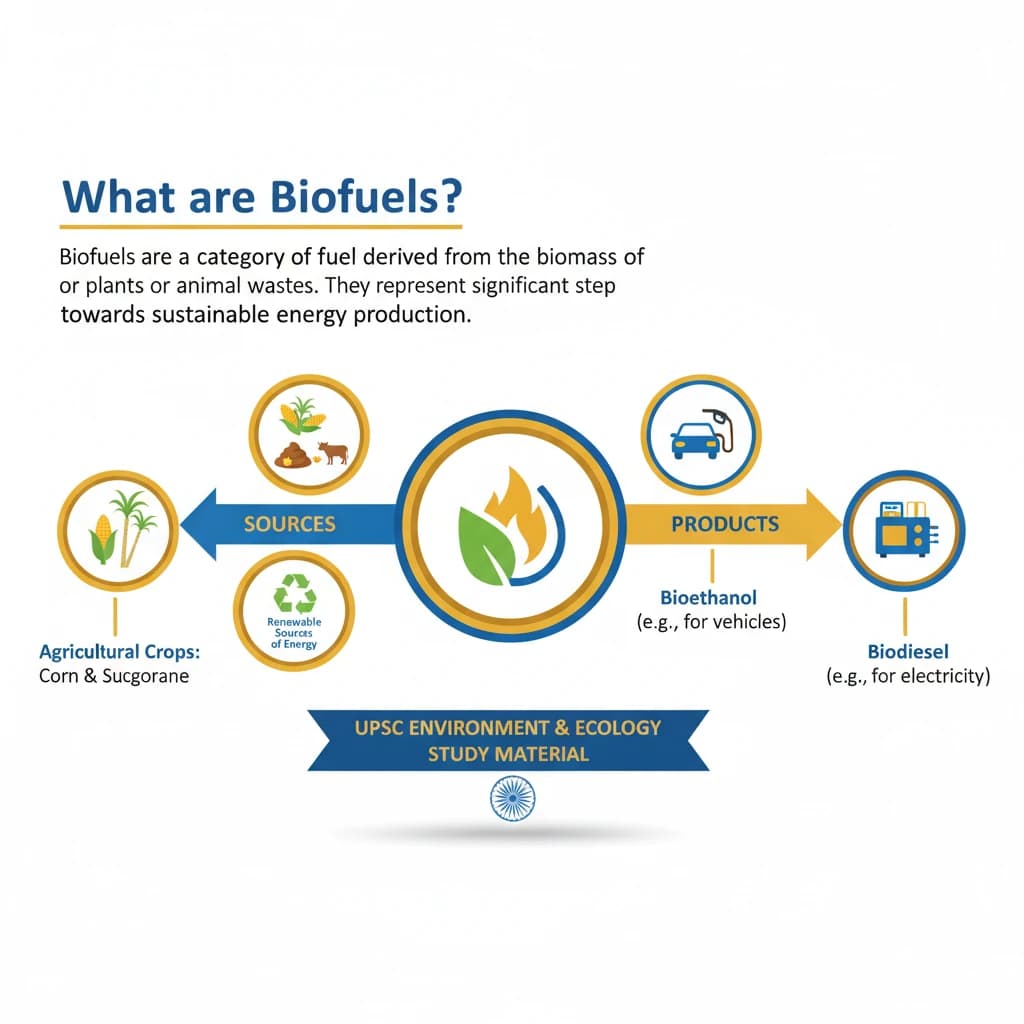
<h4>What are Biofuels?</h4><p><strong>Biofuels</strong> are a category of fuel derived from the <strong>biomass</strong> of plants or animal wastes. They represent a significant step towards sustainable energy production.</p><p>Common sources for <strong>biofuel</strong> production include agricultural crops like <strong>corn</strong> and <strong>sugarcane</strong>, as well as animal waste such as <strong>cow dung</strong>. These fuels are classified as <strong>renewable sources of energy</strong>.</p><div class='info-box'><p><strong>Definition:</strong> <strong>Biofuels</strong> are liquid or gaseous fuels produced from biomass, offering a renewable alternative to fossil fuels.</p></div><h4>Most Common Biofuels</h4><p>Two primary types of <strong>biofuels</strong> are widely recognized and utilized: <strong>Ethanol</strong> and <strong>Biodiesel</strong>.</p><h4>Ethanol</h4><p><strong>Ethanol</strong> is primarily produced through the <strong>fermentation</strong> of crop residues. Key feedstocks include <strong>corn</strong> and <strong>sugarcane</strong>.</p><p>After the fermentation process, <strong>ethanol</strong> is typically mixed with <strong>petroleum</strong>. This blending helps in reducing overall emissions from conventional fuels.</p><div class='info-box'><p>The most common blend is <strong>Ethanol-10 (E10)</strong>, which contains <strong>10% ethanol</strong> mixed with 90% gasoline.</p></div><p>The purity of <strong>ethanol</strong> varies based on its application. Fuel-grade <strong>ethanol</strong> requires a very high purity level.</p><div class='info-box'><p><strong>Ethanol Purity Levels:</strong><ul><li><strong>99.9% pure alcohol:</strong> Used in fuel applications.</li><li><strong>96% extra neutral alcohol:</strong> Used in potable liquor.</li><li><strong>94% rectified spirit:</strong> Found in industrial products like paints, cosmetics, and pharmaceuticals.</li></ul></p></div><h4>Biodiesel</h4><p><strong>Biodiesel</strong> is another significant <strong>biofuel</strong>. It is a <strong>renewable</strong> and <strong>biodegradable fuel</strong> derived from various organic sources.</p><p>Typical feedstocks for <strong>biodiesel</strong> include <strong>used cooking oil</strong>, recycled <strong>restaurant grease</strong>, <strong>yellow grease</strong>, or various types of <strong>animal fats</strong>.</p><p>The production process for <strong>biodiesel</strong> involves a chemical reaction where oil or fat is reacted with <strong>alcohol</strong> in the presence of a <strong>catalyst</strong>.</p><h4>Significance of Biofuels</h4><p><strong>Biofuels</strong> offer a multitude of benefits, addressing critical challenges in environmental sustainability, energy security, and economic development.</p><div class='key-point-box'><h4>Environmental Benefits</h4><p><strong>Biofuels</strong> are vital for promoting <strong>environmental sustainability</strong>. They help mitigate several negative impacts associated with <strong>fossil fuel</strong> use.</p><ul><li>They contribute to reducing <strong>greenhouse gas emissions</strong>, a major cause of climate change.</li><li>They lessen reliance on finite <strong>fossil fuel resources</strong>, combating resource depletion.</li><li>The utilization of organic waste for biofuel production also offers improved <strong>waste management solutions</strong>.</li></ul></div><div class='key-point-box'><h4>Energy Security</h4><p>For nations like <strong>India</strong>, <strong>biofuels</strong> play a crucial role in enhancing <strong>energy security</strong>. India is the <strong>world’s third-largest crude oil consumer</strong>.</p><p>The country imports over <strong>85% of its crude oil</strong> requirements. With rapidly rising energy demand, reducing this heavy reliance on imports is paramount.</p><p><strong>Biofuels</strong> provide a domestic, renewable alternative, thereby strengthening national <strong>energy security</strong>.</p></div><div class='key-point-box'><h4>Economic Benefits</h4><p>The adoption of <strong>biofuels</strong> can yield significant economic advantages for India.</p><ul><li>They can substantially reduce <strong>India’s oil import bill</strong>, saving valuable foreign exchange.</li><li>The production of biofuels, especially from agricultural produce, can significantly <strong>boost farm incomes</strong>.</li><li>They offer a sustainable solution for managing <strong>surplus production</strong> of crops like <strong>corn</strong> and <strong>sugarcane</strong>, providing farmers with an alternative market.</li></ul></div><div class='key-point-box'><h4>Abundant Availability</h4><p>One of the key advantages of <strong>biofuels</strong> is their diverse and abundant availability of feedstocks. They can be produced from a wide range of sources.</p><p>These sources include various <strong>crops</strong>, organic <strong>waste materials</strong>, and even <strong>algae</strong>, ensuring a broad and sustainable supply chain.</p></div>
Concept Diagram

💡 Key Takeaways

  • •Biofuels are renewable fuels derived from plant or animal biomass, like corn, sugarcane, or animal waste.
  • •The most common types are Ethanol (from fermentation of crop residues, blended with petroleum) and Biodiesel (from oils/fats via transesterification).
  • •They offer significant environmental benefits by reducing greenhouse gas emissions and improving waste management.
  • •Biofuels enhance energy security, especially for import-dependent nations like India, by providing a domestic energy source.
  • •Economically, they reduce import bills, boost farm incomes, and address crop surpluses.
  • •India's National Policy on Biofuels (2018) and initiatives like EBP and SATAT highlight their current strategic importance.

🧠 Memory Techniques
Memory Aid
95% Verified Content

📚 Reference Sources

•National Policy on Biofuels (2018), Ministry of Petroleum and Natural Gas, Government of India

Related Topics

Loading related topics...
Explore:Environment And Ecology Topics·All Subjects·Daily Current Affairs·Editorial Analysis·Previous Year Questions·UPSC GPT
What are Biofuels? - UPSC Environment And Ecology