Loading page, please wait…
Vaidra Logo
Vaidra

Top 4 items + smart groups

UPSC GPT
New
Current Affairs
Daily Solutions
Daily Puzzle
Mains Evaluator

Version 2.0.0 • Built with ❤️ for UPSC aspirants

Loading...
Loading...
Loading...
Loading...
Loading...
Loading...
Loading...
Loading...
Loading...
Loading...
Loading...
Loading...
Loading...
Back
All Subjects

Topics

0 topics • 0 completed

Loading topics...
Loading...
Loading...
Loading...
Loading...
Loading...
Overall Progress0%

Conservation of Cephalopods - UPSC Environment And Ecology

What is Conservation of Cephalopods in UPSC Environment And Ecology?

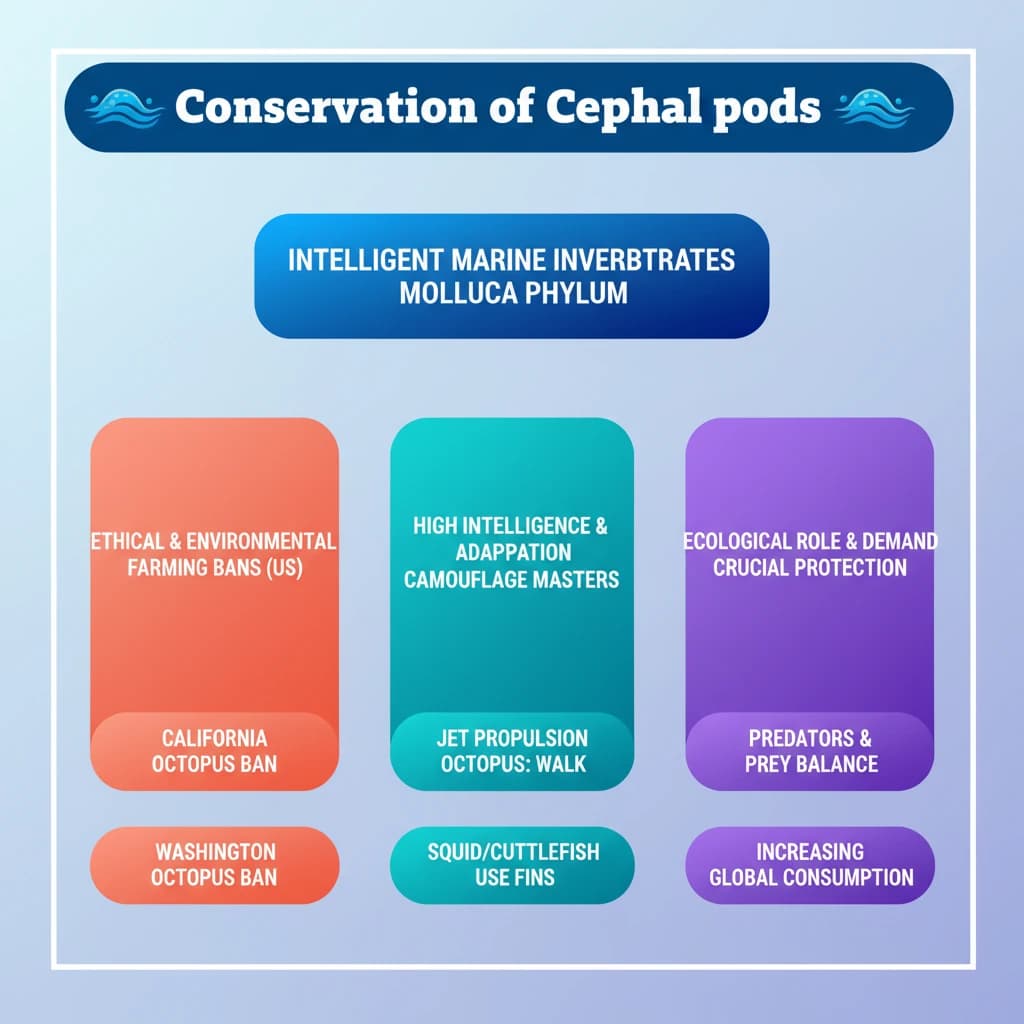
Conservation of Cephalopods is a key topic under Environment And Ecology for UPSC Civil Services Examination. Key points include: Cephalopods (octopuses, squid, cuttlefish, nautiluses) are intelligent marine invertebrates within the Mollusca phylum.. Recent bans on octopus farming in California and Washington highlight ethical and environmental concerns.. Cephalopods evolved from shelled ancestors, developing high intelligence, flexible arms, and advanced camouflage.. Understanding this topic is essential for both UPSC Prelims and Mains preparation.

Why is Conservation of Cephalopods important for UPSC exam?

Conservation of Cephalopods is a Easy-level topic in UPSC Environment And Ecology. It is tested in both Prelims (factual MCQs) and Mains (analytical answer writing). Previous year UPSC questions have frequently covered aspects of Conservation of Cephalopods, making it essential for comprehensive IAS preparation.

How to prepare Conservation of Cephalopods for UPSC?

To prepare Conservation of Cephalopods for UPSC: (1) Study the comprehensive notes covering all key concepts on Vaidra. (2) Practice previous year questions on this topic. (3) Connect it with current affairs using daily updates. (4) Revise using key takeaways and mind maps available for Environment And Ecology. (5) Write practice answers linking Conservation of Cephalopods to related GS Paper topics.

Key takeaways of Conservation of Cephalopods for UPSC

  • Cephalopods (octopuses, squid, cuttlefish, nautiluses) are intelligent marine invertebrates within the Mollusca phylum.
  • Recent bans on octopus farming in California and Washington highlight ethical and environmental concerns.
  • Cephalopods evolved from shelled ancestors, developing high intelligence, flexible arms, and advanced camouflage.
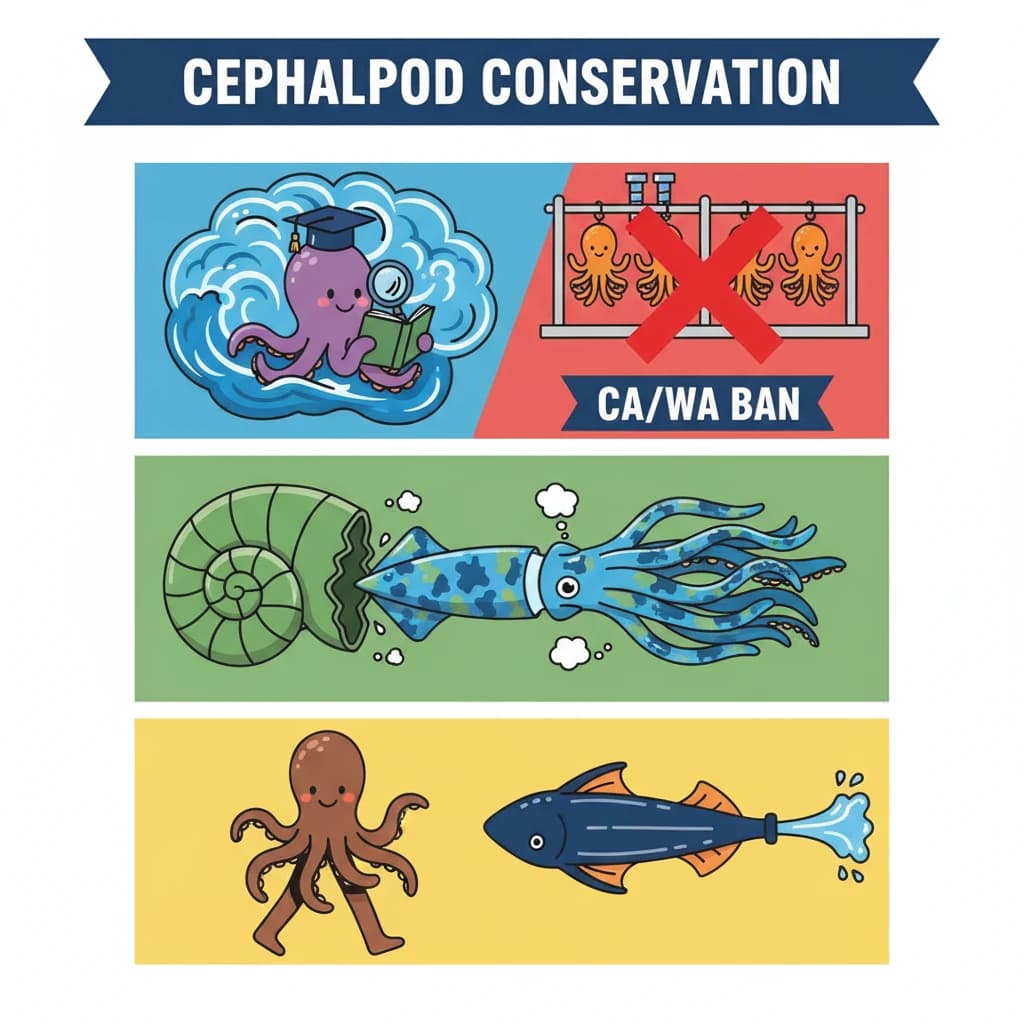
  • They use jet propulsion for movement; octopuses walk, while squid/cuttlefish use fins.
  • Conservation efforts are crucial due to their ecological role and increasing demand for their meat.
Conservation of Cephalopods

Conservation of Cephalopods

Easy⏱️ 4 min read✓ 98% Verified
environment and ecology

📖 Introduction

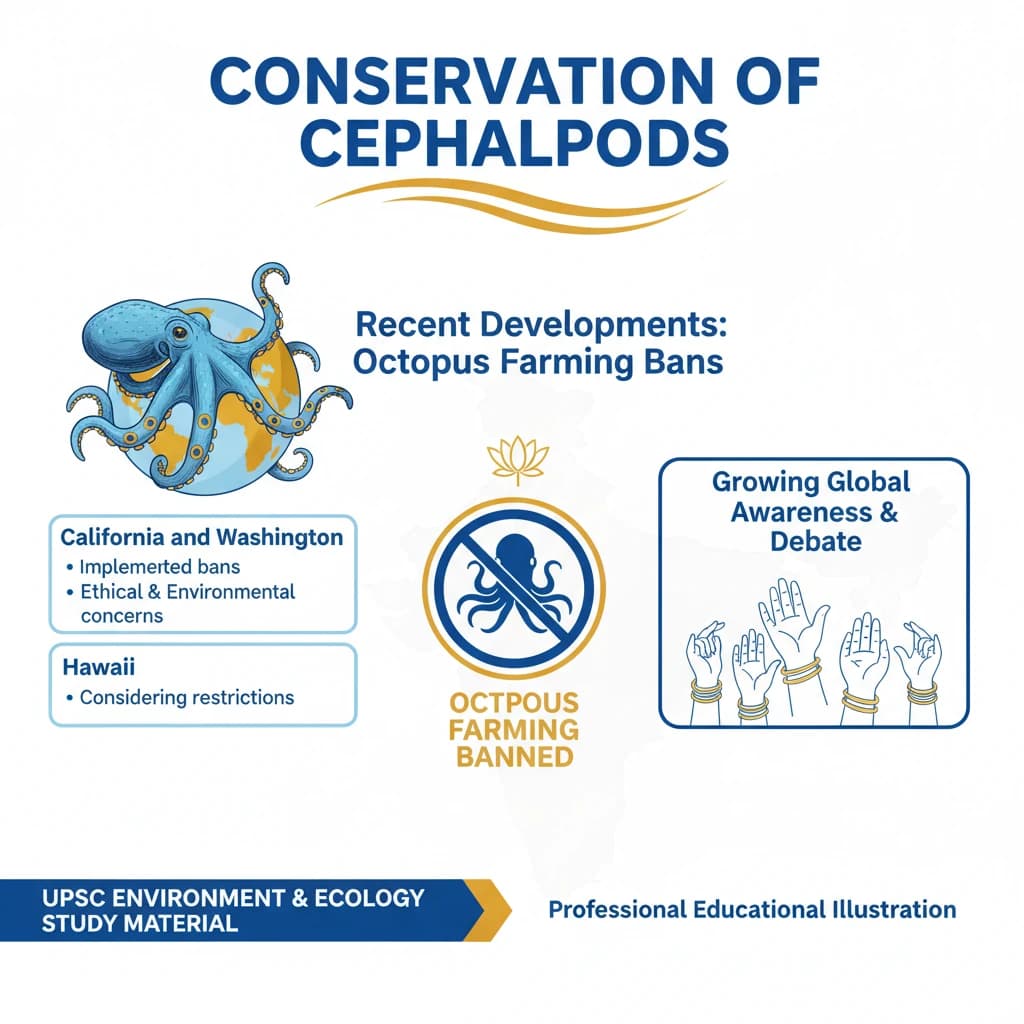
<h4>Recent Developments: Octopus Farming Bans</h4><p>The states of <strong>California</strong> and <strong>Washington</strong> have recently implemented bans on <strong>octopus farming</strong>. These decisions stem from significant <strong>ethical</strong> and <strong>environmental concerns</strong> surrounding the practice.</p><p><strong>Hawaii</strong> is also actively considering similar restrictions. This trend reflects a growing global awareness and debate about the implications of farming highly intelligent marine invertebrates, especially given the increasing demand for <strong>octopus meat</strong>.</p><div class='exam-tip-box'><p><strong>UPSC Relevance:</strong> This topic connects to <strong>GS-III Environment</strong> (conservation, sustainable practices) and <strong>GS-IV Ethics</strong> (animal welfare, human-animal relationship).</p></div><h4>What are Cephalopods?</h4><p><strong>Cephalopods</strong> are a fascinating class of marine animals. They are characterized as <strong>ocean-dwelling intelligent invertebrates</strong>, meaning they lack a backbone and possess advanced cognitive abilities.</p><div class='info-box'><p><strong>Definition:</strong> <strong>Cephalopods</strong> belong to the phylum <strong>Mollusca</strong>, which includes soft-bodied invertebrates often protected by a calcium carbonate shell. They are a highly evolved group within this phylum.</p></div><p>Historically, early cephalopods featured protective shells. However, many species evolved to lose these shells, developing unique traits such as <strong>high intelligence</strong>, incredibly <strong>flexible arms</strong>, and sophisticated <strong>camouflage capabilities</strong>.</p><h4>Diversity of Cephalopods</h4><p>The class <strong>Cephalopoda</strong> exhibits remarkable diversity, broadly categorized into three distinct superorders:</p><ul><li><strong>Octopodiforms:</strong> This group primarily includes <strong>octopuses</strong> and their closely related species, known for their eight arms.</li><li><strong>Decapodiforms:</strong> This superorder encompasses species like <strong>squid</strong>, <strong>cuttlefish</strong>, and other ten-armed cephalopods.</li><li><strong>Nautiloids:</strong> This ancient lineage includes <strong>nautiluses</strong> and their relatives, notable for retaining an external shell.</li></ul><div class='key-point-box'><p><strong>Key Distinction:</strong> While most cephalopods have lost their external shells, <strong>Nautiluses</strong> are the only extant cephalopods that still possess a prominent external shell.</p></div><h4>Cephalopod Anatomy: "Head-Foot" Connection</h4><p>The term <strong>"cephalopod"</strong> literally translates to <strong>"head foot"</strong>. This name aptly describes their unique anatomical structure, where their head is directly connected to their arms or tentacles.</p><p>All cephalopods share common anatomical features, including <strong>two eyes</strong> and at least <strong>eight arms</strong>. For instance, <strong>octopuses</strong> are known for their eight arms, while <strong>squids</strong> typically have ten arms (eight arms and two longer tentacles).</p><h4>Eyes and Vision: Masters of Camouflage</h4><p>Most cephalopods are believed to be <strong>colorblind</strong>. Despite this, they are renowned for their exceptional ability to exhibit <strong>visual camouflage</strong>, adapting their appearance to blend seamlessly with their surroundings.</p><p>This incredible camouflage is achieved through specialized structures just below their skin. They possess tiny sacs containing <strong>colored pigments</strong> and <strong>reflectors</strong>, which they can rapidly open and close to display specific colors and patterns.</p><h4>Movement and Locomotion</h4><p>The primary mode of locomotion for most cephalopods is <strong>jet propulsion</strong>. They achieve this by expelling water forcefully from their <strong>mantle cavity</strong>, propelling themselves through the water.</p><p>However, movement varies across different cephalopod groups. <strong>Octopuses</strong> are also observed to walk using their flexible arms on the seafloor, while <strong>squid</strong> and <strong>cuttlefish</strong> primarily utilize fins for more controlled movement and steering.</p>
Concept Diagram

💡 Key Takeaways

  • •Cephalopods (octopuses, squid, cuttlefish, nautiluses) are intelligent marine invertebrates within the Mollusca phylum.
  • •Recent bans on octopus farming in California and Washington highlight ethical and environmental concerns.
  • •Cephalopods evolved from shelled ancestors, developing high intelligence, flexible arms, and advanced camouflage.
  • •They use jet propulsion for movement; octopuses walk, while squid/cuttlefish use fins.
  • •Conservation efforts are crucial due to their ecological role and increasing demand for their meat.

🧠 Memory Techniques
Memory Aid
98% Verified Content

Related Topics

Loading related topics...
Explore:Environment And Ecology Topics·All Subjects·Daily Current Affairs·Editorial Analysis·Previous Year Questions·UPSC GPT
Conservation of Cephalopods - UPSC Environment And Ecology