Loading page, please wait…
Vaidra Logo
Vaidra

Top 4 items + smart groups

UPSC GPT
New
Current Affairs
Daily Solutions
Daily Puzzle
Mains Evaluator

Version 2.0.0 • Built with ❤️ for UPSC aspirants

Loading...
Loading...
Loading...
Loading...
Loading...
Loading...
Loading...
Loading...
Loading...
Loading...
Loading...
Loading...
Loading...
Back
All Subjects

Topics

0 topics • 0 completed

Loading topics...
Loading...
Loading...
Loading...
Loading...
Loading...
Overall Progress0%

Great Barrier Reef (GBR) - UPSC Environment And Ecology

What is Great Barrier Reef (GBR) in UPSC Environment And Ecology?

Great Barrier Reef (GBR) is a key topic under Environment And Ecology for UPSC Civil Services Examination. Key points include: GBR is the world's largest coral reef system, located off Queensland, Australia.. It's a UNESCO World Heritage site (1981) known for immense biodiversity.. Faces "serious threat" from pollution and warming oceans, as warned by UNESCO in 2023.. Understanding this topic is essential for both UPSC Prelims and Mains preparation.

Why is Great Barrier Reef (GBR) important for UPSC exam?

Great Barrier Reef (GBR) is a Medium-level topic in UPSC Environment And Ecology. It is tested in both Prelims (factual MCQs) and Mains (analytical answer writing). Previous year UPSC questions have frequently covered aspects of Great Barrier Reef (GBR), making it essential for comprehensive IAS preparation.

How to prepare Great Barrier Reef (GBR) for UPSC?

To prepare Great Barrier Reef (GBR) for UPSC: (1) Study the comprehensive notes covering all key concepts on Vaidra. (2) Practice previous year questions on this topic. (3) Connect it with current affairs using daily updates. (4) Revise using key takeaways and mind maps available for Environment And Ecology. (5) Write practice answers linking Great Barrier Reef (GBR) to related GS Paper topics.

Key takeaways of Great Barrier Reef (GBR) for UPSC

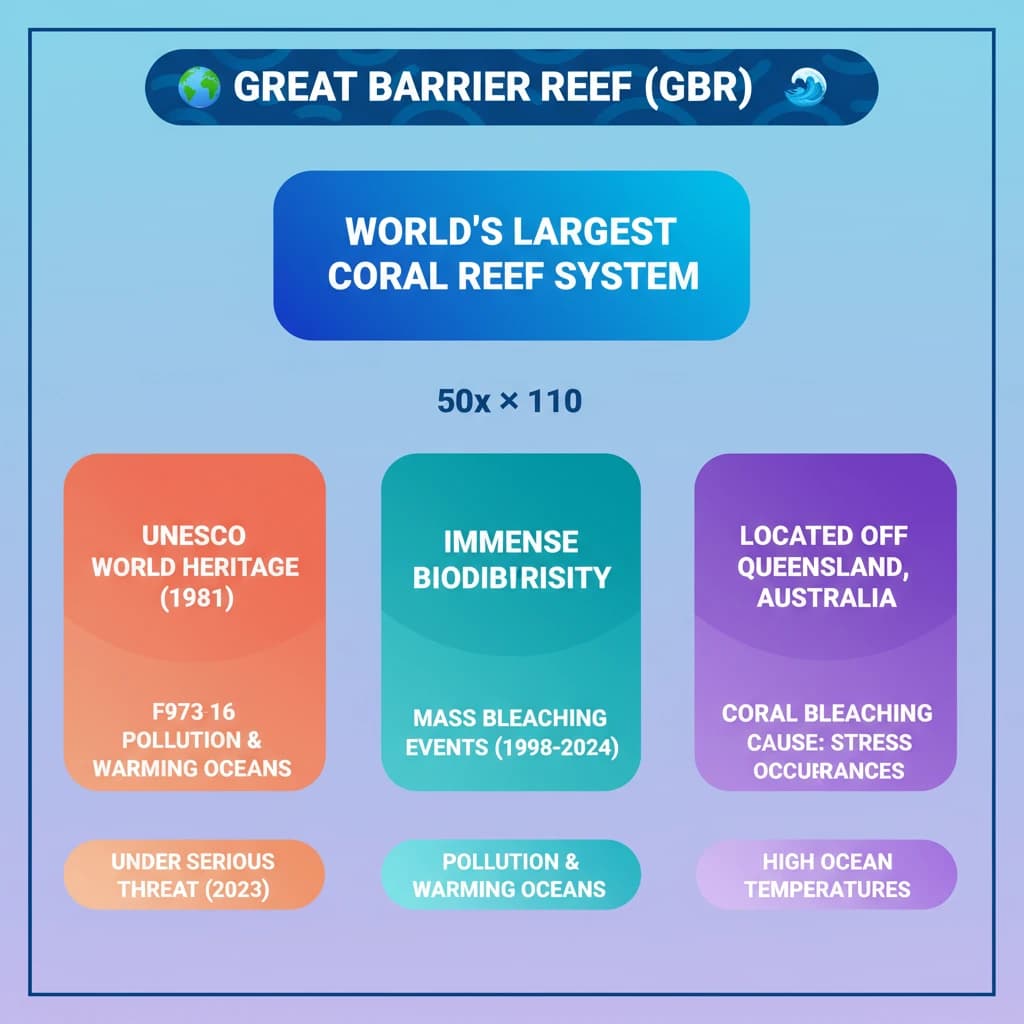
  • GBR is the world's largest coral reef system, located off Queensland, Australia.
  • It's a UNESCO World Heritage site (1981) known for immense biodiversity.
  • Faces "serious threat" from pollution and warming oceans, as warned by UNESCO in 2023.
  • Has experienced multiple widespread mass bleaching events (1998, 2002, 2016, 2017, 2020, 2022, 2024).
  • Coral bleaching is caused by stress, primarily high ocean temperatures, leading to coral death.
Great Barrier Reef (GBR)

Great Barrier Reef (GBR)

Medium⏱️ 7 min read✓ 95% Verified
environment and ecology

📖 Introduction

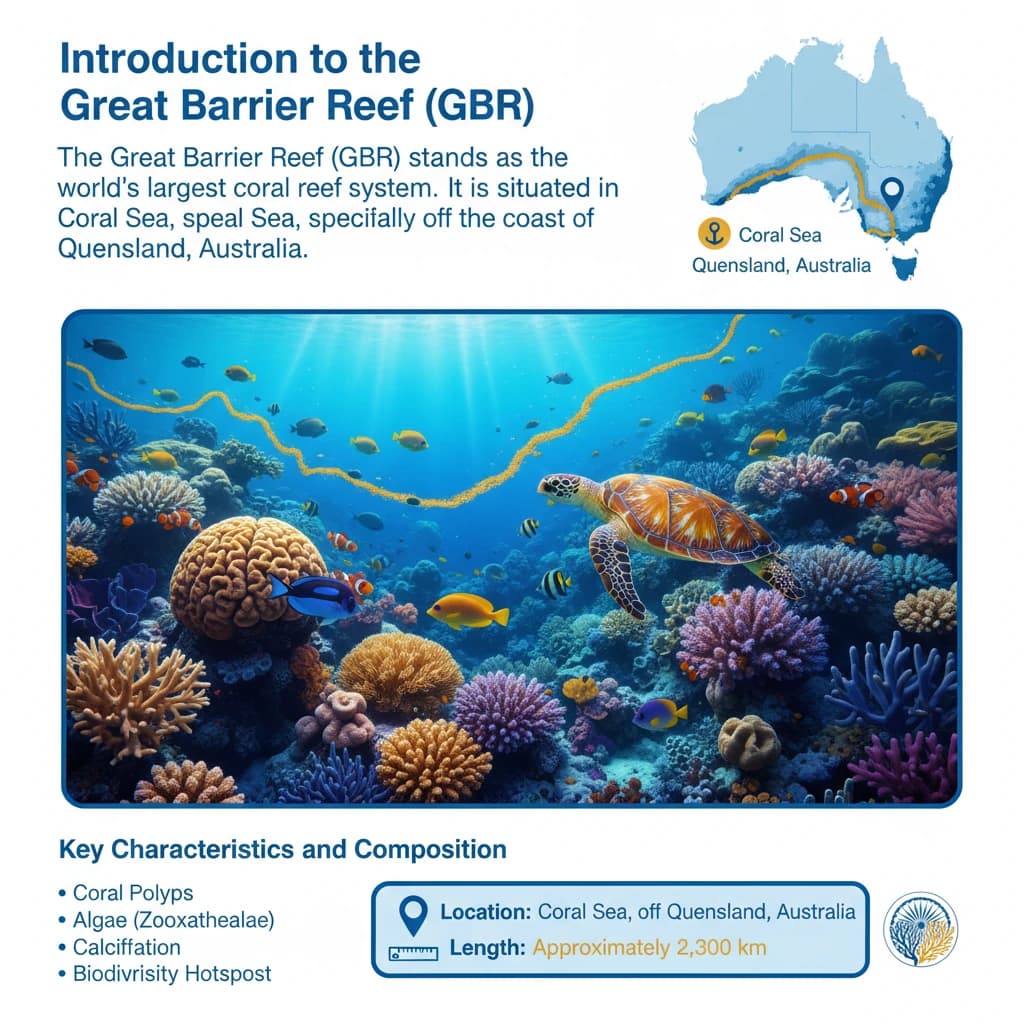
<h4>Introduction to the Great Barrier Reef (GBR)</h4><p>The <strong>Great Barrier Reef (GBR)</strong> stands as the <strong>world's largest coral reef system</strong>. It is situated in the <strong>Coral Sea</strong>, specifically off the coast of <strong>Queensland, Australia</strong>.</p><div class='info-box'><p>📍 <strong>Location:</strong> Coral Sea, off Queensland, Australia</p><p>📏 <strong>Length:</strong> Approximately <strong>2,300 km</strong></p></div><h4>Key Characteristics and Composition</h4><p>This immense natural wonder is not a single entity but a complex network. It comprises around <strong>3,000 individual reefs</strong> and features approximately <strong>900 islands</strong> scattered across its vast expanse.</p><h4>Rich Biodiversity of the GBR</h4><p>The <strong>GBR</strong> is renowned for its incredible biodiversity, supporting a wide array of marine life. It is home to a remarkable diversity of coral species and numerous fish species.</p><ul><li><strong>Coral Species:</strong> Over <strong>400 types</strong> of coral thrive within the reef system.</li><li><strong>Fish Species:</strong> Approximately <strong>1,500 species</strong> of fish inhabit these waters.</li><li><strong>Endangered Species:</strong> Critical habitat for endangered animals such as the <strong>dugong</strong> and the <strong>large green turtle</strong>.</li></ul><h4>UNESCO World Heritage Status</h4><p>Recognizing its outstanding universal value, the <strong>Great Barrier Reef</strong> was designated a <strong>UNESCO World Heritage site</strong>. This inscription underscores its global significance for natural heritage.</p><div class='info-box'><p>📅 <strong>UNESCO Inscription Year:</strong> <strong>1981</strong></p><p>⭐ <strong>Status:</strong> UNESCO World Heritage site</p></div><h4>Persistent Threats and Mass Bleaching Events</h4><p>Despite its protected status, the <strong>GBR</strong> faces severe environmental challenges. The primary threats include <strong>pollution</strong> and the escalating impacts of <strong>warming oceans</strong>, leading to widespread <strong>coral bleaching</strong>.</p><div class='key-point-box'><p><strong>Coral Bleaching:</strong> This phenomenon occurs when corals expel algae (zooxanthellae) living in their tissues, causing them to turn white and often leading to their death if conditions do not improve.</p></div><p>The reef has experienced multiple severe mass bleaching events over the past few decades, indicating the ongoing stress from climate change.</p><div class='info-box'><p>📅 <strong>Major Mass Bleaching Events:</strong></p><ul><li><strong>1998</strong> (First widespread event)</li><li><strong>2002</strong></li><li><strong>2016</strong></li><li><strong>2017</strong></li><li><strong>2020</strong></li><li><strong>2022</strong></li><li><strong>2024</strong> (Most recent event)</li></ul></div><h4>Recent UNESCO Committee Deliberations (2023)</h4><p>In <strong>2023</strong>, the <strong>UNESCO Heritage Committee</strong> reviewed the status of the <strong>GBR</strong>. While they chose not to list it as a site <strong>"in danger"</strong> at that time, they issued a stark warning.</p><div class='exam-tip-box'><p>⚡ <strong>UPSC Insight:</strong> The <strong>2023 UNESCO decision</strong> highlights the delicate balance between conservation efforts and geopolitical considerations. Understanding the reasons for not listing it "in danger" versus the warning of "serious threat" is crucial for Mains answers.</p></div><p>The committee explicitly stated that the world's largest coral reef ecosystem remained under <strong>"serious threat"</strong> from persistent <strong>pollution</strong> and the escalating issue of <strong>warming oceans</strong>.</p>
Concept Diagram

💡 Key Takeaways

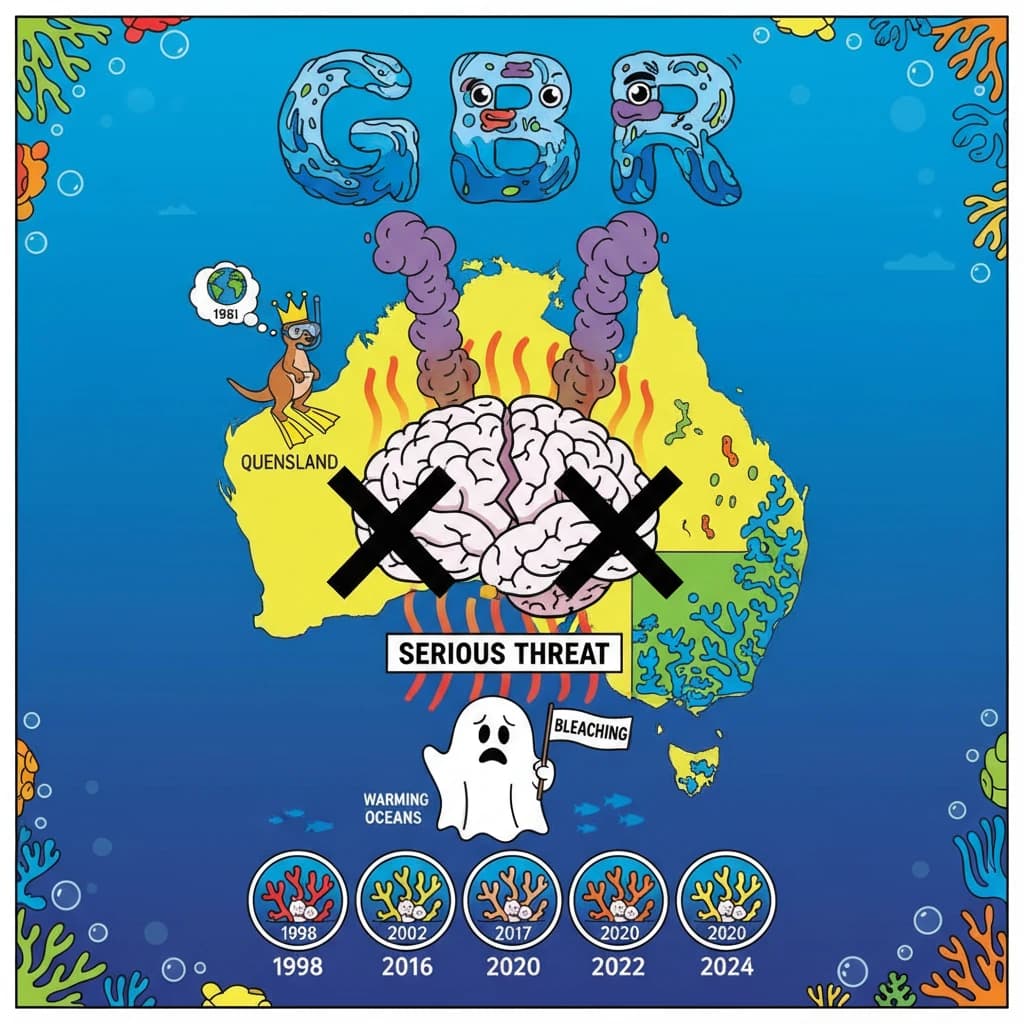
  • •GBR is the world's largest coral reef system, located off Queensland, Australia.
  • •It's a UNESCO World Heritage site (1981) known for immense biodiversity.
  • •Faces "serious threat" from pollution and warming oceans, as warned by UNESCO in 2023.
  • •Has experienced multiple widespread mass bleaching events (1998, 2002, 2016, 2017, 2020, 2022, 2024).
  • •Coral bleaching is caused by stress, primarily high ocean temperatures, leading to coral death.

🧠 Memory Techniques
Memory Aid
95% Verified Content

📚 Reference Sources

•UNESCO World Heritage Centre website
•Australian Institute of Marine Science (AIMS) reports
•NOAA Coral Reef Watch

Related Topics

Loading related topics...
Explore:Environment And Ecology Topics·All Subjects·Daily Current Affairs·Editorial Analysis·Previous Year Questions·UPSC GPT
Great Barrier Reef (GBR) - UPSC Environment And Ecology