Loading page, please wait…
Vaidra Logo
Vaidra

Top 4 items + smart groups

UPSC GPT
New
Current Affairs
Daily Solutions
Daily Puzzle
Mains Evaluator

Version 2.0.0 • Built with ❤️ for UPSC aspirants

Loading...
Loading...
Loading...
Loading...
Loading...
Loading...
Loading...
Loading...
Loading...
Loading...
Loading...
Loading...
Loading...
Back
All Subjects

Topics

0 topics • 0 completed

Loading topics...
Loading...
Loading...
Loading...
Loading...
Loading...
Overall Progress0%

GCF to Help Vulnerable Nations - UPSC Environment And Ecology

What is GCF to Help Vulnerable Nations in UPSC Environment And Ecology?

GCF to Help Vulnerable Nations is a key topic under Environment And Ecology for UPSC Civil Services Examination. Key points include: GCF committed to aiding vulnerable nations, especially SIDS, with climate finance.. Barbados Programme of Action (1994) and SAMOA Pathway (2014) are key SIDS development frameworks.. CDRI (2019), led by India, and iRAF (USD 50M) focus on infrastructure resilience.. Understanding this topic is essential for both UPSC Prelims and Mains preparation.

Why is GCF to Help Vulnerable Nations important for UPSC exam?

GCF to Help Vulnerable Nations is a Medium-level topic in UPSC Environment And Ecology. It is tested in both Prelims (factual MCQs) and Mains (analytical answer writing). Previous year UPSC questions have frequently covered aspects of GCF to Help Vulnerable Nations, making it essential for comprehensive IAS preparation.

How to prepare GCF to Help Vulnerable Nations for UPSC?

To prepare GCF to Help Vulnerable Nations for UPSC: (1) Study the comprehensive notes covering all key concepts on Vaidra. (2) Practice previous year questions on this topic. (3) Connect it with current affairs using daily updates. (4) Revise using key takeaways and mind maps available for Environment And Ecology. (5) Write practice answers linking GCF to Help Vulnerable Nations to related GS Paper topics.

Key takeaways of GCF to Help Vulnerable Nations for UPSC

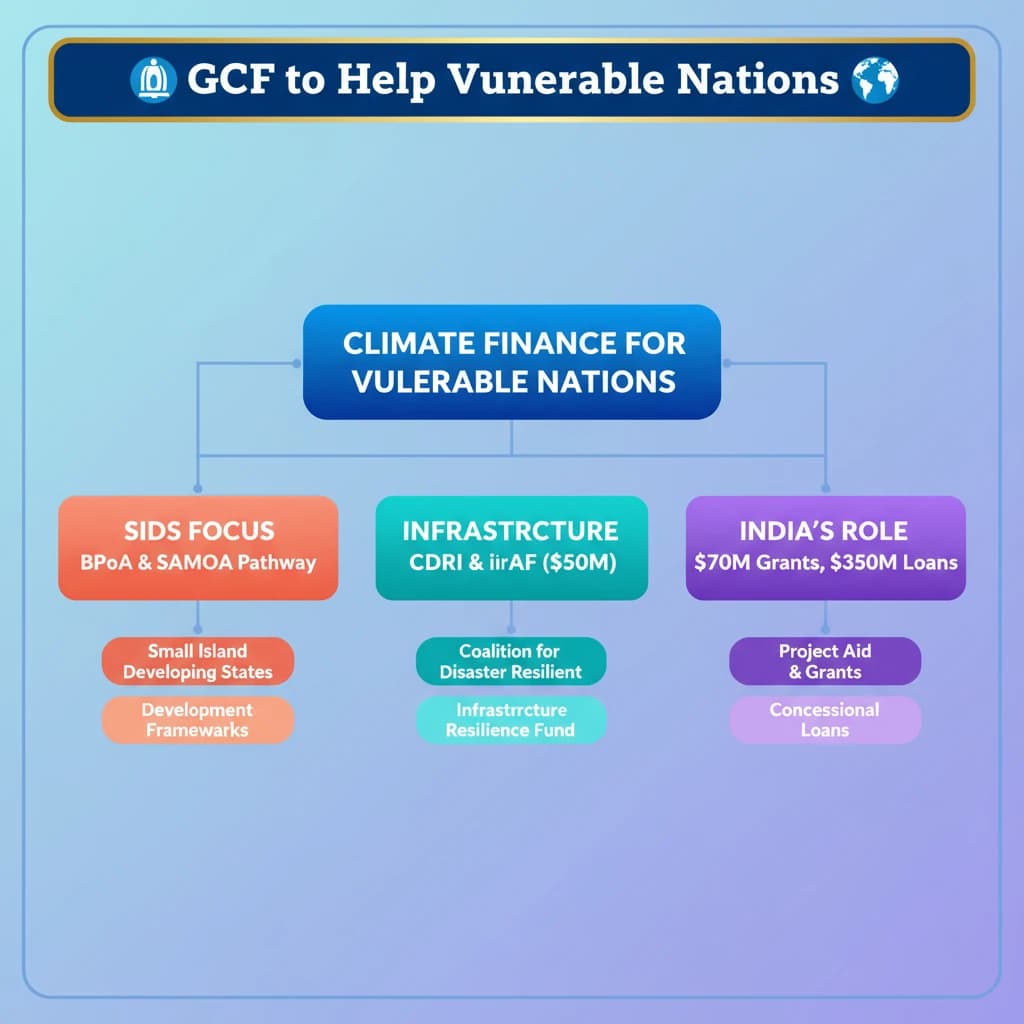
  • GCF committed to aiding vulnerable nations, especially SIDS, with climate finance.
  • Barbados Programme of Action (1994) and SAMOA Pathway (2014) are key SIDS development frameworks.
  • CDRI (2019), led by India, and iRAF (USD 50M) focus on infrastructure resilience.
  • India provides significant project aid (USD 70M) and concessional loans (USD 350M) to SIDS.
  • International cooperation and climate finance are critical for SIDS' sustainable development and climate action.
GCF to Help Vulnerable Nations

GCF to Help Vulnerable Nations

Medium⏱️ 6 min read✓ 95% Verified
environment and ecology

📖 Introduction

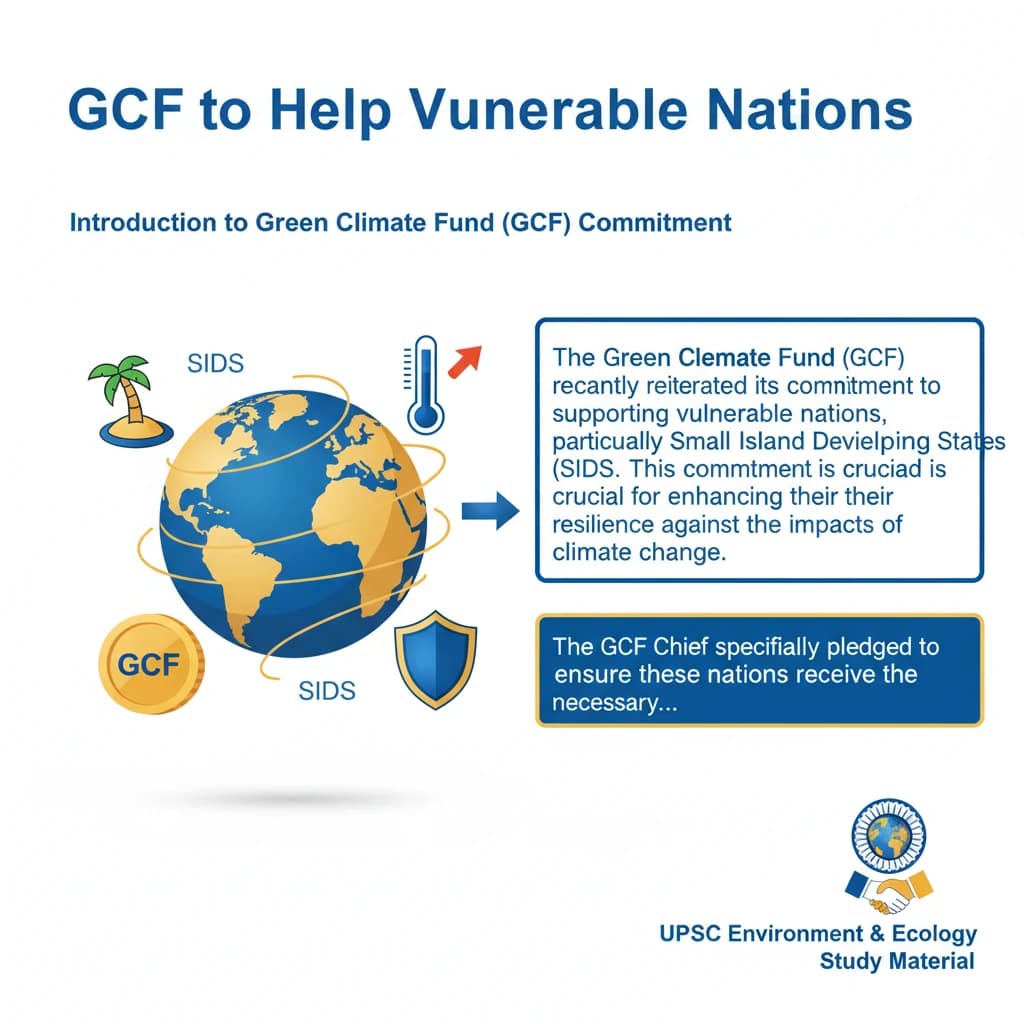
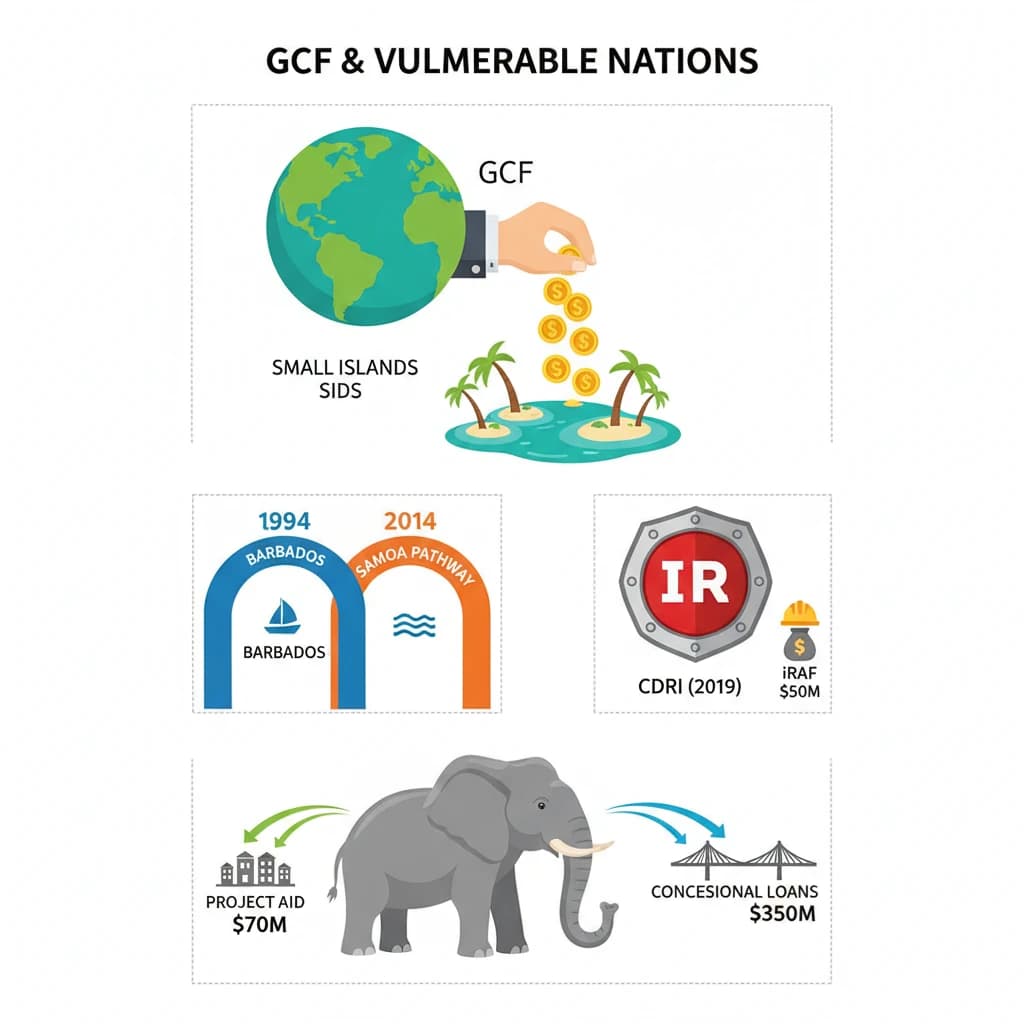
<h4>Introduction to Green Climate Fund (GCF) Commitment</h4><p>The <strong>Green Climate Fund (GCF)</strong> recently reiterated its commitment to supporting <strong>vulnerable nations</strong>, particularly <strong>Small Island Developing States (SIDS)</strong>. This commitment is crucial for enhancing their resilience against the impacts of <strong>climate change</strong>.</p><div class='info-box'><p>The <strong>GCF Chief</strong> specifically pledged to ensure these nations receive the necessary financial assistance and support to address their unique climate vulnerabilities.</p></div><h4>Barbados Programme of Action (BPOA)</h4><p>The <strong>Barbados Programme of Action (BPOA)</strong> was established in <strong>1994</strong>. It emerged from the <strong>UN Global Conference on the Sustainable Development of SIDS</strong>, held in <strong>Barbados</strong>.</p><div class='key-point-box'><p>Its primary objective is to address the specific vulnerabilities of <strong>SIDS</strong>, which include threats from <strong>climate change</strong>, <strong>sea-level rise</strong>, and <strong>climate variability</strong>.</p></div><h4>SAMOA Pathway (Small Island Developing States Accelerated Modalities of Action)</h4><p>The <strong>SAMOA Pathway</strong> was adopted in <strong>2014</strong> during the <strong>Third International Conference on Small Island Developing States</strong>.</p><p>This pathway aims to tackle the distinct challenges faced by <strong>SIDS</strong>. It emphasizes supporting their development through enhanced <strong>international cooperation</strong> and robust <strong>climate action</strong>.</p><h4>Coalition for Disaster Resilient Infrastructure (CDRI)</h4><p>The <strong>Coalition for Disaster Resilient Infrastructure (CDRI)</strong> is a significant global partnership launched in <strong>2019</strong>. It was initiated under the leadership of the <strong>Government of India</strong>.</p><div class='info-box'><p>Supported by the <strong>UN Office for Disaster Risk Reduction (UNDRR)</strong>, <strong>CDRI</strong> aims to boost the resilience of infrastructure against <strong>climate and disaster risks</strong>, thereby promoting <strong>sustainable development</strong>.</p></div><h4>Infrastructure Resilience Accelerator Fund (iRAF)</h4><p>The <strong>Infrastructure Resilience Accelerator Fund (iRAF)</strong> was founded with strong backing from the <strong>United Nations Development Programme (UNDP)</strong> and the <strong>UNDRR</strong>.</p><div class='info-box'><p>This fund, totaling <strong>USD 50 million</strong>, is dedicated to supporting <strong>disaster resilience</strong>, with a particular focus on <strong>developing countries</strong> and <strong>Small Island Developing States (SIDS)</strong>.</p></div><h4>India's Assistance for Small Island Developing States (SIDS)</h4><p><strong>India</strong> has demonstrated a strong commitment to supporting <strong>SIDS</strong>. It has pledged a total of <strong>USD 70 million</strong> in project aid.</p><p>Additionally, <strong>India</strong> has extended <strong>USD 350 million</strong> in concessional loans and credit lines to these nations. This assistance supports their journey towards <strong>sustainable development</strong>, especially in combating <strong>climate change</strong>.</p>
Concept Diagram

💡 Key Takeaways

  • •GCF committed to aiding vulnerable nations, especially SIDS, with climate finance.
  • •Barbados Programme of Action (1994) and SAMOA Pathway (2014) are key SIDS development frameworks.
  • •CDRI (2019), led by India, and iRAF (USD 50M) focus on infrastructure resilience.
  • •India provides significant project aid (USD 70M) and concessional loans (USD 350M) to SIDS.
  • •International cooperation and climate finance are critical for SIDS' sustainable development and climate action.

🧠 Memory Techniques
Memory Aid
95% Verified Content

📚 Reference Sources

•UN Global Conference on the Sustainable Development of SIDS (1994) documentation
•Third International Conference on Small Island Developing States (2014) documentation
•Coalition for Disaster Resilient Infrastructure (CDRI) official website
•United Nations Development Programme (UNDP) and UN Office for Disaster Risk Reduction (UNDRR) reports

Related Topics

Loading related topics...
Explore:Environment And Ecology Topics·All Subjects·Daily Current Affairs·Editorial Analysis·Previous Year Questions·UPSC GPT
GCF to Help Vulnerable Nations - UPSC Environment And Ecology