Loading page, please wait…
Vaidra Logo
Vaidra

Top 4 items + smart groups

UPSC GPT
New
Current Affairs
Daily Solutions
Daily Puzzle
Mains Evaluator

Version 2.0.0 • Built with ❤️ for UPSC aspirants

Loading...
Loading...
Loading...
Loading...
Loading...
Loading...
Loading...
Loading...
Loading...
Loading...
Loading...
Loading...
Loading...
Back
All Subjects

Topics

0 topics • 0 completed

Loading topics...
Loading...
Loading...
Loading...
Loading...
Loading...
Overall Progress0%

Himalayan Magpies - UPSC Environment And Ecology

What is Himalayan Magpies in UPSC Environment And Ecology?

Himalayan Magpies is a key topic under Environment And Ecology for UPSC Civil Services Examination. Key points include: Himalayan magpies are captivating birds recently under increased research focus.. They inhabit mountainous landscapes from Kashmir to Myanmar.. They are important indicator species for Himalayan ecosystem health.. Understanding this topic is essential for both UPSC Prelims and Mains preparation.

Why is Himalayan Magpies important for UPSC exam?

Himalayan Magpies is a Medium-level topic in UPSC Environment And Ecology. It is tested in both Prelims (factual MCQs) and Mains (analytical answer writing). Previous year UPSC questions have frequently covered aspects of Himalayan Magpies, making it essential for comprehensive IAS preparation.

How to prepare Himalayan Magpies for UPSC?

To prepare Himalayan Magpies for UPSC: (1) Study the comprehensive notes covering all key concepts on Vaidra. (2) Practice previous year questions on this topic. (3) Connect it with current affairs using daily updates. (4) Revise using key takeaways and mind maps available for Environment And Ecology. (5) Write practice answers linking Himalayan Magpies to related GS Paper topics.

Key takeaways of Himalayan Magpies for UPSC

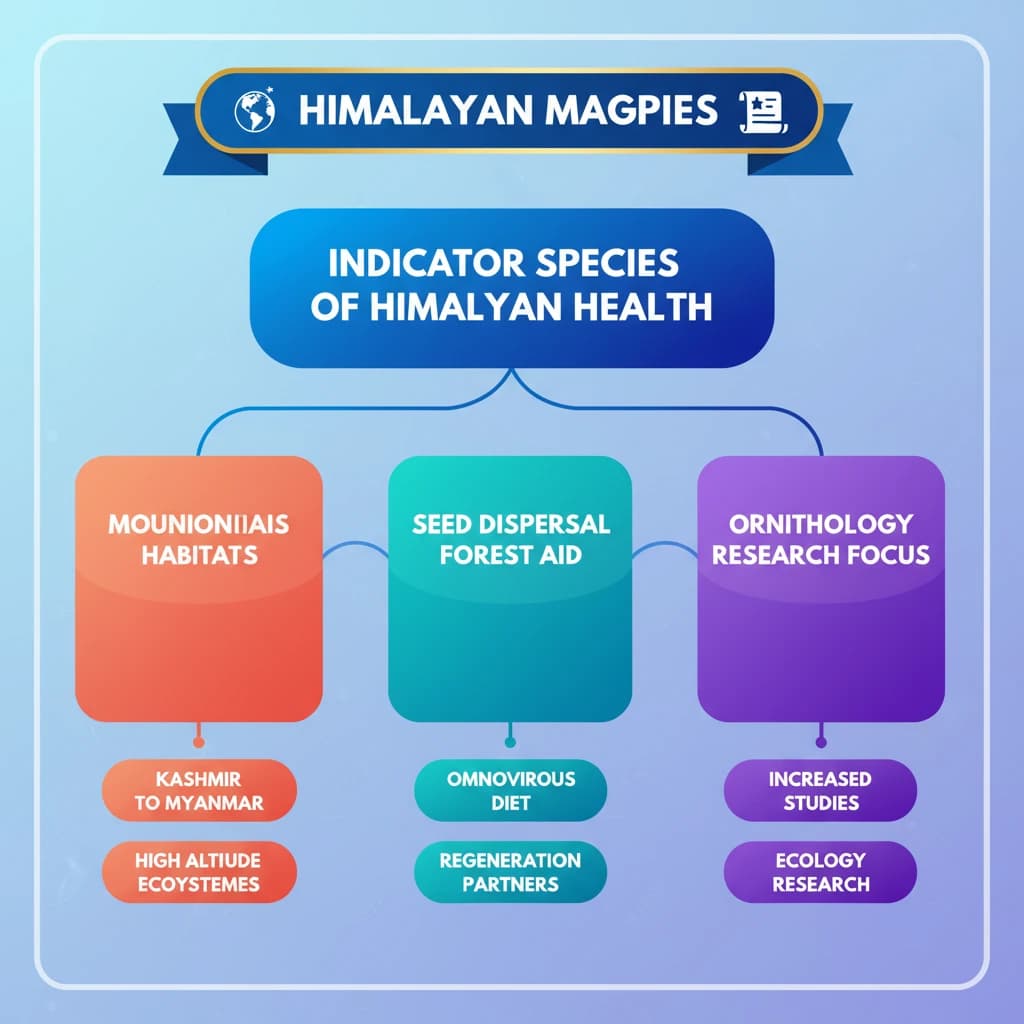
  • Himalayan magpies are captivating birds recently under increased research focus.
  • They inhabit mountainous landscapes from Kashmir to Myanmar.
  • They are important indicator species for Himalayan ecosystem health.
  • Their omnivorous diet includes seed dispersal, aiding forest regeneration.
  • Historical ornithological studies laid the groundwork for current research.
Himalayan Magpies

Himalayan Magpies

Medium⏱️ 6 min read✓ 90% Verified
environment and ecology

📖 Introduction

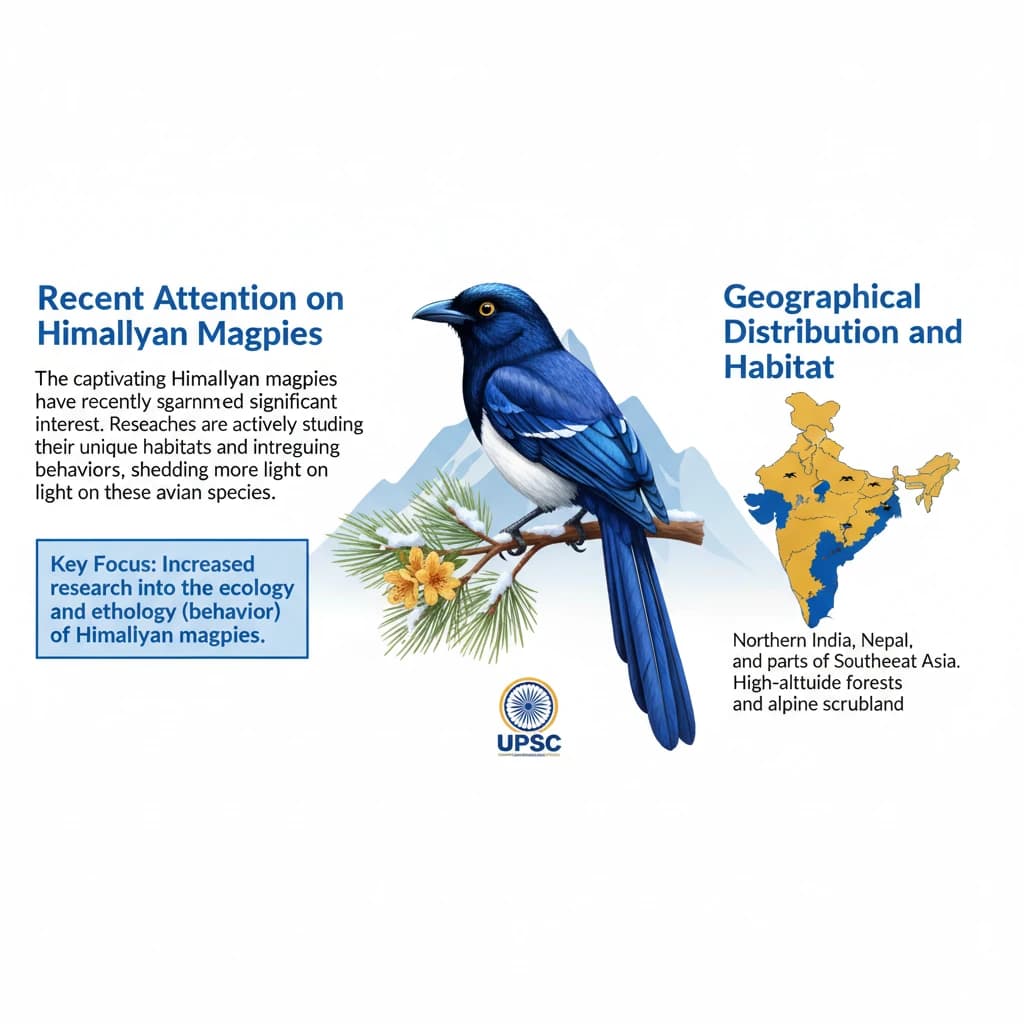
<h4>Recent Attention on Himalayan Magpies</h4><p>The captivating <strong>Himalayan magpies</strong> have recently garnered significant interest. Researchers are actively studying their unique <strong>habitats</strong> and intriguing <strong>behaviours</strong>, shedding more light on these avian species.</p><div class='info-box'><p><strong>Key Focus:</strong> Increased research into the ecology and ethology (behaviour) of Himalayan magpies.</p></div><h4>Geographical Distribution and Habitat</h4><p>These enchanting birds are prominent inhabitants of the majestic <strong>mountainous landscapes</strong> of the <strong>Himalayan region</strong>. Their distribution spans a vast area, extending from <strong>Kashmir</strong> in the west to <strong>Myanmar</strong> in the east.</p><p>They are known to add vibrant colours and sounds, contributing significantly to the biodiversity of these high-altitude ecosystems.</p><div class='key-point-box'><p><strong>Habitat Range:</strong> From <strong>Kashmir</strong> across the Himalayas to <strong>Myanmar</strong>.</p></div><div class='exam-tip-box'><p><strong>UPSC Insight:</strong> Questions on <strong>biodiversity hotspots</strong> often include specific species. Understanding the distribution and ecological role of indicator species like the <strong>Himalayan magpie</strong> can be crucial for Environment & Ecology papers (<strong>GS-III</strong>).</p></div>
Concept Diagram

💡 Key Takeaways

  • •Himalayan magpies are captivating birds recently under increased research focus.
  • •They inhabit mountainous landscapes from Kashmir to Myanmar.
  • •They are important indicator species for Himalayan ecosystem health.
  • •Their omnivorous diet includes seed dispersal, aiding forest regeneration.
  • •Historical ornithological studies laid the groundwork for current research.

🧠 Memory Techniques

Memory Aid
90% Verified Content

📚 Reference Sources

•BirdLife International Species Factsheets (General Avian Ecology)
•Journal of Himalayan Ecology and Conservation (General Himalayan Ecosystems)
•IUCN Red List (for general conservation status of similar species)

Related Topics

Loading related topics...
Explore:Environment And Ecology Topics·All Subjects·Daily Current Affairs·Editorial Analysis·Previous Year Questions·UPSC GPT
Himalayan Magpies - UPSC Environment And Ecology