Loading page, please wait…
Vaidra Logo
Vaidra

Top 4 items + smart groups

UPSC GPT
New
Current Affairs
Daily Solutions
Daily Puzzle
Mains Evaluator

Version 2.0.0 • Built with ❤️ for UPSC aspirants

Loading...
Loading...
Loading...
Loading...
Loading...
Loading...
Loading...
Loading...
Loading...
Loading...
Loading...
Loading...
Loading...
Back
All Subjects

Topics

0 topics • 0 completed

Loading topics...
Loading...
Loading...
Loading...
Loading...
Loading...
Overall Progress0%

Woody Encroachment in Grasslands - UPSC Environment And Ecology

What is Woody Encroachment in Grasslands in UPSC Environment And Ecology?

Woody Encroachment in Grasslands is a key topic under Environment And Ecology for UPSC Civil Services Examination. Key points include: Woody encroachment is the transformation of open grasslands into areas with higher tree/shrub density.. It is driven by climate change, increased CO2, and disruption of natural disturbance regimes (grazing, fire).. A study revealed it significantly reduces native grassland bird populations.. Understanding this topic is essential for both UPSC Prelims and Mains preparation.

Why is Woody Encroachment in Grasslands important for UPSC exam?

Woody Encroachment in Grasslands is a Medium-level topic in UPSC Environment And Ecology. It is tested in both Prelims (factual MCQs) and Mains (analytical answer writing). Previous year UPSC questions have frequently covered aspects of Woody Encroachment in Grasslands, making it essential for comprehensive IAS preparation.

How to prepare Woody Encroachment in Grasslands for UPSC?

To prepare Woody Encroachment in Grasslands for UPSC: (1) Study the comprehensive notes covering all key concepts on Vaidra. (2) Practice previous year questions on this topic. (3) Connect it with current affairs using daily updates. (4) Revise using key takeaways and mind maps available for Environment And Ecology. (5) Write practice answers linking Woody Encroachment in Grasslands to related GS Paper topics.

Key takeaways of Woody Encroachment in Grasslands for UPSC

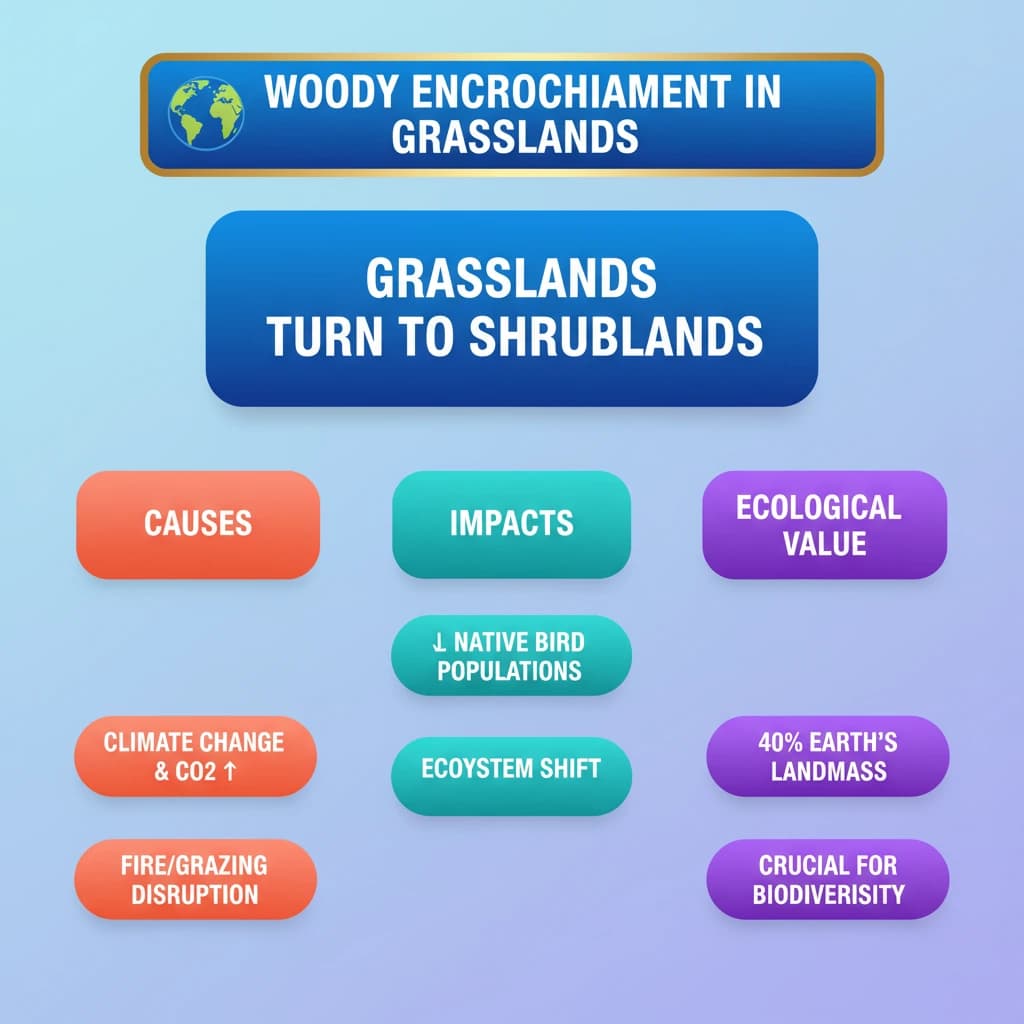
  • Woody encroachment is the transformation of open grasslands into areas with higher tree/shrub density.
  • It is driven by climate change, increased CO2, and disruption of natural disturbance regimes (grazing, fire).
  • A study revealed it significantly reduces native grassland bird populations.
  • Grasslands and savannahs cover 40% of Earth's landmass and are crucial for diverse species.
  • Increasing tree cover, while generally positive, can be detrimental to specific open ecosystems.
Woody Encroachment in Grasslands

Woody Encroachment in Grasslands

Medium⏱️ 8 min read✓ 95% Verified
environment and ecology

📖 Introduction

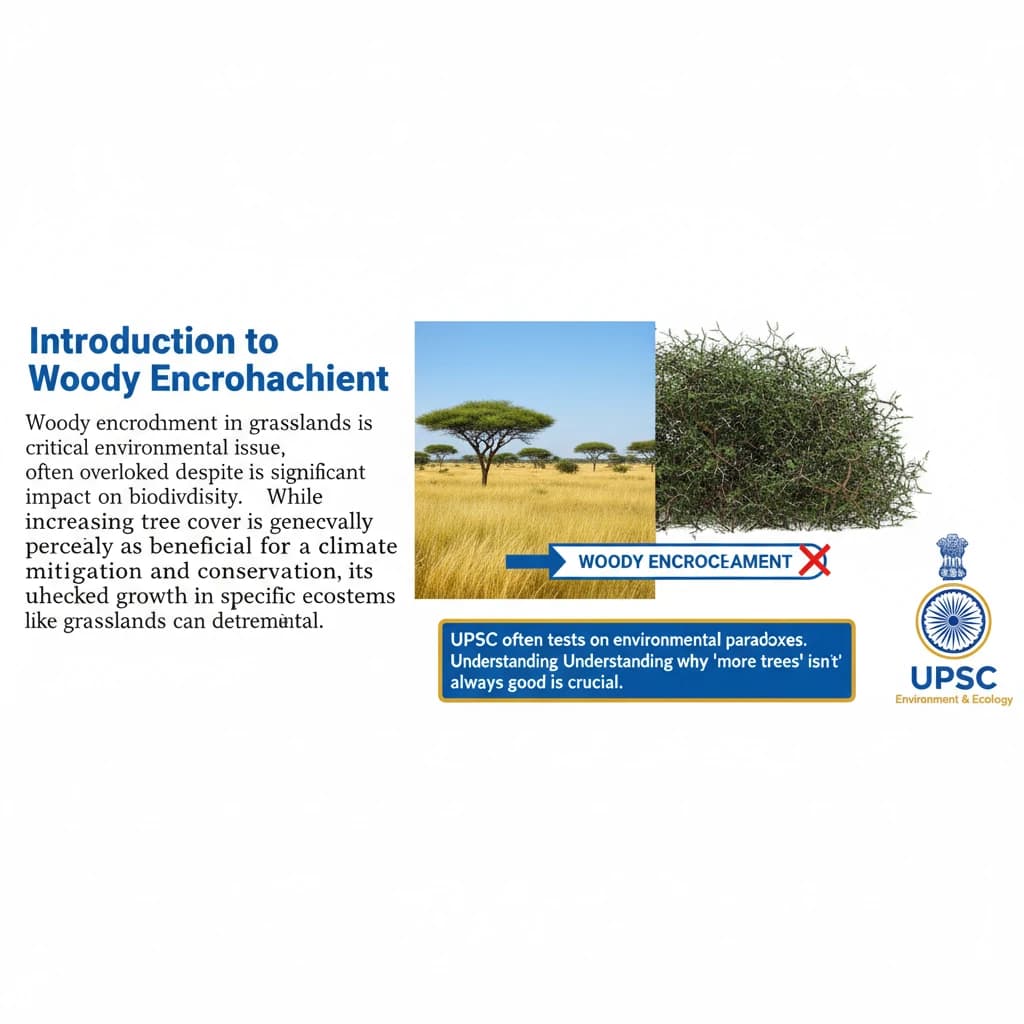
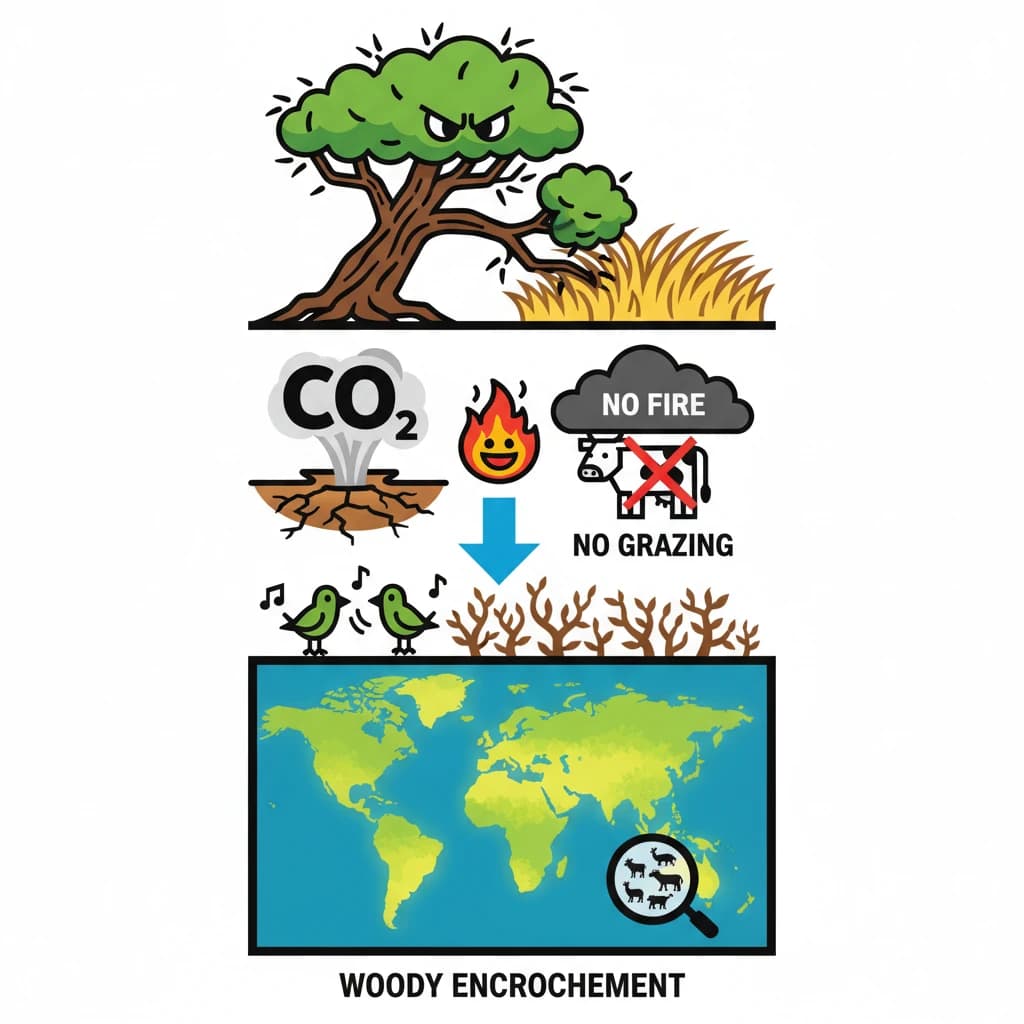
<h4>Introduction to Woody Encroachment</h4><p><strong>Woody encroachment</strong> in grasslands is a critical environmental issue, often overlooked despite its significant impact on biodiversity. While increasing tree cover is generally perceived as beneficial for climate change mitigation and conservation, its unchecked growth in specific ecosystems like grasslands can be detrimental.</p><div class='exam-tip-box'><p>UPSC often tests on environmental paradoxes. Understanding why 'more trees' isn't always good for all ecosystems, especially grasslands, is crucial for <strong>GS Paper III: Environment and Ecology</strong>.</p></div><h4>Recent Study Highlights Concerns</h4><p>A recent study, conducted by researchers from the <strong>Universities of Witwatersrand</strong>, <strong>Cape Town</strong>, and <strong>Oxford</strong>, brought attention to the negative consequences of woody encroachment. Their findings revealed that an increase in tree density in open ecosystems like <strong>savannahs</strong> and <strong>grasslands</strong> has led to a substantial reduction in native grassland bird populations.</p><div class='info-box'><p><strong>Study Finding:</strong> Increased tree cover in open ecosystems like savannahs and grasslands significantly reduces the number of <strong>native grassland birds</strong>.</p></div><h4>Understanding Grasslands and Savannahs</h4><p><strong>Grasslands</strong> and <strong>savannahs</strong> are vital and diverse habitats globally. They are found in both <strong>tropical</strong> and <strong>temperate regions</strong>, collectively covering approximately <strong>40% of the Earth’s landmass</strong>.</p><p>These ecosystems support a rich variety of species. They are home to large herbivores such as <strong>elephants</strong> and <strong>rhinoceroses</strong>, as well as unique grassland birds like <strong>bustards</strong> and <strong>floricans</strong>. Despite their ecological importance, these habitats are currently facing rapid decline due to various threats, including woody encroachment.</p><h4>Defining Woody Encroachment</h4><div class='key-point-box'><p><strong>Woody encroachment</strong> refers to the gradual process where open habitats, such as grasslands and savannahs, are transformed into areas with a higher density of <strong>trees</strong> and <strong>shrubs</strong>.</p></div><p>This process fundamentally alters the ecosystem structure. It results in the <strong>homogenization of ecosystems</strong>, meaning the diverse grassy understory, which supports unique flora and fauna, is replaced by a more uniform woody cover. This shift reduces habitat diversity and impacts species adapted to open environments.</p><h4>Factors Contributing to Woody Encroachment</h4><p>Several interconnected factors contribute to the phenomenon of woody encroachment:</p><ul><li><strong>Climate Change:</strong> Altered rainfall patterns and increased temperatures can favor woody species over grasses.</li><li><strong>Increased Atmospheric CO2:</strong> Higher levels of carbon dioxide in the atmosphere can enhance the growth rates of woody plants, giving them a competitive advantage.</li><li><strong>Disruption of Natural Disturbance Regimes:</strong> Historically, natural processes like <strong>grazing</strong> by large herbivores and periodic <strong>fires</strong> played a crucial role in maintaining open grasslands by suppressing woody growth. The disruption or suppression of these regimes allows trees and shrubs to proliferate.</li></ul>
Concept Diagram

💡 Key Takeaways

  • •Woody encroachment is the transformation of open grasslands into areas with higher tree/shrub density.
  • •It is driven by climate change, increased CO2, and disruption of natural disturbance regimes (grazing, fire).
  • •A study revealed it significantly reduces native grassland bird populations.
  • •Grasslands and savannahs cover 40% of Earth's landmass and are crucial for diverse species.
  • •Increasing tree cover, while generally positive, can be detrimental to specific open ecosystems.

🧠 Memory Techniques
Memory Aid
95% Verified Content

📚 Reference Sources

•Study by Universities of Witwatersrand, Cape Town, and Oxford (as referenced in the summary)

Related Topics

Loading related topics...
Explore:Environment And Ecology Topics·All Subjects·Daily Current Affairs·Editorial Analysis·Previous Year Questions·UPSC GPT
Woody Encroachment in Grasslands - UPSC Environment And Ecology