Loading page, please wait…
Vaidra Logo
Vaidra

Top 4 items + smart groups

UPSC GPT
New
Current Affairs
Daily Solutions
Daily Puzzle
Mains Evaluator

Version 2.0.0 • Built with ❤️ for UPSC aspirants

Loading...
Loading...
Loading...
Loading...
Loading...
Loading...
Loading...
Loading...
Loading...
Loading...
Loading...
Loading...
Loading...
Back
All Subjects

Topics

0 topics • 0 completed

Loading topics...
Loading...
Loading...
Loading...
Loading...
Loading...
Overall Progress0%

What are the Key Facts About the Hoollongapar Gibbon Wildlife Sanctuary? - UPSC Environment And Ecology

What is What are the Key Facts About the Hoollongapar Gibbon Wildlife Sanctuary? in UPSC Environment And Ecology?

What are the Key Facts About the Hoollongapar Gibbon Wildlife Sanctuary? is a key topic under Environment And Ecology for UPSC Civil Services Examination. Key points include: The Hoollongapar Gibbon Wildlife Sanctuary is located in Assam, India.. It is the sole habitat for gibbons (specifically the Western Hoolock Gibbon) in India.. The sanctuary was established and renamed in 1997, and officially became Hoollongapar Gibbon WLS in 2004.. Understanding this topic is essential for both UPSC Prelims and Mains preparation.

Why is What are the Key Facts About the Hoollongapar Gibbon Wildlife Sanctuary? important for UPSC exam?

What are the Key Facts About the Hoollongapar Gibbon Wildlife Sanctuary? is a Medium-level topic in UPSC Environment And Ecology. It is tested in both Prelims (factual MCQs) and Mains (analytical answer writing). Previous year UPSC questions have frequently covered aspects of What are the Key Facts About the Hoollongapar Gibbon Wildlife Sanctuary?, making it essential for comprehensive IAS preparation.

How to prepare What are the Key Facts About the Hoollongapar Gibbon Wildlife Sanctuary? for UPSC?

To prepare What are the Key Facts About the Hoollongapar Gibbon Wildlife Sanctuary? for UPSC: (1) Study the comprehensive notes covering all key concepts on Vaidra. (2) Practice previous year questions on this topic. (3) Connect it with current affairs using daily updates. (4) Revise using key takeaways and mind maps available for Environment And Ecology. (5) Write practice answers linking What are the Key Facts About the Hoollongapar Gibbon Wildlife Sanctuary? to related GS Paper topics.

Key takeaways of What are the Key Facts About the Hoollongapar Gibbon Wildlife Sanctuary? for UPSC

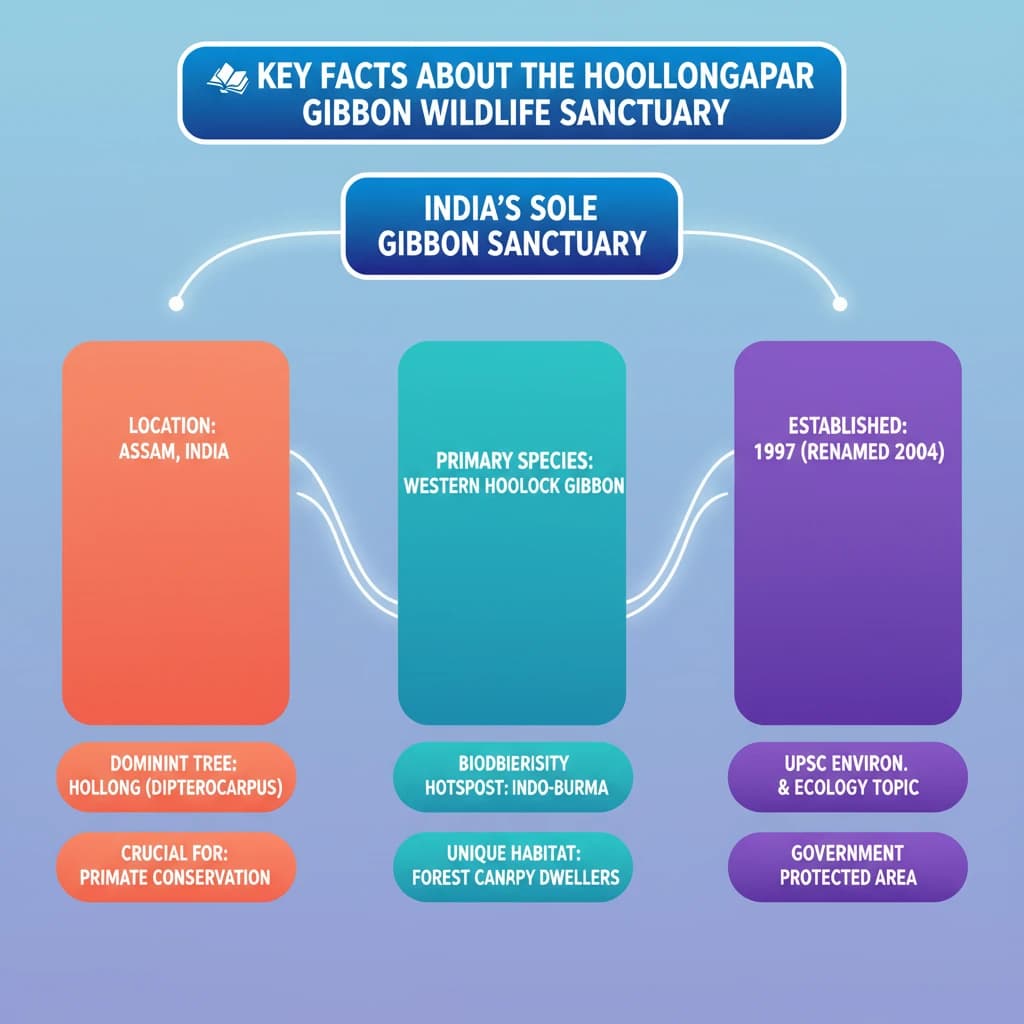
  • The Hoollongapar Gibbon Wildlife Sanctuary is located in Assam, India.
  • It is the sole habitat for gibbons (specifically the Western Hoolock Gibbon) in India.
  • The sanctuary was established and renamed in 1997, and officially became Hoollongapar Gibbon WLS in 2004.
  • The upper canopy is dominated by the Hollong tree (Dipterocarpus macrocarpa).
  • It is crucial for primate conservation and contributes significantly to the Indo-Burma Biodiversity Hotspot.
What are the Key Facts About the Hoollongapar Gibbon Wildlife Sanctuary?

What are the Key Facts About the Hoollongapar Gibbon Wildlife Sanctuary?

Medium⏱️ 5 min read✓ 95% Verified
environment and ecology

📖 Introduction

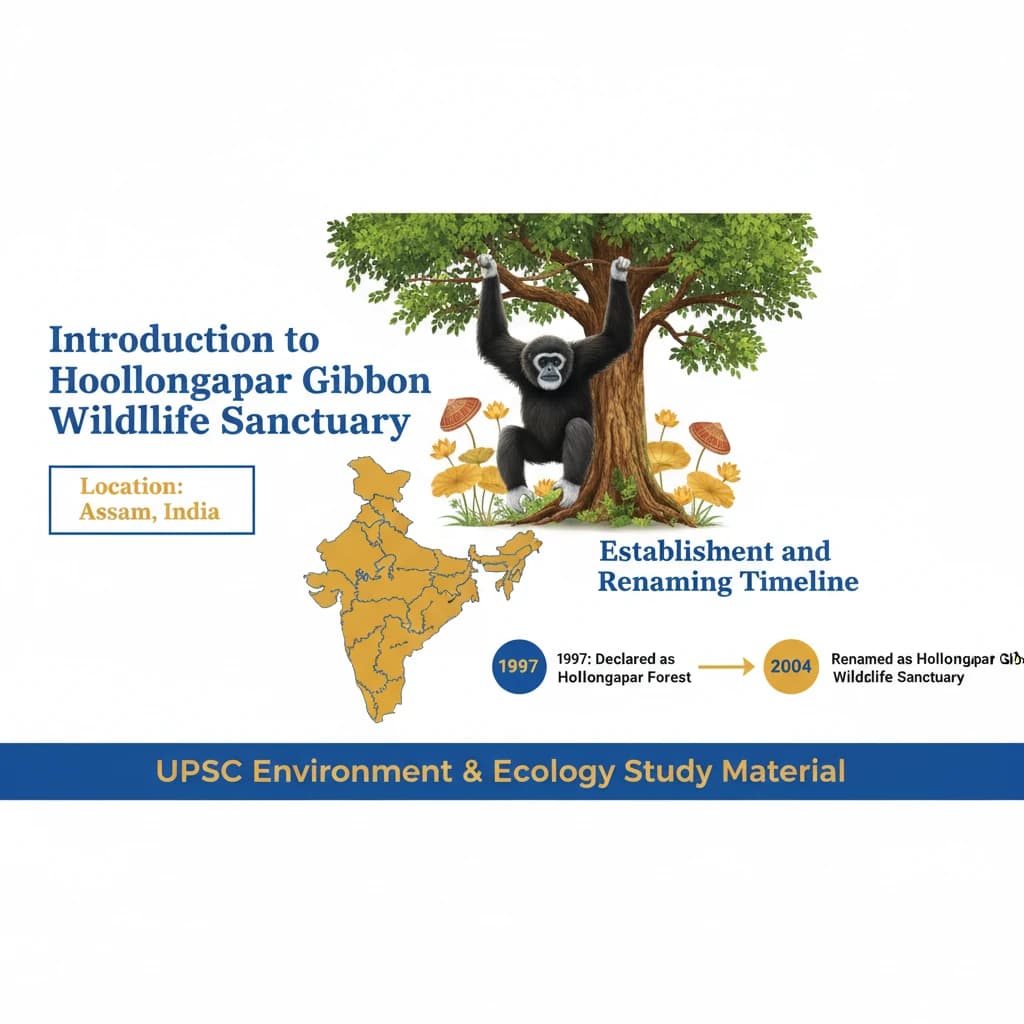
<h4>Introduction to Hoollongapar Gibbon Wildlife Sanctuary</h4><p>The <strong>Hoollongapar Gibbon Wildlife Sanctuary</strong> is a vital protected area located in the state of <strong>Assam, India</strong>. It plays a crucial role in the conservation of unique biodiversity in the region.</p><div class='info-box'><p><strong>Location:</strong> Assam, India</p></div><h4>Establishment and Renaming Timeline</h4><p>The sanctuary underwent significant changes in its designation and nomenclature over the years. These changes reflect its evolving status as a protected area.</p><div class='info-box'><ul><li><strong>1997:</strong> The area was initially <strong>established and renamed</strong> as a protected area.</li><li><strong>2004:</strong> It was officially renamed to <strong>Hoollongapar Gibbon Wildlife Sanctuary</strong> from its previous designations.</li></ul></div><p>Prior to its current name, it was known as the <strong>Gibbon Wildlife Sanctuary</strong> or the <strong>Hollongapar Reserve Forest</strong>, highlighting its historical significance as a forested region.</p><h4>Unique Biodiversity and Significance</h4><p>This sanctuary is globally recognized for its exceptional biodiversity. Its primary distinction lies in being the <strong>sole habitat for gibbons in India</strong>, making it a critical conservation site.</p><div class='key-point-box'><p>The <strong>Hoollongapar Gibbon Wildlife Sanctuary</strong> is the <strong>only sanctuary in India</strong> dedicated primarily to the conservation of <strong>gibbons</strong>, specifically the <strong>Western Hoolock Gibbon</strong>.</p></div><h4>Dominant Flora of the Sanctuary</h4><p>The vegetation within the sanctuary is rich and diverse, characterized by a prominent upper canopy. This forest type supports a wide array of plant and animal life.</p><div class='info-box'><p>The <strong>upper canopy</strong> is predominantly characterized by the towering <strong>Hollong tree</strong> (<em>Dipterocarpus macrocarpa</em>), which can reach impressive heights of up to <strong>30 metres</strong>.</p></div><p>Other significant tree species found in the sanctuary include <strong>Sam</strong>, <strong>Amari</strong>, <strong>Sopaat</strong>, <strong>Betelu</strong>, <strong>Udai</strong>, and <strong>Hingori</strong>. These species contribute to the rich ecological fabric of the area.</p><div class='exam-tip-box'><p>For <strong>UPSC Prelims</strong>, remember the <strong>Hollong tree</strong> as the dominant species and its scientific name, <em><strong>Dipterocarpus macrocarpa</strong></em>. Also, note the specific mention of it being the <strong>sole gibbon habitat</strong> in India, which is a key distinguishing fact.</p></div>
Concept Diagram

💡 Key Takeaways

  • •The Hoollongapar Gibbon Wildlife Sanctuary is located in Assam, India.
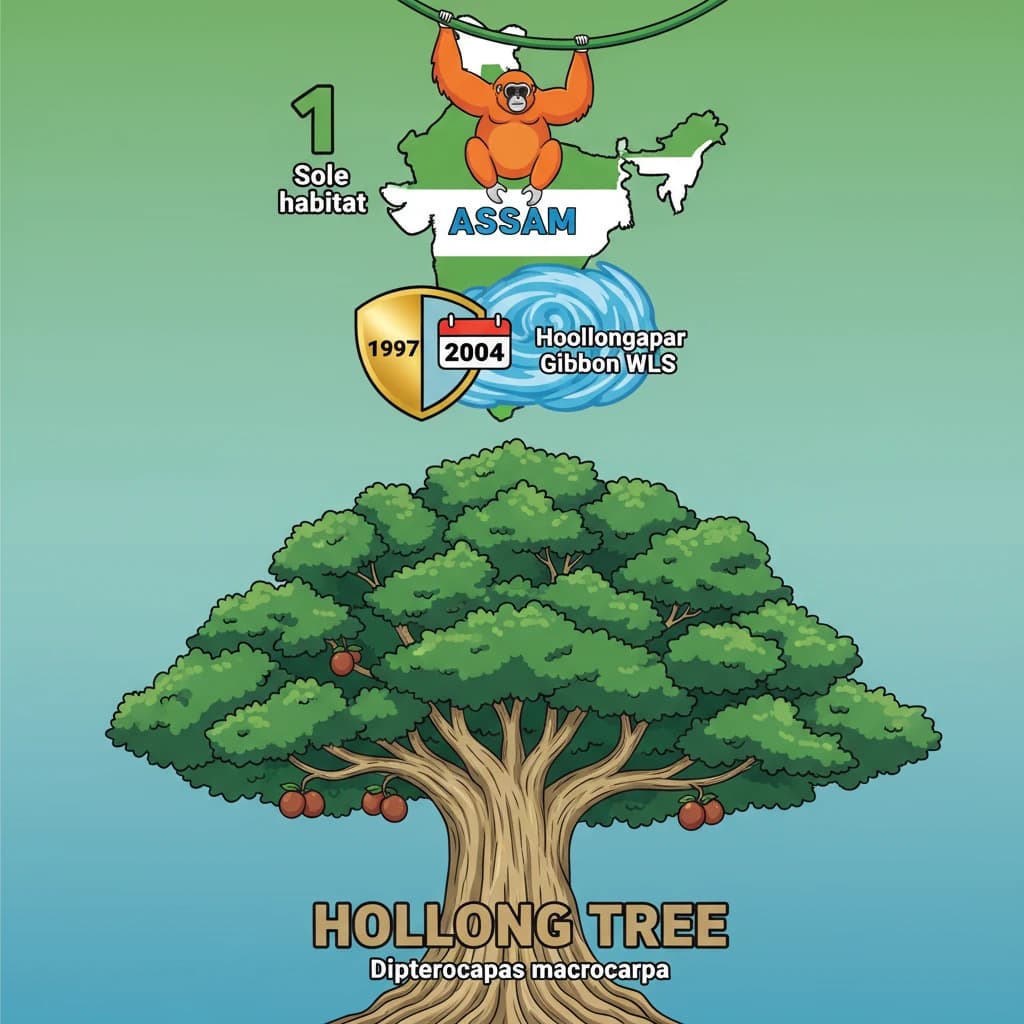
  • •It is the sole habitat for gibbons (specifically the Western Hoolock Gibbon) in India.
  • •The sanctuary was established and renamed in 1997, and officially became Hoollongapar Gibbon WLS in 2004.
  • •The upper canopy is dominated by the Hollong tree (Dipterocarpus macrocarpa).
  • •It is crucial for primate conservation and contributes significantly to the Indo-Burma Biodiversity Hotspot.

🧠 Memory Techniques
Memory Aid
95% Verified Content

📚 Reference Sources

•IUCN Red List for Hoolock Gibbon conservation status
•General knowledge databases on Indian wildlife sanctuaries

Related Topics

Loading related topics...
Explore:Environment And Ecology Topics·All Subjects·Daily Current Affairs·Editorial Analysis·Previous Year Questions·UPSC GPT
What are the Key Facts About the Hoollongapar Gibbon Wildlife Sanctuary? - UPSC Environment And Ecology